Tectonic Earthquake: What Causes Them and Why They Matter
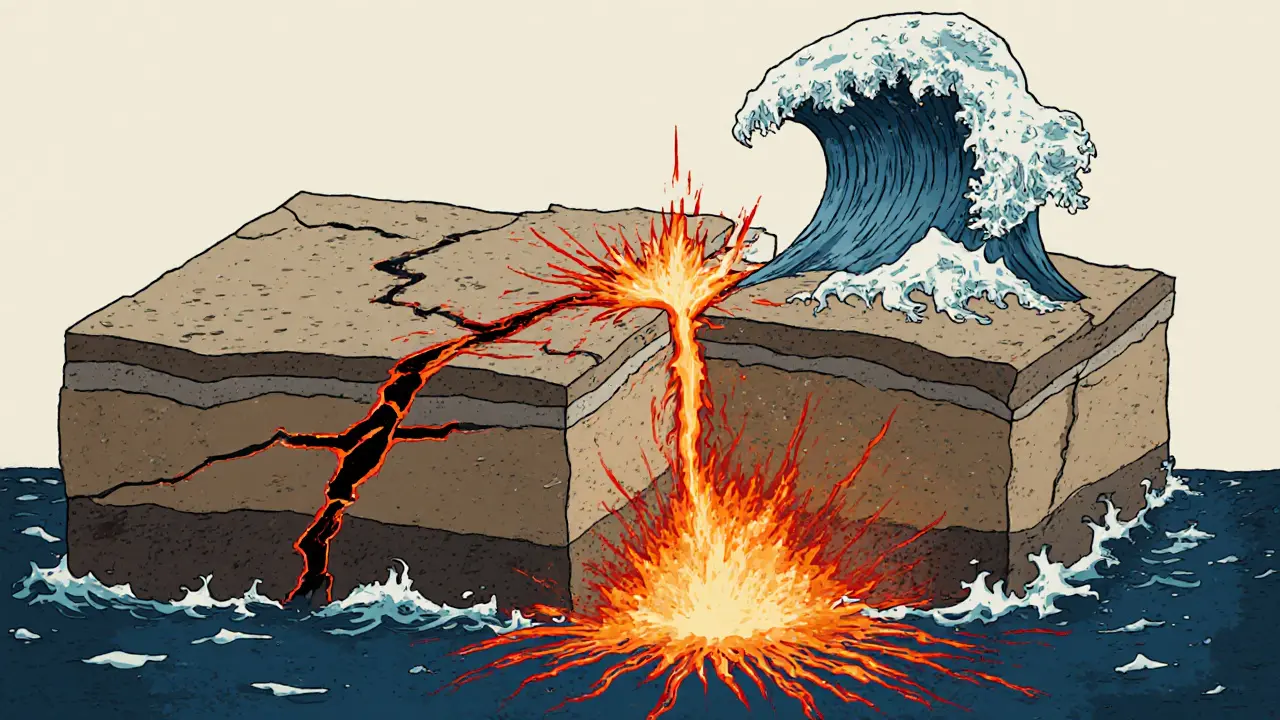
When we talk about the strongest earthquakes on Earth, we’re really talking about tectonic earthquake, a massive release of energy caused by the sudden movement of Earth’s tectonic plates along fault lines. Also known as megathrust earthquake, this type of quake happens where one plate slides under another — a process called subduction — and it’s responsible for the biggest disasters in recorded history. Unlike smaller tremors from volcanic activity or human drilling, tectonic earthquakes can hit magnitudes over 9.0 and shake entire continents.
These quakes don’t happen randomly. They’re tied to specific zones, most famously the Ring of Fire, a horseshoe-shaped belt around the Pacific Ocean where about 90% of the world’s earthquakes occur. Places like Japan, Chile, Alaska, and Indonesia sit right on top of these active boundaries. The 2004 Sumatra quake, which triggered a deadly tsunami, and the 2011 Tōhoku quake in Japan were both tectonic events — each caused by plates grinding together after decades of pressure buildup. The energy released in these moments is more than all the nuclear bombs ever detonated combined.
What makes tectonic earthquakes so dangerous isn’t just their power — it’s how little warning we get. There’s no reliable way to predict when they’ll strike. But we do know where they’re likely to happen, and that’s where preparedness matters. Building codes in high-risk areas, early warning systems, and public education can save thousands of lives. Even small changes — like securing heavy furniture or knowing how to drop, cover, and hold on — can make a real difference when the ground shakes.
And while most people think of earthquakes as natural disasters, the real impact often comes from what happens after: collapsed buildings, broken power lines, flooded coastlines, and supply chains that never fully recover. That’s why understanding tectonic earthquakes isn’t just about geology — it’s about survival, planning, and resilience. The posts below dig into real cases, scientific facts, and lessons learned from the biggest quakes in modern history. You’ll find clear breakdowns of how these events form, where they’re most likely to strike next, and what science says about future risks — no fluff, no hype, just what you need to know.