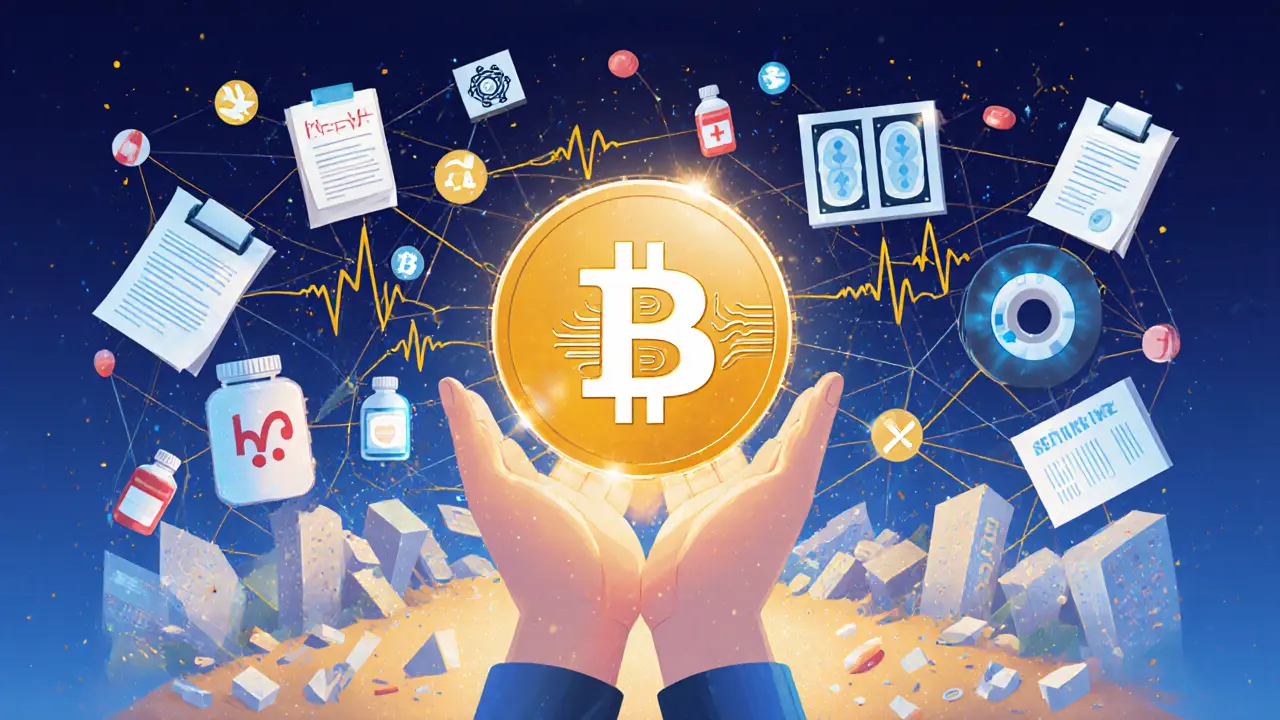
Blockchain Medical Records: How Your Health Data Can Be Secure and Yours
When your blockchain medical records, a system that stores health data on a decentralized, tamper-proof ledger. Also known as decentralized health records, it lets you own your medical history instead of letting hospitals or insurers hold it hostage. Most people don’t realize their health data is stored in silos—each doctor, lab, or pharmacy keeps its own copy, often in outdated systems. If you switch providers, you’re stuck filling out forms, faxing records, or waiting weeks for a CD. Blockchain changes that by putting your records on a secure, shared network where only you control access.
Think of it like a digital vault you carry with you. Every time a doctor adds a new test result, it’s time-stamped and encrypted, then added to your personal chain. No one can alter it without your permission. This isn’t just theory—real projects are already testing this. For example, some clinics in Estonia and the U.S. are using blockchain to let patients share data with specialists instantly, reducing errors and duplicate tests. The technology also helps with consent: you can grant access to a researcher for a study, then take it back the next day. It’s not about replacing doctors—it’s about giving you back control over who sees what, and when.
But it’s not just about security. patient data ownership, the right to decide how and when your health information is used is a legal and ethical shift happening fast. In the EU and parts of the U.S., laws now require patients to be able to access and transfer their data. Blockchain makes that practical. And health data security, the protection of sensitive medical information from breaches and misuse has never been more urgent. Hackers target hospitals because medical records sell for 10 times more than credit cards on the dark web. With blockchain, even if one node is compromised, the whole chain stays intact.
You won’t find blockchain medical records on your phone yet—but you will find the pieces. Projects are building the tools: interoperable wallets for health data, smart contracts that auto-release records when conditions are met, and zero-knowledge proofs that prove you’re eligible for treatment without revealing your full history. The posts below show you what’s real, what’s fake, and what’s coming next. Some are about companies trying to sell you a solution. Others reveal how governments and clinics are quietly making it work. You’ll see why most "blockchain health" apps are just rebranded databases—and why the few that actually use the tech are changing lives.