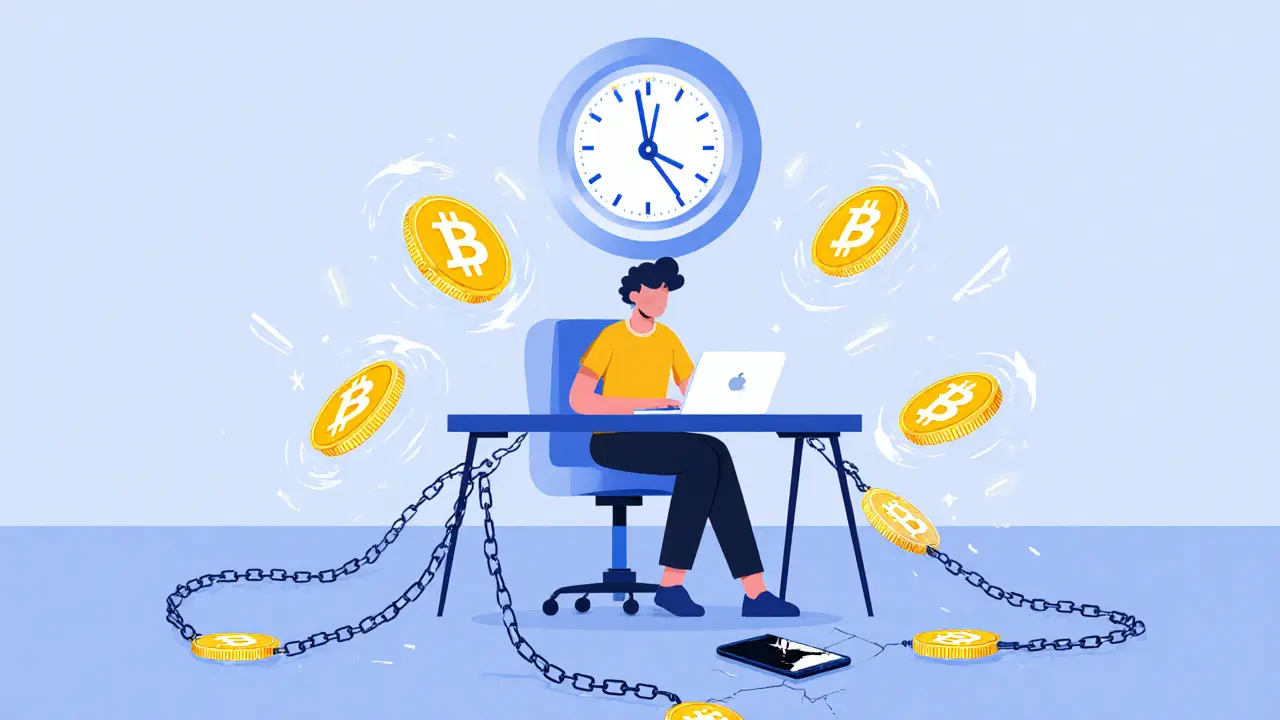
Blockchain Scaling: How Networks Handle More Users Without Slowing Down
When you send crypto, you’re not just clicking a button—you’re asking a blockchain scaling, the process of making a blockchain network faster and cheaper as more people use it. It’s what keeps Bitcoin and Ethereum from turning into digital traffic jams. Without scaling, every transaction gets stuck in line. Fees spike. Wait times grow. That’s why some networks can’t handle millions of users—yet.
There are two main ways to fix this. One is to make the base layer (Layer 1) faster, like upgrading a highway. But that’s hard. Bitcoin and Ethereum can’t just change their core rules without risking security. So most teams focus on Layer 2 solutions—like building extra lanes on top of the highway. Layer 2 solutions, technologies built on top of a main blockchain to handle transactions more efficiently include rollups, sidechains, and state channels. These let users trade, pay, or play games without clogging the main network. Projects like Shadow Exchange on Sonic show how a fast, low-fee Layer 2 can dominate by offering sub-second trades and 95% lower costs than Ethereum.
But scaling isn’t just about speed. It’s about cost, security, and who gets left behind. When Upbit faced $34 billion in fines for ignoring KYC rules, it wasn’t just about compliance—it was about how scaling affects regulation. More users mean more data, more risk, and more pressure to verify identities. Meanwhile, transaction fees, the cost to process a transaction on a blockchain network can make small payments impossible. If you’re trying to send $1 in crypto but the fee is $5, the system fails. That’s why DeFi protocols like Moola Market on Celo focus on mobile users in emerging markets—they need low fees to survive.
And scaling isn’t just technical. It’s economic. When a token like BULEI or SOVRN crashes 99% after hype, it’s often because the network behind it couldn’t scale sustainably. No one wants to pay high fees for a coin that’s worthless. Real scaling means keeping costs low, security strong, and adoption growing—not just pumping tokens.
What you’ll find here aren’t theory papers. These are real cases: the shutdown of TradeOgre because it skipped compliance, the rise of Shadow Exchange because it solved speed, the fall of fake airdrops that promised free tokens on broken networks. Every story here ties back to one truth: if a blockchain can’t scale, it won’t survive.