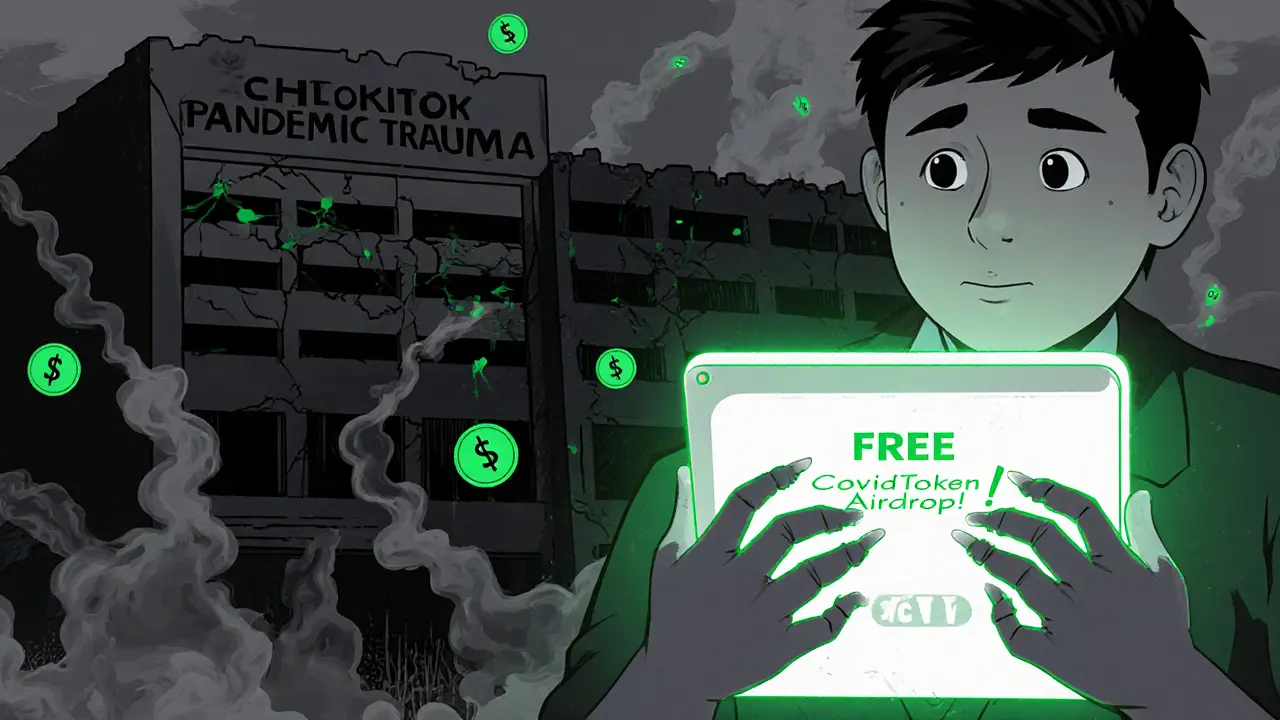
CovidToken Airdrop: What Really Happened and Why It Vanished
When the world locked down in 2020, CovidToken, a fake cryptocurrency that pretended to fund pandemic relief. Also known as COVID Token, it was never real—just a lure for people looking for easy money during a crisis. Scammers used the fear and uncertainty of the pandemic to push fake airdrops, promising free tokens if you connected your wallet or paid a small fee. No official team, no whitepaper, no blockchain activity—just social media posts and Telegram groups full of bots. These weren’t projects. They were digital pickpockets.
What made CovidToken so dangerous wasn’t just the lie—it was how well it exploited trust. People saw posts from accounts that looked real, with stock images of masks and hospitals, and fake testimonials from "verified users." They thought, "If I don’t act now, I’ll miss out." But crypto airdrops don’t ask you to send funds first. Legit projects don’t need you to pay gas fees to claim free tokens. And if a token has zero trading volume, zero exchange listings, and no team behind it, it’s not a project—it’s a ghost.
The same pattern showed up with dozens of other "pandemic coins"—PandemicToken, CoronaCoin, LockdownCoin. All vanished within months. Meanwhile, real crypto projects like CANDY, a travel rewards token from TripCandy that actually pays you when you book flights, kept running. They didn’t need fear to grow. They just needed to deliver value. And that’s the difference: real tokens solve problems. Fake ones just take your money.
Today, you’ll find posts still popping up about CovidToken airdrops. Some are old memes. Others are new scams trying to recycle the same trick. The truth? There was never a CovidToken airdrop. There never will be. The only thing you’ll get from clicking those links is a drained wallet. The posts below show you exactly how these scams worked, what other fake tokens followed the same script, and how to spot the next one before it’s too late.