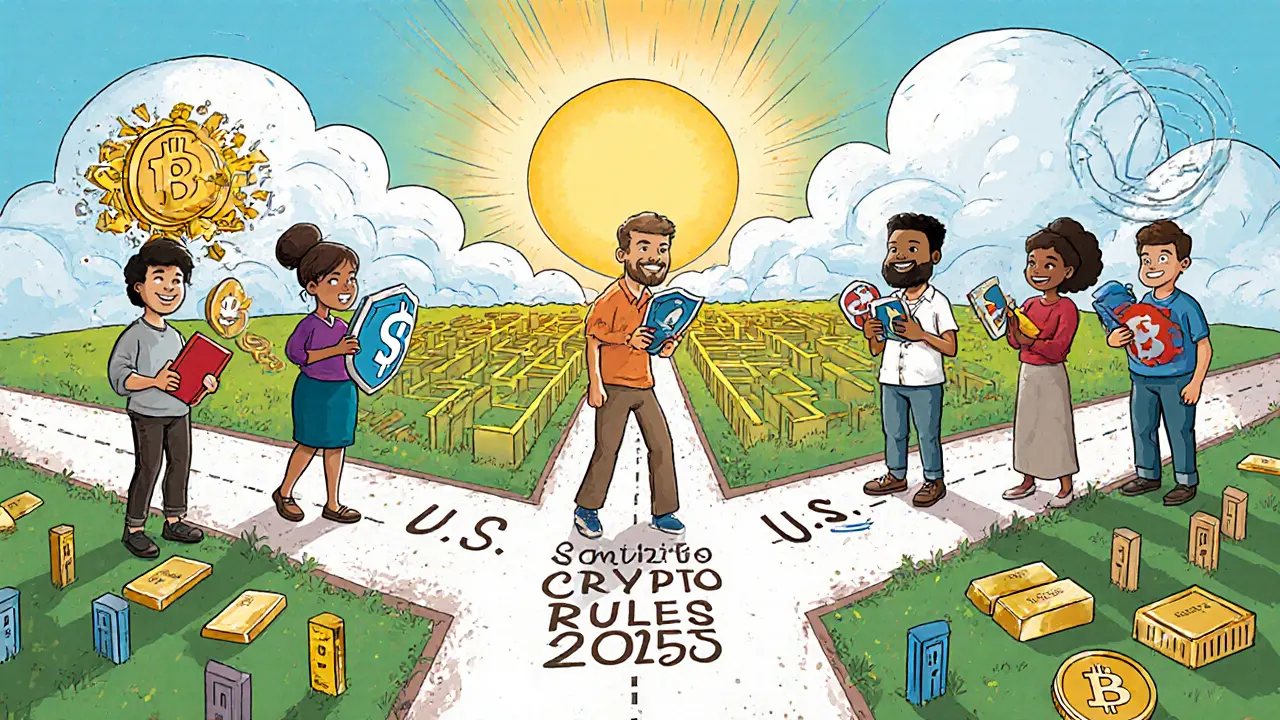
Crypto Regulations: What You Need to Know About Global Rules and Enforcement
When we talk about crypto regulations, government rules that control how cryptocurrencies are bought, sold, and tracked. Also known as cryptocurrency compliance, these rules now shape everything from exchange operations to individual wallet security. It’s not about stopping crypto—it’s about controlling it. And in 2025, that control is real, enforced, and expensive.
Take KYC crypto, the requirement for exchanges to verify your identity before letting you trade. It’s no longer optional. From South Korea to Canada, exchanges that skip KYC get shut down. Upbit faced $34 billion in potential fines for failing to verify users. TradeOgre lost $40 million in crypto and was shut down by Canadian authorities. These aren’t warnings—they’re punishments. And they’re setting the global standard. If an exchange doesn’t know who you are, regulators will shut it down. Period.
AML crypto, anti-money laundering rules that force platforms to track suspicious transactions, is now baked into every major exchange’s backend. The FATF Travel Rule means even small transfers between wallets must carry user info. That’s why anonymous platforms like LongBit and AnimeSwap don’t exist—they’re scams pretending to be real. Even privacy-focused coins like Monero are being tracked because regulators now demand transparency at the exchange level. You can’t hide if you’re trading on a platform that answers to the law.
And it’s not just exchanges. Airdrops? They’re being scrutinized. Fake projects like CovidToken and HyperGraph (HGT) are scams because they don’t follow basic compliance. Real airdrops—like TripCandy’s CANDY token or BabySwap’s BABY token—are tied to verifiable services, not promises. If there’s no website, no team, no blockchain activity, it’s not a reward—it’s a trap.
What does this mean for you? If you’re trading crypto, you’re already under regulation. You can’t opt out. The question isn’t whether rules exist—it’s whether you’re using platforms that follow them. Safe exchanges like Bitsonic and KyberSwap Classic operate under strict compliance. Scams like Bvnex and LongBit vanished because they didn’t. The same logic applies to DeFi: if a protocol doesn’t have audits, liquidity, or user verification, it’s not just risky—it’s legally exposed.
These rules aren’t going away. They’re getting stronger. Countries are sharing data. Banks are cutting off crypto services. Fines are rising. And the people who win? Those who understand the system—not those who ignore it. Below, you’ll find real cases of how these regulations played out: exchanges that died, tokens that vanished, and the ones that survived because they played by the rules. This isn’t theory. It’s what’s happening right now.