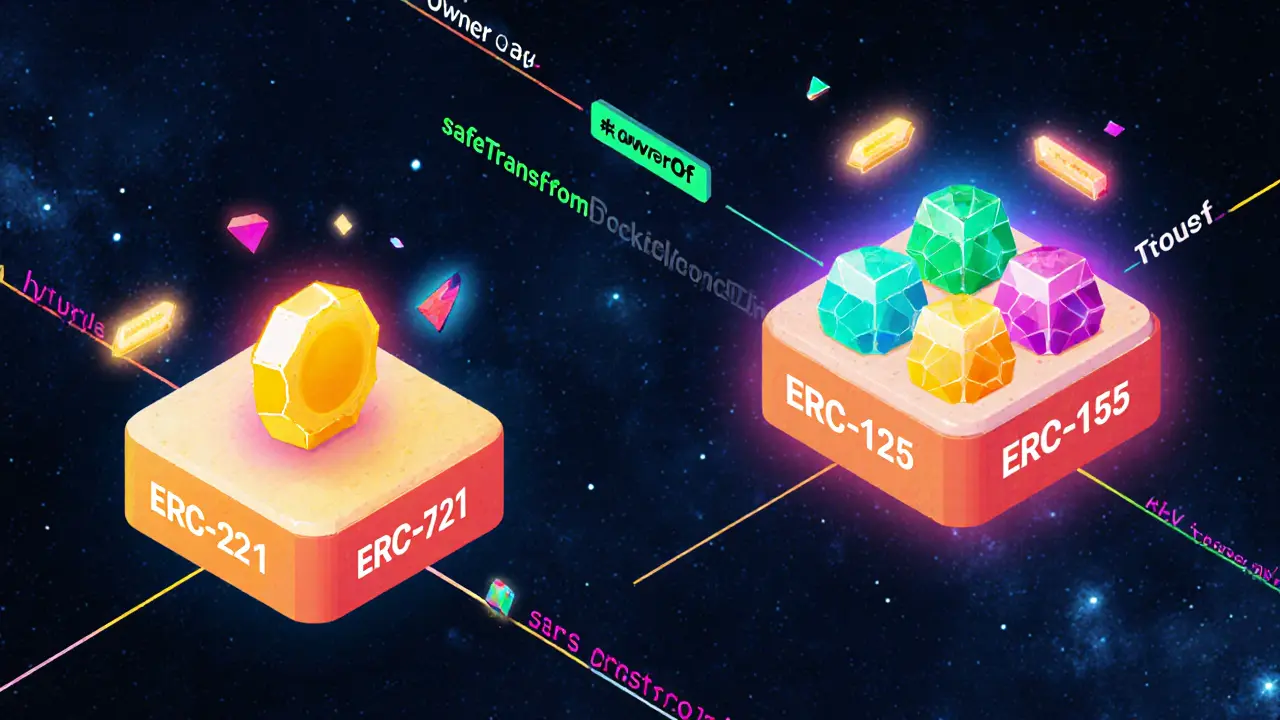
ERC-721 Explained: What It Is, Why It Matters, and How It Powers NFTs
When you buy an NFT, you’re not just downloading a JPEG—you’re claiming ERC-721, a blockchain standard that creates unique, non-fungible digital tokens. Also known as Ethereum Request for Comment 721, it’s the reason your digital art, virtual land, or game item can’t be copied or replaced like regular cryptocurrency. Unlike Bitcoin or Ethereum, where every unit is identical and interchangeable, ERC-721 tokens are one-of-a-kind. Each has a unique ID, metadata, and ownership history stored directly on the blockchain. This isn’t just tech jargon—it’s what lets you truly own a piece of the digital world.
ERC-721 works by embedding rules into smart contracts, self-executing code on the Ethereum network that enforces ownership and transfer rules. These contracts make sure only the person with the private key can sell, send, or prove they own the token. That’s why fake NFT marketplaces can’t steal your asset—they don’t control the contract. And when you see platforms like OpenSea or Blur listing NFTs, they’re all built on top of ERC-721 (or its upgraded cousin, ERC-1155). This standard also powers digital ownership, the idea that you can hold, trade, and control digital items without relying on a company to grant you access. Think of it like owning a physical painting versus just having a print—you control the original.
ERC-721 isn’t just for art. It’s behind blockchain games where your character’s sword is a real asset you can sell. It’s in virtual real estate where your plot of land can be rented or resold. Even music and domain names now use it to prove authenticity. But here’s the catch: not all NFTs are created equal. Some are backed by real utility, others are just hype. The posts below cut through the noise. You’ll find real breakdowns of NFT projects, scams hiding as airdrops, and how to tell if your digital item is truly yours—or just a ghost in the code. No fluff. No guesswork. Just what works.