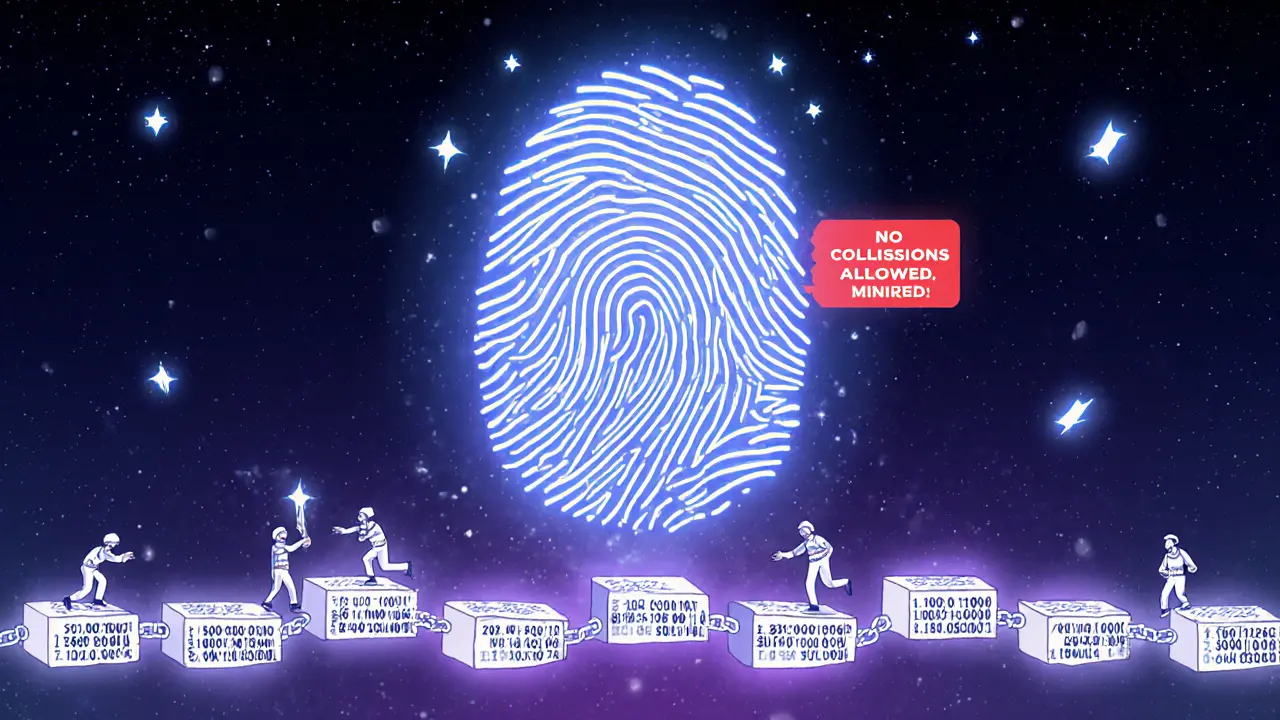
Hashing Algorithm: What It Is and Why It Keeps Crypto Secure
When you send Bitcoin or verify a transaction, you're relying on a hashing algorithm, a mathematical function that converts any input into a unique, fixed-length string of characters. Also known as a cryptographic hash function, it’s what makes blockchain tamper-proof—change one letter in a transaction, and the entire hash flips completely. No one can reverse it. No one can guess the original data from the hash. That’s not magic—it’s math, and it’s the reason your crypto stays safe.
Every blockchain uses hashing to link blocks together. Bitcoin’s SHA-256, a specific type of hashing algorithm developed by the NSA and now used globally takes your transaction data and turns it into a 64-character code. That code becomes part of the next block’s header, creating an unbreakable chain. If someone tries to alter a past transaction, the hash changes, breaking the chain—and everyone on the network knows something’s wrong. That’s why blockchain is called immutable.
Hashing isn’t just for blocks. It’s in your wallet too. Your public address? A hashed version of your private key. Your file checksums? Hashed. Even the way crypto exchanges store passwords? Hashed. And then there’s the Merkle tree, a structure that uses hashing to efficiently verify large sets of transactions in a single block. Instead of checking every single transaction, your wallet checks one hash at the top of the tree. Fast, secure, and scalable.
You won’t see hashing in action, but you feel its effects every time you send crypto without fear of fraud. It’s why fake airdrops can’t fake a blockchain signature. Why even anonymous exchanges like TradeOgre got caught—their transaction hashes still left a trail. And why no one can rewrite history on Bitcoin, even if they control half the network.
What you’ll find in the posts below are real-world examples of how hashing underpins security, detection, and trust in crypto—from how Upbit got fined for failing to verify identities (which rely on hashed data) to why fake tokens like BULEI or CovidToken can’t fool the chain. You’ll see how slashing penalties in staking connect to hash-based validator accountability, and why even meme coins depend on the same math that secures billions.