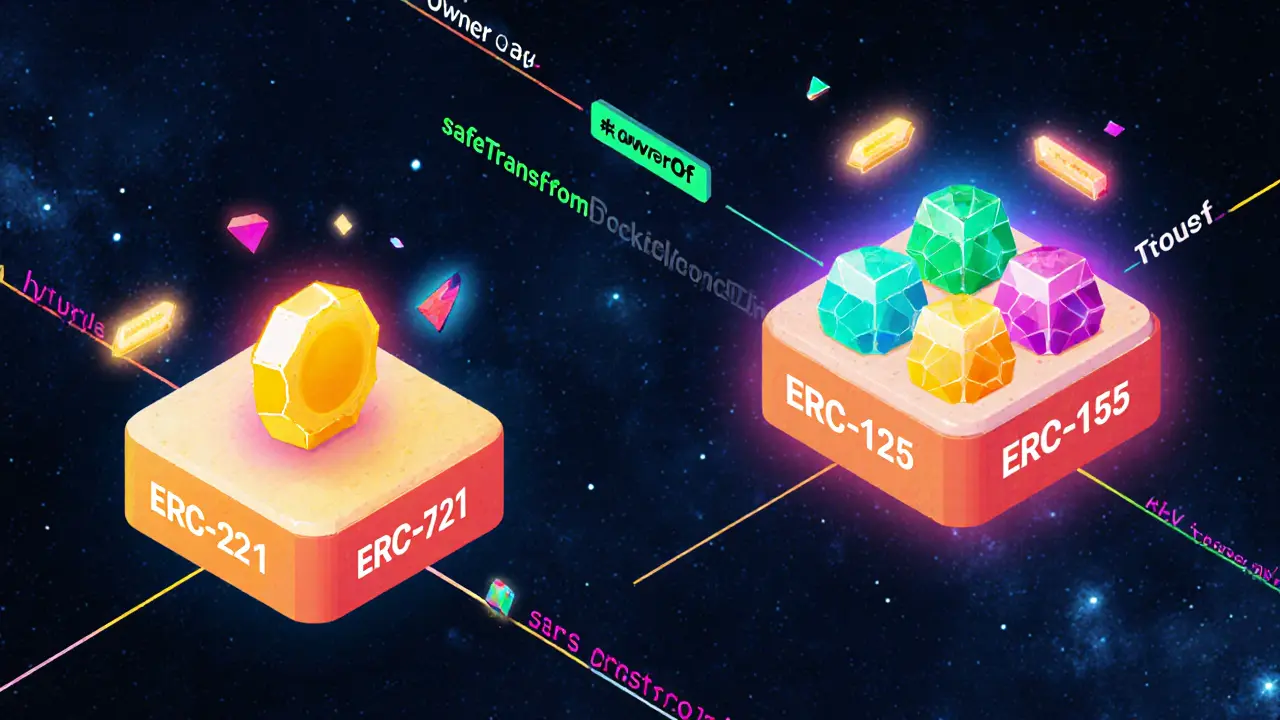
NFT Token Standards: What They Are and Why They Matter
When you buy an NFT, you’re not just getting a picture or a clip—you’re getting NFT token standards, the rules that make digital ownership real on blockchain. These standards are the invisible code that tells your wallet, the marketplace, and the network: this item is unique, it belongs to you, and no one else can copy the proof. Without them, NFTs would just be JPEGs with a URL attached. The most common ones—ERC-721, the original standard for unique, one-of-a-kind digital assets and ERC-1155, a more flexible standard that handles both unique and multiple identical items—are what make trading, displaying, and using NFTs possible across platforms.
Think of ERC-721 like a signed certificate of authenticity for a rare baseball card. It proves that one specific card exists, who owns it, and that it can’t be duplicated on the blockchain. That’s why most digital art NFTs use it. But what if you want to sell 1,000 copies of the same item—like game skins or concert tickets? That’s where ERC-1155 comes in. It lets one smart contract manage both unique and bulk tokens, cutting down on gas fees and complexity. This flexibility is why big gaming projects and collectibles are shifting to it. And behind both standards? smart contracts, self-executing code that enforces ownership rules without middlemen. They’re the reason you can sell an NFT on OpenSea, then show it in a virtual gallery on Decentraland—because the rules stay the same no matter where you go.
These standards don’t just enable trading—they change how we think about digital stuff. Your NFT isn’t stored on a server someone else controls. It’s tied to your wallet through these standards, making your ownership permanent and portable. That’s why fake NFT marketplaces can’t steal your asset: the blockchain itself enforces who owns what. But not all standards are equal. Some are outdated. Others are poorly coded. And some projects skip the basics entirely, pretending their token is an NFT when it’s just a coin with a fancy name. That’s why checking the underlying standard matters—whether you’re buying art, a game item, or a virtual land plot. The posts below cut through the noise. You’ll find real breakdowns of what works, what doesn’t, and how to spot the difference between a true NFT and a scam pretending to be one.