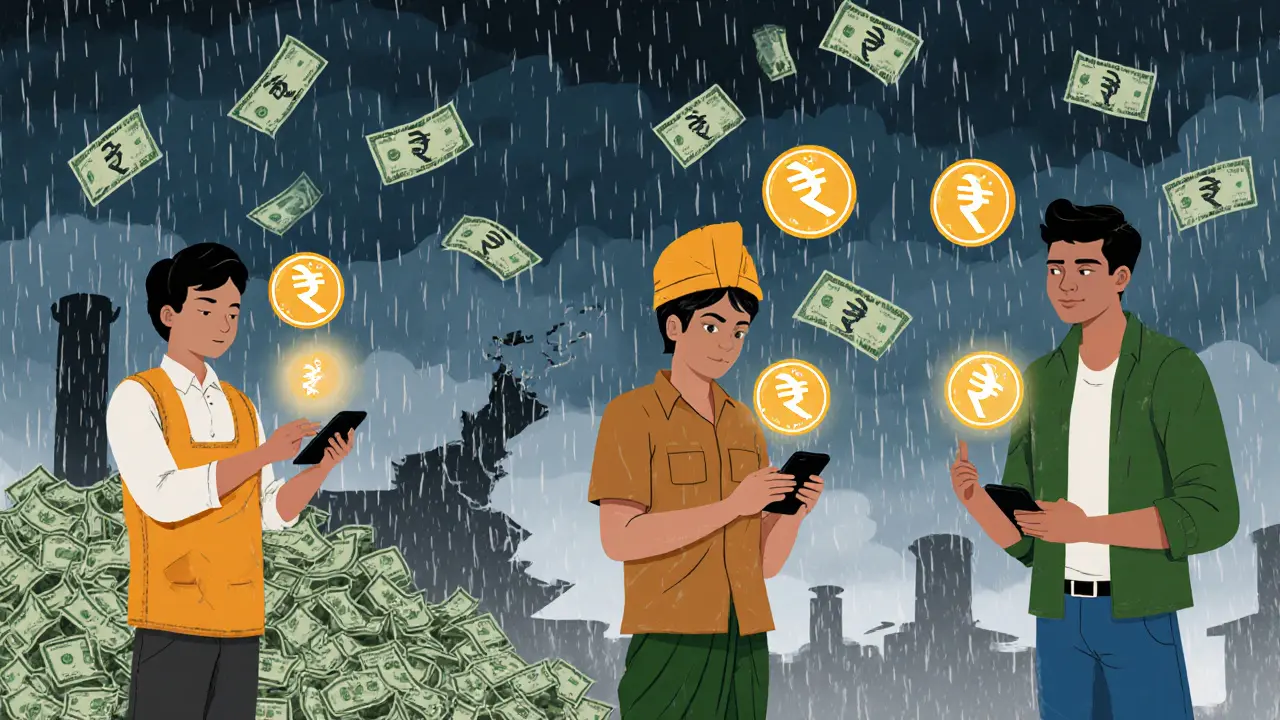
Stablecoins Pakistan: How They Work and Where to Use Them Safely
When you live in a country where the local currency loses value fast, stablecoins, digital currencies pegged to stable assets like the US dollar. Also known as pegged tokens, they let people in Pakistan hold value without risking daily inflation swings. For many, a stablecoin isn’t just a crypto—it’s a lifeline. Whether you’re sending money to family abroad, buying goods online, or saving for the future, stablecoins like USDT and USDC offer a way out of the cycle of rupee depreciation.
Stablecoins in Pakistan don’t need banks to work. You can buy them on peer-to-peer platforms like Paxful or LocalBitcoins, or through local crypto traders who accept bank transfers or mobile wallets. Once you have them, you can hold them in a non-custodial wallet like Trust Wallet or MetaMask, or use them to trade for other coins on exchanges that still serve Pakistani users. But here’s the catch: not all platforms are safe. Some fake exchanges pretend to be local services, while others vanish overnight. The PKR stablecoin, the term used locally for stablecoins traded against the Pakistani rupee market is growing, but so are scams. Always check if a platform has real user reviews, transparent ownership, and clear withdrawal processes.
Regulators in Pakistan haven’t banned stablecoins outright, but they’ve made it clear they don’t recognize them as legal tender. That means you’re on your own if something goes wrong. Banks may freeze accounts linked to crypto activity, and law enforcement has cracked down on unlicensed trading. Still, people keep using stablecoins because the alternative—watching your savings shrink—is worse. The real question isn’t whether stablecoins are legal in Pakistan. It’s whether you know how to use them without getting scammed.
What you’ll find in the posts below are real stories from people who’ve navigated this space. You’ll see how traders avoid fake exchanges, why some stablecoin projects vanish overnight, and how to spot a scam that looks like a legitimate airdrop. You’ll also learn why some crypto platforms shut down in Pakistan while others keep running, and how global crackdowns on KYC and AML rules affect everyday users. This isn’t theory. It’s what’s happening right now, on the ground, in homes and small offices across the country.