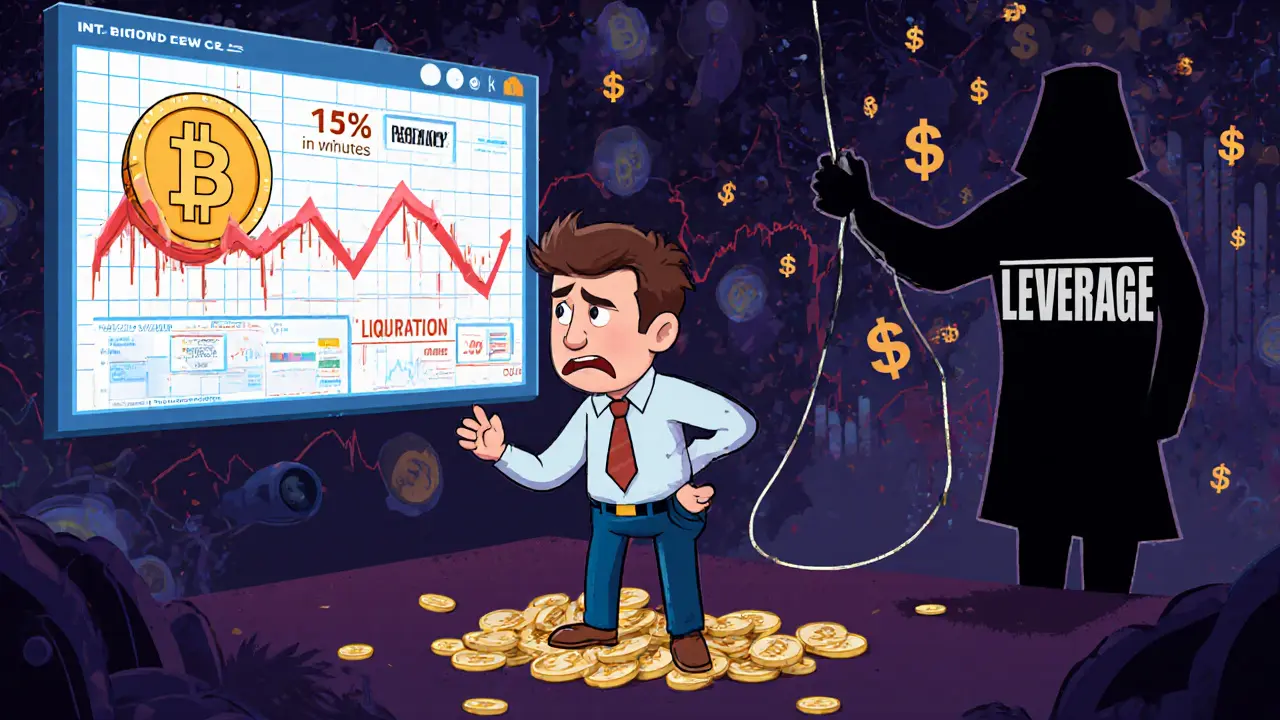
Trading Leverage: How It Works and Why It Can Make or Break Your Crypto Trades
When you use trading leverage, a tool that lets you borrow funds to increase your position size in crypto markets. Also known as margin trading, it’s like renting extra power to push your trades further—but if you misjudge the road, you don’t just skid, you flip. Most new traders see leverage as a shortcut to big profits. But in reality, it’s a double-edged sword that cuts both ways—and too many people end up losing everything because they never learned how to handle it.
Leverage isn’t magic. It’s math. If you trade with 5x leverage, you’re controlling $5,000 worth of crypto with just $1,000 of your own money. That sounds great until the price moves against you by just 20%. Suddenly, your entire $1,000 is gone. And if you’re using 10x or 20x? That 5% dip wipes you out. This isn’t theory. It’s what happened to thousands on platforms like FTX, Bybit, and even smaller exchanges that didn’t have proper liquidation safeguards. Real traders don’t just chase leverage—they manage risk by setting stop-losses, avoiding over-leveraged positions, and never risking more than 1-2% of their capital on a single trade. You’ll find posts here that show how margin trading, the practice of borrowing funds to amplify crypto positions led to massive losses on exchanges like TradeOgre and Upbit when regulators cracked down on unsecured lending. Others explain how leveraged positions, trades amplified by borrowed capital that increase both gains and losses can trigger cascading liquidations on decentralized exchanges, especially in low-liquidity markets like those on Sonic or Celo.
What you’ll find in these posts isn’t hype. It’s real cases: traders who lost everything using leverage on fake exchanges like LongBit, or those who survived by sticking to low leverage on verified platforms. You’ll learn why some DeFi protocols like KyberSwap or Shadow Exchange don’t even offer high leverage—because they know how dangerous it is. You’ll see how even stablecoin lending on Moola Market can turn risky when leverage is involved. And you’ll understand why regulators in South Korea and Canada moved so hard against exchanges that let users trade with too much borrowed money. This isn’t about getting rich quick. It’s about staying in the game long enough to actually make money. The posts below give you the facts—not the fantasy—so you can decide if leverage is right for you, and if so, how to use it without blowing up your account.