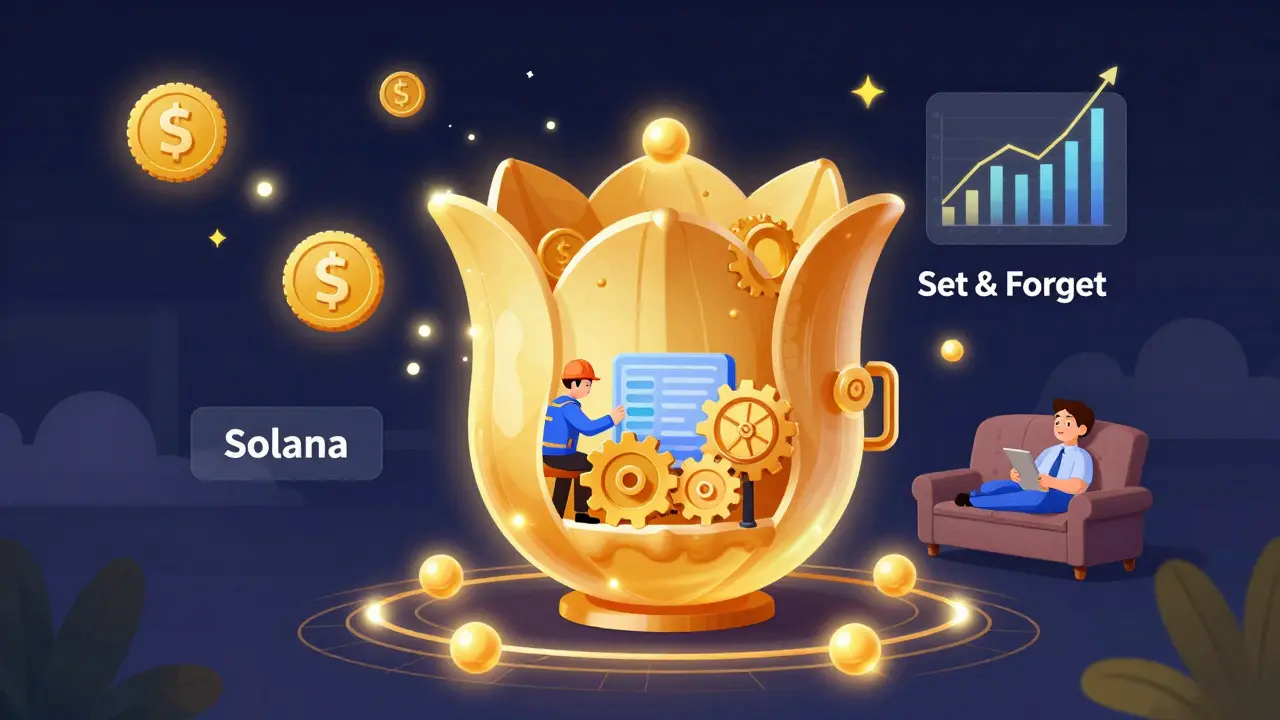
Yield Aggregation Explained: How DeFi Protocols Maximize Your Crypto Earnings
When you hear yield aggregation, a system that automatically moves your crypto between earning opportunities to get the highest return. Also known as automated compounding, it’s what lets you earn interest without constantly switching between protocols yourself. Think of it like a smart money manager that checks dozens of DeFi platforms every hour, finds the best rates, and moves your funds—without you lifting a finger.
It’s not just about finding high yields. The real value is in liquidity pools, markets where users lock up crypto to help trades happen and earn fees in return and how yield aggregators reduce the risks that come with them. One big risk? impermanent loss, when the value of your deposited tokens drops compared to holding them outside the pool. Good yield aggregators avoid risky pools, use stablecoin pairs, or hedge exposure so your earnings stay steady. They also handle gas fees, claim rewards, and reinvest them automatically—turning small, scattered gains into bigger, compound growth over time.
Yield aggregation doesn’t replace DeFi—it makes it easier to use. Platforms like Yearn Finance, Beefy Finance, and others built this tech because most people don’t have the time or knowledge to chase 10% APY on one pool, then 15% on another, then 22% on a new one that just launched. And when a pool shuts down or gets hacked—like YodeSwap or Eterbase—a smart aggregator can pull your funds before you even notice.
But it’s not magic. You still need to know what you’re putting in. Some aggregators use risky tokens, charge high fees, or lock your funds for weeks. The best ones are transparent, open-source, and have been tested over time. That’s why the posts below cover real cases: from yield aggregation tools that actually work, to tokens like ACA and CYI that try to automate DeFi earnings, to scams that pretend to do it. You’ll see how Japan’s tax changes affect earnings, why Vietnam’s pilot program matters for yield seekers, and how exchanges like AscendEX offer built-in yield features that compete with standalone aggregators.
What you’ll find here isn’t theory. It’s what’s actually happening—on-chain, in wallets, and in the real world. Whether you’re earning from a stablecoin pool or trying to understand why a token like ELK or MOO matters for automated yields, this collection cuts through the noise. No fluff. Just what works, what fails, and what you need to know before you stake your next dollar.