Imagine waking up to find your life savings have lost half their value overnight. For millions of Venezuelans, this isn't a hypothetical nightmare-it’s Tuesday. While the rest of the world debates Bitcoin as a speculative asset or a digital gold reserve, Venezuelans use it for something far more primal: survival. With inflation hitting 229% annually and the bolívar losing over 70% of its value in just eight months, cryptocurrency has shifted from a tech novelty to an essential lifeline. This isn't about getting rich quick; it's about buying groceries before prices change again.
The Collapse That Fueled Adoption
To understand why Venezuela ranks 13th globally in crypto adoption, you have to look at the wreckage of its traditional financial system. The turning point came in October 2023, when the government stopped defending the bolívar’s exchange rate. Almost immediately, the currency collapsed. Banks became unreliable gatekeepers, often freezing accounts or imposing strict limits on foreign currency withdrawals. Enter the blockchain.
According to Chainalysis’ 2024 Crypto Adoption Index, usage grew by a staggering 110% year-over-year. This wasn't driven by hype cycles but by desperation. Economist Aarón Olmos put it bluntly: "Venezuelans started using cryptocurrencies out of necessity." When your salary is paid in a currency that evaporates faster than you can spend it, holding dollars-even digital ones-becomes a rational act of self-preservation. By July 2025, private sector crypto transactions hit $119 million monthly, proving that this shift is structural, not temporary.
USDT vs. Bitcoin: The Real Battle
Here is a common misconception: most people think "crypto" means Bitcoin. In Venezuela, the real king is Tether (USDT). Why? Because Bitcoin is volatile. If you're trying to buy rice today, you don't want your payment method swinging 5% in value while you walk to the counter. USDT, a stablecoin pegged to the U.S. dollar, offers the stability of fiat without the hassle of physical cash shortages.
| Asset | Primary Use Case | Confirmation Time | Market Dominance |
|---|---|---|---|
| Tether (USDT) | Daily commerce, rent, food, savings preservation | < 2 minutes (on Tron network) | ~91% of transaction volume |
| Bitcoin (BTC) | Long-term savings, large transfers, hedge against total collapse | 10-60 minutes | Minority share |
| Bolívar (VES) | Small local transactions, government mandates | Instant (but low trust) | Fiat baseline |
Locals often refer to USDT as "Binance dollars," highlighting how closely tied the stablecoin is to the dominant trading platform. The speed matters here. On the Tron network, which many Venezuelans prefer due to lower fees and faster speeds, a USDT transfer confirms in under two minutes. Compare that to Bitcoin’s 10-60 minute window during peak congestion, and you see why merchants prefer stablecoins for routine sales.
P2P Platforms: The New Banking System
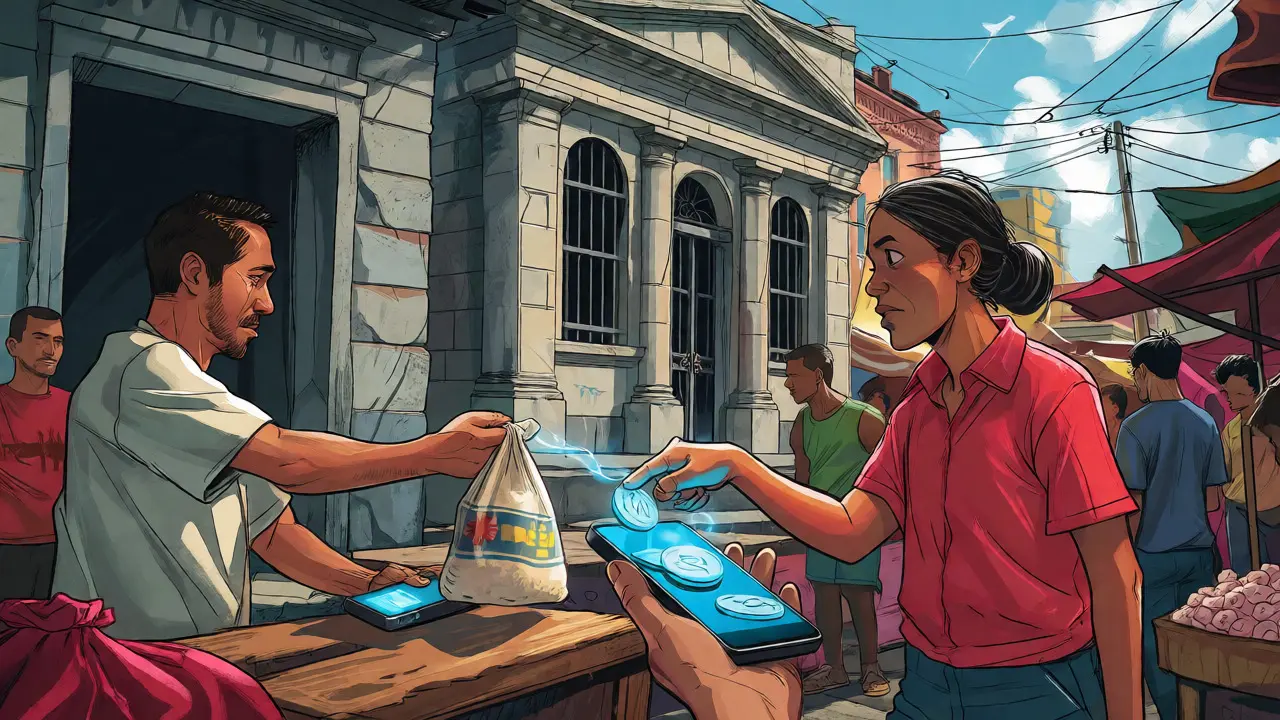
With traditional banks restricted by U.S. sanctions and internal mismanagement, Peer-to-Peer (P2P) platforms like Binance P2P have become de facto banks. There are no branches, no lines, and no bank tellers judging your credit score. You simply match with another user who wants to sell dollars for bolívars (or vice versa), send the crypto, and release the funds once payment clears.
This infrastructure supports roughly 4.3 million users, about 13% of the population. But it’s not seamless. Internet reliability is a major hurdle. Venezuela ranks 153rd globally for internet speed, averaging just 14.79 Mbps. A slow connection can turn a simple transaction into a stressful ordeal, especially if you’re standing in a store waiting for confirmation. Furthermore, U.S. sanctions restrict services for accounts linked to sanctioned entities, blocking about 18% of attempted transactions. Users must navigate these invisible minefields daily.
Remittances: Lifelines from Abroad
For families separated by migration, crypto has revolutionized remittances. Traditional money transfer operators charge high fees and take days. Crypto cuts through the noise. In 2023, crypto accounted for 9% of the $5.4 billion remittance flow into Venezuela-that’s nearly $461 million sent via blockchain rails.
Consider the story of Victor Sousa, a Caracas resident who told the Financial Times he now accepts USDT for phone accessories. "The plan is to one day have my savings in crypto," he said. His experience mirrors thousands of others. Reddit communities like r/BitcoinVenezuela, with over 42,000 members, are filled with threads about sending money home instantly. One user, 'CryptoSurvivorVE,' noted, "Without USDT, I couldn't feed my family after my bolivar salary became worthless overnight." The emotional weight of these transactions cannot be overstated; they are literal lifelines.
Government Stance: Hypocrisy and Uncertainty
You might expect the Venezuelan government to embrace this innovation, given their own launch of the Petro cryptocurrency in 2018. Reality is messier. The Petro, intended to be backed by oil reserves, largely failed following corruption allegations and collapsed in 2024. Meanwhile, the government shut down SUNACRIP, the main crypto regulator, in 2023, creating a regulatory vacuum.
The Central Bank acknowledges crypto’s role but offers no formal framework. It’s a state of "de facto acceptance." They tolerate it because it relieves pressure on the failing banking system, yet they crack down on exchanges that threaten political control. This inconsistency creates risk. As University of Zulia Professor Carlos Hernández warns, "Crypto adoption in Venezuela is a symptom of economic failure, not a solution." Relying on a tool born from chaos carries inherent dangers, particularly if the government decides to ban specific platforms or impose stricter KYC (Know Your Customer) rules.

Challenges and Risks
While crypto solves immediate liquidity issues, it doesn’t fix the underlying economy. Production shortages, supply chain disruptions, and lack of investment remain. Moreover, relying on centralized issuers like Tether Limited introduces counterparty risk. If Tether faces regulatory trouble or loses its peg, Venezuelans lose their primary savings vehicle.
- Connectivity: Frequent power outages and slow internet disrupt transactions.
- Sanctions: U.S. restrictions limit access to global platforms and banking partners.
- Education Gap: While adoption is high, understanding security best practices lags behind. Phishing scams target new users constantly.
- Volatility Spreads: Converting crypto to goods often incurs a 3.7% spread cost during high-demand periods.
Despite these hurdles, the trend is upward. Business acceptance has jumped from 9% in 2023 to 28% in 2025 among medium-to-large enterprises. Universities like Universidad Central de Venezuela have even launched mandatory crypto courses, signaling that digital literacy is becoming a basic skill, akin to reading or writing.
Looking Ahead: Temporary Fix or Permanent Shift?
Will Venezuelans abandon crypto if the bolívar stabilizes? Some economists argue yes, viewing it as a temporary workaround. Others believe the genie is out of the bottle. Once you’ve experienced instant, borderless payments, returning to slow, corrupt banking feels archaic.
The IMF suggests crypto will remain essential until inflation drops below 50%, a threshold unlikely before 2027. Even then, the infrastructure built-wallets, merchant networks, educational resources-won’t vanish overnight. We may see a hybrid model where crypto serves as a parallel payment system, integrated with any future stabilized national currency. For now, however, the focus remains on survival. Every transaction completed in USDT is a small victory against economic uncertainty.
Why do Venezuelans prefer USDT over Bitcoin?
Venezuelans prefer Tether (USDT) because it is a stablecoin pegged to the U.S. dollar, offering price stability necessary for daily purchases like food and rent. Bitcoin’s volatility makes it less practical for routine commerce, though it is still used for long-term savings and larger transfers.
How do U.S. sanctions affect crypto use in Venezuela?
U.S. sanctions restrict international banking relationships and block certain transactions involving sanctioned Venezuelan entities. Approximately 18% of attempted transactions on platforms like Binance are blocked or restricted, forcing users to rely heavily on peer-to-peer (P2P) trades rather than direct bank integrations.
Is internet access a barrier to crypto adoption in Venezuela?
Yes, significant connectivity challenges exist. Venezuela ranks 153rd globally for internet speed, with average download speeds around 14.79 Mbps. Power outages and slow connections can delay transaction confirmations, causing frustration for merchants and users alike, though mobile data penetration helps mitigate some issues.
What percentage of remittances to Venezuela use crypto?
As of 2023, approximately 9% of the $5.4 billion total remittance flow into Venezuela was conducted via cryptocurrency, totaling around $461 million. This figure highlights crypto's growing role as a fast, low-cost alternative to traditional money transfer services.
Did the Venezuelan government support cryptocurrency?
The government launched its own cryptocurrency, the Petro, in 2018, but it largely failed due to corruption allegations and lack of trust. Currently, the stance is inconsistent: they tolerate private crypto use as a relief valve for the economy but maintain regulatory uncertainty and have cracked down on some exchange regulators like SUNACRIP.
Write a comment