You’ve probably seen a new platform popping up in your feed promising lightning-fast trades and massive returns. That's the case with Coinquista is a digital asset trading platform that claims to provide a seamless gateway for buying and selling cryptocurrencies. But let's be honest: in a world where platforms like Mt. Gox vanished with hundreds of millions of dollars, a "shiny" interface isn't enough to trust a site with your life savings. If you're wondering whether this exchange is a goldmine or a trap, you're in the right place.
The Red Flags and the Silence
When you review a financial platform, the first thing you look for is a digital paper trail. You want to see regulatory filings, a clear history of corporate leadership, and a transparent fee schedule. With Coinquista, there is a disturbing lack of public data. Most reputable exchanges, like Coinbase or Binance, have thousands of verified reviews across Trustpilot and specialized crypto forums. Coinquista, however, operates in a vacuum. When a platform has almost no footprint in the professional auditing community or the broader Blockchain ecosystem, it should trigger an immediate warning.
Why does this matter? Because transparency is the only currency that actually counts in crypto. If a company won't tell you who owns it, where it's registered, or how it handles its reserves, they aren't just "private"-they're hiding something. In the industry, we call this a "black box" operation. You put money in, and you hope it comes out, but you have no idea what's happening inside the machine.
Analyzing the Trading Experience
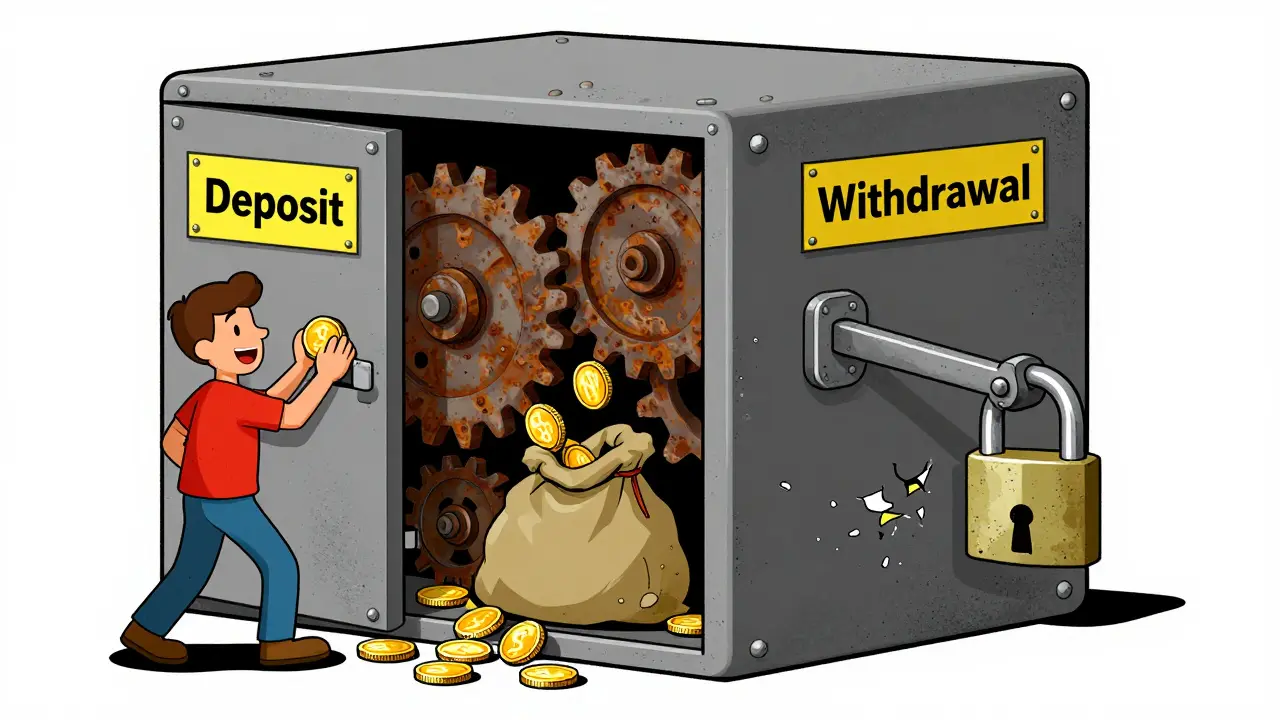
On the surface, Coinquista attempts to mimic the look of a professional trading terminal. It offers a dashboard with real-time price tickers and a user-friendly interface designed to attract beginners. However, a pretty layout is easy to copy. The real test is the Coinquista review of its actual execution. Users who have attempted to move significant funds often report a common pattern: deposits are instant, but withdrawals are suddenly "under review" or require an additional payment to "unlock" the account.
This is a classic hallmark of a fraudulent operation. A legitimate exchange makes money through trading fees-small percentages charged on every transaction. They don't ask you to pay a "tax" or a "verification fee" upfront just to get your own money back. If you encounter a prompt asking for more money to release your funds, stop immediately. You are not paying a fee; you are sending more money to a scammer.
Security Measures: Real or Fake?
Every exchange claims to have "military-grade security." But what does that actually mean? A real security audit involves third-party firms checking for vulnerabilities in the smart contracts and the API. For example, high-tier platforms utilize Two-Factor Authentication (2FA) via apps like Google Authenticator, not just SMS, which is prone to SIM-swapping attacks.
| Feature | Legit Exchanges (e.g., Kraken) | High-Risk / Unverified Sites |
|---|---|---|
| Proof of Reserves | Publicly audited via Merkle Trees | None or "Trust us" promises |
| Withdrawal Process | Standard KYC/AML checks | Requests "activation fees" |
| Regulatory Status | Registered with FinCEN/FCA | Unregistered or fake licenses |
| Customer Support | Ticket system, official email | Telegram/WhatsApp only |
If Coinquista cannot provide a verifiable Proof of Reserves (PoR), they are essentially playing with your money. PoR is a method where an exchange proves they actually hold the assets they claim to have on behalf of their users. Without this, the platform is just a database of numbers that doesn't actually correlate to real coins in a wallet.
Comparing the Costs and Fees
Trading fees are where the business model of an exchange lives. Most platforms use a "maker-taker" model. A Maker is someone who adds liquidity to the order book, while a Taker removes it. Typically, these fees range from 0.01% to 0.5%.
When you look at Coinquista, the fee structure is often vague or shifted. Some users report that they were promised zero fees to lure them in, only to find hidden charges during the withdrawal phase. This "loss leader" strategy is used to get you to deposit a large sum of money. Once the money is in their wallet, the fees become a secondary concern because the platform's goal is no longer to facilitate trading-it's to keep your capital.
The Psychology of the Crypto Trap
Why do people fall for sites like Coinquista? It's usually a mix of FOMO (Fear Of Missing Out) and the desire for a "secret' edge. Scammers often use social engineering, reaching out via Telegram or WhatsApp, pretending to be "account managers" or "investment experts." They show you fake screenshots of massive gains and tell you that Coinquista is the only place where these specific trades are possible.
Remember: no legitimate exchange will ever reach out to you via a direct message on social media to offer a "guaranteed" profit. In the world of Cryptocurrency, any guarantee of profit is a lie. Market volatility is a feature, not a bug. If someone tells you the risk is gone, they are the risk.
Better Alternatives for Your Assets
If you're looking for a place to trade, stick to the giants. Yes, they have their own problems (like high KYC requirements), but they are far better than a ghost platform. If you value privacy, look into Decentralized Exchanges (DEX) like Uniswap. On a DEX, you don't deposit your money into someone else's pocket; you trade directly from your own private wallet. This removes the "custodial risk" entirely.
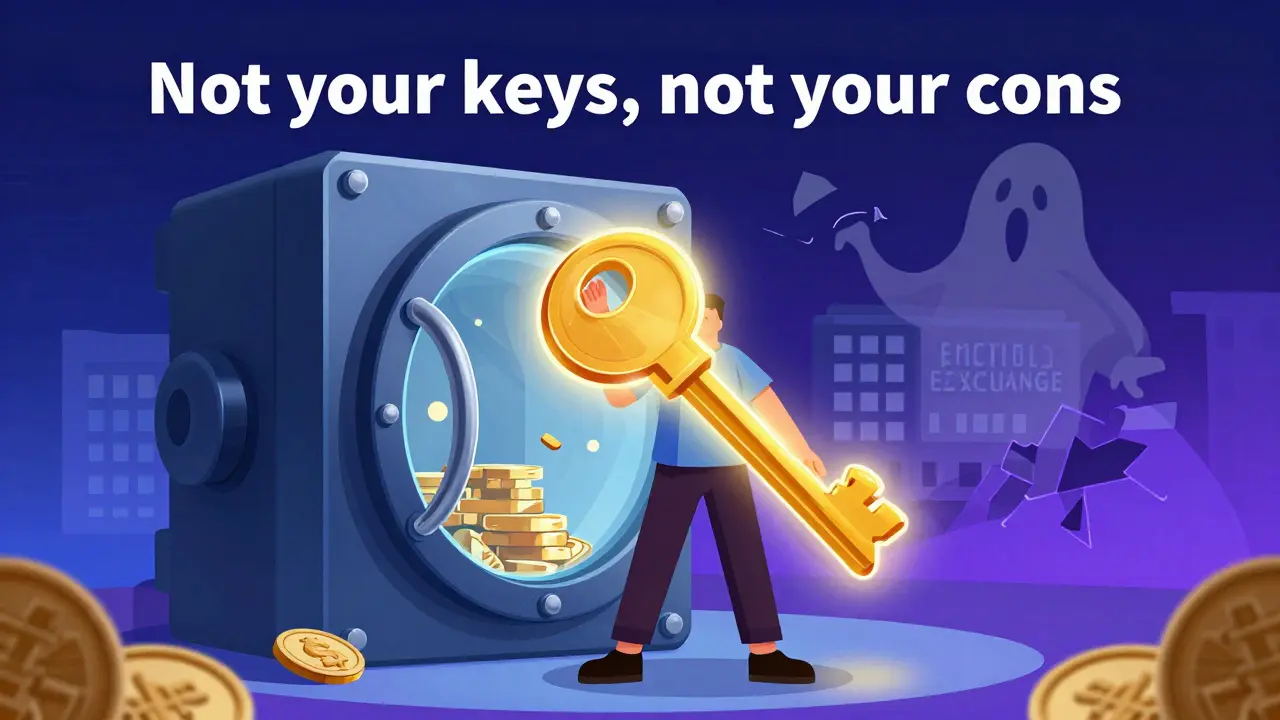
The golden rule of crypto is: Not your keys, not your coins. This means if you don't control the private keys to your wallet, you don't actually own the crypto. Using a centralized exchange is essentially a loan of your assets to a company. Only do this with a company that has a multi-billion dollar valuation and a decade of operational history.
Is Coinquista a legitimate cryptocurrency exchange?
Based on the lack of regulatory transparency, missing proof of reserves, and reports of withdrawal issues, there are significant red flags suggesting Coinquista may not be legitimate. Always exercise extreme caution with platforms that have no verifiable track record.
What should I do if I can't withdraw my funds from Coinquista?
Do not send any more money to "unlock" your account or pay "taxes." This is a common scam tactic. Instead, document all your transactions, take screenshots of your balance and communications, and report the platform to your local financial authorities or cybercrime unit.
How can I tell if a crypto exchange is a scam?
Look for these signs: lack of a physical address, no clear team members, promises of guaranteed returns, requests for money to withdraw funds, and a lack of presence on reputable review sites or regulatory lists (like FinCEN).
Are there safer alternatives to using centralized exchanges?
Yes, Decentralized Exchanges (DEXs) allow you to trade without a middleman, meaning you keep control of your private keys. Additionally, using a hardware wallet (cold storage) is the safest way to store long-term investments.
What is Proof of Reserves (PoR)?
Proof of Reserves is a transparent accounting method where an exchange provides cryptographic evidence that they hold the actual assets they claim to have for their users, preventing them from lending out user funds illegally.
Next Steps for New Traders
If you're just starting out, don't let the fear of scams keep you away from crypto-just change your approach. Start by getting a reputable hardware wallet. Learn how to send a small "test amount" before moving large sums. Most importantly, ignore any "investment gurus" who slide into your DMs. The best way to grow your portfolio is through a combination of research, patience, and using tools that have been vetted by the community for years, not weeks.

Write a comment