By 2025, over 200 million people worldwide call themselves content creators. That’s not a niche group anymore-it’s a global workforce. But here’s the truth: creator economy challenges aren’t getting easier. They’re getting deeper. The dream of quitting your 9-to-5 to post videos, grow an audience, and live off brand deals? It’s still possible. But it’s no longer just about being talented or consistent. It’s about surviving a system rigged against sustainability.
Content Saturation Is Killing Originality
Every minute, 500 hours of video hit YouTube. Over 10 million images go up on Instagram. TikTok pushes out 100 million new posts daily. You’re not competing with five other creators in your niche-you’re competing with 5,000. And most of them are using the same templates, same trends, same hooks. This isn’t just noise. It’s a flood. And when everything looks the same, audiences tune out. The magic word now isn’t “viral”-it’s authentic. But authenticity isn’t just saying “hi” in a casual tone. It’s having a real perspective, a unique voice, a point of view that only you can offer. The problem? Most creators are too busy trying to copy what’s working to figure out what they actually care about. The result? A sea of sameness. And in a sea of sameness, no one stands out.Platform Dependency Is a Time Bomb
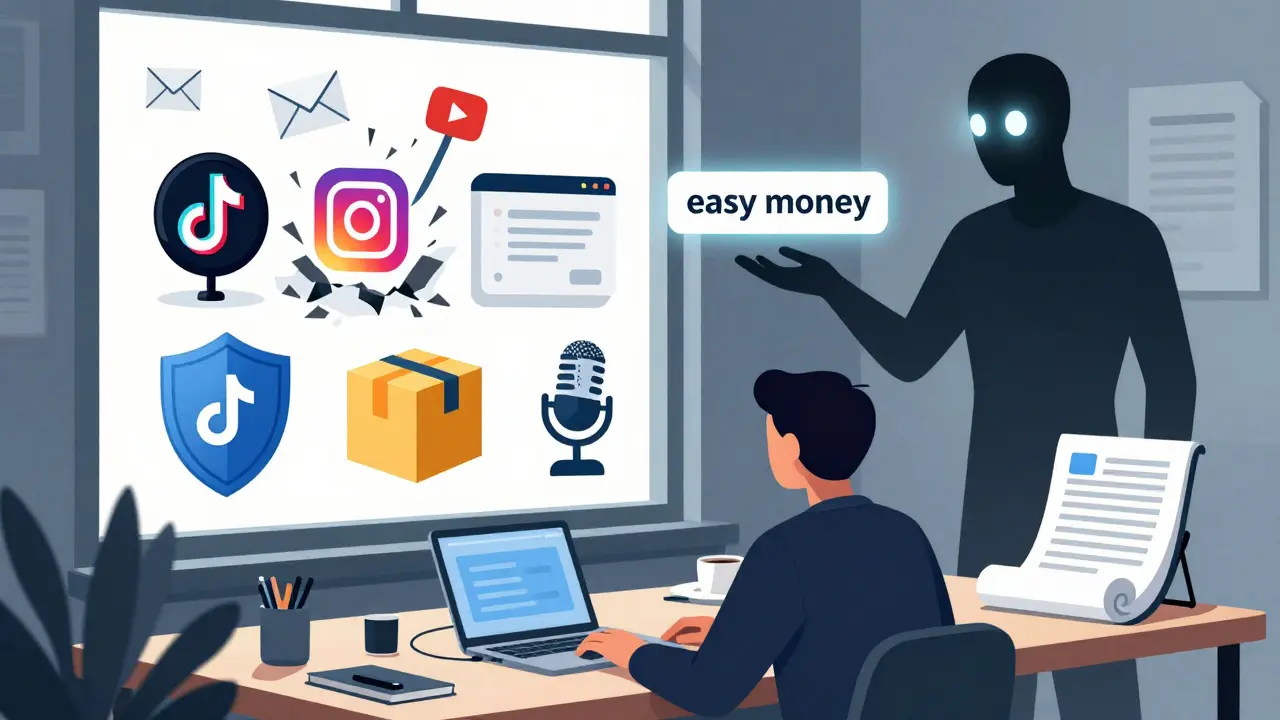
You built your audience on TikTok. You grew on YouTube. You monetized through Instagram. Then, one day, the algorithm changes. Your views drop 70%. Your sponsorships vanish. No warning. No explanation. Just silence. This isn’t a rare event. It’s the norm. Platforms like TikTok, YouTube, and Instagram control your visibility, your reach, and your income. And they don’t owe you anything. They change rules to maximize their own profits-not yours. That’s why the smartest creators in 2025 aren’t just posting on platforms-they’re building their own. Email newsletters on Substack. Paid communities on Discord. Websites with direct subscriptions. One creator in Austin, for example, grew from 12,000 Instagram followers to 8,000 paying subscribers on her own site-no algorithm, no middleman. She owns her audience. That’s the future.Monetization Is Now a Full-Time Job
Forget just ad revenue. That barely covers coffee now. In 2025, successful creators need at least 4 income streams:- Subscription memberships (Patreon, Buy Me a Coffee)
- Direct product sales (digital templates, courses, merch)
- Livestream tipping and paid events
- Brand partnerships with performance-based payouts (not flat fees)
AI Is Making Trust the New Currency
AI-generated influencers are real. They have fake names, fake faces, and fake engagement. Some have 500K followers. Some are paid by brands to promote products they’ve never used. And guess what? People hate it. A 2025 survey found that 72% of consumers can tell when an influencer is AI-generated-and 89% of them say they’ll avoid brands that use them. Duolingo learned this the hard way. They replaced human creators with AI avatars on TikTok. The backlash was instant. They deleted every post. Their engagement tanked. Their brand trust? Gone. The lesson? In 2025, authenticity isn’t a buzzword. It’s your only competitive advantage. If your content feels robotic, your audience will walk away-even if the AI is “better.” People don’t follow algorithms. They follow people.Measurement Is Broken
Brands still measure success by follower count. That’s 2018 thinking. In 2025, a creator with 10K followers who gets 8% engagement and drives 200 sales is worth more than a creator with 500K followers who gets 0.5% engagement and zero conversions. But most companies still use vanity metrics. Why? Because it’s easy. Tracking real sales, repeat customers, or brand lift takes time, tools, and data science. And most brands don’t have it. This disconnect is why 20% of U.S. marketers are avoiding influencer campaigns entirely. They can’t prove ROI. So they stop spending. And creators? They’re left scrambling for deals that don’t pay fairly.Everyone’s a Creator-So Who Gets Chosen?
Thirty percent of people aged 18-24 say they’re creators. Forty percent of those 25-34 do too. That’s not a trend. That’s a cultural shift. The barrier to entry? Almost zero. A phone, an app, and 10 minutes. But the barrier to success? Higher than ever. Brands used to pick influencers based on follower size. Now, they’re hunting for hyper-niche creators: the 12K-follower yoga teacher who sells out every class she promotes. The 8K-follower local baker who gets 150 comments per post. The 20K-follower indie musician whose fans buy every vinyl drop. These creators don’t need millions. They need thousands who care. And brands are starting to notice. The challenge? Finding them. Sorting through millions of profiles to find the ones with real engagement, real loyalty, real trust? That’s a full-time job for marketing teams-and most still don’t have the tools to do it right.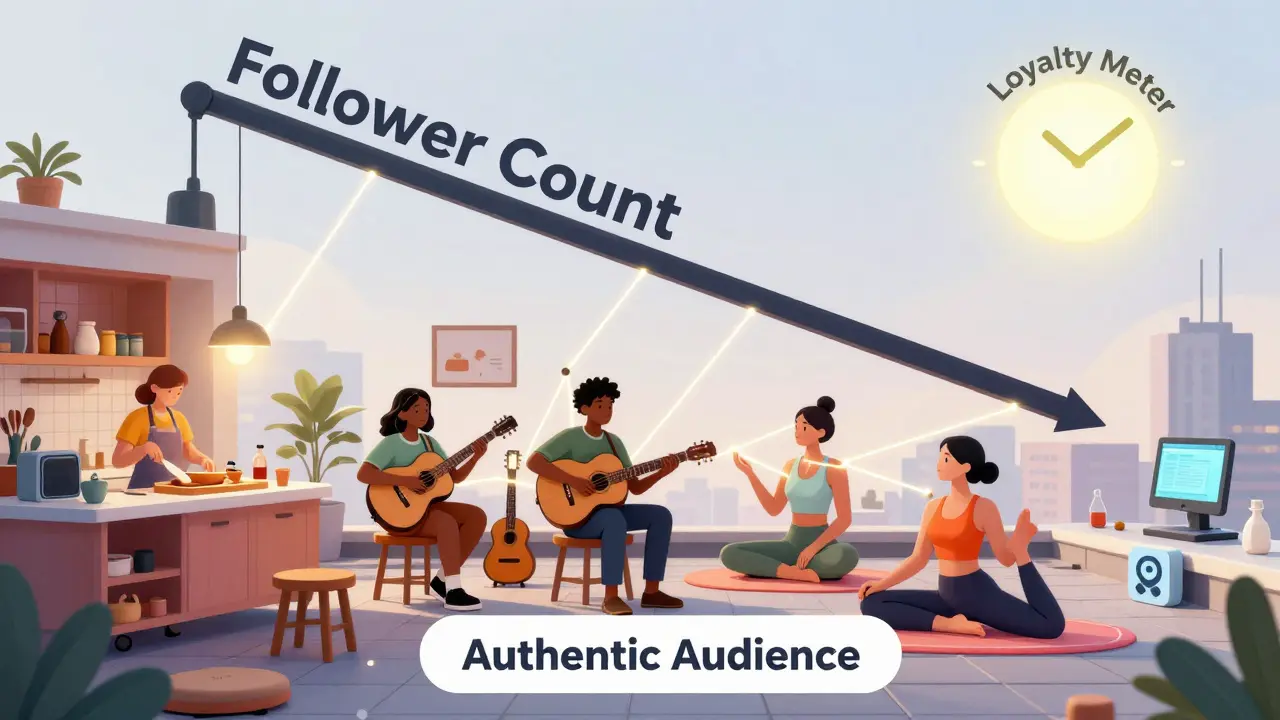
The Relentless Cycle of ‘More’ Is Burning People Out
It’s not enough to post once a day. Now you need to post twice. Then go live. Then do a story. Then reply to every comment. Then analyze your analytics. Then tweak your captions. Then plan next week’s content. This isn’t creativity. It’s a grind. And it’s crushing people. Burnout rates among creators have doubled since 2022. Many quit after 18 months. Why? Because the system demands constant output-and offers no rest. There’s no vacation policy. No sick leave. No HR department. Just you, your phone, and the fear that if you stop, you disappear.The Skills You Need Now (That No One Taught You)
To survive in 2025, you need more than a good camera. You need:- Basic financial literacy (taxes, invoicing, profit margins)
- Data analysis (what posts convert? Which platforms drive sales?)
- Legal awareness (contract clauses, FTC disclosure rules, copyright)
- AI fluency (using tools for editing, ideation, audience research-not replacement)
- Community building (how to turn followers into loyal fans)
What’s Next? Adapt or Fade
The creator economy isn’t dying. It’s evolving. The winners in 2025 won’t be the ones with the most followers. They’ll be the ones who:- Own their audience (email, website, community)
- Focus on depth, not volume
- Use AI as a tool-not a replacement
- Measure what actually matters (sales, loyalty, retention)
- Treat their work like a business-not a hobby
Why are so many creators struggling to make money in 2025?
Most creators still rely on ad revenue and flat-rate sponsorships, which pay pennies today. With over 200 million creators competing for attention, brands are more selective than ever. Successful creators now need multiple income streams-subscriptions, direct sales, live monetization-and the business skills to manage them. Without diversification and financial literacy, even popular creators can’t earn a stable income.
Is AI replacing human creators?
AI is being used to find creators, edit content, and even generate fake influencers-but it’s not replacing the human connection. Audiences can tell when content feels robotic, and 89% say they’ll avoid brands that use AI influencers. The most successful creators use AI for efficiency-like automating editing or analyzing trends-but they keep their voice, personality, and authenticity front and center.
Should I stop posting on TikTok and Instagram?
No-but don’t depend on them. Use TikTok and Instagram to grow visibility, but build your audience on platforms you own: email lists, newsletters, websites, or private communities. That way, if an algorithm changes or your account gets banned, you still have a direct line to your fans. Platforms are free to change rules. Your audience? That’s yours.
How do I know if my content is actually working?
Stop tracking likes and followers. Start tracking what moves the needle: Do people buy your product after seeing your post? Do they join your email list? Do they comment with personal stories? Use UTM links, promo codes, or direct surveys to measure real impact. One creator found that her 5K-follower niche audience drove 300 sales in a month-while her 200K-follower post only brought 12. Quality beats quantity every time.
What’s the biggest mistake new creators make?
Trying to be everything to everyone. Instead of doubling down on a niche they’re passionate about, they chase trends, copy others, and spread themselves too thin. The best creators in 2025 aren’t the loudest-they’re the most focused. They serve a small group deeply, and that loyalty turns into sustainable income.
Scott McCrossan
This whole post is just a LinkedIn article dressed up as a manifesto. 200 million creators? So what? The market doesn't care about your numbers. It cares about who's willing to outwork everyone else. You think authenticity is the answer? Try showing up for 1000 days straight with zero growth. Then come back and tell me how 'being yourself' saved you. It didn't. Discipline did.
Beth Erickson
AI influencers are fake but human creators are just lazy. If you cant make content that stands out then maybe you should go back to your 9-5. Stop blaming algorithms and start improving. I saw a guy post the same 3 second clip 20 times in a week and he got 2M views. You dont need originality you need repetition.
Ruby Ababio-Fernandez
Own your audience? Cool. Good luck building an email list when your followers are 16 and on TikTok.
Jeremy Fisher
You know what's interesting about this whole creator economy thing? It mirrors exactly how capitalism works in every other industry. The people at the top get richer. The people in the middle burn out. The people at the bottom get exploited. We're not talking about content creation here. We're talking about labor exploitation with better lighting. And the worst part? Everyone thinks they're the exception. They're not. You're not. I'm not. We're all just cogs in a machine that was designed to extract attention and monetize it before it fades. The system doesn't need you to be great. It needs you to be available. And that's why so many of us are exhausted.
andy donnachie
I've been a creator for 8 years now. Started with YouTube, moved to Substack, now I run a paid Discord. The shift from chasing views to building trust was brutal. But once I stopped trying to go viral and started showing up for the same 500 people every week? That's when things changed. It's not about scale. It's about consistency. And yeah, you need to treat it like a business. No one handed me a handbook. I learned by failing. Hard.
Lauren Brookes
There's a quiet truth here that no one wants to admit: we don't want creators to succeed. We want to consume them. We want the story of the person who quit their job to live off content, but we don't want to pay for it. We want free clips, free stories, free wisdom. And when the creator tries to charge? We call them greedy. We call them 'selling out'. But if you work 80 hours a week and make $800? That's not selling out. That's surviving. And maybe the real problem isn't the algorithm. It's us. The audience. We're the ones who turned passion into performance.
James Breithaupt
The metrics discussion is spot on. Vanity metrics are the opiate of the masses. Engagement rate? CTR? LTV? These aren't buzzwords-they're survival metrics. If you're not tracking conversion funnels from your content to your product, you're not a creator-you're a content volunteer. I've seen creators with 50K followers make $20K/month because they had a $7 digital template that converted at 12%. Meanwhile, someone with 2M followers is broke because they're still waiting for a brand deal. The difference? One understood unit economics. The other didn't.
Alex Williams
I help creators build sustainable businesses. The biggest blind spot? They think monetization is about adding more streams. It's not. It's about deepening one. Pick one product. One audience. One platform to own. Then optimize it until it's a well-oiled machine. Most creators try to do 5 things at once and fail at all of them. The ones who win? They do one thing better than anyone else. And they charge for it. No fluff. No gimmicks. Just value. And if you're not selling something tangible? You're not a business. You're a hobbyist with a camera.
Sarah Shergold
AI influencers are just the next step in the commodification of human emotion. We're not even surprised anymore. We just scroll. Pathetic. Also, 'authenticity' is just a marketing term now. Like 'wellness'. Like 'synergy'. We're all just performing vulnerability for clout.
Andrew Edmark
I just want to say thank you to whoever wrote this. I'm 23 and I've been trying to build something for 2 years. I thought I was failing. Turns out the system is just rigged. But reading this made me feel less alone. I started an email list last week. Sent my first newsletter. Got 3 replies. One of them was from someone who said 'this made my week'. That's enough for me now. Not likes. Not followers. Just one real human saying that. That's the currency.
Dominica Anderson
The real problem? Americans think they're special. Every culture has creators. But only here do people believe they deserve to get paid for posting. Go to Japan. Go to Nigeria. Go to Brazil. People create. They don't expect a paycheck. We turned art into a gig economy and then got mad when it didn't pay. Classic.
sruthi magesh
You think this is about algorithms? Nah. It's about the deep state. The same people who control the Fed control the algorithms. They want you distracted. They want you scrolling. They want you believing you're building something when you're just feeding data to Meta and Google. AI influencers? They're not replacing humans. They're replacing your ability to trust. And once you stop trusting? You stop spending. And that's the real goal. Economic collapse via emotional disconnection. Welcome to 2025.
Lisa Parker
I just quit. After 3 years. I'm done. I can't do it anymore. I feel so empty. I used to love making videos. Now I just cry before I record. No one gets it.
Ian Plunkett
I'm a 45-year-old teacher who started posting cooking videos during lockdown. Now I have 12K followers. I make $3K/month. Not because I'm viral. But because I show up every Tuesday at 7pm. Same time. Same lighting. Same intro. My audience knows me. And they trust me. That's it. No AI. No trends. Just consistency. And yeah, I track every sale. I invoice. I file taxes. I don't post unless I've slept. It's not glamorous. But it's mine.