Running a cryptocurrency exchange or wallet service in the Philippines without a license is no longer an option. If you are targeting Filipino users, the Securities and Exchange Commission (SEC) has implemented strict rules that require every Crypto Asset Service Provider (CASP) to register locally. The days of international platforms operating freely while ignoring local laws ended with the enforcement of SEC Memorandum Circulars No. 04 and No. 05, Series of 2025. These regulations took effect on July 5, 2025, creating one of the most comprehensive regulatory frameworks in Southeast Asia.
If you are a business owner, legal counsel, or investor looking to understand what it takes to operate legally in this market, this guide breaks down the exact requirements, costs, and penalties involved. We will look at the capital needed, the documentation required, and how the SEC enforces these rules against non-compliant entities.
Who Needs a CASP License?
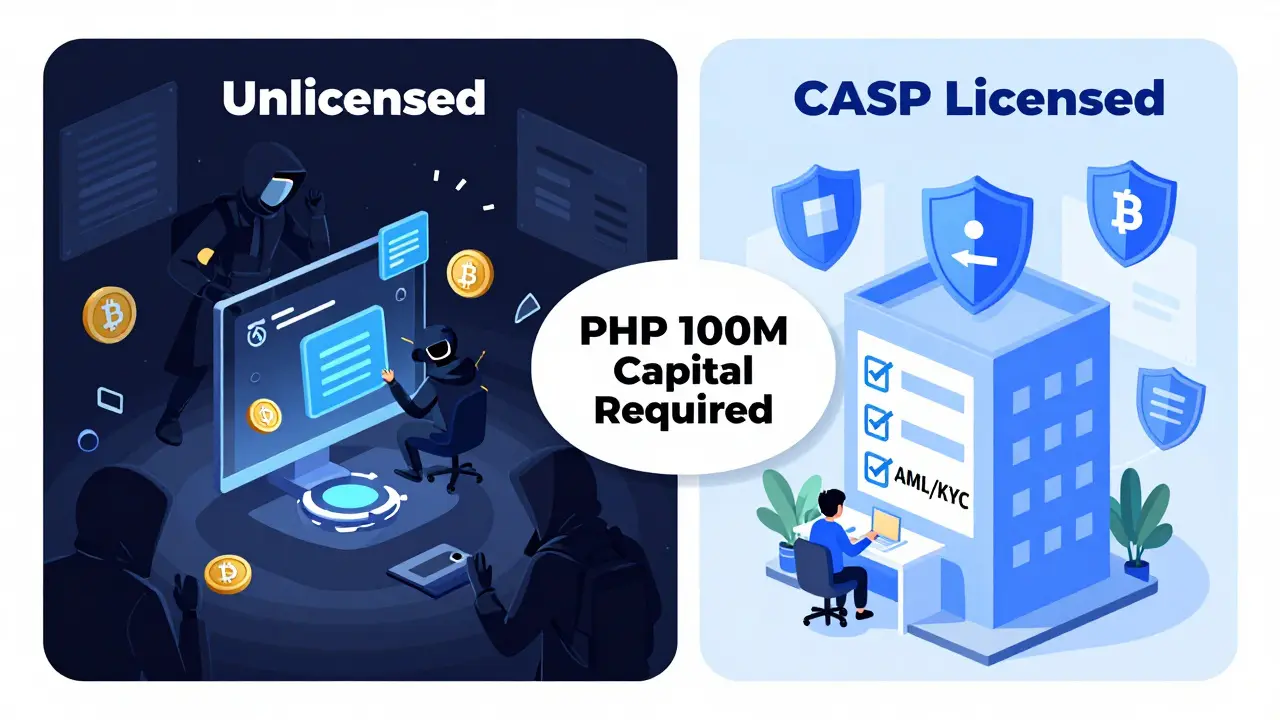
The term Crypto Asset Service Provider (CASP) covers almost any business interacting with digital assets in the Philippines. You need a license if your platform allows users to buy, sell, trade, or hold cryptocurrencies. This includes centralized exchanges, custodial wallets, and brokers.
The rule applies whether your company is based in Manila or London. If your services are accessible to people in the Philippines, you fall under the jurisdiction of the SEC. The regulator made it clear in July 2025 that trading itself is not banned, but the *platform* facilitating that trade must be registered. This distinction is crucial because it means individual investors can still trade, but they must do so on licensed platforms.
- Exchanges: Platforms matching buyers and sellers of crypto-assets.
- Custodians: Services holding private keys on behalf of clients.
- Brokers: Intermediaries executing trades for clients.
- Payment Processors: Companies converting crypto to fiat currency (PHP) or vice versa.
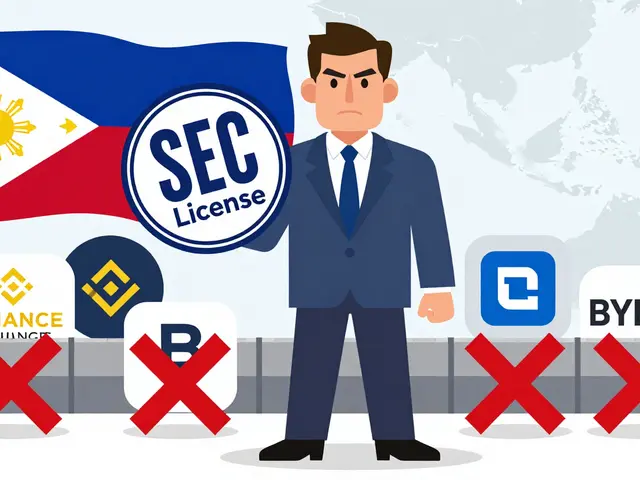
International giants like Binance were blocked in 2024 for failing to comply with earlier directives. In August 2025, the SEC issued public advisories against ten major exchanges, including OKX, Bybit, KuCoin, and Kraken, for continuing to serve Filipino users without proper registration. This shows the SEC is actively monitoring traffic and enforcing bans.
Core Licensing Requirements
To get approved, your business must meet several structural and financial hurdles. The SEC wants to ensure that only serious, solvent companies operate in the space. Here is what you need to prepare:
1. Corporate Structure
You cannot operate as a foreign entity alone. You must register as a domestic corporation with the SEC. This means incorporating a local company in the Philippines. This local entity will be the legal holder of the CASP license. It ensures that the SEC has direct legal recourse against the company if things go wrong.
2. Minimum Capital Requirement
This is often the biggest barrier to entry. The rules mandate a minimum paid-up capital of PHP 100 million (approximately $1.8 million USD). Importantly, this capital must be in cash or traditional assets. You cannot use cryptocurrency holdings to satisfy this requirement. This ensures the company has liquid funds to cover operational risks and potential customer losses.
3. Physical Presence
Digital-only operations are not enough. You must maintain a physical office in the Philippines. This office serves as the headquarters for your local operations and is where regulators can conduct inspections. It also demonstrates a long-term commitment to the Philippine market rather than a fly-by-night scheme.
4. Submission Timeline
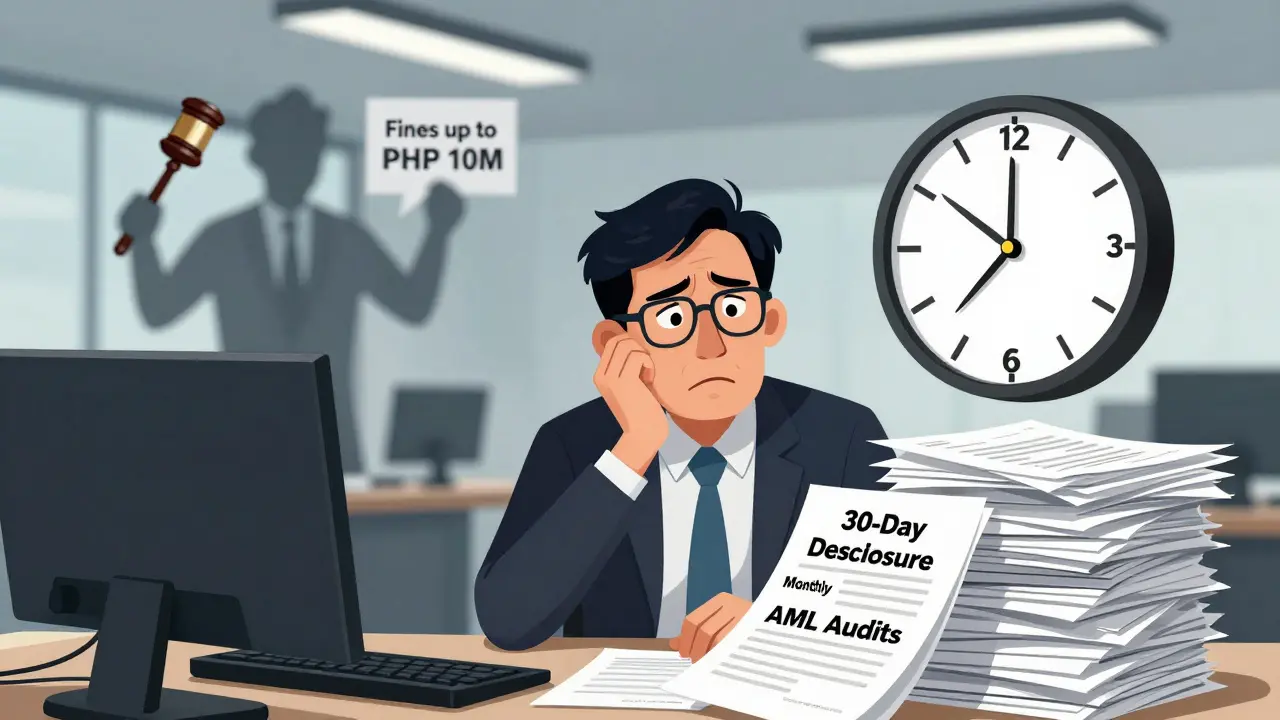
You cannot launch tomorrow. Applications must be submitted to the SEC's PhiliFintech Innovation Office. All disclosure plans and marketing materials must be filed at least 30 days prior to commencing any crypto-related activities. This cooling-off period allows the SEC to review your documents for compliance.
Documentation and Compliance Systems
Beyond money and offices, you need robust systems. The SEC requires extensive documentation proving your platform is secure and transparent. When applying, you must submit:
- Business Rules: Clear terms of service outlining user rights, fee structures, and dispute resolution mechanisms.
- AML/KYC Systems: Detailed procedures for Anti-Money Laundering and Know Your Customer checks. You must integrate with the Anti-Money Laundering Council (AMLC) reporting systems.
- Risk Control Mechanisms: Technical safeguards to prevent hacking, fraud, and system failures. This includes cybersecurity audits and insurance details.
- Segregation of Funds: Proof that customer funds are kept separate from company operational accounts. This prevents the company from using client money for its own expenses, a common cause of exchange collapses elsewhere.
The AMLC integration is critical. You must report suspicious transactions regularly. Failure to do so can result in immediate revocation of your license. The SEC views financial crime prevention as a top priority, especially given the high volume of remittances flowing through crypto channels in the region.
Marketing and Disclosure Rules
How you talk about your product matters just as much as how you build it. Under MC 4-2025, you cannot simply run ads promising huge returns. The SEC has strict rules on marketing crypto-assets.
You must produce disclosure documents that are filed with the SEC and published on your website, social media, and other channels at least 30 days before any offering begins. These documents must explain the risks clearly. You are prohibited from making assertions about future values of crypto-assets, except for specific statements allowed under Section 5.3 of the regulations. This means no "guaranteed profits" or speculative hype.
This transparency requirement protects retail investors who may not understand the volatility of digital assets. It forces companies to educate their users rather than exploit their lack of knowledge. Platforms like Youholder and Cex.io have adapted by focusing on educational content and clear risk warnings, positioning themselves as trusted partners in the regulated ecosystem.
Fees and Ongoing Costs
Getting the license is just the start. Operating legally involves ongoing costs. The SEC calculates registration and supervision fees based on your gross revenue. This means as your business grows, your regulatory fees increase proportionally.
In addition to fees, you face significant administrative overhead. You must submit detailed monthly financial reports to the SEC. These reports provide real-time visibility into your financial health, allowing regulators to spot trouble early. Regular AML audits are also mandatory, adding to the operational budget.
| Requirement | Detail / Cost | Frequency |
|---|---|---|
| Minimum Paid-Up Capital | PHP 100 Million (~$1.8M USD) | One-time (Initial) |
| Registration Fee | Based on Gross Revenue | Annual |
| Supervision Fee | Based on Gross Revenue | Annual |
| Financial Reporting | Detailed Monthly Statements | Monthly |
| AML Audits | Third-party compliance checks | Regular / As Directed |
These costs create a barrier for smaller startups but favor established players who can absorb the expense. For many international exchanges, the cost of setting up a local entity and raising PHP 100 million outweighs the profit from the Philippine market, leading them to exit voluntarily or face blocking.
Penalties for Non-Compliance
The consequences of ignoring these rules are severe. The SEC has shown it is willing to take aggressive action. Violations of the CASP framework result in fines ranging from PHP 50,000 to PHP 10 million per violation. If the violation continues, an additional daily penalty of PHP 10,000 is applied until compliance is achieved.
But fines are not the only risk. The primary enforcement tool is website blocking. Internet Service Providers (ISPs) in the Philippines can be ordered to block access to non-compliant platforms. This effectively cuts off your entire user base in the country. The blocking of Binance in 2024 serves as a stark warning. Users were given 90 days to withdraw their funds before access was completely severed.
Furthermore, executives of non-compliant companies can face legal liability. The SEC has the power to pursue criminal charges for fraud or money laundering facilitation. This personal risk makes it difficult for founders to argue that they "didn't know" about the regulations.
Market Impact and Future Outlook
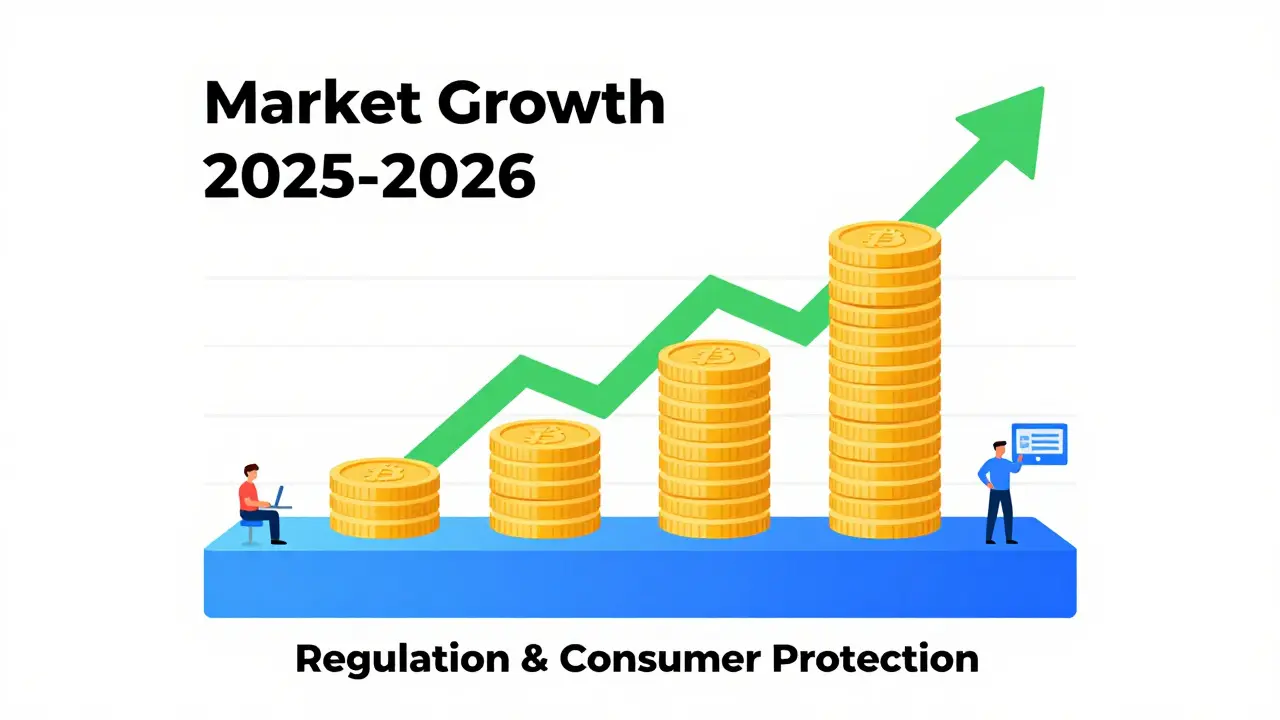
Despite the strict rules, the Philippine crypto market is growing. Adoption is projected to reach 10.49% penetration in 2025, rising to 10.86% by 2026. The number of users is expected to hit 12.79 million, with crypto revenue growing to ₱1.1 billion. The annual growth rate remains steady at 4.59%, suggesting that regulation has not killed demand; it has merely formalized it.
The government’s stance is protective, not prohibitive. The central bank maintains oversight but does not hold crypto reserves, keeping a neutral, regulatory role. The goal is to position the Philippines as a regional hub for fintech innovation by balancing consumer protection with market accessibility.
For compliant operators, this creates a safer environment. Users are more likely to trust platforms that display their SEC license prominently. This trust can lead to higher user retention and larger average account sizes. Companies that invest in compliance now are building a moat against competitors who may try to enter later.
However, challenges remain. The high capital requirement may limit competition, potentially leading to oligopolies where a few large players dominate the market. Smaller, innovative startups might struggle to raise the necessary funds, slowing down product diversity. The SEC may refine these rules in the future based on feedback, but for now, the bar is high.
Next Steps for Businesses
If you plan to operate in the Philippines, start by assessing your capital structure. Can you raise PHP 100 million? If yes, begin the process of incorporating a local entity. Engage with local legal counsel specializing in fintech to navigate the application process. Prepare your AML/KYC systems for audit well in advance. Do not wait until you are ready to launch; the 30-day disclosure window is strict.
If you are already operating without a license, consider the risks. Will you pay the fines? Can you survive being blocked? The trend is clear: the SEC is closing loopholes. Voluntary compliance is always cheaper and less damaging than forced shutdowns.
What is the minimum capital required for a crypto license in the Philippines?
The minimum paid-up capital required is PHP 100 million (approximately $1.8 million USD). This amount must be in cash or traditional assets and cannot include cryptocurrency holdings.
Can I operate a crypto exchange in the Philippines from abroad?
No. You must register as a domestic corporation with the SEC and maintain a physical office presence in the Philippines. Foreign entities cannot operate directly without local incorporation.
What happens if I don't get a CASP license?
You face fines ranging from PHP 50,000 to PHP 10 million per violation, plus daily penalties. More importantly, the SEC can order ISPs to block your website, cutting off all Filipino users, as seen with Binance and others.
When did the new crypto regulations take effect?
The SEC Memorandum Circulars No. 04 and No. 05, Series of 2025, were issued in May 2025 and enforcement began on July 5, 2025.
Do I need to report to the Anti-Money Laundering Council?
Yes. Licensed CASPs must implement strict AML/KYC systems and regularly report suspicious transactions to both the SEC and the Anti-Money Laundering Council (AMLC).
Christina Pearce
I appreciate how detailed this breakdown is, especially regarding the specific capital requirements. It really highlights the gap between casual trading and running a compliant business entity in the Philippines.
Hadleigh Edwards
It is truly fascinating to observe how regulatory frameworks are evolving across Southeast Asia, and while some might view these stringent new rules as burdensome hurdles that stifle innovation, I personally believe they provide a necessary layer of security and legitimacy for the broader market ecosystem which ultimately fosters greater investor confidence and long-term sustainability for all participants involved in this dynamic sector.
mark valmart
man i feel for the smaller startups trying to break in here. raising 100 million pesos just to get your foot in the door seems insane when you consider how volatile crypto can be. it basically guarantees that only the big whales will survive and everyone else gets crushed under the weight of compliance costs.
Crystal Davis
You clearly haven't read the actual Memorandum Circulars if you think this is just about 'startup crushing'. The SEC isn't trying to help your feelings; they are implementing standard financial safeguards that every other major jurisdiction has had for decades. The PHP 100M requirement is a solvency test, not a punishment. If you can't raise basic operating capital, you don't deserve to hold other people's money. This is elementary economics and risk management, not some conspiracy against innovation.
Barclay Chantel
Typical American ignorance on display here. You assume that because you have venture capital backing, the rest of the world should cater to your lack of discipline. The Philippines has been burned by unregulated schemes before. Requiring a physical presence and substantial capital is not elitism; it is basic civic responsibility. Perhaps if we spent less time complaining about 'barriers' and more time understanding why regulations exist, we wouldn't be so surprised when scammers vanish with our funds.
Joshua Alcover
The ontological imperative of sovereign jurisdictional integrity necessitates that any entity engaging in digital asset facilitation within the Philippine archipelago must submit to the hegemonic oversight of the Securities and Exchange Commission. To suggest otherwise is to engage in a epistemological fallacy regarding the nature of state power and financial sovereignty. The blocking of Binance was not merely an administrative action but a profound assertion of national autonomy against transnational capitalist encroachment. One must recognize the dialectical tension between decentralized ideals and centralized regulatory enforcement.
Diana Morris
wake up people stop crying about fees and start building real products that comply with the law its not that hard if you actually want to be taken seriously by institutions
Dianne Wright
i mean honestly who cares about the details just look at how much money these companies are losing on compliance audits it makes me so sad that they cant just operate freely like they used to back in the wild west days everything is so corporate and sterile now where is the fun in all this paperwork
trisya hazriyana
lol yeah sure lets pretend this isnt just another way for governments to tax innovation into extinction but hey at least you get to play nice with the regulators now thats progress right
Debbie Lewis
Its pretty clear that the era of anonymous offshore exchanges serving retail users without oversight is over. While the costs are high, the stability it brings might actually attract more institutional money down the line.
Eric Grosso
does anyone know if the 30 day disclosure window applies to marketing campaigns or just the initial launch? also im wondering if there are any loopholes for non-custodial wallets since they dont technically hold the keys?