If you're trading digital assets in Thailand or running a platform that targets Thai users, the days of "flying under the radar" are officially over. Since the implementation of the Royal Decree on the Digital Asset Businesses (No. 2) B.E. 2568 (2025), the Thai government has shifted from a cautious observer to an aggressive enforcer. We aren't just talking about a few warnings or small fines; we're talking about prison time, unlimited financial liability, and the sudden disappearance of your favorite trading platform from the internet.
The core of the problem is that the SEC Thailand is now working in lockstep with the Ministry of Digital Economy and Society (MDES) and the Bank of Thailand (BOT). This creates a regulatory dragnet that catches not just local businesses, but any foreign entity that offers Thai-language services or processes payments in Thai baht. If you haven't aligned your operations with the 2025 framework, you're essentially playing a high-stakes game of chicken with the Thai government.
The High Cost of Ignoring the Rules
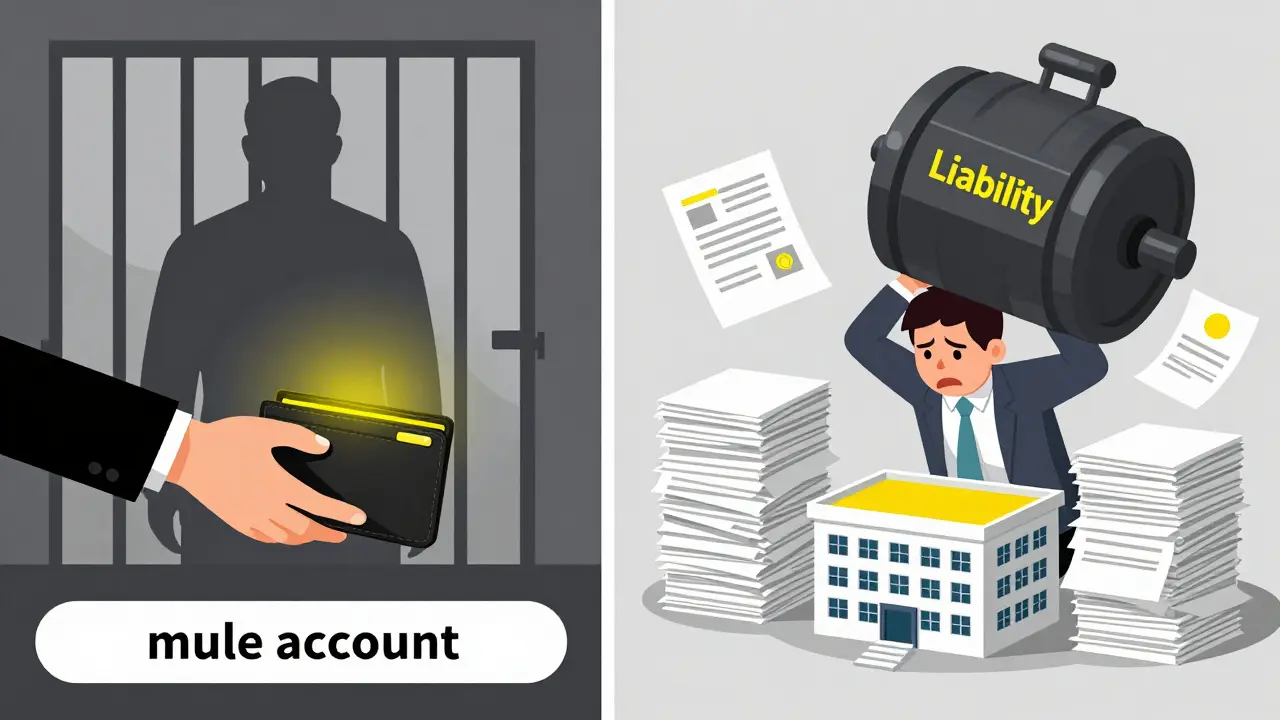
For most people, "non-compliance" sounds like a corporate headache involving paperwork. In Thailand, it can be a criminal offense. One of the most striking parts of the new regime is the crackdown on "mule accounts." If you're caught providing a crypto wallet or financial account to someone else to move funds-especially if those funds are linked to scams-you're looking at up to 3 years in prison and fines reaching THB 300,000 (roughly $8,400 USD). They aren't just going after the masterminds; they're going after the people who provide the infrastructure.
For platform operators, the stakes are even higher. Thailand has introduced a joint liability framework. This means if your platform fails to meet security or compliance obligations and a user is defrauded, the operator could be held liable for the damages. Unlike a fixed fine, this is potentially unlimited financial exposure. It's a massive departure from how things used to work and makes the cost of a single security lapse potentially bankrupting for smaller exchanges.
What Foreign Platforms Must Do to Survive
Think you're safe because your servers are in Singapore or the US? Think again. The SEC has a wide jurisdictional reach. If you use search engine marketing to attract Thai users or offer a localized experience, you're in their crosshairs. To stay legal, foreign platforms have to undergo a process called localization, which is a grueling 6-to-12 month journey.
To be compliant, a platform can't just be a website; it has to be a Thai entity. This involves:
- Establishing a formal legal entity within Thailand.
- Appointing a local Thai director to be the face of the company.
- Opening and maintaining local Thai bank accounts.
- Integrating directly with national Anti-Money Laundering (AML) services and implementing Financial Action Task Force (FATF) algorithms.
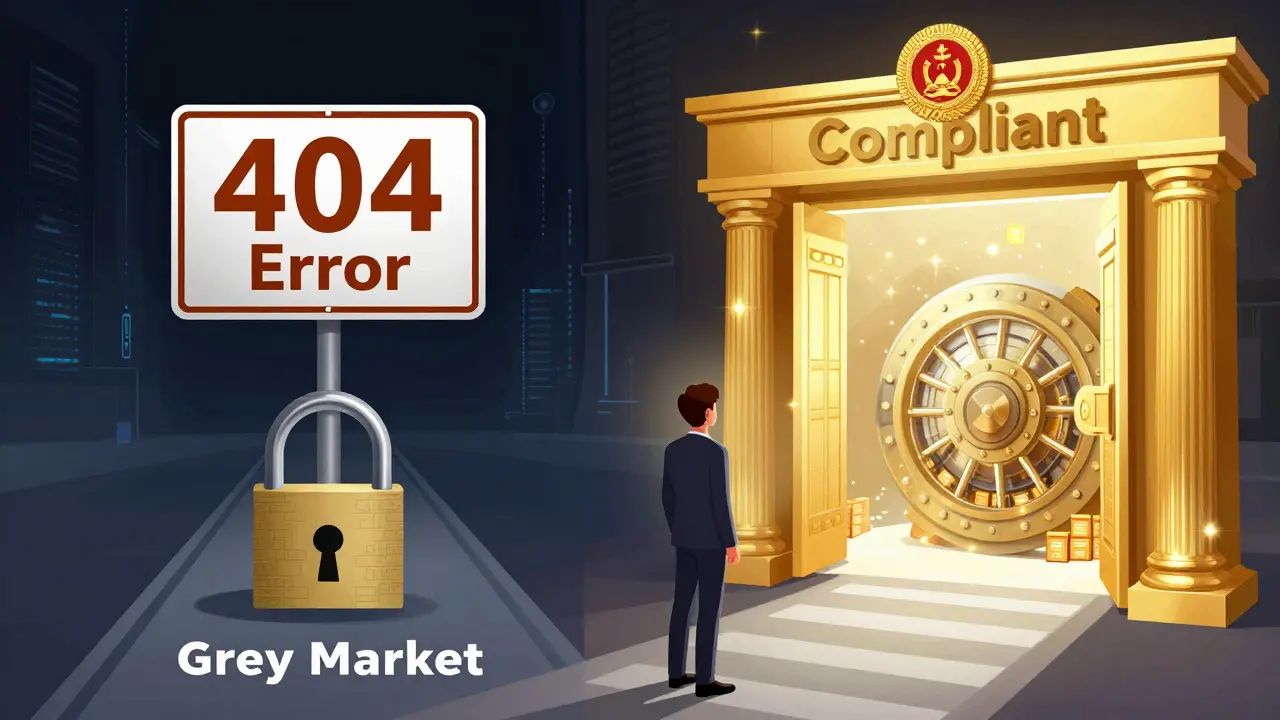
The penalty for skipping these steps is immediate and brutal. The MDES now has the power to block access to unlicensed platforms without needing a court order first. We saw this in action on June 28, 2025, when five unauthorized platforms were wiped from the Thai internet overnight. Users who didn't withdraw their funds in time were left staring at a 404 page, effectively losing access to their assets.
| Feature | Licensed Platforms | Unlicensed/Foreign Platforms |
|---|---|---|
| Legal Status | Fully authorized by SEC | Illegal/Unauthorized |
| User Access | Stable access | Risk of immediate MDES blocking |
| Tax Benefit | 5-year capital gains exemption | No exemptions; high legal risk |
| Liability | Regulated joint liability | Potential criminal prosecution |
| KYC Standards | Strict, SEC-approved | Non-compliant/Incomplete |
The Burden of Being a Licensed Operator
Getting the license is only the first hurdle. Once you're in, the SEC expects you to act as a quasi-law enforcement agency. Licensed platforms are now required to run comprehensive transaction monitoring systems. If a transaction looks suspicious, you don't just flag it-you must suspend the account immediately. You're also expected to maintain a blacklist of wallet addresses linked to criminal activity and block any funds attempting to move through them.
Perhaps the most challenging requirement is the mandate to assist in refunding fraud victims. This means platforms may have to facilitate the return of stolen funds, adding a layer of operational complexity that traditional financial institutions have struggled with for decades. If you fail to implement these KYC (Know Your Customer) and monitoring protocols, the SEC won't just fine you; they can revoke your license entirely and pursue criminal charges against the operators.
The Trade-off: Security vs. Accessibility
From a user's perspective, this aggressive approach is a double-edged sword. On one hand, the market is becoming cleaner. Those using licensed exchanges report better fraud protection and a general sense of security. There's even a carrot: individuals who trade on licensed exchanges are enjoying a five-year exemption on capital gains taxes (from January 1, 2025, to December 31, 2029). It's a clever move by the government to push users away from "grey market" platforms and into the regulated fold.
On the other hand, the user experience is taking a hit. KYC procedures have become incredibly invasive, and transaction delays are more common because of the mandatory monitoring. Furthermore, as the barrier to entry for platforms rises, competition is dropping. Between January and June 2025, the number of licensed platforms fell from 12 to 7. Fewer options usually mean higher trading fees and less innovation, as smaller, more nimble operators simply can't afford the THB 500,000 to 2,000,000 in legal fees required just to get through the licensing process.
Navigating the Grey Areas
There are a few narrow escape hatches. The TouristDigiPay program is a prime example. It allows foreign tourists to use digital wallets and stablecoins for specific use cases without needing full registration. However, don't mistake this for a general pass. If you start offering trading services to tourists, you're back in the territory of full SEC compliance.
The situation with stablecoins is also evolving. In March 2025, the SEC approved certain uses of USDT and USDC. But there's a catch: they are approved for specific transactions, not for general payments. The Bank of Thailand still maintains a hard line against using crypto as a payment method for goods and services, while they simultaneously pilot their own Central Bank Digital Currency (CBDC).
Can I still use foreign crypto exchanges in Thailand?
Technically, some might still be accessible, but it is extremely risky. The MDES actively blocks platforms that target Thai users. If your exchange is blocked, you may lose access to your funds instantly with no legal recourse within Thailand.
What is a "mule account" and why is it dangerous?
A mule account is any bank account or crypto wallet that you allow someone else to use to move money. Even if you aren't the one scamming people, providing the account for unlawful purposes can lead to 3 years in prison and heavy fines.
Do I have to pay tax on my crypto gains in Thailand?
If you use a licensed exchange, you are currently eligible for a capital gains tax exemption that runs until December 31, 2029. This is a major incentive to move your assets to compliant platforms.
How long does it take for a company to get a Thai crypto license?
The process generally takes 6 to 12 months. This includes setting up a local entity, finding a Thai director, and passing the SEC's rigorous AML and KYC audit.
What happens if my licensed platform is hacked?
Under the 2025 rules, licensed platforms face joint liability for damages. This means the platform may be legally required to compensate users for losses resulting from cybercrime if they failed to meet compliance standards.
Veronica Bago
This is wild. I had no idea Thailand was getting this aggressive with the blocks.
Felix Eduardo Velasquez
The movement toward central bank digital currencies often correlates with a crackdown on decentralized alternatives. By tightening the noose on foreign exchanges, the Bank of Thailand effectively creates a captive market for their own CBDC pilot. It is a classic strategy of eliminating competition under the guise of consumer protection and national security. The joint liability framework is particularly interesting as it shifts the systemic risk from the state to the private operators, essentially forcing companies to become unpaid regulatory agents of the government.
Emily A
It is honestly laughable that anyone thought they could operate a financial service in a foreign jurisdiction without a legal entity. Basic regulatory compliance is not "flying under the radar"; it is the bare minimum requirement for any legitimate business venture. Those complaining about the 6-to-12 month localization process simply lack the professional patience required for institutional scaling.
Ryan Nakielny
Oh sure, because nothing says "innovation" like needing a government-approved director and a 2 million baht entry fee. I'm sure the tiny startups are just thrilled about this inclusive new environment.
Alex Mazonowicz
Wow!!! This is such a great way to clean up the market!!! It's awesome to see things getting more secure for everyone!!!!
Arti Jain
India does this better. Thai laws are weak.
Tracy McBurney
The analysis here is surface-level at best. You've completely ignored the liquidity implications of forcing users into seven licensed platforms. When the number of exchanges drops from 12 to 7, you aren't just seeing "compliance," you're seeing a massive spike in slippage and a death knell for competitive pricing. Anyone who thinks this is a win for the user is either delusional or financially illiterate. The capital gains exemption is just a shiny lure to get people to hand over their KYC data to a government that can block their access on a whim.
Gabby Puche
Stay safe everyone! 🛡️ Definitely check where your funds are before the 404 happens! ✨
Lynne Teperman
just a wild ride of a landscape honestly. these rules are a real trip and the vibes are shifting fast
Rachel S
The sheer audacity of the MDES to block platforms without a court order is absolutely breathtaking! 😱 It is a complete nightmare for any legitimate business trying to enter the Southeast Asian market. One simply cannot operate with such volatility hanging over their head! I am genuinely shocked by the scale of these penalties!
Andrew Todd
US platforms are better anyway. This is just a joke.
Sri Astuti
It's just so typical of these regulatory bodies to claim they are protecting the users while actually just creating a bottleneck that benefits the inner circle of licensed elites, and honestly, looking at the way these AML algorithms are implemented, it's clear they are just using outdated legacy code to flag innocent people while the real whales continue to move money through shell companies in the Caribbean 🙄
Elle Kharitou
I often wonder if we are trading our fundamental freedom for a perceived sense of safety, and this situation in Thailand feels like a poignant lesson in that eternal struggle 🌿. While the protection against scams is a beautiful intention, the cost of such a rigid structure is the loss of the very spirit of decentralization that made crypto a revolution in the first place 💫. We must ask ourselves if a tax break is worth the surrender of our financial privacy to a centralized authority. I believe there is a middle path where we can have safety without total surveillance, but it requires a global shift in how we perceive trust in the digital age 🌸.
AP Fisher
I'm not sure I get the mule account part. So just letting a friend use your wallet is a crime now?
Kara Spadone
People really think they can beat the system. Newsflash: the system always wins when you're playing by their rules in their backyard. :)
Wayne Gillis
Who else is still using a VPN for this? 😂 Just keep it on the low and you're golden! 🤫
Jehan ZA
It appears the regulatory environment in Thailand has become exceptionally stringent. One must exercise extreme caution when engaging with digital assets in such a jurisdiction.