When you trade crypto, do you really own your coins-or does the exchange? Most people don’t realize that on platforms like Binance or Coinbase, your Bitcoin isn’t really yours. It’s sitting in a wallet the exchange controls. If they freeze your account, get hacked, or change their rules overnight, you’re stuck. That’s why more traders are turning to DDEX, a decentralized exchange that flips the script: no custody, no middleman, no surprises.
How DDEX Works: No Wallet, No Problem
DDEX doesn’t hold your crypto. Ever. When you trade on DDEX, you sign orders directly from your Ethereum wallet-MetaMask, WalletConnect, or any EIP-1559-compatible wallet. Those orders get broadcast to the network. Only when someone matches your order does the trade settle on-chain. That means your funds never leave your control. No API keys. No withdrawal limits. No “we’ll help you recover your account” because you’re the only one who can access it. This isn’t just a marketing gimmick. It’s the core of decentralized finance. You’re not trusting DDEX. You’re trusting Ethereum’s code. And that’s a big deal when centralized exchanges like Bybit suddenly cut off European users from margin trading in late 2025. DDEX doesn’t care where you live. As long as you have a wallet and some ETH, you can trade.Fees That Actually Make Sense
Most exchanges charge you differently depending on whether you’re a maker (placing a limit order) or a taker (filling someone else’s order). DDEX doesn’t. Every trade costs 0.10%. That’s half the industry average of 0.25%. And here’s where it gets better: if you trade at least $10,000 worth of crypto in 30 days, you get a 0.10% rebate. That means your effective fee drops to zero. For active traders, that’s free trading. And forget about withdrawal fees. Most exchanges charge $5-$20 to pull your coins out. DDEX? Zero. No matter how much you withdraw. That’s rare. Even dYdX and Hyperliquid charge for withdrawals. For someone moving funds between wallets or staking platforms, that adds up fast. There’s also a perk if you hold Hydro Protocol Tokens (HYDRO). If you keep at least 10,000 HYDRO in your wallet, your trading fee drops even further. It’s not a huge discount, but for heavy users, every 0.01% matters.What You Can Trade
DDEX only supports Ethereum-based assets. That means ETH, ERC-20 tokens, and wrapped Bitcoin (WBTC). No Solana. No Dogecoin. No BNB. If you want to trade tokens from other chains, you’ll need to bridge them to Ethereum first. That’s a limitation-but it’s intentional. DDEX focuses on deep liquidity and low slippage within the Ethereum ecosystem. Leverage? Yes. Up to 5x. That’s not as high as some centralized platforms offering 100x, but it’s more than enough for serious traders who want to amplify positions without risking total liquidation. And because trades settle on-chain, you’re not subject to margin calls from a centralized operator. Your liquidation happens automatically if your position drops below the threshold-no human intervention. You can also lend your idle crypto on DDEX and earn interest. It’s built right into the interface. No need to move funds to a separate lending platform. Just click, select your asset, and start earning. Interest accrues in real time and is paid out in the same token you lent.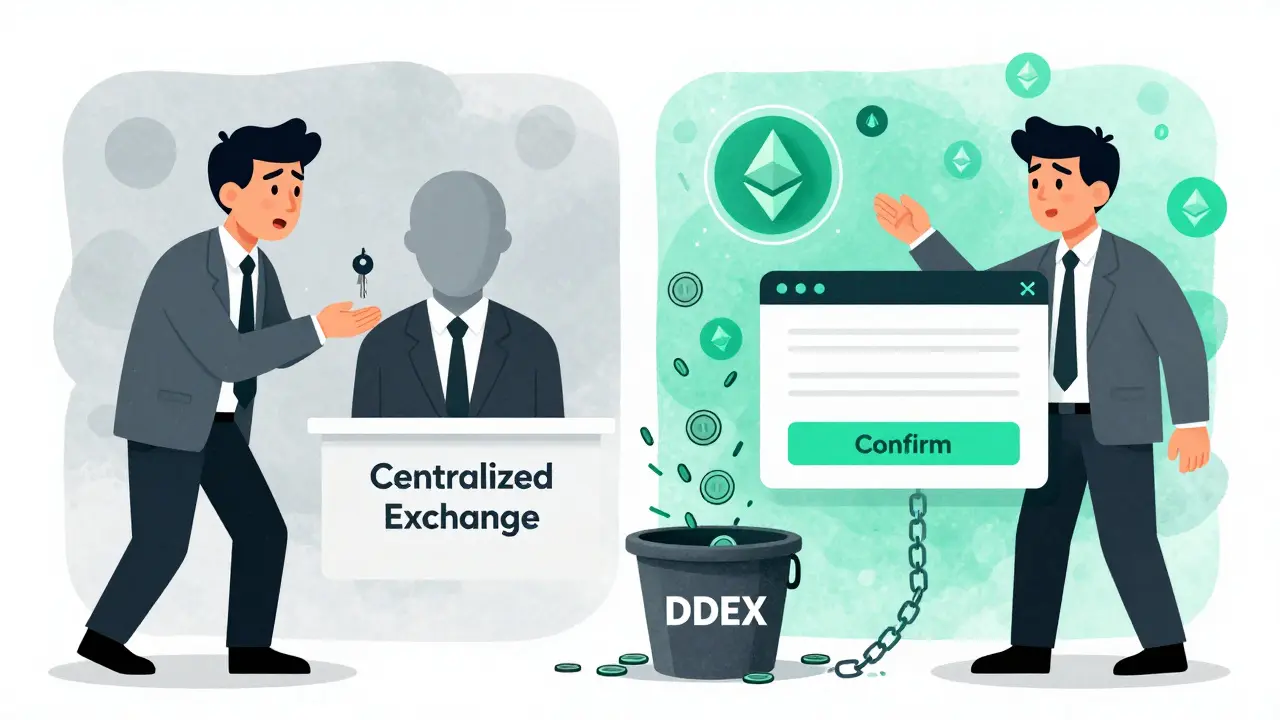
Who Is DDEX For?
DDEX isn’t for beginners. If you don’t know what a private key is, or if you’ve ever clicked “I forgot my password” on a crypto exchange, this isn’t the place for you. There’s no customer support to help you recover your wallet. If you lose your seed phrase, your funds are gone forever. No exceptions. But if you’ve traded before? If you’ve used MetaMask? If you’ve sent ETH to a contract and understood the gas fee? Then DDEX is a game-changer. You get institutional-grade leverage, zero withdrawal fees, and self-custody-all in one clean interface. The design is simple: order book on the left, wallet balance on the right, trade button in the middle. No clutter. No ads. No confusing dropdown menus. Compare that to Uniswap, which is great for swapping tokens but terrible for limit orders. Or dYdX, which has better leverage but charges withdrawal fees and requires more technical setup. DDEX hits a sweet spot: advanced features, but without the friction.The Competition in 2026
The decentralized exchange space has exploded since 2023. Uniswap still leads in total value locked, but it’s mostly for swapping, not trading. dYdX is popular among derivatives traders, but its interface feels clunky for casual users. Hyperliquid is fast and cheap, but it’s built for institutions with deep pockets. DDEX stands out because it’s not trying to be everything. It’s focused: Ethereum-based leverage trading + lending + zero withdrawal fees. It doesn’t need to list 500 coins. It just needs to be reliable, cheap, and private. And privacy? That’s huge. No KYC. No ID uploads. No government tracking. In countries where crypto is restricted or banned, DDEX is one of the few ways to trade without asking permission.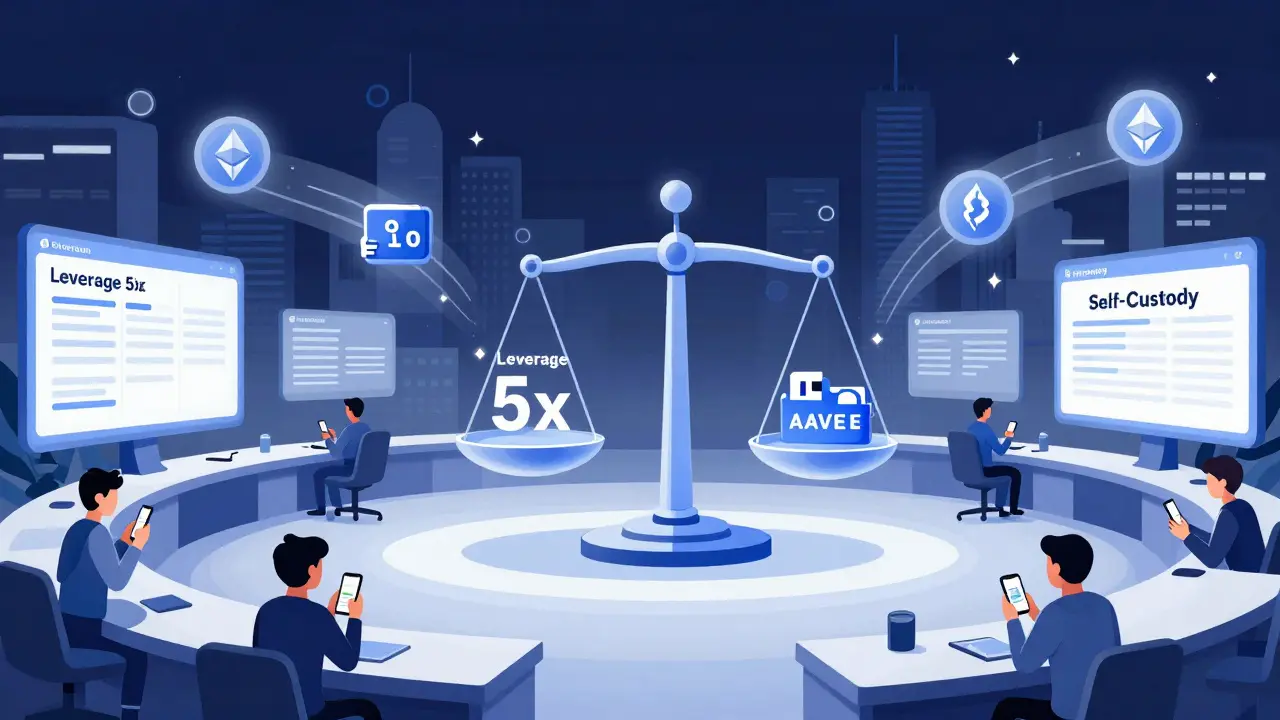
The Catch
There’s no free lunch. DDEX’s biggest downside? Gas fees. Every trade costs ETH to settle on Ethereum. During peak times, that can be $5-$15 per trade. That’s why DDEX works best for traders who make fewer, larger moves-not day traders making 10 trades an hour. Also, liquidity isn’t as deep as on centralized exchanges. If you try to trade a large amount of a low-volume token, you’ll get slippage. Stick to ETH, WBTC, and major ERC-20s like AAVE or MKR. And yes-you still need to understand blockchain basics. If you’re not comfortable with wallet signatures, transaction confirmations, or checking your balance on Etherscan, you’re better off starting with a centralized exchange first.Final Verdict
DDEX isn’t for everyone. But if you’re serious about crypto trading and you want full control over your assets, it’s one of the best options in 2026. The fee structure alone makes it worth trying: 0.10% per trade, no withdrawal fees, and free trading for active users. Add in 5x leverage, built-in lending, and zero KYC-and you’ve got a platform that’s quietly changing how people trade crypto. It’s not flashy. It doesn’t have a mobile app with gamified rewards. But it does one thing better than most: keeps your money safe while letting you trade like a pro.Is DDEX a centralized or decentralized exchange?
DDEX is a fully decentralized exchange (DEX). It doesn’t hold your funds at any time. Trades are settled directly on the Ethereum blockchain using cryptographic signatures from your personal wallet. Unlike centralized exchanges like Binance or Coinbase, DDEX has no access to your private keys or wallet passwords.
Do I need KYC to use DDEX?
No, DDEX requires no identity verification. You can trade anonymously using any Ethereum-compatible wallet. This makes it ideal for users in regions with strict crypto regulations or those who prioritize privacy. There are no ID uploads, no address checks, and no account freezes based on location.
Can I deposit fiat currency on DDEX?
No, DDEX does not accept fiat deposits like USD, EUR, or GBP. You must already own cryptocurrency-such as ETH, WBTC, or ERC-20 tokens-to trade on the platform. New users should first buy crypto on a centralized exchange that supports fiat, then transfer it to their wallet before connecting to DDEX.
What are the trading fees on DDEX?
DDEX charges a flat 0.10% fee on every executed trade, regardless of whether you’re a maker or taker. Users who trade $10,000 or more in a 30-day period receive a 0.10% rebate, effectively reducing their fee to 0%. Additionally, holding 10,000 Hydro Protocol Tokens (HYDRO) grants further fee reductions. Withdrawals are always free.
Can I use DDEX on my phone?
DDEX has no official mobile app, but it works perfectly through mobile browsers using wallet apps like MetaMask or WalletConnect. Simply open the DDEX website in your phone’s browser, connect your wallet, and trade as you would on desktop. The interface is responsive and optimized for touch controls.
Is DDEX safe from hacks?
Since DDEX doesn’t hold user funds, there’s no central wallet for hackers to target. The biggest risk comes from your own wallet security. If you lose your private key or fall for a phishing scam, your funds are gone. Always use a hardware wallet like Ledger or Trezor for large amounts, and never share your seed phrase. DDEX itself has never been hacked.
What cryptocurrencies can I trade on DDEX?
DDEX supports Ethereum (ETH), wrapped Bitcoin (WBTC), and all ERC-20 tokens. This includes major DeFi tokens like AAVE, MKR, UNI, and LINK. It does not support tokens from other blockchains like Solana (SOL), BNB Chain (BNB), or Polygon (MATIC) unless they are bridged to Ethereum as ERC-20 tokens.
How does leverage trading work on DDEX?
DDEX allows up to 5x leverage on ETH and WBTC pairs. When you open a leveraged position, your collateral is locked in a smart contract. If the market moves against you, your position is automatically liquidated to prevent negative balances. There are no margin calls from human operators-everything is handled by code. This reduces counterparty risk but requires careful risk management.
Can I earn interest on my crypto with DDEX?
Yes. DDEX includes a built-in lending feature. You can lend ETH, WBTC, or other supported tokens directly from your wallet and earn interest in real time. Interest is paid in the same asset you lent, and you can withdraw your funds at any time. Rates vary based on demand and are updated every hour.
Why should I choose DDEX over Uniswap?
Uniswap is great for simple token swaps, but it doesn’t support limit orders, leverage, or lending. DDEX offers all of those features in one place. If you want to place a buy order at $3,200 for ETH, open a 3x leveraged position, and earn interest on your idle ETH-all without leaving the platform-DDEX is the better choice. Uniswap is a swap tool. DDEX is a full trading platform.
Next steps? If you’re ready to try DDEX, start by setting up a wallet like MetaMask, funding it with some ETH, and visiting the official DDEX website. Test it with a small trade first. Watch how the transaction settles on Etherscan. Once you see your order execute and your balance update in real time, you’ll understand why decentralized trading isn’t just the future-it’s already here.

Ann Liu
DDEX is one of the few platforms that actually delivers on decentralization. No custody means no counterparty risk - period. Most users still don’t get this, but if you’ve ever had an account frozen on Binance or lost funds because of a withdrawal delay, this isn’t theoretical. It’s survival. The 0.10% fee structure is transparent, and the rebate for $10k/month? That’s not a gimmick - it’s a loyalty program designed for serious traders. Withdrawal fees are the real scam in this industry, and DDEX nukes them. Simple. Clean. No fluff.
Ross McLeod
Look, I’ll admit I was skeptical. I thought ‘no custody’ was just marketing until I actually used it. But here’s the thing - most people who rave about DDEX are either crypto degens who already know how to use MetaMask or they’re ex-centralized exchange users who got burned. The real issue isn’t the platform. It’s the user. If you don’t understand that your private key = your life savings, you shouldn’t be anywhere near a DEX. And yes, gas fees during peak Ethereum congestion are brutal. If you’re trading $500 at a time, you’re losing money on fees alone. This isn’t for weekend traders. It’s for people who treat crypto like a business. If you’re not keeping spreadsheets of your gas costs, you’re already behind.
rajan gupta
broooooo 🤯 DDEX is like the crypto version of a monk who lives in a cave and only trades with the wind 🌬️💸 No KYC? No fees? No middlemen? It’s not a platform - it’s a revolution. I cried when my first trade settled on-chain. I felt the blockchain in my soul. 🙏✨ I’m not just trading ETH - I’m transcending the fiat matrix. 🕊️ The gas fees? Just the price of freedom. And if you’re scared of losing your seed phrase? Then you were never meant to be free. 🌌💎 #DeFiOrBust #NoCustodyNoProblem
Billy Karna
People keep saying DDEX is ‘for advanced users,’ but that’s not entirely true. It’s for users who care about sovereignty. The interface is clean because they removed everything unnecessary - not because they’re dumbing it down. The real advantage isn’t the 0.10% fee or the leverage - it’s the integration of lending. Being able to earn interest on idle ETH without moving funds off-platform is huge. Most platforms force you to jump between 3 different apps. DDEX does it in one tab. And yes, gas is a problem, but that’s Ethereum’s problem, not DDEX’s. The platform works exactly as designed. If you’re complaining about gas, you’re blaming the tool for the ecosystem’s limitations. That’s like blaming a hammer because nails are hard to drive in concrete.
Cheri Farnsworth
I have been using DDEX for over six months now and I must say the experience has been nothing short of transformative. The absence of KYC is not merely a feature - it is a fundamental reassertion of personal liberty. The interface, though minimalist, is intuitively designed for precision. I have never once felt the need to consult documentation. My trades settle with the quiet dignity of a well-timed breath. Withdrawal fees? Nonexistent. This is not merely a platform. It is a statement.
Gene Inoue
Everyone’s acting like DDEX is some revolutionary breakthrough. Newsflash - it’s just Uniswap with leverage and a better UI. And let’s be real - 5x leverage on Ethereum? That’s barely even trading. You think you’re a pro? Try 50x on Bybit. And don’t even get me started on liquidity. Try to sell 100k of a mid-cap ERC-20 and watch your slippage hit 15%. This isn’t DeFi - it’s DeFi cosplay. Real traders use centralized exchanges because they’re faster, deeper, and don’t require you to be a blockchain engineer just to buy a damn token.
Ricky Fairlamb
Let’s not pretend this is about freedom. DDEX is a honeypot. The ‘no KYC’? That’s not privacy - it’s a magnet for sanctions evaders, ransomware operators, and state-sponsored actors. The ‘no withdrawal fees’? That’s because they’re not holding your funds - they’re not liable. The real risk isn’t gas - it’s that one day, Ethereum gets regulated out of existence and your entire portfolio becomes a digital ghost. This isn’t innovation. It’s a legal time bomb wrapped in a sleek interface. The people who love this? They’re not traders. They’re anarchists with a MetaMask.
Tony Weaver
Let’s be honest - DDEX is the only DEX that actually understands what traders want. No one cares about listing 500 coins. We care about execution, liquidity, and control. The fact that they don’t charge withdrawal fees alone puts them ahead of dYdX and Hyperliquid. And yes, gas is a pain - but that’s why you trade in batches. One $50k trade instead of ten $5k trades saves you $50 in fees. It’s not rocket science. The real issue? Most people still think crypto is about getting rich quick. DDEX is for people who want to build something lasting. And if you can’t handle a little gas? Then maybe crypto isn’t for you. Period.
Henrique Lyma
It’s funny how people treat DDEX like it’s the future. It’s not. It’s just another Ethereum-based platform with a decent UI. The 0.10% fee? That’s standard now. The rebate? So what. Every DEX has a token incentive. The ‘no withdrawal fees’? Yeah, because they don’t touch your money. But that’s also why they can’t offer customer support. If you mess up, you’re dead. And the 5x leverage? That’s barely above spot trading. I’ve seen better on centralized platforms with 100x and lower fees. This isn’t groundbreaking - it’s incremental. And honestly? It’s not even that well marketed. You’d think a platform this good would have a viral Twitter thread. Instead, it’s buried under Uniswap’s hype. That tells you everything.
Steph Andrews
I just started using DDEX last week and honestly it felt like coming home
Zachary N
For anyone thinking about trying DDEX - start small. Fund your wallet with 0.1 ETH. Make one trade. Watch it settle on Etherscan. Feel how clean it is. No waiting. No ‘your withdrawal is being reviewed.’ No ‘contact support.’ Just you, your keys, and the blockchain. That’s the magic. You don’t need to be an expert. You just need to be careful. And if you’re not ready for that? That’s okay. But don’t dismiss it because it doesn’t have a mobile app or a meme coin listing. This isn’t a casino. It’s a tool. And tools don’t need to be flashy to be powerful. If you’re serious about owning your assets - this is the quiet revolution you’ve been waiting for.