Imagine you’re trying to keep a massive, shared ledger accurate without a central boss. You have two main ways to do it: make people burn energy to prove they did the work (mining), or make them lock up their own money as collateral (staking). Both methods secure blockchains, but they feel completely different in practice. One is loud, hot, and expensive; the other is quiet, simple, and accessible. If you’re deciding which side of the blockchain fence to stand on-or just trying to understand why Ethereum switched gears-this breakdown clears up the noise.
The Core Difference: Work vs. Stake
Mining is a process where participants use computational power to solve complex mathematical puzzles to validate transactions on Proof-of-Work networks like Bitcoin. It’s an arms race. The first miner to solve the puzzle gets the reward, and everyone else burns electricity for nothing. This requires specialized hardware like ASICs or GPUs. On the other hand, Staking is a method used in Proof-of-Stake networks where validators lock up cryptocurrency as collateral to verify blocks and earn rewards. Here, the algorithm picks validators based on how much they’ve locked up, not how fast their computer runs. You don’t need a warehouse full of noisy machines; you just need a standard computer and some coins in your wallet.
Energy Consumption and Environmental Impact
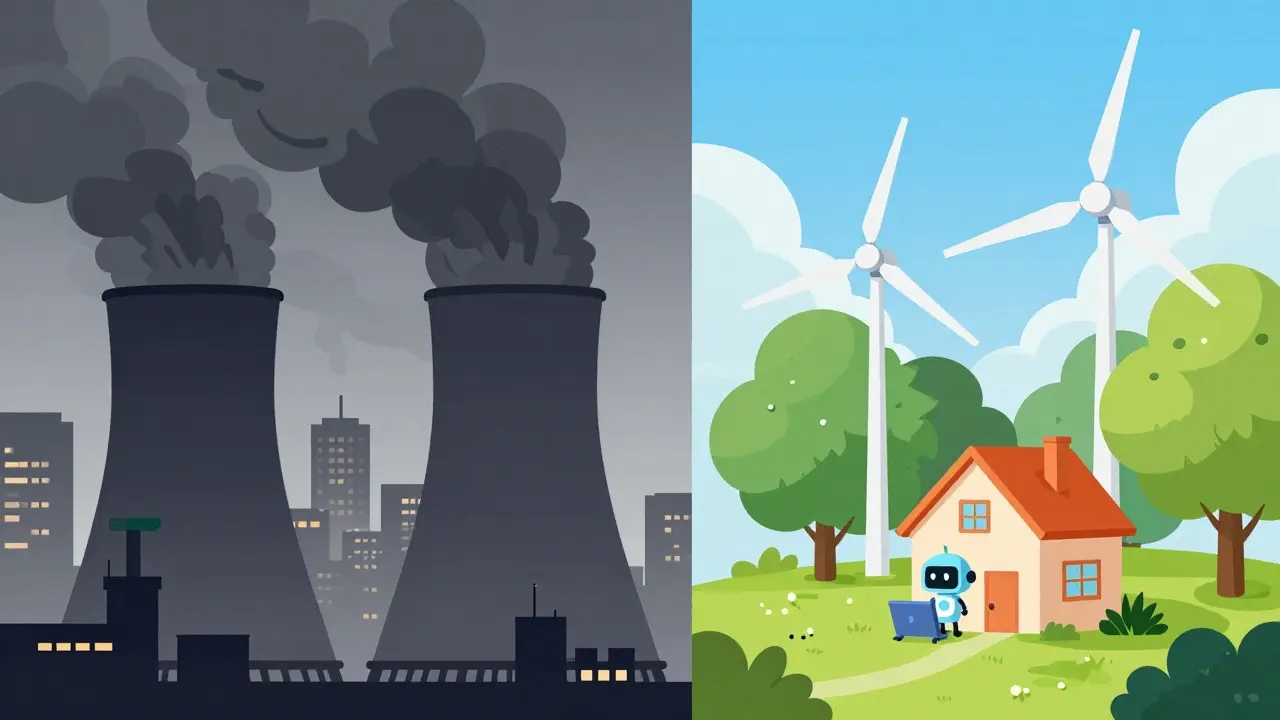
This is the biggest practical difference. In 2023, Bitcoin miners consumed over 120 terawatt-hours of energy annually-that’s more than some mid-sized countries use for all their needs. When Ethereum switched from mining to staking in 2022, its network energy use dropped by more than 99%. Why such a massive gap? Mining is designed to be wasteful. The "work" has no other value; it exists purely to secure the chain. Staking doesn’t require this brute-force computation. A validator node can run on a laptop that sips power. For anyone worried about their carbon footprint or rising electricity bills, staking is the clear winner. Mining still makes sense if you have access to cheap renewable energy, but for the average user, the environmental cost is hard to ignore.
Hardware Requirements and Entry Barriers
Getting started with mining is a technical project. You need to research the best ASICs for Bitcoin or GPUs for altcoins, assemble rigs, set up cooling systems, and configure software. It takes weeks or months to get profitable, and you’re constantly upgrading because mining difficulty increases over time. If your hardware breaks, your income stops until you fix it. Staking is far simpler. Most people start through an exchange or a crypto platform. You click "stake," and it’s done. If you want to be a solo validator on Ethereum, you need 32 ETH and a decent home server, but even that is easier than building a mining farm. There’s no constant hardware upgrade cycle. Your "equipment" is just your internet connection and a reliable computer. This lower barrier means staking has democratized participation. You don’t need to be a tech expert or have tens of thousands of dollars in capital to join in.
Rewards, Risks, and Financial Implications
Both methods pay you, but the risk profiles are different. Mining rewards can be high, but they’re volatile. Profitability depends entirely on the balance between coin price and electricity costs. If the price drops or difficulty spikes, your margins vanish. You also face hardware obsolescence-your shiny new rig might be useless in two years. Staking offers more predictable, passive yields. You earn a percentage of your staked amount, usually around 3-5% annually for major networks. The catch? Liquidity. When you stake, your funds are locked. You can’t sell them instantly if the market crashes. Plus, there’s the risk of "slashing." If a validator acts maliciously or goes offline too often, they lose part of their stake. For most casual users, though, these risks are managed by professional validator services, making staking a safer, steadier play compared to the operational headaches of mining.
| Feature | Mining (Proof-of-Work) | Staking (Proof-of-Stake) |
|---|---|---|
| Primary Resource | Computational Power & Energy | Cryptocurrency Holdings |
| Hardware Needs | Specialized ASICs/GPUs | Standard Computer/Server |
| Energy Usage | Very High | Low |
| Entry Barrier | High (Capital + Tech Skill) | Low (Coins + Basic Setup) |
| Liquidity | High (Sell hardware/coins anytime) | Low (Funds locked during period) |
| Main Risk | Hardware Failure & Electricity Costs | Slashing Penalties & Price Drops |
Security Models: How They Protect the Network
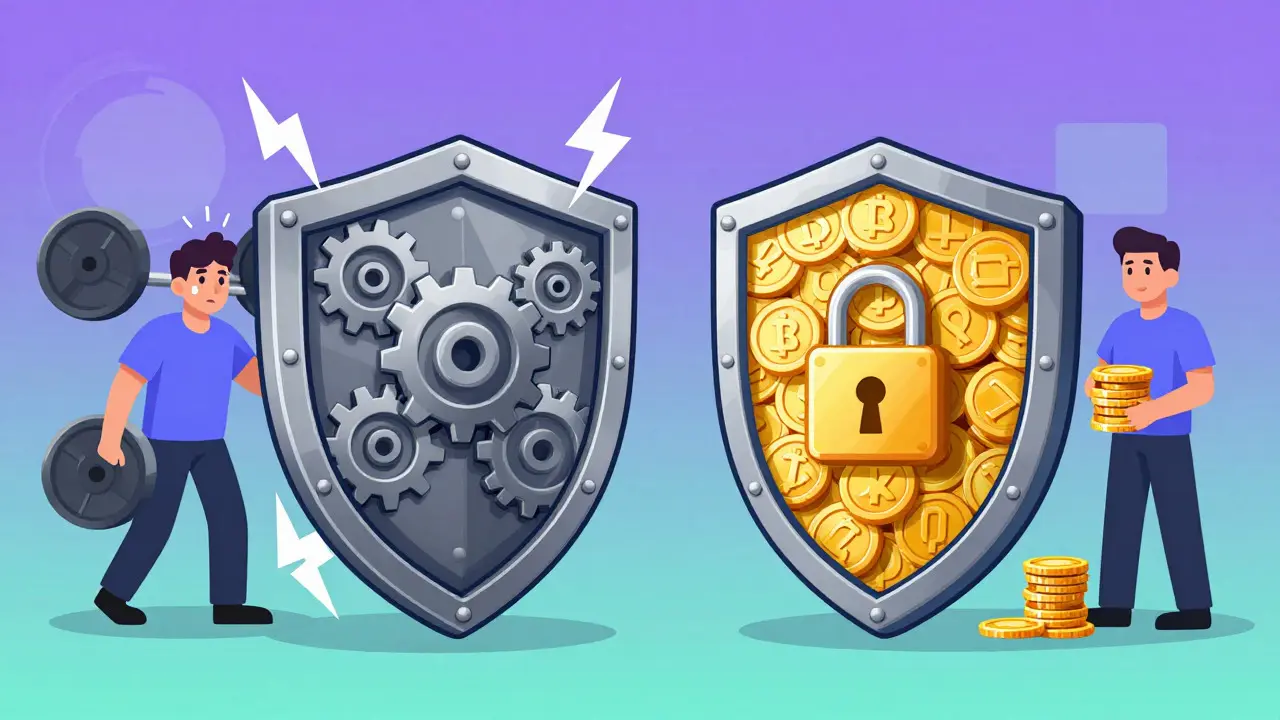
People often argue that mining is "more secure" because it’s harder to attack. To take over a PoW network, you’d need to control 51% of the global hash rate, which costs billions in hardware and electricity. That’s a huge deterrent. Staking security relies on economic incentive. To attack a PoS network, you’d need to buy enough tokens to control 51% of the stake. If you succeed and cheat, you get slashed (lose your money). So, both models make attacks economically unviable, just through different levers. Mining uses physical energy; staking uses financial capital. For Bitcoin, the energy model is deeply ingrained and trusted. For newer chains, the financial model is faster and more efficient. Neither is inherently "better"-they just serve different philosophies.
Which One Should You Choose?
If you love tinkering with hardware, have access to cheap electricity, and believe in Bitcoin’s long-term dominance, mining is still a viable path. It’s a business, not a passive investment. You need to manage costs, upgrades, and maintenance. But for most investors, staking is the smarter move. It’s easier, greener, and provides steady passive income without the headache of managing physical infrastructure. As the industry evolves, more projects are launching directly with staking, recognizing that accessibility drives adoption. Unless you’re a hardcore tech enthusiast with specific resources, staking is likely the better fit for your portfolio in 2026.
Frequently Asked Questions
Is mining dead?
Not at all. Bitcoin remains the dominant Proof-of-Work currency and shows no signs of switching to staking. Many smaller cryptocurrencies also still use mining. However, the overall market share of mining is shrinking as more large-cap networks adopt Proof-of-Stake.
Can I stake with less than 32 ETH?
Yes. While running a solo validator on Ethereum requires 32 ETH, you can participate in staking pools or use exchange services to stake smaller amounts. These services group your funds with others to meet the minimum requirement.
What happens if my validator goes offline?
If you’re a solo validator and go offline for too long, you may miss out on rewards for that period. In severe cases of negligence or malice, you could face slashing penalties where you lose a portion of your staked funds. Using reputable staking providers mitigates this risk significantly.
Which is more environmentally friendly?
Staking is far more environmentally friendly. It consumes minimal energy compared to mining. When Ethereum transitioned to staking, its energy usage dropped by over 99%, proving the significant ecological advantage of Proof-of-Stake over Proof-of-Work.
Do I need technical skills to stake?
No. Most users stake through exchanges or apps, which handle the technical side. You just connect your wallet and select the staking option. Solo staking requires more technical knowledge, but it’s still simpler than setting up a mining rig.
Write a comment