You’ve heard the name Defibox, maybe in a Telegram group, a Discord server, or a flashy social media ad. The promise is always the same: high yields, easy access to new tokens, and a seamless trading experience. But here’s the hard truth about this platform in 2026-there is almost no credible public data to back it up.
When you search for a serious review of Defibox, you hit a wall. Unlike giants like Coinbase or even mid-tier players like Kraken, Defibox doesn’t appear in major financial databases, regulatory filings, or reputable tech reviews. In the world of cryptocurrency, silence isn’t golden; it’s dangerous. This article breaks down what we know (and more importantly, what we don’t) about Defibox, helping you decide if your funds are safe or if you’re walking into a trap.
The Silence Surrounding Defibox
In an industry that thrives on transparency-or at least tries to-the absence of information is a red flag waving in slow motion. Most legitimate exchanges, whether centralized or decentralized, have a digital footprint. They list their team members, publish audits, and engage with regulators.
Defibox lacks these basics. There are no verified LinkedIn profiles for its founders. There are no published smart contract audits from top-tier firms like CertiK or Trail of Bits. There is no clear headquarters address. When a platform operates in the shadows, it’s usually because they have something to hide. For a retail trader, this means you are betting on trust alone, which is a currency that depreciates quickly in crypto.
Centralized vs. Decentralized: Where Does Defibox Fit?
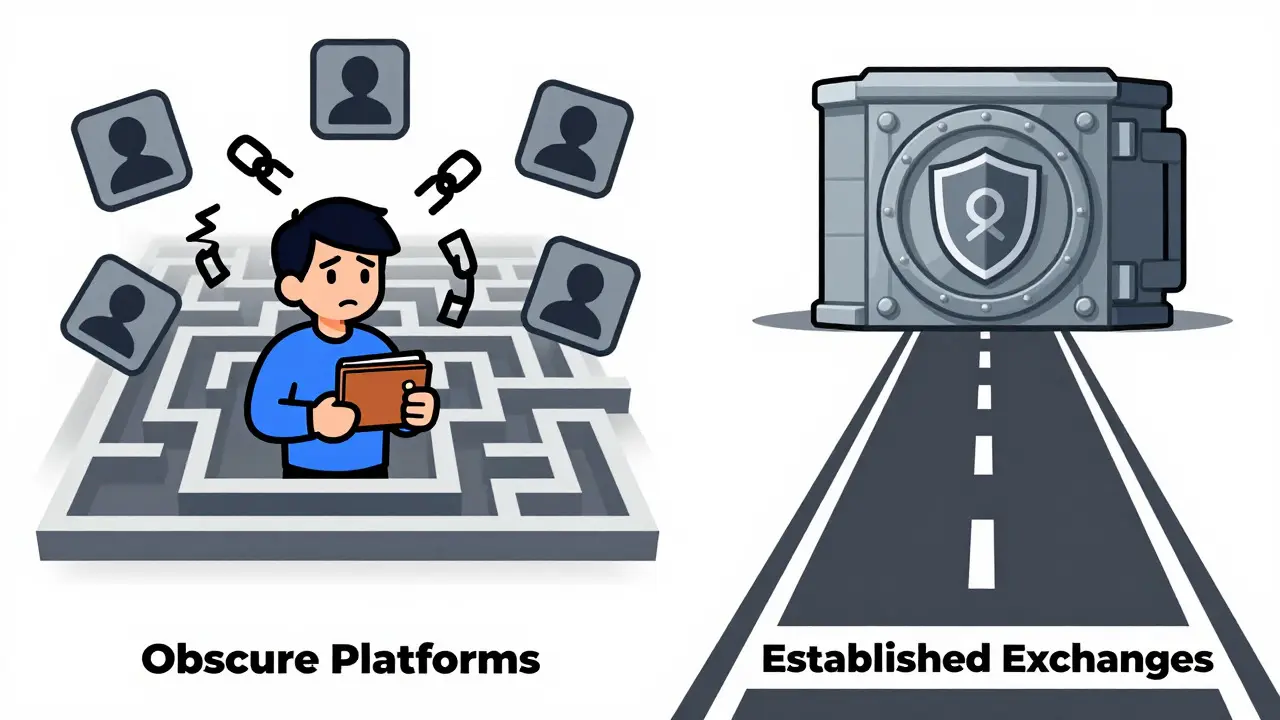
To understand the risk, you first need to understand the structure. The crypto market splits into two main camps: Centralized Exchanges (CEXs) and Decentralized Exchanges (DEXs). Defibox seems to blur the lines, which is confusing for users.
| Feature | Centralized (e.g., Coinbase) | Decentralized (e.g., Uniswap) | Obscure Platforms (e.g., Defibox) |
|---|---|---|---|
| Custody | Exchange holds keys | User holds keys | Unclear / Likely Custodial |
| Regulation | High (KYC/AML required) | Low (Code is law) | None / Unknown |
| Security Audits | Mandatory & Public | Optional but Common | Rarely Available |
| Recovery Options | Customer Support | None (Self-custody) | Non-existent |
If Defibox acts like a CEX by holding your money, you need to trust them not to run away. If it acts like a DEX, you need to trust their code isn’t broken. Without knowing which model they use, you are exposed to both sets of risks simultaneously. Established CEXs like Kraken is a regulated exchange known for strong security practices and transparent fee structures ranging from 0% to 0.4% offer peace of mind through compliance. Obscure platforms offer nothing but promises.
Red Flags That Should Stop You From Depositing
Let’s look at the specific warning signs associated with platforms like Defibox. These aren’t just minor inconveniences; they are structural weaknesses that often lead to total loss of funds.
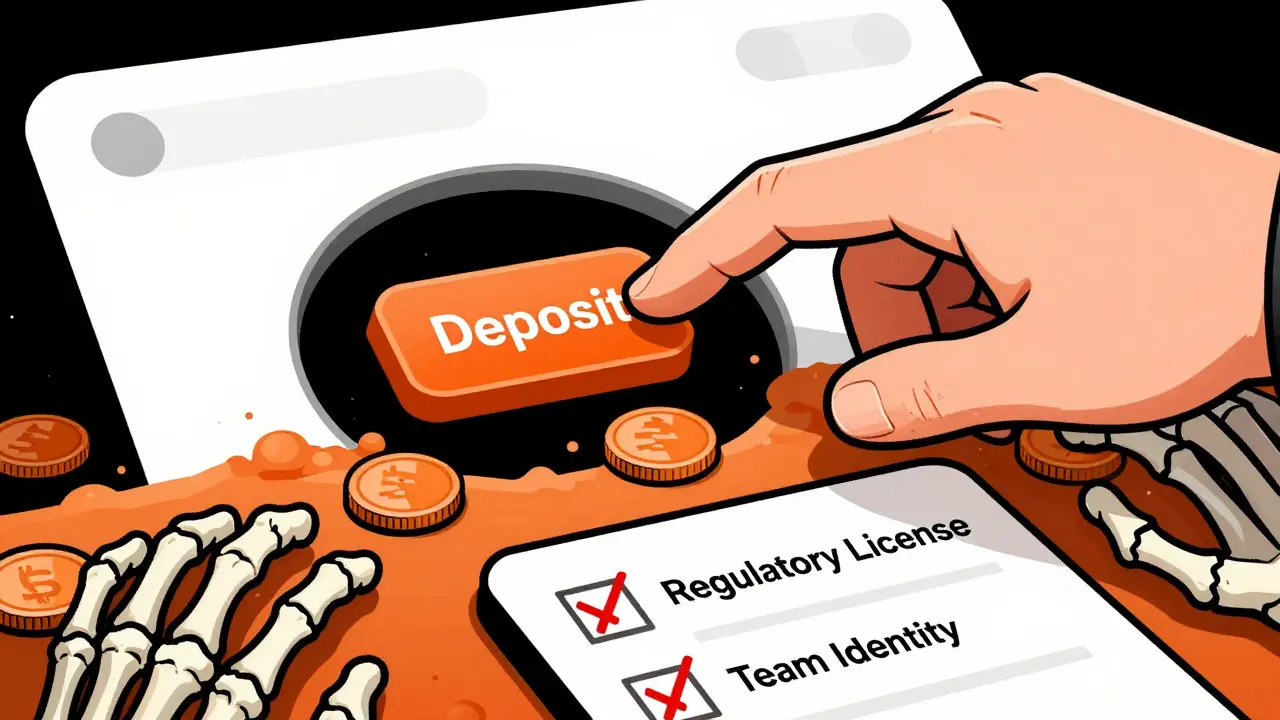
- Lack of Regulatory License: Check if Defibox is registered with any financial authority, such as the SEC in the US or the FCA in the UK. If you can’t find a license number, assume they are unregulated. This means if they steal your money, there is no legal recourse.
- Anonymous Team: Legitimate projects have faces behind them. If the "founders" are just cartoon avatars or pseudonyms, ask yourself: who do you sue when things go wrong? Anonymity is fine for privacy coins, but terrible for an exchange handling billions in volume.
- Aggressive Marketing: Do they pay influencers huge sums to shill the platform? Are there too many five-star reviews on Trustpilot that all sound robotic? This is a classic tactic used by rug-pull schemes to create fake social proof before disappearing.
- Unrealistic Yields: If Defibox promises guaranteed returns that beat traditional markets by double digits without explaining the source of the yield, it’s likely a Ponzi scheme. New user deposits are being used to pay old users, until the music stops.
Comparing Defibox to Proven Alternatives
Why risk your capital on an unknown entity when established options exist? Let’s compare Defibox against reliable alternatives based on security, fees, and asset variety.
Binance US is a compliant exchange offering over 158 cryptocurrencies with low fees between 0% and 0.6%. It provides a balance of accessibility and security, backed by insurance funds for cold storage assets. Similarly, Coinbase is a publicly traded company supporting 235+ assets, ideal for beginners due to its intuitive interface and regulatory adherence.
For those seeking the benefits of decentralization without the anonymity risk, platforms like Uniswap is the leading decentralized exchange on Ethereum, allowing peer-to-peer token swaps without intermediaries or Aave is a lending protocol that allows users to earn interest on deposits or borrow assets against collateral provide open-source code that anyone can audit. You can verify their security yourself. With Defibox, you are flying blind.
How to Verify Any Crypto Platform Yourself
Before you send even one dollar to Defibox or any similar platform, run this checklist. It takes five minutes and could save you thousands.
- Check Domain Age: Use a WHOIS lookup tool. If the website was registered less than six months ago, be extremely cautious. Scammers spin up domains quickly and discard them after the rug pull.
- Search for Complaints: Go beyond Google. Search Reddit, Twitter (X), and specialized forums like Bitcointalk. Look for threads titled "scam," "withdrawal issues," or "fake." Real users complain loudly when they get burned.
- Verify Social Media Authenticity: Click on their followers. Are they real people with histories, or bot accounts created last week? Check the engagement rate. High likes but zero meaningful comments is a sign of bought engagement.
- Test Small Withdrawals: If you must try it, deposit a small amount. Then, try to withdraw it immediately. Many scams allow deposits but block withdrawals once your balance grows, citing "maintenance" or "verification delays."
The Verdict: Proceed with Extreme Caution
So, is Defibox a good exchange? Based on the available evidence in 2026, the answer leans heavily toward risky. The lack of transparency, regulatory oversight, and independent verification makes it a poor choice for storing significant value.
The crypto market is maturing. We are moving away from the "wild west" era of anonymous platforms and toward regulated, secure infrastructure. While innovation continues in DeFi protocols like Hyperliquid and Apex, these platforms build trust through open code and community governance, not secrecy.
If you are looking for safety, stick to the names you recognize. If you are looking for high-risk, high-reward speculation, ensure you only invest what you can afford to lose entirely. Don’t let FOMO (Fear Of Missing Out) drive your decisions. In crypto, patience is often the most profitable strategy.
Is Defibox a scam?
While there is no definitive court ruling labeling Defibox a scam, it exhibits many characteristics of fraudulent platforms, including lack of regulation, anonymous leadership, and limited public presence. Treat it as high-risk until proven otherwise.
What is the safest crypto exchange in 2026?
For most users, Coinbase and Kraken are considered the safest due to their regulatory compliance, public trading status, and robust security histories. For decentralized trading, Uniswap and Aave are industry standards with audited code.
How can I tell if a crypto exchange is legit?
Look for three things: a verifiable physical address, a public team with professional backgrounds, and licenses from financial regulators. Also, check for independent security audits of their smart contracts or infrastructure.
Does Defibox require KYC?
Information on Defibox's KYC (Know Your Customer) requirements is scarce. However, platforms that skip KYC often attract illicit activity and face higher scrutiny from banks, making fiat deposits and withdrawals difficult.
Can I recover my funds if Defibox shuts down?
If Defibox is unregulated and operates anonymously, recovering funds is nearly impossible. Unlike bank-insured accounts, crypto holdings on obscure exchanges have no government backing. Always prioritize self-custody wallets for long-term storage.

Erica Johnson
Oh honey, you really need to check the domain age before you even think about sending money. :P I’ve seen so many of these 'new' exchanges pop up and vanish in weeks. It’s basic due diligence, not rocket science. If they don’t have a LinkedIn presence for their founders, they’re probably just some guy in his mom’s basement running a script.
Ken G
the whole crypto space is rigged anyway. big corps control the narrative and silence anyone who asks questions. defibox might be a scam but so is binance if you look close enough at their ties to offshore havens. wake up sheeple
Alex Di Mango
I think it’s important to stay balanced here. While the lack of transparency is definitely concerning, we shouldn’t dismiss every new project as a scam immediately. Innovation often comes from smaller players who haven’t had time to build that massive corporate footprint yet. That said, caution is absolutely warranted. Maybe give it a few more months to see if they publish an audit?
Nick Darring
You guys are all missing the point because you’re too busy looking at surface-level metrics like LinkedIn profiles which are easily faked anyway. The real question is whether the code works and if the liquidity is deep enough to handle withdrawals without slippage killing your trade. I’ve used obscure DEXs before and made bank while everyone else was waiting for Coinbase to approve their KYC. Don’t let fear stop you from making alpha moves. Just make sure you understand the smart contract risks yourself instead of relying on some blog post.
Amor Jordan
Ugh, Nick, you always have to play devil’s advocate! 😤 It’s exhausting. Look, if I were in your shoes, I’d just stick to what I know works. Why risk your hard-earned savings on a platform that literally has no customer support? Imagine losing everything and having no one to call. It’s terrifying. Please, just be safe out there. Your peace of mind is worth more than any potential yield.
Eden Tadesse
i tried to withdraw form a similar site last year and never got my funds back. its scary how easy it is to get scammed now days. please be careful evryone!
Eric Zehr
Great article. The checklist provided is extremely useful for anyone navigating this space. Always verify the team and look for audits. It’s better to be safe than sorry when dealing with digital assets.
Namrata Mapgaonkar
In India we have SEBI regulations which are strict but sometimes slow down innovation. Here we prefer platforms that are listed on major aggregators. Defibox is not on CoinMarketCap or CoinGecko which is a huge red flag for us. Stay safe friends :)
Rita Dutta
The epistemological crisis of trust in decentralized finance is profound. When the oracle is silent, does the truth exist? We place our faith in algorithms that are opaque, much like the black boxes of traditional banking but with less regulatory oversight. It is a philosophical dilemma wrapped in blockchain technology. One must ask: what is the nature of value when the custodian is anonymous? Perhaps the answer lies not in the platform but in the user's own discernment. But honestly, i think its just a rug pull waiting to happen lol
Paul Smith
Hey everyone! 👋 Just wanted to chime in. I love exploring new tech, but yeah, the lack of info on Defibox is worrying. 🧐 I usually stick to Uniswap for my swaps because I can verify the contracts myself. It feels safer knowing exactly where my tokens are going. Hope you all find a good spot for your trades! 🚀💎
Rodmun Tarnowski
Indeed; the analysis presented herein is quite thorough. One must consider the implications of unregulated entities operating within the global financial ecosystem. Furthermore, the comparison table is exceptionally helpful in delineating the risks associated with various exchange models. Prudence is paramount. Thank you for sharing this valuable information.
Matthew Smith
morality dictates we protect the weak from predators. these anonymous platforms prey on the uninformed. it is unethical to operate without accountability. yet society continues to embrace them. perhaps we are complicit in our own destruction by ignoring the signs. the system is broken but we keep playing along
Prudence Flemming
liquidity fragmentation is the real issue here. if defibox is a honeypot then the exit liquidity is non-existent. jargon aside it means you cant sell. simple as that. dont touch it.