Imagine trying to build a house where the architect changes the blueprints every time you lay a brick. That is exactly what it feels like for businesses navigating Mexican financial technology regulations today.
You want to offer digital payments or handle crypto transactions in Mexico. The country has one of the most active fintech scenes in Latin America. But there is a catch. While the government encourages innovation, it also enforces some of the strictest rules on how that innovation works-especially when it comes to cryptocurrency.
If you are looking to operate here, you need to understand that Mexico is not a wild west for crypto. It is a highly regulated environment where the line between legal innovation and illegal activity is drawn by two powerful bodies: the CNBV (National Banking and Securities Commission) and Banxico (Bank of Mexico). This guide breaks down what is allowed, what is banned, and how the new "Fintech Law 2.0" discussions are shaping the future.
The Foundation: What Is the Mexican Fintech Law?
To understand the current restrictions, you have to look back at 2018. That was the year Mexico passed the Law to Regulate Financial Technology Institutions, commonly known as the Ley Fintech. This was a massive deal. It made Mexico the first country in Latin America to create a specific legal framework for fintech companies.
Before this law, fintechs operated in a gray area. Now, they fall into three clear buckets:
- Crowdfunding Institutions: Platforms that connect investors with entrepreneurs seeking capital.
- Electronic Payment Funds Institutions: Companies that manage digital wallets and payment services.
- Regulatory Sandbox Participants: Startups testing new models under supervised conditions.
This structure sounds great, right? It provides clarity. But here is the problem for many operators: the law focuses heavily on traditional banking functions. It does not explicitly recognize cryptocurrencies as money or even as a standard asset class for general public trading through banks. This creates a regulatory gap that the authorities have filled with strict prohibitions rather than permissive licenses.
The Crypto Ban: What Can You Actually Do?
Let’s get straight to the point about Cryptocurrency in Mexico. Is it illegal? No. Can you own Bitcoin? Yes. Can you trade it on a peer-to-peer basis? Generally, yes, as long as you are not running an unlicensed business.
However, if you are a financial institution, the rules change drastically. Under the current framework enforced by Banxico, banks and authorized financial entities are strictly prohibited from buying, selling, or exchanging virtual assets. They cannot facilitate these transactions either.
This means you cannot walk into a Banco Nacional de México branch and ask to deposit Bitcoin. You cannot use your standard debit card to buy Ethereum on a local exchange if that exchange tries to route funds through traditional banking rails without special authorization. The central bank views virtual assets as high-risk instruments that could destabilize the financial system if integrated too deeply.
So, who handles crypto then? Private exchanges do. But they face a mountain of compliance requirements. If you run an exchange, you are treated similarly to a money service business. You must register with the Unit of Financial Intelligence (UIF). You must implement rigorous Know Your Customer (KYC) protocols. You must monitor every transaction for suspicious activity.

Compliance Costs: The Hidden Barrier to Entry
The biggest hurdle for startups isn't just the law; it's the cost of following it. The Ley Fintech requires companies to appoint specific officers. You need a Compliance Officer and a Chief Information Security Officer (CISO). These are not titles you give to your intern. These are specialized roles requiring significant expertise and salary budgets.
For a small startup, hiring two senior-level executives before you have made your first dollar is a heavy burden. Larger players like Nu Mexico or Mercado Pago can absorb these costs. They have the resources to build robust internal controls, conduct regular audits, and maintain the required cloud backup systems (which must be hosted locally or meet strict security standards).
Smaller competitors often find themselves priced out. This consolidation trend is visible across the market. The number of fintechs has grown to over 1,000, but the dominance of a few large players is increasing because they can navigate the bureaucratic maze more easily.
| Requirement | Fintech Institution (Ley Fintech) | Crypto Exchange (UIF/Banxico Rules) |
|---|---|---|
| Primary Regulator | CNBV | UIF / Banxico |
| Mandatory Officers | Compliance Officer + CISO | Compliance Officer (KYC/AML focus) |
| Banking Integration | Allowed via licensed partners | Restricted; no direct bank settlement for VA |
| Record Keeping | 5 years minimum | 5 years minimum (enhanced for PEPs) |
| Consumer Protection | CONDUSEF oversight | Limited direct consumer protection mechanisms |
The Push for "Fintech Law 2.0"
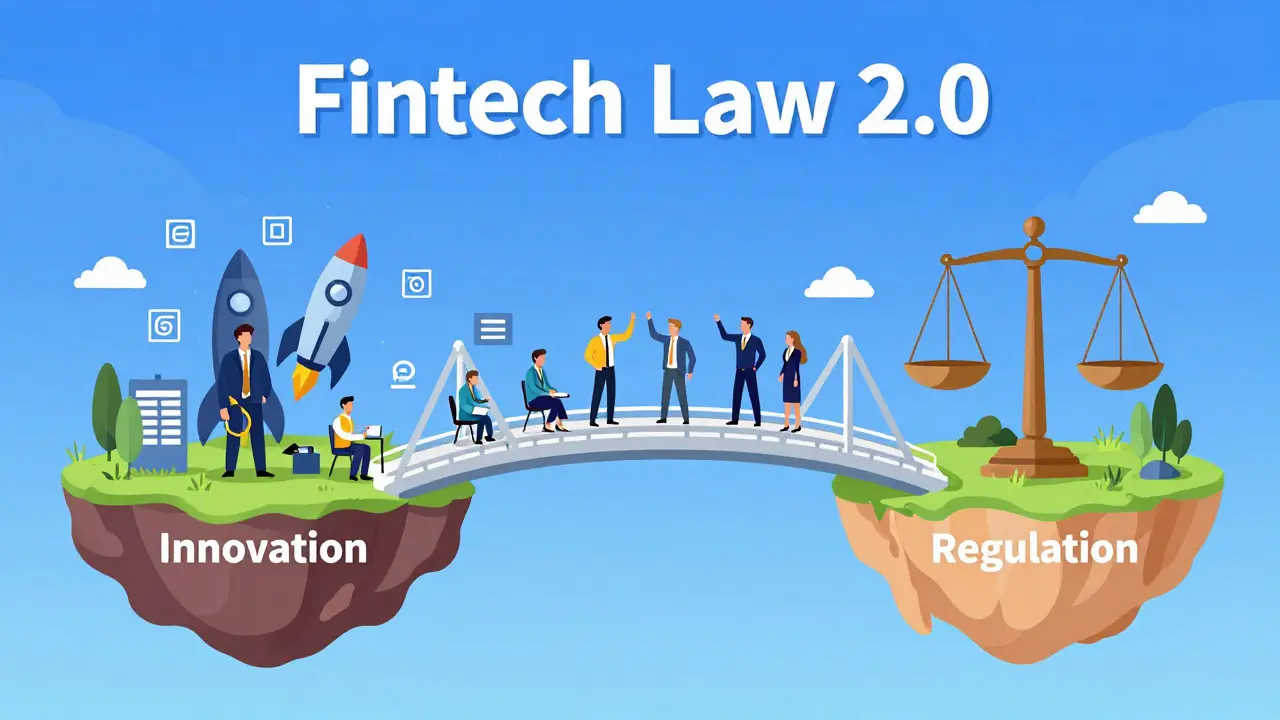
The industry knows the current system is clunky. Since 2018, the world has changed. Open banking, cross-border payments, and decentralized finance (DeFi) have evolved. Mexico’s laws have not kept pace. This has led to widespread calls for a "Fintech Law 2.0."
What would this update look like? Industry experts suggest several key changes:
- Open Finance Frameworks: Allowing users to share their financial data securely with third-party providers. Countries like Brazil and Colombia have moved faster here, giving them a competitive edge.
- Clearer Crypto Definitions: Instead of banning banks from touching crypto, regulators might create a specific license for "Virtual Asset Service Providers" (VASPs) that allows limited integration with the banking system under strict supervision.
- Cross-Border Flexibility: Simplifying the rules for foreign fintechs entering the Mexican market. Currently, the process is slow and opaque.
Ramiro Nández, Commercial Director at Mercado Pago, has noted that while Mexico was a pioneer, other regional countries have since implemented more agile systems. This agility allows them to offer better products and foster greater financial inclusion. Mexico risks falling behind if it does not modernize its approach.
Practical Steps for Businesses Operating Today
If you are planning to launch a fintech product in Mexico in 2026, here is your reality check. You cannot ignore the regulators. You must engage with them early.
First, determine your classification. Are you a crowdfunding platform? A payment fund manager? Or are you facilitating crypto trades? Each path has different entry points. For crypto, your primary interaction will be with the UIF for anti-money laundering registration. For fintech lending or payments, you will deal with the CNBV.
Second, budget for compliance. Do not underestimate this. You need legal counsel specializing in Mexican financial law. You need technical teams to build secure, auditable systems. You need to train your staff on recognizing Politically Exposed Persons (PEPs) and suspicious transactions.
Third, consider partnerships. Many successful fintechs in Mexico partner with established banks or existing licensed entities. This allows you to leverage their regulatory approvals while you build your brand and technology. However, be aware that the bank still bears ultimate responsibility, so they will vet you thoroughly.
The Future Outlook: Innovation Meets Regulation
Despite the hurdles, Mexico remains a critical market. With over 1,000 fintechs operating, the ecosystem is vibrant. The demand for financial services is huge. Millions of Mexicans remain unbanked or underbanked. Fintechs are uniquely positioned to solve this problem through mobile-first solutions and lower overhead costs.
The challenge lies in balancing innovation with stability. Regulators are afraid of another crisis. They want to prevent fraud, money laundering, and systemic risk. This caution sometimes stifles growth. But as the sector matures, we may see a shift. The recent reforms to the Securities Market Law show a willingness to streamline processes for capital markets. This could pave the way for broader fintech reforms.
Keep an eye on 2025-2026 developments. The conversation around Fintech Law 2.0 is gaining momentum. If implemented correctly, it could unlock new opportunities for crypto-friendly businesses and open finance platforms. Until then, proceed with caution, invest in compliance, and respect the boundaries set by Banxico and the CNBV.
Is cryptocurrency legal in Mexico?
Yes, owning and trading cryptocurrency is legal for individuals and private entities. However, financial institutions are prohibited from dealing in virtual assets. Private exchanges must register with the Unit of Financial Intelligence (UIF) and comply with strict anti-money laundering laws.
What is the role of CNBV in Mexican fintech?
The National Banking and Securities Commission (CNBV) is the primary regulator for fintech institutions under the 2018 Fintech Law. It oversees crowdfunding platforms, electronic payment funds, and ensures these companies meet consumer protection and operational standards.
Can I use my Mexican bank account to buy Bitcoin?
Generally, no. Banxico prohibits banks from facilitating cryptocurrency transactions. You typically need to use peer-to-peer methods or registered crypto exchanges that do not rely on direct bank settlements for virtual asset purchases, though cash deposits or specific third-party payment processors may be used depending on current enforcement nuances.
What is Fintech Law 2.0?
Fintech Law 2.0 is a proposed update to the 2018 Ley Fintech. Industry experts advocate for it to introduce open finance frameworks, clearer regulations for virtual assets, and more flexible rules for cross-border operations to keep Mexico competitive in Latin America.
Who regulates cryptocurrency exchanges in Mexico?
Cryptocurrency exchanges are primarily regulated by the Unit of Financial Intelligence (UIF) under the Ministry of Finance. They must comply with anti-money laundering (AML) and counter-terrorism financing (CTF) regulations, including KYC procedures and transaction reporting.

Write a comment