Back in 2020, if you downloaded a random app on your phone and started earning free cryptocurrency just by walking around, you weren’t imagining things. That was GEOCASH - the airdrop from GeoDB that promised to pay you for your location data. It wasn’t just another crypto hype cycle. It was a real attempt to flip the script on how big tech makes money off your personal information. And for a while, thousands of people actually got paid.
What Was GeoDB?
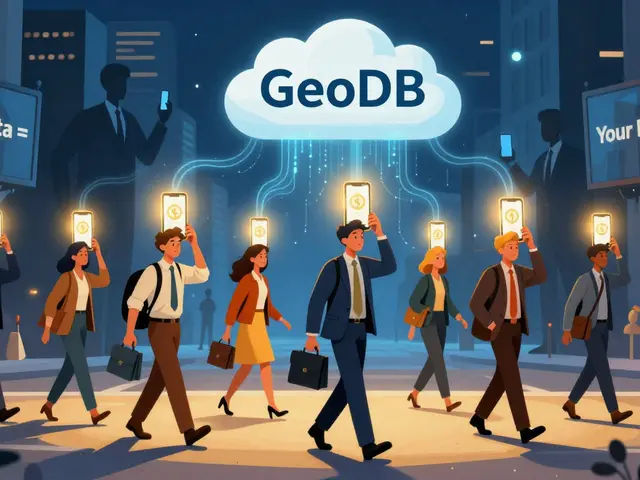
GeoDB wasn’t trying to build the next Bitcoin. It wanted to build a new kind of data economy - one where you own your location history, browsing habits, and movement patterns, and get paid for them. Instead of Google or Facebook quietly selling your data to advertisers, GeoDB said: ‘Here’s a token for every bit of data you share.’
The idea was simple: install the GeoDB app, allow location access, and earn GEO tokens daily. The more you used your phone, the more you earned. The app tracked your movements, Wi-Fi connections, and even app usage - all encrypted and anonymized - then rewarded you with GEO, the project’s native cryptocurrency. No surveys. No clicks. Just being you, online and on the move.
The GEO Airdrop: How to Claim Free Tokens
The airdrop wasn’t a one-time giveaway. It was designed as a daily reward system. Here’s how it worked:
- Download the official GeoDB app from the Google Play Store or Apple App Store.
- Create a wallet inside the app - this was your personal GEO wallet, managed by Wallace Wallet.
- Enable location services and agree to the terms.
- Open the app daily to ‘mine’ your tokens.
Users earned a base amount of GEO each day - often advertised as enough to be worth $5 or more if prices rose. But the real kicker was the referral program. If you invited a friend using your code - like MDHALIM759_PXGYZQ - you got bonus tokens for every person who signed up and stayed active. Some users reported earning hundreds of tokens in the first few weeks just by sharing with family and coworkers.
There were also regional campaigns. In India, for example, a limited-time offer gave 10 free GEO tokens to the first 2,000 users who downloaded the app and linked their Bitforex account. These promotions were localized, time-sensitive, and often promoted through Telegram groups and YouTube videos.
How GEO Tokens Were Built
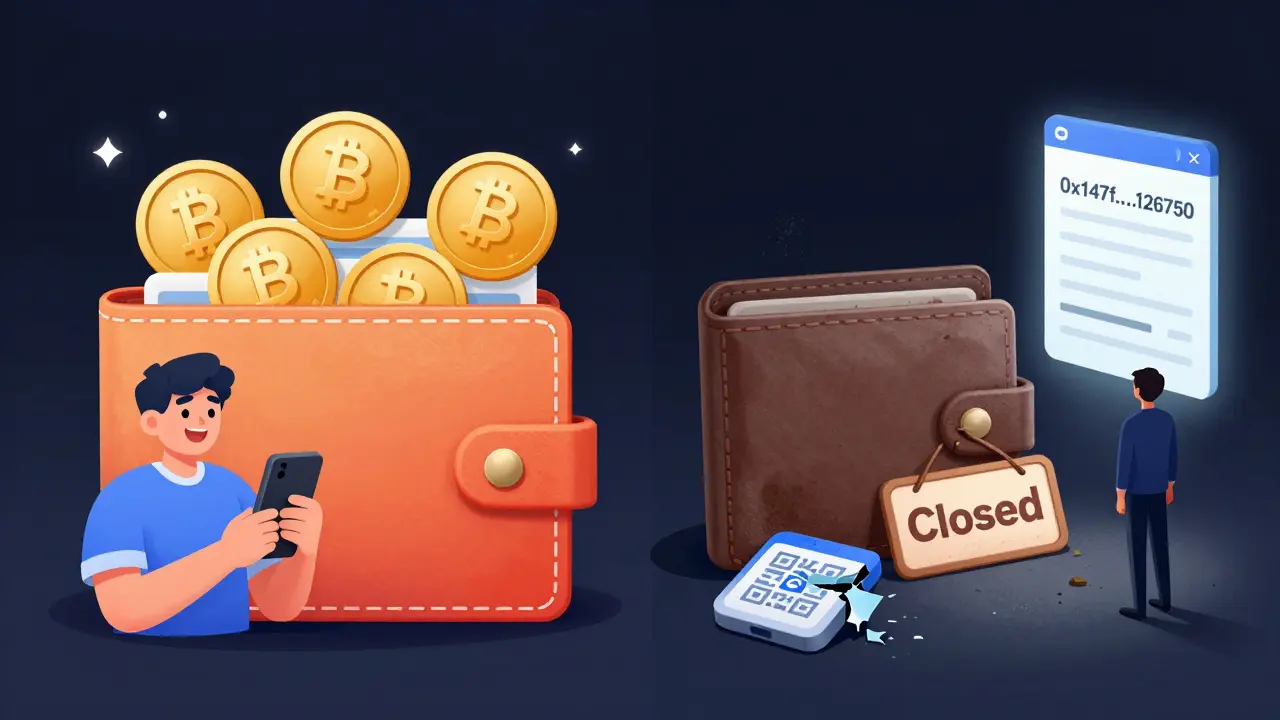
GEO was an ERC-20 token on the Ethereum blockchain. Its contract address was 0x147f...126750, and it had a fixed maximum supply of 350 million tokens. At its peak, over 313 million GEO were created, but only about 82 million were circulating - meaning most were locked up in team wallets, ecosystem funds, or reserved for future incentives.
Unlike most airdrops that dump tokens on the market and vanish, GeoDB planned for long-term use. The tokens weren’t just for trading. They were meant to be spent inside the GeoDB ecosystem - for premium data insights, API access, or even to buy ad space from other users. But that part never really took off.
What Happened to the App and the Tokens?
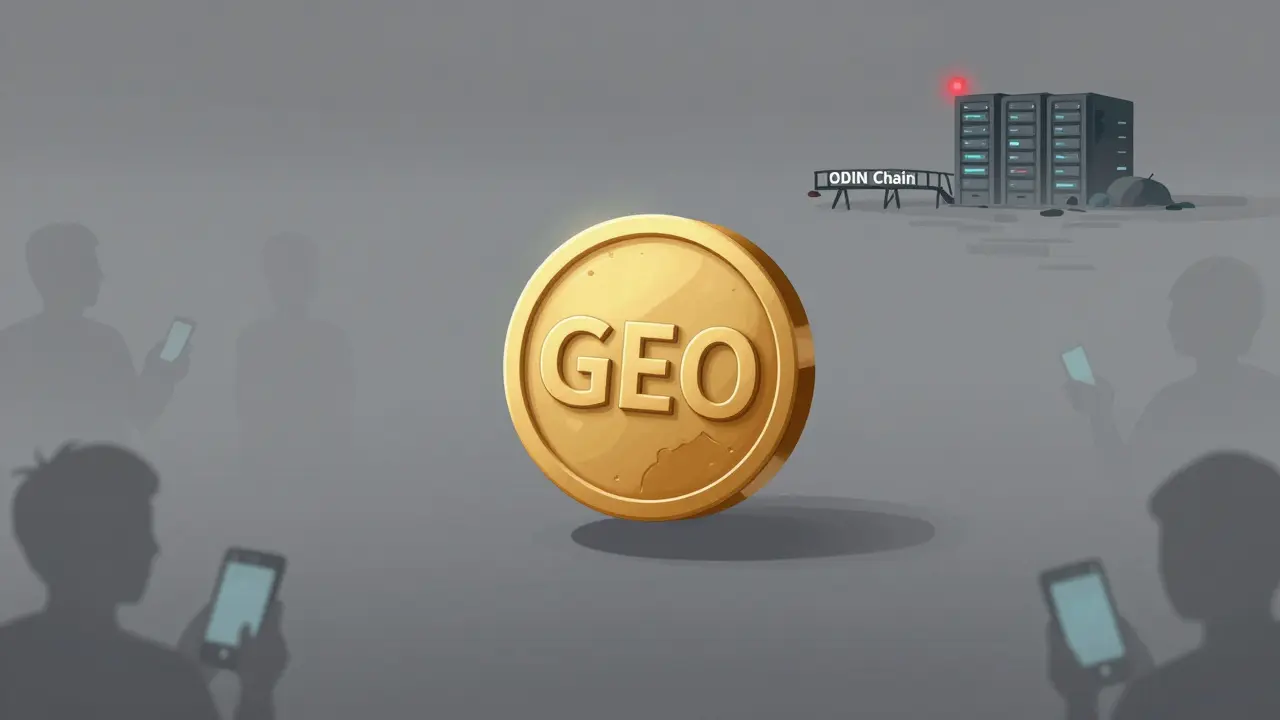
By 2022, the GeoDB app had quietly disappeared from app stores. The official website redirected to Wallace Wallet, a new interface that still supported GEO tokens but with fewer features. The airdrop campaign ended. Daily mining stopped. The Telegram group, once buzzing with 10,000+ members, became a ghost town.
But the token didn’t die. It moved.
In 2023, GeoDB announced a migration from Ethereum to ODIN Chain - a new blockchain built for data-heavy applications. Existing GEO holders had to swap their tokens manually using a bridge tool. Many didn’t. Some lost access to their wallets. Others forgot their private keys. And because the app was gone, there was no easy way to recover them.
Current Status of GEO Tokens (December 2025)
As of today, GEO is still listed on CoinMarketCap and CoinGecko. But the numbers tell a quiet story:
- Price: $0.0001664
- 24-hour trading volume: $120.24
- Market cap: ~$52,000
- Primary exchange: Uniswap V2 (GEO/WETH pair)
- Last trade: 2 days ago
That’s less than $130 in trading volume in two full days. For comparison, even obscure tokens with no real use case often trade over $1 million daily. GEO is barely alive.
There are no active developers posting updates. No new partnerships. No marketing. The project has entered maintenance mode - the token still exists, the wallet still works, but the original promise is gone.
Why Did It Fail?
GeoDB had a brilliant idea. But it ran into three hard truths:
- People don’t want to give up their data - even for free. Most users didn’t understand what they were giving. Others feared privacy risks. The app asked for a lot - and few trusted it enough to keep using it long-term.
- The earnings were unrealistic. Promising $5 a day in crypto was a marketing tactic, not a sustainable model. When token prices didn’t rise as expected, users lost interest.
- No real utility. You couldn’t buy anything with GEO. You couldn’t use it in apps. There was no marketplace, no ecosystem, no reason to hold it beyond speculation.
It was a classic case of solving a problem nobody cared enough to pay for.
Is It Still Worth Claiming GEO Today?
No.
The airdrop is over. The app is gone. Even if you find an old APK file, the backend servers that issued daily rewards were shut down years ago. The wallet still holds your tokens if you saved your private key - but there’s no way to earn more.
Some people still hold GEO as a curiosity. A few traders occasionally buy it for pennies, betting on a revival that’s unlikely. But unless ODIN Chain gains traction and the team releases a new app with real utility, GEO will remain a footnote in crypto history - a well-intentioned experiment that ran out of steam.
What You Can Learn From GEO
GeoDB’s story isn’t about losing money. It’s about understanding what makes a crypto project last.
Real value comes from:
- Real use cases - not just promises
- Real trust - not just privacy disclaimers
- Real incentives - not just daily airdrops
Today, projects that succeed in data monetization - like Hivemapper or Helium - focus on hardware, clear value exchange, and long-term tokenomics. They don’t rely on app downloads and referral codes. They build ecosystems people can’t live without.
GEO didn’t fail because the tech was bad. It failed because it asked people to give up something valuable - their data - for something worthless in practice: a token with nowhere to go.
If you still have GEO tokens in your wallet, keep them. They’re a reminder of what crypto tried to be - a fairer internet. But don’t expect them to be worth anything beyond that.
Was the GeoDB airdrop real, or was it a scam?
The GeoDB airdrop was real. Thousands of users received GEO tokens between 2020 and 2021. Payments were distributed via smart contracts, and token balances were visible on the blockchain. However, the project made exaggerated claims about earnings and failed to deliver long-term utility, which led to its decline. It wasn’t a scam - it was an ambitious idea that didn’t scale.
Can I still download the GeoDB app today?
No. The official GeoDB app was removed from both the Google Play Store and Apple App Store in 2022. Any APK files you find online are outdated and no longer connect to active servers. The project has since rebranded to Wallace Wallet, which only supports token management, not data mining or earning.
Do I still own my GEO tokens if I didn’t withdraw them?
Yes - if you saved your wallet’s private key or 12-word recovery phrase. Your GEO tokens are stored on the blockchain, not in the app. Even if the app is gone, your tokens still exist. You can view them in any Ethereum-compatible wallet by adding the contract address 0x147f...126750. But you can’t earn more - the mining feature is permanently offline.
Is GEO still tradable? Where can I sell it?
Yes, but barely. GEO is still listed on Uniswap V2 as a GEO/WETH pair. You can trade it there if you have an Ethereum wallet like MetaMask. Trading volume is extremely low - under $130 per day - so finding a buyer might take days. The price is around $0.00016 per token. Don’t expect to make money - you’re selling a digital artifact, not an investment.
What happened to the ODIN Chain migration?
GeoDB announced a migration to ODIN Chain in 2023 to improve scalability and reduce fees. Token holders were given a window to swap their Ethereum-based GEO for the new version. But the process was complicated, poorly documented, and lacked support. Most users didn’t complete the swap. The ODIN Chain version of GEO is now the official token, but it’s nearly impossible to trade or use due to lack of exchange listings and developer activity.
Can I get my GEO tokens back if I lost my private key?
No. Like all cryptocurrencies, GEO is not recoverable if you lose your private key or recovery phrase. There is no customer support, no password reset, and no central authority that can restore your wallet. If you didn’t back it up, your tokens are permanently lost.
Are there any similar projects today?
Yes - but they’re more realistic. Projects like Hivemapper pay users for driving and mapping roads with GPS data. Helium rewards users for setting up wireless hotspots. These projects tie token rewards to real-world actions and hardware. Unlike GeoDB, they offer clear value, not just promises. They also have active communities and growing ecosystems.
Mmathapelo Ndlovu
man i still have my old geo tokens in a wallet i forgot about... like a digital time capsule 🕰️💛
every time i check the price i laugh and cry at the same time. we were so naive, but also kinda brilliant for trying.
it felt like we were building something fair, you know? like the internet was finally going to pay us back.
now it’s just a ghost in the blockchain, whispering ‘what if?’
thank you, geodb, for the dream. even if it died.
still keeps me hopeful for the next one.
Aaron Heaps
it wasn’t a scam. it was a poorly executed charity with crypto branding.
Tristan Bertles
i remember when i first downloaded it. i thought i was gonna get rich walking to my car.
turned out i just got a battery drain and a new habit of checking my phone every hour.
still think the idea was solid though. just needed better execution.
people don’t trust apps that ask for location unless they’re from apple or google.
and even then, half of us turn it off.
Megan O'Brien
the tokenomics were a dumpster fire. 350m supply, 82m circulating, zero utility.
classic vaporware playbook: hype first, build later, vanish when the hype fades.
also, ‘earn $5/day’? please. that’s not airdrop, that’s a pyramid with gps.
Earlene Dollie
my mom signed up for this because she thought it was like free money from the government 😭
she still asks me every month if ‘that location app’ is back
i told her no, honey, the internet broke
she cried. i cried. we both got scammed by hope
Dusty Rogers
the real tragedy isn’t the lost tokens.
it’s that we believed a startup could fix data exploitation.
we thought if we just gave our data to the right company, it’d be different.
it wasn’t the tech. it was the human condition.
we wanted to be paid, but we didn’t want to be watched.
and that’s the paradox crypto never solved.
Kevin Karpiak
usa only. everyone else is just here for free crypto. this was never meant for india or africa. the devs were american. the servers were american. the promise was american. if you lived somewhere else you were just a data point.
Amit Kumar
in india, we called it ‘walking ka paisa’ - money for walking.
thousands downloaded it. we thought we were pioneers.
but when the app vanished, no one even apologized.
we didn’t lose money - we lost trust.
and now? no one believes in any app that says ‘earn while you move’.
even if it’s real, we think it’s a trap.
Helen Pieracacos
so… you’re telling me the entire project was built on the delusion that people care enough about data privacy to trade it for pennies?
brilliant.
also, the most american thing ever.
Melissa Black
geo’s failure is a textbook case of misaligned incentive structures in decentralized systems.
the token lacked embedded utility, liquidity was artificially suppressed, and user retention was dependent on speculative appreciation rather than network effects.
additionally, the migration to odin chain was executed without adequate onboarding or documentation - a fatal flaw in user-centric design.
the project demonstrated conceptual innovation but zero operational maturity.
it’s not dead - it’s just a failed experiment in behavioral economics.
Naman Modi
lol i had 2000 geo. now it’s worth $0.32.
but hey - i got free data for 6 months.
my phone still works.
so i guess i won?
Brian Martitsch
if you still hold geo, you’re not a crypto investor. you’re a museum curator.
congrats on preserving a relic of early 2020s delusion.
Zavier McGuire
people who still care about geo are the same ones who still believe in the tooth fairy
just stop. move on. your wallet is a tombstone, not a portfolio
Sybille Wernheim
you know what’s beautiful? that we tried.
we didn’t wait for someone else to fix it.
we downloaded the app.
we walked.
we invited our friends.
we believed in something weird and kind.
and yeah, it fell apart.
but we were the ones who showed up.
and that matters more than any token price.
Cathy Bounchareune
i used to name my walks after geodb sessions - ‘the lavender lane expedition,’ ‘the 7-eleven loop’
it felt like i was mapping my life, not just my location.
now i walk without apps.
but sometimes i still look at the sky and think - what if they’d just let us keep the dream alive?
Sheila Ayu
the odin chain migration? yeah, that was a joke.
they sent a link that didn’t work.
then they deleted the telegram group.
then they changed the contract address twice.
and then… silence.
if you think that’s not a rug pull, you’re not paying attention.
they didn’t fail - they vanished.
Shubham Singh
the project demonstrated a fundamental misunderstanding of behavioral economics and data valuation. the marginal utility of location data to the average user is negligible, and the cost of trust is prohibitively high. furthermore, the absence of a clear governance mechanism rendered the token economically inert. the entire endeavor was an exercise in wishful thinking, masquerading as innovation.
Vijay n
the us government paid them to collect data for surveillance
they just didn't tell us
that's why the app vanished
they got bought out
governments don't care about your data rights
they care about your location
you were never earning tokens
you were being mapped
Alison Fenske
i still have my geo tokens. not because i think they’ll be worth anything.
but because every time i open my wallet, i remember how excited i was to walk somewhere new just to earn a few more.
it felt like magic.
and sometimes, that’s enough.