If you hold Bitcoin or other cryptocurrencies in Germany, waiting twelve months before selling could mean paying zero taxes on your profits. This isn't a rumor; it is actual law under Section 23 of the German Income Tax Act (EStG). For many investors in 2026, this rule makes Germany one of the most attractive places in Europe to store digital assets long-term. While active traders face steep taxes, patient holders enjoy a complete tax exemption after the magic 365-day mark.
Germany Crypto Tax Exemption Explained Simply
The core mechanism here is straightforward but requires precise timing. When you sell a digital asset held for more than 365 calendar days, the gain is considered private disposal without any capital gains tax liability. Unlike traditional stocks, where speculation periods differ, cryptocurrencies fall under the category of "private money" in German jurisdiction. This unique classification separates Bitcoin from standard financial instruments.
This rule applies regardless of how much you earn. Whether you make €1,000 or €100,000 on a single coin held for over a year, the profit remains yours to keep. The government cannot touch gains that have aged past the one-year threshold. However, this freedom comes with strict record-keeping requirements. You must prove exactly when you acquired the asset and when you sold it.
Section 23 EStG is a clause in the German Income Tax Act that governs taxation of private sales transactions including cryptocurrency disposals after a holding period. It forms the legal backbone allowing citizens to avoid tax on long-term crypto profits if they do not trade professionally.Calculating the 365-Day Holding Period
You might think a holding period is easy, but the clock starts ticking the moment you receive the asset. It is not measured in trading days; it uses exact calendar days according to guidance from the Federal Central Tax Office (BZSt). If you buy Bitcoin on January 1st at 10:00 AM, you cannot sell until January 1st at 10:00 AM exactly one year later.
- Count every day as a full 24-hour cycle.
- Include weekends and public holidays in your count.
- Fractional days matter significantly for compliance.
- Start time is crucial if multiple purchases occur near the deadline.
Miscounting by even a few hours can reclassify your sale as short-term. In 2025, community reports showed traders losing thousands because they sold twelve hours too early. One investor reported losing €3,200 in taxes because they did not account for the minute-by-minute requirement on their Ethereum trade. Precision is non-negotiable if you want that tax-free status.
Taxation for Short-Term Traders
If you sell before the 12 months are up, you are looking at a different set of rules. Profits from holdings less than one year are taxed as regular income. This means they join your salary and other earnings, pushing you into higher progressive tax brackets.
| Holding Period | Taxable Event | Effective Tax Rate | Reporting Requirement |
|---|---|---|---|
| Less than 365 days | Income Tax | 14% to 47.475% | Mandatory if >€1,000 net gain |
| More than 365 days | No Tax | 0% | Mandatory reporting often waived |
For most middle-class earners, this translates to roughly 25% to 40% of your profit going to the state. On top of that, you usually pay a 5.5% Solidarity Tax (Solidaritätszuschlag). There is a small relief threshold though. If your total net short-term gains stay under €1,000 in a calendar year, you generally do not need to report them. But cross that line, and you owe tax on the entire amount, not just the excess.
Federal Ministry of Finance defines the central authority overseeing financial regulations and tax policy in Germany, including recent clarifications on DeFi and NFT taxation. They issued the March 2025 guidance document that solidified current rules.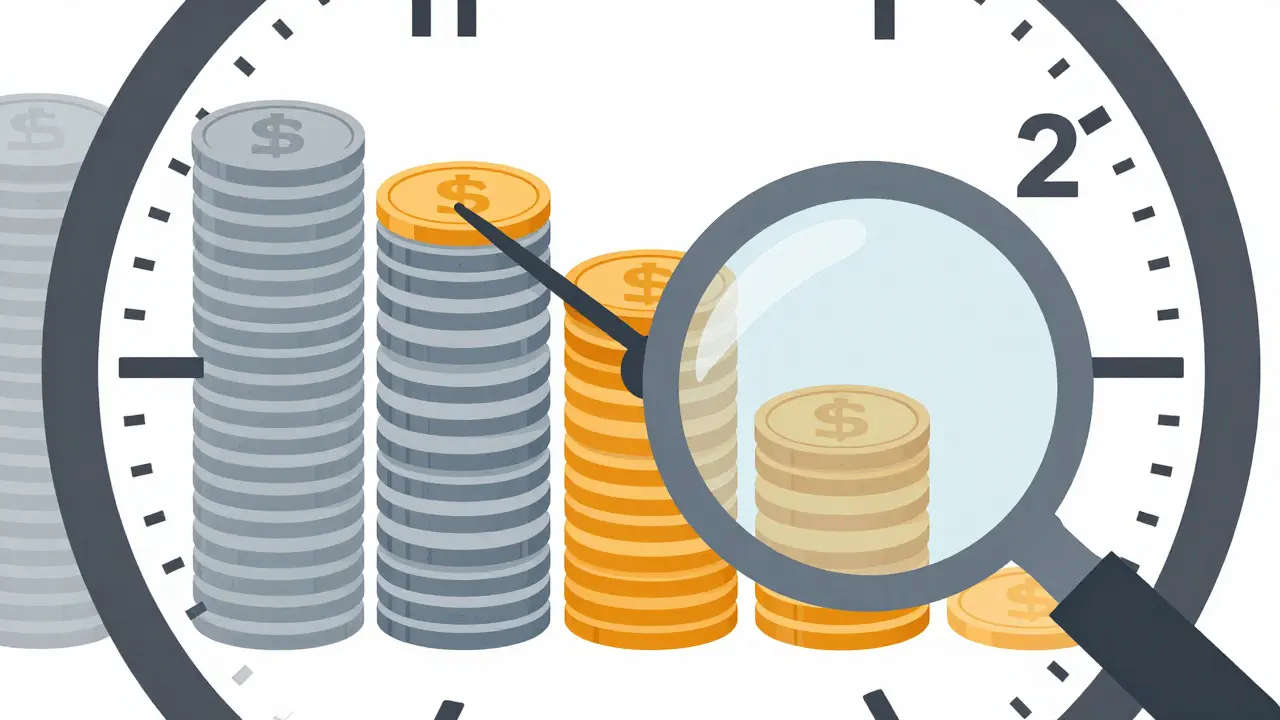
The FIFO Challenge and Wallet Management
A major pitfall for German taxpayers is the mandatory First-In-First-Out (FIFO) accounting method. You cannot choose which Bitcoin unit you sold. The tax authorities assume you sold the oldest coins first. If you bought one Bitcoin last month and another five years ago, and you sell one coin today, the system treats it as selling the old one (tax-free) only if the old one is still available.
However, mixing old and new purchases in a single wallet creates confusion. When you deposit fresh funds into a wallet already containing long-held assets, the tax office views those as one pool. To maintain control over your tax exposure, experts recommend separating assets by acquisition timeline.
- Create distinct wallets for each purchase batch.
- Label wallets clearly (e.g., "BTC-Jan2024", "BTC-Feb2024").
- Avoid consolidating funds before checking maturity dates.
This discipline prevents accidental short-term triggers when moving funds for spending. Many users fail here because they treat all their balances as one liquid fund rather than distinct tax lots.
Software Tools and Professional Help
Tracking these dates manually is nearly impossible for anyone with multiple transactions. Specialized software bridges the gap between blockchain data and the Elster tax portal. Platforms like Koinly or BitcoinSteuer connect directly to your exchange accounts to map out every transaction timestamp automatically.
A survey of German investors in February 2025 found that 42% of users with significant holdings rely on such tools. These programs calculate your FIFO obligations precisely down to the minute. While hiring a professional costs around €285 per season, doing it alone takes 15 to 20 hours of research. For complex portfolios involving staking or mining rewards, software is almost essential.
Koinly is a leading cryptocurrency tax software platform widely used in Germany to automate calculation of FIFO lots and tax reports.Remember that the federal tax office is integrating data feeds from major exchanges like Kraken and Coinbase starting in 2026. They will soon have direct visibility into your wallet movements. Relying on self-filing becomes riskier as automated reconciliation improves. Using certified software provides a layer of audit protection.

Upcoming Regulatory Changes
The landscape might shift soon due to European directives. The DAC8 directive is expected to harmonize crypto taxation across EU member states by 2027. This proposal suggests replacing national exemptions with a standardized 15% capital gains tax rate for all digital assets held longer than 365 days.
While grandfathering provisions are likely for existing holdings, new acquisitions made after the change could lose the zero-tax benefit. Analysts project a high probability of adoption, meaning you should plan strategies accordingly. Long-term investors are advised to consider the current window favorable before wider harmonization locks in.
In the meantime, keep in mind that mining rewards and staking payouts do not get the same treatment initially. Mining income is taxable as ordinary income at the moment of receipt. Staking rewards follow a hybrid path where the initial receipt is income, but selling the reward token later follows the 12-month rule.
Frequently Asked Questions
Does the 12-month rule apply to stablecoins?
Yes, stablecoins like USDT or USDC follow the same rules as Bitcoin. If you hold a stablecoin for over 365 days and then convert it to Euro, any gain exceeding the purchase price is tax-exempt. However, since stablecoins track fiat currency closely, gains are usually negligible unless the peg breaks significantly.
What happens if I swap one crypto for another?
Swapping tokens counts as a disposal event. You must calculate the Euro value of the old asset at the moment of the swap. If you swapped a token held for under 12 months, the difference is taxed as income. Swapping tokens held for over a year incurs no tax.
Is tax loss harvesting possible in Germany?
No, German tax law currently lacks provisions for offsetting losses against gains. Unlike the US system, you cannot deduct bad trades from your good trades to lower your taxable income. Each gain stands on its own merit above the €1,000 threshold.
When must I declare my crypto income?
You must file by July 31st following the tax year. If you hire an accountant, the deadline extends to October 31st. Late filings incur penalties, and accurate submission through the Elster online portal is mandatory for gains exceeding exemption limits.
How does inflation affect the €1,000 threshold?
With inflation running above 6% in 2024, the static €1,000 threshold has eroded slightly in real purchasing power. Experts argue this captures more middle-class investors than originally intended, though the legislation has not yet been adjusted for inflation rates.

Justin Garcia
People think they can track every minute easily in real life. Reality proves otherwise when dealing with volatile markets.
Michael Nadeau
It is fascinating how nations treat digital assets differently based on their economic philosophy. Germany seems willing to wait for patience before taxing gain. This creates a specific behavioral incentive within the market structure. Investors must understand the deeper intent behind such regulations clearly. The balance between revenue generation and capital retention shifts frequently. Historical data shows policy changes rarely stay static forever. One must anticipate shifts in legislative priorities accordingly. Strategic planning requires looking beyond current statutory benefits.
Leah Lara
Reading this while eating cereal.
Justin Smith
Actually that assumption is incorrect regarding economic philosophy. It stems from legacy inheritance laws mostly. The classification as private money drives the tax status entirely. Confusing speculation with capital gains leads to errors.
Raymond K
I knwo what u mean but its actually super important for ur portfolo health so dont sleep on it plz!
Ashley Stump
They say 0 tax now but the government will find a way to steal it later. Trust no one. They are watching wallets already.
Jamie Riddell
let us try to remain calm though there is always uncertainty in regulation
Chris R
From my perspective overseas, having clarity is better than ambiguity even if rates change. Transparency helps with long term strategic planning effectively.
Markus Church
The documentation requirements appear stringent but necessary for compliance. One should adhere to the protocols established by the Federal Central Tax Office. Neglecting these standards creates unnecessary liability risks later.
joshua kutcher
I get where you're coming from regarding discipline. It's hard to hold when volatility is high. We all want quick gains sometimes.
Tiffany Selchow
oh sure just sit pretty for a year while bitcoin crashes to zero lol
Alex Kuzmenko
yeah risk is real but the rule still stands right now so peolple use it
Zackary Hogeboom
Exactly! Clear rules help everyone plan better for the future. Thanks for sharing your thoughts!
Disha Patil
It makes me so anxious thinking about losing all my money because of one hour mistake. Fear is high when accuracy matters so much.
Addy Stearns
Fear is a natural reaction to financial risk management strategies. You worry about time precision but consider the broader implications of ownership. If we focus too much on the minute we miss the decade long trend. Holding assets requires mental fortitude beyond calendar tracking. Many forget that tax planning is part of wealth preservation efforts globally. The stress comes from trying to control uncontrollable variables like price action. We must accept some level of uncertainty in our investment journeys. Compliance should be viewed as a standard operating procedure rather than a threat. Setting up systems helps reduce the psychological burden significantly. Automation tools exist to handle these complex calculations for individuals. You build confidence through preparation instead of panic driven decisions. Every rule exists to clarify boundaries for lawful participation in markets. Understanding the law reduces the fear factor associated with enforcement actions. Knowledge empowers you to navigate these periods of volatility without hesitation. Discipline transforms anxiety into a structured approach to asset management. Ultimately peace of mind comes from following clear guidelines consistently.