Imagine buying Bitcoin when it was worth a few thousand dollars and selling it today for over $60,000. In most countries, you’d owe the government a significant chunk of that profit. But in Germany? If you held that coin for just one year and one day, you might pay zero euros in taxes on those gains. It sounds too good to be true, but it’s the reality under German crypto tax law, which treats cryptocurrencies as private assets rather than financial securities.
This rule is a massive advantage for anyone living in or investing from Germany. It flips the standard investment script on its head. Instead of worrying about market timing or short-term volatility, the focus shifts entirely to patience. The core mechanism is simple: hold your digital assets for more than twelve months, and any profit you make becomes completely tax-free. This isn't a loophole; it's written into Section 23 of the German Income Tax Act (EStG). But while the headline "zero tax" is catchy, the details matter. Misunderstanding the holding period rules can turn a tax-free win into a hefty bill.
The One-Year Rule Explained
The heart of this policy lies in how Germany classifies cryptocurrency. Unlike stocks, which are often subject to different withholding taxes, crypto falls under "private sales transactions" (private Veräußerungsgeschäfte). This classification triggers a specific waiting period. Once you buy a token-whether it’s Bitcoin, Ethereum, or an obscure altcoin-the clock starts ticking. If you sell, swap, or spend that asset after exactly one year has passed, the gain is exempt from income tax.
Here is where people get tripped up: the calculation is precise. It’s not just "a year." It is 365 days from the exact moment of acquisition. If you bought at 10:00 AM on January 1st, 2025, you cannot sell until 10:00 AM on January 1st, 2026. Selling one minute early makes the entire gain taxable. This strict adherence to time means record-keeping is non-negotiable. You need proof of purchase dates down to the second, especially if you use automated trading bots or frequent DCA (Dollar-Cost Averaging) strategies.
What Happens If You Sell Early?
If you don’t wait out the full year, you aren’t off the hook. Short-term gains (held for less than 12 months) are taxed as regular personal income. This means they are added to your other earnings-like your salary-and taxed at progressive rates ranging from 14% to 45%. On top of that, there is a solidarity surcharge of 5.5%, pushing the maximum effective rate close to 47.4%.
However, there is a safety net. Germany offers a tax-free allowance of €1,000 per year for these private sales. This is distinct from the general basic tax-free allowance. So, if you make €900 in profit from short-term trades, you owe nothing. If you make €2,000, you only pay tax on the €1,000 above the threshold. For active traders who flip coins quickly, this allowance provides some breathing room, but it rarely covers substantial profits compared to the long-term exemption.
| Holding Period | Tax Rate | Tax-Free Allowance | Best For |
|---|---|---|---|
| < 1 Year | 14% - 45% + Soli | €1,000/year | Active Traders |
| > 1 Year | 0% | N/A (Fully Exempt) | Long-Term Investors |
How Other Countries Compare
To understand why this matters, look at the neighbors. France charges a flat 30% tax on crypto gains regardless of how long you hold them. The UK applies Capital Gains Tax, with allowances shrinking significantly in recent years. Even Portugal, once a haven, has tightened its rules. Germany stands out because it combines EU regulatory clarity with a genuinely investor-friendly tax code for holders.
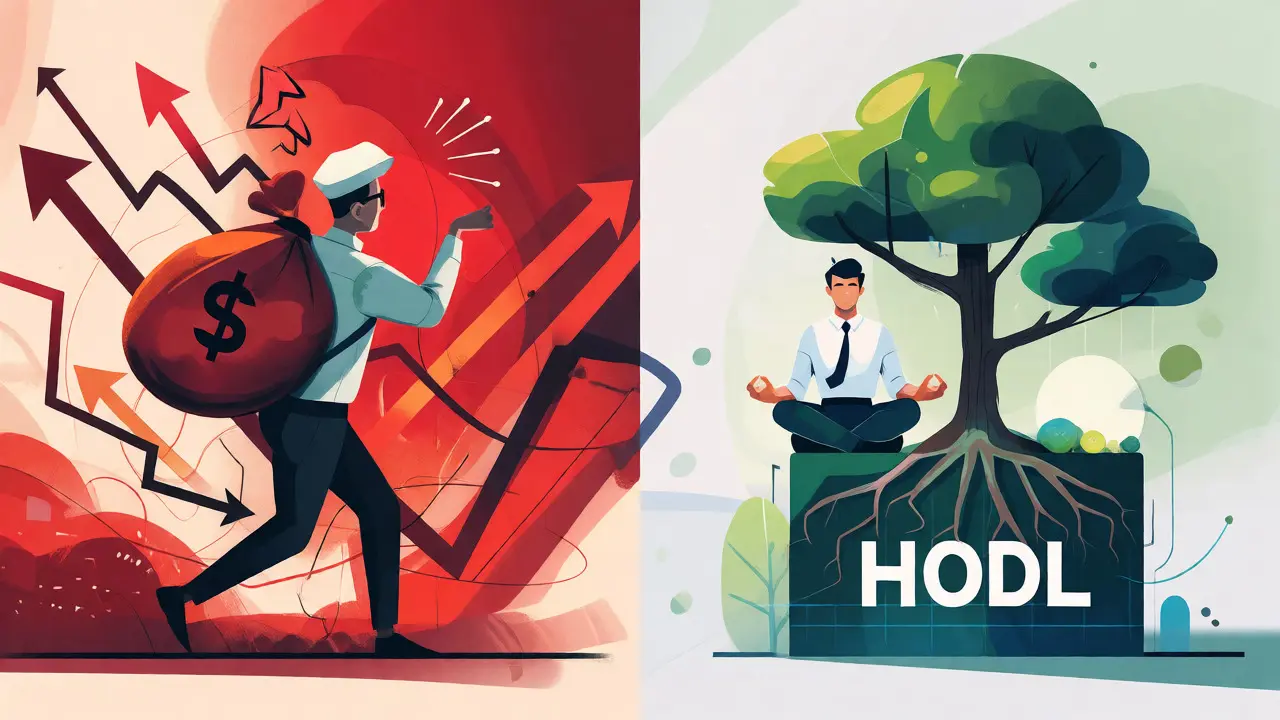
This doesn’t mean everyone should move to Berlin immediately. Switzerland, for instance, has no capital gains tax for private investors either, but it imposes a wealth tax on the total value of your holdings every year. Singapore taxes frequent traders as business income. Germany’s approach strikes a balance: no annual wealth tax on crypto, and no capital gains tax if you have the patience to wait. It effectively rewards the "HODL" mentality with hard cash savings.
Complexities: Staking, DeFi, and NFTs
Not everything fits neatly into the "buy and hold" box. What about staking rewards? Or lending your coins on DeFi platforms? The German Federal Ministry of Finance (BMF) has provided guidance, but it requires careful navigation. Generally, staking rewards are treated as income in the year they are received. They are taxed at your personal income tax rate, regardless of how long you hold the underlying asset. However, once those rewards are credited to your wallet, they become new assets with their own one-year holding periods. If you sell those specific reward tokens within a year of receiving them, you’ll owe tax on any price appreciation since receipt.
Non-Fungible Tokens (NFTs) follow the same rules as cryptocurrencies. They are considered private assets. If you buy an NFT and sell it after a year, the profit is tax-free. If you sell it next week, it’s taxable income. This consistency simplifies things for collectors who treat NFTs as long-term investments rather than quick flips.
Record-Keeping Is Your Best Friend
You can’t claim the exemption without proof. The German tax office (Finanzamt) is known for being thorough. If you report a tax-free sale, they may ask for documentation showing the acquisition date and cost basis. Vague statements won’t cut it. You need transaction hashes, exchange statements, and wallet logs.
Most serious investors in Germany use specialized software like Koinly, CoinTracker, or Blockpit. These tools integrate with exchanges and wallets to automatically calculate holding periods. They flag assets that are nearing the one-year mark, helping you avoid accidental early sales. Setting up these accounts takes a few hours, but it saves thousands in potential penalties and stress during tax season. Remember, the burden of proof is on you. If you can’t prove you held the asset for over a year, the Finanzamt will likely assume you didn’t.

Strategic Advantages for Long-Term Holders
This tax structure encourages behavioral changes among investors. Because short-term trading is penalized with high tax rates, many Germans shift toward passive accumulation strategies. Dollar-cost averaging becomes particularly attractive here. By buying small amounts regularly, you create multiple entry points with staggered expiration dates for the tax exemption. After five years, you could theoretically sell portions of your portfolio tax-free every single day, assuming you’ve been buying daily for the past five years.
It also reduces the psychological pressure to sell during dips. Since you know that selling now incurs a heavy tax hit, you’re more likely to ride out volatility. This aligns perfectly with the fundamental thesis of many crypto investors: that digital assets are long-term stores of value. The tax code essentially subsidizes patience.
Future Outlook and Risks
Is this rule permanent? Nothing in politics is set in stone. The European Union is pushing for harmonization through regulations like MiCA (Markets in Crypto-Assets). While MiCA focuses more on consumer protection and issuer transparency than direct tax rates, future directives could influence national policies. There is always a risk that Germany might adjust the holding period or introduce a wealth tax similar to Switzerland’s.
For now, the policy remains stable. As of late 2025 and heading into 2026, there are no announced changes to the one-year rule. Given that roughly 30% of the German population holds some form of cryptocurrency, politicians are wary of disrupting a system that benefits so many voters. However, keeping an eye on updates from the Federal Central Tax Office (BZSt) is wise. If you plan large exits, consult a tax advisor familiar with current case law, especially regarding complex DeFi interactions which still lack comprehensive guidelines.
Frequently Asked Questions
Does the zero tax rule apply to all cryptocurrencies?
Yes, the rule applies to all digital currencies classified as private assets under German law. This includes major coins like Bitcoin and Ethereum, as well as altcoins, stablecoins, and even NFTs. The key factor is the holding period, not the specific type of token, provided it is not part of a commercial business operation.
How do I calculate the holding period if I used Dollar-Cost Averaging?
You must track each individual purchase separately. If you bought 0.1 BTC on January 1st and another 0.1 BTC on February 1st, the first batch becomes tax-free on January 2nd of the following year, while the second batch becomes tax-free on February 2nd. You cannot average the holding period across all your coins; FIFO (First-In, First-Out) is commonly used by tax software to determine which units were sold first.
Are staking rewards tax-free after one year?
No. Staking rewards are considered income in the year they are generated and are taxed at your personal income tax rate immediately. However, the tokens themselves start a new one-year holding period upon receipt. If you hold the rewarded tokens for over a year and then sell them, any price increase since the day you received them is tax-free.
Do I need to report tax-free sales on my tax return?
Generally, if your total short-term gains are below the €1,000 allowance and you have no taxable transactions, you may not need to file a separate schedule for crypto. However, transparency is recommended. Many advisors suggest reporting the transactions anyway to establish a clear paper trail, ensuring that if audited, you have already declared the activity and proven the holding periods.
What happens if I swap one crypto for another?
A swap is treated as a sale of the old asset and a purchase of the new one. If you swap Bitcoin for Ethereum before holding the Bitcoin for one year, you realize a taxable event. The new Ethereum position starts its own fresh one-year holding period. If you swap after one year, the disposal is tax-free, but the new asset still needs to be held for a year to qualify for exemption upon its eventual sale.
Write a comment