Living under international sanctions doesn't mean you're cut off from the global financial system anymore. In fact, for citizens in countries like Iran, Russia, and North Korea, cryptocurrency has become a lifeline-a way to bypass capital controls, preserve wealth against hyperinflation, and access global markets. But it’s not as simple as downloading an app and signing up. With the U.S. Office of Foreign Assets Control (OFAC) tightening its grip on digital assets, accessing crypto exchanges has turned into a high-stakes game of cat and mouse.
In 2025 alone, OFAC sanctioned 57 individuals and entities specifically for illicit cryptocurrency activities. That number is rising fast-crypto-related sanctions grew by 18% annually, making up 23% of all new designations in 2024. So how do ordinary people in these restricted regions still manage to trade, transfer, and store value? The answer lies in a mix of technical workarounds, decentralized finance (DeFi), and rapid adaptation to enforcement actions.
The Rise of Decentralized Finance (DeFi) as a Backdoor
One of the biggest shifts in recent years is the move away from centralized exchanges toward decentralized protocols. Traditional platforms like Binance or Coinbase require identity verification (KYC) and IP tracking, which makes them easy targets for regulators. But Decentralized Finance (DeFi) is a financial system built on blockchain technology that allows peer-to-peer transactions without intermediaries. This means no central authority can easily block access based on geography.
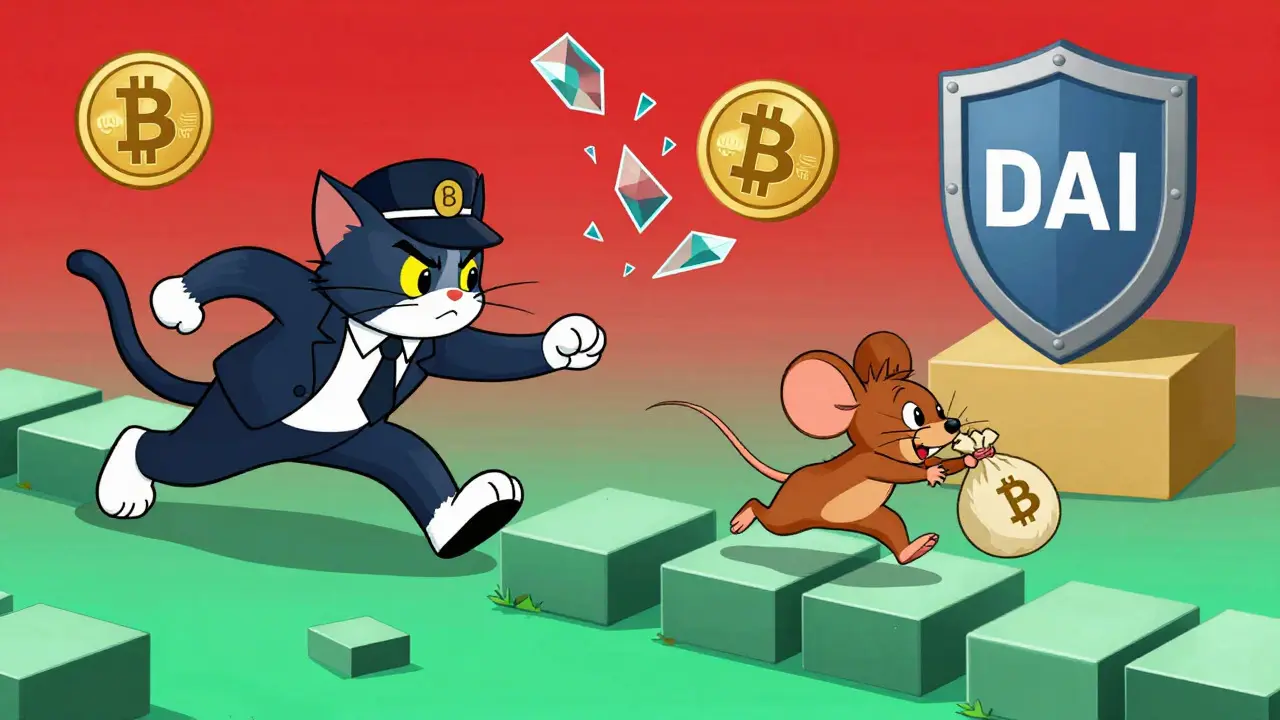
Citizens in sanctioned countries increasingly use DeFi platforms to swap tokens, lend assets, and earn yields. For example, when Tether froze 42 Iranian-linked addresses in July 2025, users didn’t panic-they pivoted. Many swapped their USDT holdings into DAI via the Polygon network, preserving liquidity while avoiding direct exposure to sanctioned stablecoins. This kind of agility shows how deeply embedded crypto has become in daily life for those under sanctions.
- No KYC required: Most DeFi platforms don’t ask for ID documents.
- Global accessibility: As long as you have internet access, you can interact with smart contracts.
- Censorship resistance: No single entity can shut down a protocol overnight.
But here’s the catch: DeFi isn’t foolproof. In January 2025, OFAC issued its first-ever sanction against a DeFi protocol, freezing $150 million in assets. That was a wake-up call for many users who thought they were safe outside the reach of traditional regulation.
Stablecoins Under Pressure: The USDT Freeze Effect
Stablecoins like Tether (USDT) and USD Coin (USDC) are popular among users in sanctioned countries because they offer stability amid volatile local currencies. But they’re also vulnerable to enforcement actions. When Tether froze funds linked to Iranian exchange Nobitex in July 2025, it sent shockwaves through the community. Users had to act fast to avoid losing access to their funds.
| Stablecoin | Issuer | KYC Required? | Sanction Risk | Popularity in Restricted Areas |
|---|---|---|---|---|
| USDT | Tether | Yes (for large withdrawals) | High | Very High |
| USDC | Circle | Yes | Medium-High | Moderate |
| DAI | MakerDAO | No | Low | Growing Rapidly |
| BUSD | Paxos/Binance | Yes | High | Declining |
As shown above, DAI has emerged as a safer alternative due to its decentralized nature. It’s pegged to the dollar but not controlled by any single company, making it harder for authorities to freeze. However, even DAI isn’t completely immune-if the underlying collateral gets flagged, there could be ripple effects.
Peer-to-Peer Trading: The Human Network
When centralized exchanges become too risky, people turn to each other. Peer-to-peer (P2P) trading platforms allow buyers and sellers to connect directly, often using escrow services to ensure trust. These platforms thrive in sanctioned regions because they operate largely off-grid from traditional banking systems.
In Iran, P2P networks have grown significantly since 2023. Local influencers and Telegram groups coordinate trades, helping users find reliable partners. Similarly, in Russia, after Garantex was seized by law enforcement in March 2025, many traders moved to informal P2P channels or successor platforms like Grinex.
Here’s how typical P2P transactions work:
- User A posts an ad offering BTC for cash or bank transfer.
- User B responds and agrees to terms.
- Funds are locked in escrow until both parties confirm completion.
- Once verified, the release happens automatically.
This method works well for small amounts, but scaling it requires strong reputation systems-and those are hard to build when anonymity is key.
Successor Platforms and Shadow Exchanges
When one exchange falls, another rises. This pattern became clear with the case of Garantex, a Russian crypto platform sanctioned by OFAC in 2022. After its domain was seized and over $26 million in crypto frozen, Garantex didn’t disappear-it evolved. Its operations shifted to Grinex, a new platform that mirrored its functionality while dodging legal scrutiny.
These “shadow exchanges” often rebrand frequently, change domains, and rely on offshore hosting to stay ahead of investigators. Some even mimic legitimate brands to confuse users and evade detection. MKAN Coin, operating out of Dubai, is one such example-it replicates Garantex’s core functions while claiming independence.
What makes this model resilient is its decentralization at the operational level. Even if one node goes down, others pick up the slack. And thanks to cross-border payment processors like Exved, these platforms continue facilitating dual-use goods imports into Russia despite heavy pressure.
Regulatory Crackdowns and Enforcement Trends
Enforcement agencies aren’t sitting idle. OFAC now tracks over 1,200 crypto wallet addresses on its Specially Designated Nationals (SDN) List. They collaborate closely with INTERPOL and Europol to enforce compliance across borders. Penalties imposed on crypto businesses for sanctions violations totaled $430 million in 2024-a 40% jump from the previous year.
The ShapeShift case stands out as a cautionary tale. The Swiss-based exchange paid $750,000 in fines in 2025 for allowing users from Cuba, Iran, Sudan, and Syria to transact illegally. OFAC found that ShapeShift lacked a proper sanctions compliance program entirely. That sends a message: ignorance won’t protect you anymore.
Meanwhile, mixers like Tornado Cash face increasing heat. Five major enforcement actions targeted mixer-like services in 2024, signaling that privacy tools are no longer safe havens. Yet, demand remains high-especially in countries where financial freedom is limited.
Adapting to Change: What Users Do Next
If you live in a sanctioned country and want to keep using crypto, you need to think strategically. Here are some practical steps:
- Diversify your wallets: Don’t put all your eggs in one basket. Use multiple chains and platforms.
- Monitor news feeds: Stay updated on OFAC actions and exchange freezes so you can react quickly.
- Use non-custodial solutions: Keep control of your private keys wherever possible.
- Explore Layer-2 networks: Platforms like Polygon and Arbitrum offer faster, cheaper transactions with less visibility.
- Join trusted communities: Telegram and Discord groups often share real-time updates about safe routes.
Remember, the goal isn’t just to access crypto-it’s to do so safely and sustainably. One wrong move could lead to frozen assets or worse.
Looking Ahead: The Future of Access
The battle between enforcement and evasion will only intensify. With an 18% annual growth rate in crypto sanctions, expect more aggressive moves from governments. At the same time, users will keep finding creative ways around restrictions. We’re seeing early signs of this with the rise of decentralized identity solutions and zero-knowledge proofs, which could make future transactions nearly impossible to trace back to individuals.
For now, though, the best strategy is adaptability. Whether you’re swapping to DAI, joining a P2P network, or experimenting with DeFi protocols, staying informed and flexible is crucial. Because in the world of sanctioned crypto, tomorrow’s workaround might be today’s vulnerability.
Can I use Bitcoin in a sanctioned country?
Yes, Bitcoin is widely used in sanctioned countries due to its censorship-resistant nature. However, converting it to fiat currency may still pose challenges depending on local regulations and available exchanges.
Is DeFi truly anonymous?
Not entirely. While DeFi doesn’t require KYC, blockchain transactions are public. Advanced analytics firms can sometimes link wallets to identities through behavioral patterns or metadata leaks.
What happened to Garantex?
Garantex was sanctioned by OFAC in 2022 and later seized by law enforcement in March 2025. Its operations continued under new names like Grinex, showing how resilient shadow exchanges can be.
Why did Tether freeze Iranian-linked addresses?
Tether acted to comply with U.S. sanctions. On July 2, 2025, it froze 42 addresses connected to Iranian exchange Nobitex, prompting users to migrate to alternatives like DAI.
Are mixers still useful for evading sanctions?
Mixers like Tornado Cash help obscure transaction trails, but they’ve faced increased scrutiny. Five major enforcement actions hit mixer-style services in 2024, reducing their safety margin.
Which stablecoin is safest for sanctioned users?
DAI is currently considered the safest option due to its decentralized structure. Unlike USDT or USDC, it’s not controlled by a single entity that can freeze funds on regulatory orders.
How does OFAC track crypto wallets?
OFAC maintains a list of over 1,200 sanctioned wallet addresses. It uses chain analysis tools and collaborates with global agencies to identify and flag suspicious activity.
Can I legally hold crypto in a sanctioned country?
Legality varies by country. In Iran, crypto trading is taxed but not banned outright. In Russia, it’s regulated but permitted. Always check local laws before engaging in significant transactions.
What role do Telegram bots play in crypto access?
Telegram bots serve as informal marketplaces for P2P trades, especially in sanctioned regions. They enable quick communication and coordination among users looking to buy or sell crypto discreetly.
Will DeFi ever be fully regulated?
Some form of regulation is likely, but full control over DeFi is difficult due to its decentralized architecture. Regulators may focus on on-ramps/off-ramps rather than trying to govern protocols themselves.

Write a comment