Every day, billions of dollars move through cryptocurrency networks. Most of it is legal. But some of it? It’s dirty. Stolen. Laundered. And traditional banks can’t see it coming.
That’s where AML technology and blockchain analytics come in. They’re not just buzzwords. They’re the reason crypto exchanges aren’t getting shut down by regulators. They’re why your Bitcoin wallet isn’t frozen because someone else used it to move drug money. And they’re the only reason this industry still exists without full government takeover.
Why Old AML Systems Fail in Crypto
Think about how banks fight money laundering today. They watch for red flags: big cash deposits, rapid transfers, accounts with no clear purpose. But crypto doesn’t work like that. There are no tellers. No physical branches. No IDs required to create a wallet. A criminal can generate 10,000 wallets in five minutes and move funds across continents without leaving a paper trail.
Traditional AML tools? They’re blind. They rely on structured data-names, account numbers, addresses. Crypto uses public keys: long strings of letters and numbers like 0x742...a9f. No name attached. No bank branch. No human to question.
That’s why false positives are everywhere. A legitimate user sending $5,000 to a friend in Ukraine? Flagged. A small business paying a freelancer in crypto? Flagged. Meanwhile, a criminal moving $50 million through 47 mixers and 12 DeFi protocols? Goes unnoticed. That’s the system we had before blockchain analytics.
How Blockchain Analytics Works
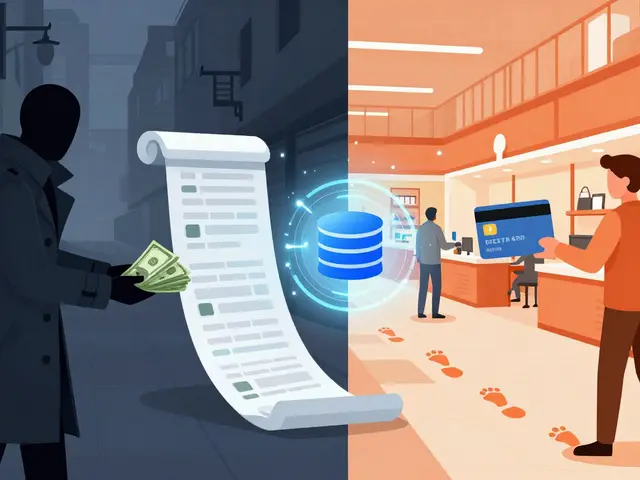
Blockchain analytics flips the script. Instead of asking, “Who is this person?” it asks, “Where did this money come from?”
Every Bitcoin, Ethereum, or Solana transaction is recorded forever on a public ledger. No one can delete it. No one can hide it. Blockchain analytics tools follow those trails like detectives following footprints in snow.
Platforms like Chainalysis, Elliptic, and TRM Labs don’t just look at single transactions. They map entire networks. They connect wallet addresses to real-world entities-exchanges, darknet markets, ransomware operators. They track when funds move from a known criminal address to a centralized exchange. They spot clustering patterns: dozens of small deposits funneling into one large withdrawal. That’s classic layering-the second stage of money laundering.
Here’s how it works in practice:
- A wallet linked to a past ransomware attack sends 0.5 BTC to another wallet.
- That wallet sends 0.1 BTC to a DeFi protocol, then 0.2 BTC to a mixer.
- The mixer combines it with 100 other transactions and sends out 0.3 BTC to a new address.
- That address sends the funds to Binance.
Without blockchain analytics, this looks like five separate, normal transactions. With it? The system flags the entire chain as high-risk. It doesn’t need to know who owns the wallets. It just needs to know where the money’s been.
The Role of AI and Machine Learning
Blockchain analytics isn’t just about tracing paths. It’s about predicting behavior.
AI models now analyze millions of transactions daily. They learn what normal looks like. A user who sends $100 every Friday to the same online store? That’s fine. A user who suddenly sends $10,000 to 15 different wallets in 12 hours? That’s not normal. The AI spots it. It learns from past cases of fraud. It gets better over time.
Some systems even use natural language processing. They scan chat logs from dark web forums, Telegram groups, and crypto forums to find keywords linked to laundering: “mixer,” “chain hopping,” “no KYC,” “cash out fast.” They cross-reference those with on-chain activity. If someone’s posting about moving crypto through a mixer-and then you see a wallet doing exactly that? That’s a high-confidence alert.
And it’s not just about spotting criminals. It’s about protecting good users. AI reduces false positives by 60-70% compared to rule-based systems. That means fewer frozen accounts. Fewer angry customers. Fewer compliance officers working 80-hour weeks.
Decentralized Identity and KYC 2.0
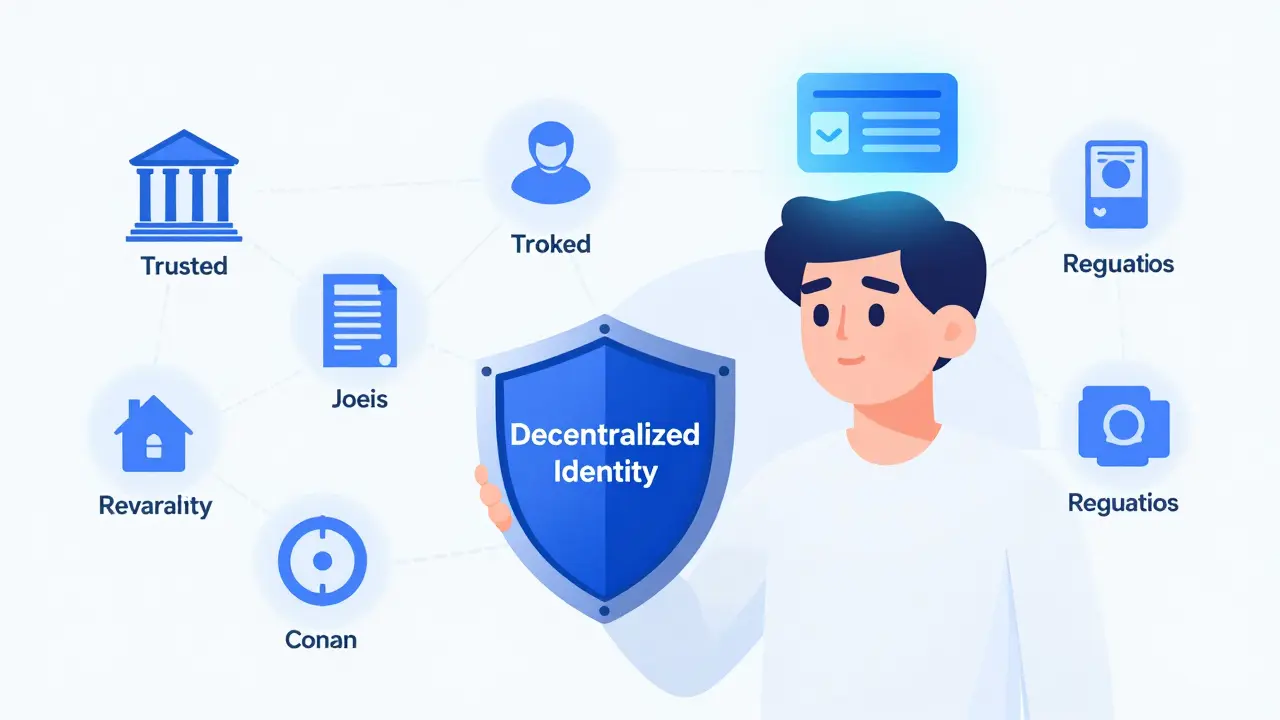
One of the biggest headaches in crypto compliance? Know Your Customer (KYC). Every exchange wants your ID. Your selfie. Your utility bill. It’s invasive. It’s slow. And you have to do it over and over-for every platform.
Enter decentralized identity (DID). Platforms like Sovrin and uPort let users own their identity data. Instead of giving your passport to 10 different exchanges, you create a verifiable credential on the blockchain. It’s encrypted. It’s tamper-proof. You control who sees it.
When you sign up for a new exchange, you don’t upload your ID. You share a cryptographic proof: “This person has passed KYC with a licensed provider.” The exchange checks the blockchain. It’s instant. No documents. No delays. And you never give away your personal data.
Consortiums like R3 and Hyperledger are building these networks. Banks, crypto firms, and regulators all participate. Once you’re verified once, you’re verified everywhere. That’s not just convenient. It’s revolutionary.
Smart Contracts: Automated Compliance
Imagine a smart contract that freezes funds if they come from a sanctioned address. Or one that blocks a withdrawal if the user hasn’t completed KYC. Or one that auto-files a SAR (Suspicious Activity Report) to regulators when a threshold is crossed.
That’s not science fiction. It’s happening now.
Some DeFi protocols are building compliance directly into their code. If you try to swap tokens from a wallet linked to North Korean hacking groups, the transaction fails. No human needed. No delay. No loophole.
This shifts compliance from reactive to proactive. Instead of waiting for regulators to catch up, the system enforces rules in real time. It’s not perfect-bad actors still find ways around it. But it raises the cost of crime so high that most give up.

Why This Matters for You
Maybe you’re a crypto investor. Maybe you run a small business that accepts Bitcoin. Maybe you just want to use DeFi without getting your account shut down.
Here’s the truth: if you’re using crypto in 2026, you’re already living in a world shaped by AML technology and blockchain analytics. It’s not optional. It’s the foundation.
Without it, exchanges would be blocked by banks. Wallets would be frozen randomly. Governments would ban crypto entirely. The industry wouldn’t survive.
With it, you get:
- Fewer account freezes
- Faster onboarding
- More stable platforms
- Lower fees (because compliance costs dropped 30-50%)
- Real protection from scams and stolen funds
It’s not about surveillance. It’s about safety. Just like seatbelts don’t mean the government doesn’t trust you-they mean you’re less likely to die in a crash.
The Future: Smarter, Faster, More Connected
What’s next? In 2026, we’re seeing three big shifts:
- Behavioral AI-systems that don’t just look at where money went, but how it moved. Did it hop chains? Did it wait 72 hours before cashing out? Did it mimic a legitimate merchant? That’s the new frontier.
- Global data sharing-regulators in the U.S., EU, and Singapore are starting to share blockchain analytics data. No more jurisdictional blind spots.
- On-chain identity-your wallet address might soon carry a reputation score. Not based on your name, but on your transaction history. Good behavior = lower fees. Suspicious activity = restrictions.
The goal isn’t to control crypto. It’s to make it trustworthy. And that’s the only way it survives.
Final Thought: It’s Not About Technology. It’s About Trust.
Blockchain was supposed to be anonymous. But the truth? Real freedom isn’t hiding. It’s being trusted.
AML technology and blockchain analytics aren’t killing crypto’s promise. They’re protecting it. They’re turning a wild, lawless frontier into a financial system people can actually use-without fear of being robbed, scammed, or shut down.
If you’re still skeptical? Ask yourself this: Would you rather use a crypto exchange that can’t track dirty money? Or one that keeps your funds safe, your account active, and your transactions fast?
The answer isn’t even close.

Devyn Ranere-Carleton
so like... i just tried to send some btc to my buddy and got flagged for 'suspicious clustering'? wtf. i'm not laundering, i just buy coffee with crypto now. why does it feel like i'm under surveillance just for using the tech i paid for?
christal Rodriguez
Freedom isn't being trusted. It's being left alone.
Dahlia Nurcahya
I get where the concern is coming from, but honestly? This tech is what's keeping crypto from becoming a total free-for-all. I've had accounts frozen before because of bad actors using shared addresses. Now? My transactions clear faster and I actually feel safe. It's not perfect, but it's way better than the chaos we had 5 years ago.
josh gander
Man, I used to think blockchain was all about anonymity, but now I see it’s more about accountability. Like, yeah, my wallet’s public-but so is my reputation. I’ve been doing legit DeFi swaps for years, and my address has a clean history. That’s worth something. I don’t mind if the system knows I’m not a scammer. In fact, I want it to know. It means I get lower fees and faster withdrawals. And honestly? The AI false positive drop is insane. I used to get flagged every time I sent $200 to my sister for concert tickets. Now? Nothing. She’s not a ransomware gang. 😅
Sunil Srivastva
In India, we’ve seen a lot of scams using crypto as a front. This kind of analytics is actually helping local users avoid getting scammed. I’ve helped friends set up wallets with proper KYC via DID, and now they can use exchanges without fear. It’s not perfect, but it’s a big step forward. Trust isn’t about hiding-it’s about proving you’re clean without giving up your privacy.
Kevin Thomas
You people are acting like this is some Orwellian nightmare. It’s not. It’s the difference between a bank that lets you get robbed and one that stops it before it happens. If you’re not doing anything shady, why are you mad that the system works? I’ve seen people lose life savings because some exchange didn’t have analytics. Now? They don’t. And guess what? Crypto’s growing. Because it’s not a wild west anymore. It’s a real financial system. Get over it.
Robert Mills
This is the future and it’s lit 🔥
Jerry Ogah
They’re not protecting crypto. They’re killing it. Every time you trace a transaction, you’re erasing the soul of decentralization. This isn’t compliance-it’s control dressed up in tech jargon. They want to turn Bitcoin into a government-approved credit card. And you’re clapping? Pathetic.
Andrea Demontis
I’ve been thinking about this for weeks. The real question isn’t whether blockchain analytics works-it’s whether we’ve confused safety with surrender. We built crypto to escape surveillance, to break the chain of trust imposed by banks and states. Now we’re building new chains-algorithmic ones, invisible ones, harder to escape. Is this progress? Or just a more elegant cage? The money trails are clear, yes. But what about the human right to be untracked? Not everyone who moves crypto is a criminal. Some of us just want to exist outside the system. And now, even that’s being mapped.
Richard Kemp
i think this is cool but kinda scary at the same time? like i get it but also… my wallet’s basically an open book now. hope they don’t start selling this data to advertisers next.
Gurpreet Singh
In Pakistan, we’ve had people lose everything because they didn’t know how to use crypto safely. These tools? They’re lifesavers. I’ve taught my cousins how to check their wallet history using blockchain explorers. Now they know if a sender is flagged. It’s not about trust in the system-it’s about trust in yourself. Learn how it works, and you’re not a victim. You’re in control.
Christopher Michael
The real innovation here isn't the analytics-it's the convergence of decentralized identity, AI-driven behavioral modeling, and on-chain smart contract enforcement. This isn't just compliance; it's the birth of a self-regulating, trust-minimized financial infrastructure. The fact that SARs can be auto-filed via smart contracts? That’s a paradigm shift. We’re moving from reactive policing to proactive governance. And honestly? It’s beautiful. The old guard didn’t see it coming. The regulators are still playing catch-up. But the code? The code is already there.
Parth Makwana
The integration of blockchain analytics with institutional-grade AML frameworks represents a quantum leap in financial integrity. The confluence of on-chain clustering detection, NLP-driven dark web sentiment correlation, and DID-based KYC orchestration is not merely an enhancement-it is the foundational architecture of next-gen DeFi compliance. Enterprises that fail to adopt this stack will be rendered obsolete by regulatory attrition and systemic exclusion.
Elle M
Oh wow, so now we’re praising surveillance as ‘safety’? Next they’ll say seatbelts are proof we love the government. This isn’t protection. It’s the slow, quiet death of financial privacy-and you’re all applauding like it’s a TED Talk. America, you’ve been sold a lie wrapped in a whitepaper.
Rico Romano
Honestly, if you’re surprised by this, you never understood crypto. The blockchain was never meant to be anonymous-it was meant to be transparent. The real criminals were the ones who lied about it. Now the system finally works the way it was designed. And you? You’re still stuck in 2014 thinking privacy means hiding. Wake up. The future belongs to those who operate in the light.
Crystal Underwood
You think this is safe? This is a dictatorship in beta. They’re building a financial caste system where your wallet score determines if you can buy bread. And you’re thanking them? You’re not a user-you’re a data point. And soon, your ‘good behavior’ will be taxed. Mark my words: the next step is mandatory transaction fees for ‘low-trust’ wallets. And you’ll pay it with a smile.
Raymond Pute
Look, I get the appeal. I really do. But this whole thing feels like we’re trading one kind of control for another. The bank used to be the gatekeeper. Now it’s the algorithm. And guess what? Algorithms don’t have mercy. They don’t understand context. They don’t care if you’re sending money to your mom’s hospital bill. They just see a pattern. And if you’re not part of the elite who understand the jargon, you’re just collateral damage. I’m not anti-tech-I’m anti-inequality dressed up as innovation.
Jack Petty
This is how they get you. First they say ‘trust us, we’re protecting you.’ Then they track everything. Then they freeze your funds for ‘suspicious activity.’ Then they sell your data to insurers. Then they ban you for ‘risk profile.’ Then they say ‘you had no choice.’ It’s not compliance. It’s social engineering. And you’re all just handing over your keys like good little sheep.