You might be wondering if you can legally buy, sell, or use Bitcoin while living in or doing business with Russia. The short answer is yes, but the details are complicated. As of May 2026, cryptocurrency regulation in Russia sits in a gray area that permits ownership and trading for the wealthy while strictly banning its use for everyday payments by ordinary citizens. It’s not a free-for-all, nor is it a total ban. Instead, it’s a tightly controlled system designed to protect the state’s financial sovereignty while allowing specific economic benefits.
The Current Legal Framework: Ownership vs. Usage
To understand where things stand today, we have to look at the pivotal law passed in July 2020. This legislation legalized cryptocurrency transactions but explicitly banned their use as payment for goods and services within Russia. Enforcement kicked in January 2021. So, what does this mean for you?
- You can own crypto: Holding Bitcoin, Ethereum, or other digital assets is legal. There is no penalty for simply having them in your wallet.
- You cannot pay with crypto domestically: You cannot buy coffee, rent an apartment, or pay taxes using Bitcoin. Attempting to do so violates the ban on domestic payments.
- International trade is different: A major shift occurred in summer 2024. New legislation allowed digital currency payments in international trade. This created a critical exception for companies conducting cross-border business, letting them bypass traditional banking restrictions.
This dual approach shifted the country away from a potential total prohibition. However, it introduced stringent reporting requirements. If you are a business owner looking to settle international debts, crypto is now a viable tool. If you are a consumer trying to avoid the banking system for daily purchases, you are still out of luck.
The Experimental Legal Regime (ELR): Access for the Elite
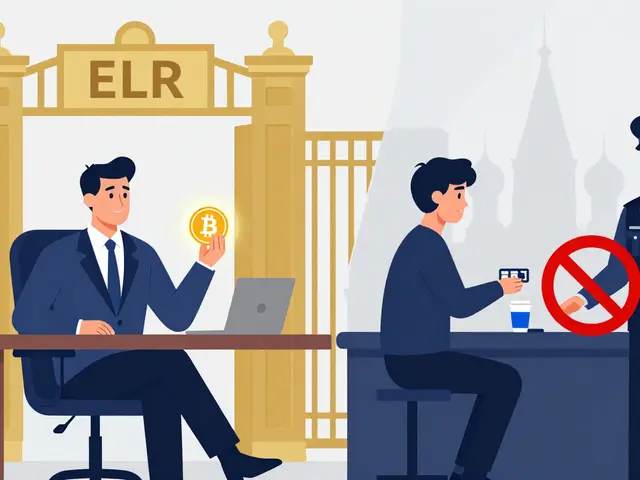
If you want to trade crypto legally through regulated channels, you need to enter the Experimental Legal Regime (ELR). Implemented in March 2025 by the Bank of Russia, this framework is the cornerstone of the country’s regulated crypto market. But don’t expect it to be open to everyone. It is exclusive.
Access is restricted to "highly qualified" investors. The thresholds are steep:
- Private individuals: You must have investments in securities and deposits exceeding 100 million rubles (over $1.2 million) OR an annual income from the previous year of at least 50 million rubles (over $600,000).
- Financial Institutions: Banks and exchanges can participate, which they did quickly. In May 2025, the regulator permitted institutions like Sberbank and the Moscow Exchange to offer crypto derivatives to these qualified investors.
Within the first month of availability, Russian investors purchased $16 million worth of Bitcoin futures under this regime. The Bank of Russia has signaled intentions to allow investment funds to acquire crypto derivatives in 2026, extending access to capital management companies. For the average person, however, the ELR remains closed. This creates a two-tiered market: an exclusive, regulated segment for the wealthy and an unregulated shadow market for everyone else.
Crypto Mining: The Fully Legal Sector
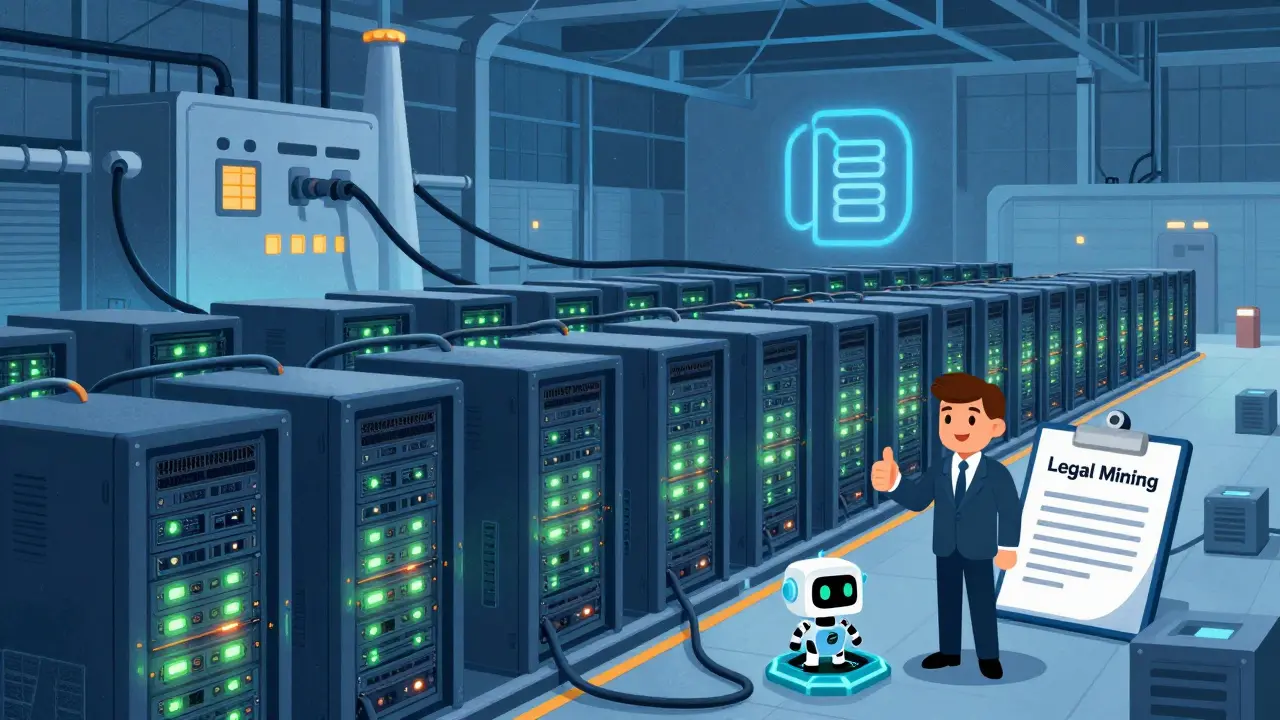
While trading is restricted, cryptocurrency mining is the only fully recognized legal activity in Russia’s digital asset sector. The government has established a registry for mining enterprises and created a taxation system. President Vladimir Putin has actively encouraged regions with idle energy reserves to engage in crypto mining, viewing it as a strategic opportunity for economic development.
Boris Titov, Putin’s aide on business development, emphasized that mining creates infrastructure that can be repurposed for AI tasks. With the AI market projected to grow to $100 billion by 2030, the government sees mining not just as a way to produce coins, but as a foundation for future tech infrastructure. This supportive stance on mining contrasts sharply with the restrictive approach to trading and payments. If you have access to cheap electricity and industrial space, mining is a safe bet. If you’re trying to run a local exchange for retail users, you’re walking on thin ice.
International Trade and Sanctions Workarounds
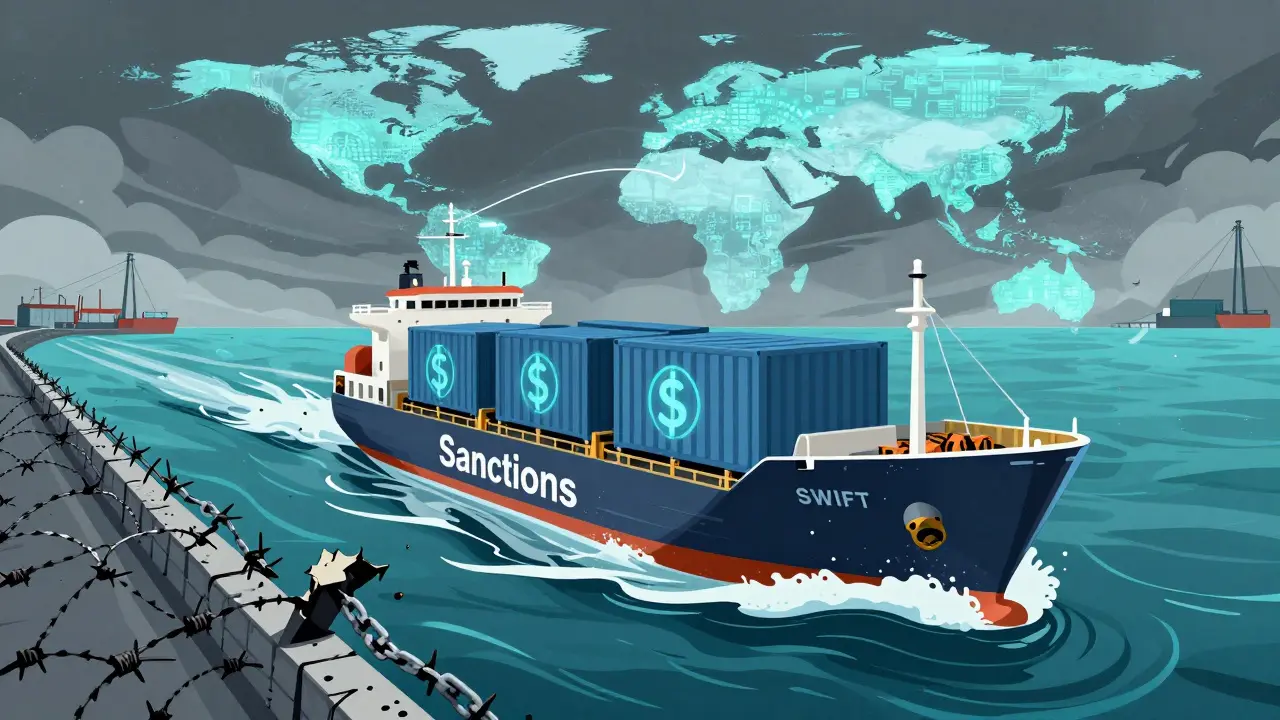
A significant driver behind Russia’s evolving crypto strategy is economic sanctions. Following increased pressure on the traditional financial system, crypto became a practical utility for circumventing restrictions. During the first half of 2025, foreign trade transactions using cryptocurrencies for settlement reached 1 trillion rubles (approximately $12 billion in fiat equivalent), according to estimates by Boris Titov.
This volume demonstrates that businesses are actively using crypto to keep trade flowing. Titov suggested that combining private crypto assets with Russia’s Digital Ruble could create an alternative international payment system independent of sanctions pressure. This isn’t just theory; it’s happening. The goal is to build a financial system that doesn’t rely on SWIFT or US dollars.
| Activity | Legal Status | Key Restrictions/Requirements |
|---|---|---|
| Ownership | Legal | No restrictions on holding assets personally. |
| Domestic Payments | Illegal | Banned for goods, services, and taxes. |
| International Trade | Legal | Allowed for cross-border settlements since Summer 2024. |
| Mining | Fully Legal | Must register enterprise; subject to taxation. |
| Trading (Retail) | Unregulated/Grey | No centralized domestic exchanges; mostly via foreign platforms. |
| Trading (Institutional) | Legal (ELR) | Restricted to highly qualified investors (>100M RUB assets). |
The Digital Ruble and Future Outlook
Russia’s central bank digital currency, the Digital Ruble, plays a key role in this ecosystem. The pilot program began operations on August 15, 2023, with 12 participating banks. By mid-2024, it had processed over 100,000 transactions through approximately 2,500 wallets. While distinct from decentralized cryptocurrencies like Bitcoin, the Digital Ruble is part of the broader strategy to modernize the financial infrastructure.
Regulatory tensions persist between the Finance Ministry and the Central Bank. The Finance Ministry, led by figures like Alexey Yakovlev, advocates for lowering qualification thresholds to widen access. Yakovlev stated at the Eastern Economic Forum that criteria "can be adjusted downwards." However, the Central Bank remains cautious, prioritizing protection of ordinary Russians from crypto risks. This clash reflects a broader debate: policymakers press for expansion to boost adoption, while regulators warn of systemic risks.
Despite regulatory progress, Russia’s position in global crypto adoption has declined, falling to number 10 among adopters. This drop has fueled the Finance Ministry’s push for relaxed rules. Experts anticipate that the three-year Experimental Legal Regime will serve as a testing ground for permanent rules. If thresholds are lowered, we may see more democratized access. Until then, the high barriers limit widespread adoption and drive continued use of unregulated channels.
Compliance and Risks for Businesses
If you are operating a business in Russia, compliance is non-negotiable. The Bank of Russia has implemented robust Anti-Money Laundering (AML) measures. Financial institutions must identify and report suspicious activities, particularly focusing on peer-to-peer transactions used for cryptocurrency purchases. Know Your Customer (KYC) requirements remain central to the government’s approach.
Additional mandatory procedures include:
- Prohibitions on financial institutions investing directly in cryptocurrencies.
- Restrictions on using Russian financial infrastructure for most crypto transactions.
- Enhanced monitoring with information exchange between tax and financial authorities.
Failure to comply can result in severe penalties. The government is keenly aware of the risks associated with illicit finance and is leveraging technology to track crypto-related activities. For businesses, this means maintaining meticulous records and ensuring all crypto usage falls within the narrow legal exceptions, such as international trade or registered mining operations.
Can I use Bitcoin to buy groceries in Russia?
No. Using cryptocurrency for domestic payments, including buying groceries, paying rent, or settling taxes, is strictly illegal in Russia. The ban on domestic crypto payments was enforced starting in January 2021.
Who can trade crypto legally in Russia?
Only "highly qualified" investors can trade legally through the Experimental Legal Regime (ELR). Individuals must have over 100 million rubles in assets or an annual income of 50 million rubles. Financial institutions like Sberbank also participate under strict regulations.
Is crypto mining legal in Russia?
Yes, crypto mining is fully legal. The government encourages it, especially in regions with excess energy capacity. Miners must register their enterprises and pay taxes, but it is one of the few crypto activities without heavy restrictions.
Can Russian companies use crypto for international payments?
Yes. Since summer 2024, new legislation has permitted digital currency payments in international trade. This allows companies to settle cross-border transactions using crypto, helping them navigate economic sanctions.
What is the Digital Ruble?
The Digital Ruble is Russia’s central bank digital currency (CBDC). It is distinct from decentralized cryptocurrencies like Bitcoin. Launched in pilot form in 2023, it aims to modernize the financial system and potentially integrate with international payment networks.
Kiran CS
Oh, how delightful. The oligarchs get their little playground while the rest of us are told to stay in our lanes and buy coffee with rubles that are evaporating like morning dew. Truly a masterclass in equitable financial policy if one ignores basic human rights.
Larry Port
I find it interesting how the state tries to control the narrative around digital assets while simultaneously relying on them for international trade. It’s a paradox that highlights the fragility of traditional banking systems under sanctions. The mining sector seems to be the only bright spot here, but even that is heavily regulated.
Bridget Coogle
It really feels like they are trying to protect people from themselves but ending up just locking them out entirely
Ashley Rodriguez
i think this is actually quite a complex situation because on one hand you have the government wanting to keep control over the money supply which makes sense in a way but then you also have these huge restrictions that basically mean normal people cant use crypto for anything useful at all so its kind of pointless for the average citizen who just wants to save some money or send it to family abroad without paying massive fees to banks that dont care about us anyway and its frustrating because we know technology can do better than this
Zara Zaman
This is exactly why Russia needs to stick to its own financial sovereignty. Letting Western-style crypto anarchy bleed in is dangerous. The ELR is a good filter. Keep the riffraff out.
Michael Berggren
Look at the silver lining! 🌟 Even in a gray area, there is structure. The fact that mining is legal shows a recognition of technological progress. We should celebrate the steps forward, no matter how small they seem. Every regulation is just a stepping stone to broader understanding. 💪✨
Bronwen Butler
youre all missing the point that this isnt about protection its about control and the fact that they call it experimental legal regime is just fancy talk for controlled chaos where only the rich play and everyone else watches
Bijan Das
so basically if you dont have a million bucks you cant touch the shiny new toys huh
Jocelyn Garcia
The arbitrage opportunities between the shadow market and the ELR derivatives are wild right now. Liquidity is thin but the spreads are juicy for those with the capital to enter. Just watch the volatility when the next sanction wave hits.
Amit Varpe
Russia knows what it's doing 👍 Sanctions made us stronger. Crypto is just another tool in the toolbox. West is scared because they can't control it anymore.
Pauline Larocco71
its so hard to navigate all these rules i feel like im always doing something wrong even though im just trying to hold my bitcoin securely
Michelle Bonahoom
typical russian bureaucracy designed to fail the common man while enriching the connected few
Matt Davis
You lot are being far too charitable. This isn’t a ‘gray area’; it is a deliberate stratification of society based on wealth. The notion that this protects financial sovereignty is laughable when the primary beneficiaries are those with offshore accounts. It is not a system; it is a sieve.
beti macedo
it is important to remember that regulations are put in place for a reason and perhaps we should wait and see how the digital ruble integrates with these systems before jumping to conclusions