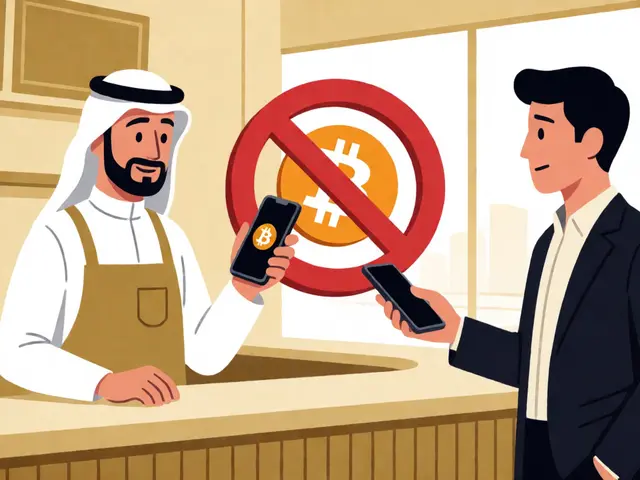
Imagine trying to buy a coffee with Bitcoin in Kuwait City. You pull out your phone, scan a QR code, and the barista looks at you like you just offered them a handful of sand from the desert. It’s not that they don’t understand blockchain; it’s that legally, you can’t do it. The Central Bank of Kuwait (CBK) has enforced an absolute prohibition on all virtual currency activities, making Kuwait one of the strictest jurisdictions for digital assets in the entire Gulf Cooperation Council (GCC).
This isn't a new rumor or a temporary hiccup. Since July 2023, Kuwait has maintained a hardline stance against cryptocurrencies, banning everything from payments and investments to mining operations. While neighbors like the UAE are rolling out red carpets for Web3 companies, Kuwait is closing its doors tighter. If you’re a trader, investor, or tech enthusiast looking at the Middle East landscape, understanding why Kuwait says "no" to crypto-and how strictly they enforce it-is crucial.
The Four Pillars of the Prohibition
Kuwait didn’t just issue a single warning. They coordinated a multi-agency crackdown. On July 17, 2023, four separate government bodies released circulars that collectively shut down the crypto ecosystem. This wasn't accidental overlap; it was a designed net to catch every possible angle of digital asset usage.
The Capital Markets Authority issued Circular No. (10) of 2023, while the Insurance Regulatory Unit followed with Circular No. (6) of 2023. Simultaneously, the Minister of Commerce and Industry and the Minister of State for Youth Affairs released Ministerial Circular No. (1) of 2023. Together with the CBK’s direct orders to banks, these documents created a comprehensive legal framework that leaves no gray areas.
The ban covers four specific areas:
- Payments: Virtual assets cannot be used as a method of payment. They are not recognized as decentralized currency within Kuwait’s borders.
- Investments: Financial institutions cannot offer crypto-related services or treat digital assets as investment vehicles for their clients.
- Licensing: No licenses have been issued for virtual asset service providers, and none are being considered. If you aren’t licensed, you aren’t operating.
- Mining: All forms of cryptocurrency mining are explicitly prohibited.
Why so strict? The primary driver is compliance with international Anti-Money Laundering (AML) and Combating the Financing of Terrorism (CFT) standards. Specifically, Kuwait is implementing Recommendation (15) of the Financial Action Task Force (FATF). By eliminating private cryptocurrencies, regulators argue they eliminate the anonymity gaps that criminals exploit.
Mining: The $1,400 Problem
Here is where things get ironic. Economically, Kuwait should be a crypto miner’s paradise. In 2022, estimates placed Kuwait as the most affordable location worldwide for Bitcoin mining, with costs dropping as low as $1,400 per BTC. Compare that to over $18,000 in Texas at the same time, and you see the massive arbitrage opportunity.
But cheap electricity comes from subsidies, and subsidies come from oil wealth. The government views this subsidized energy as a public resource meant for national development, not for powering anonymous servers that generate profit for offshore entities. When the Ministry of Electricity, Water, and Renewable Energy reported discovering over 1,000 illegal cryptocurrency mining sites, the response wasn't surprise-it was alarm.
| Factor | Status in Kuwait | Regulatory View |
|---|---|---|
| Electricity Cost | Extremely Low (~$0.02/kWh) | Subsidized public utility |
| Mining Profitability | High Potential | Resource drain without tax benefit |
| Legal Status | Prohibited | Violates Industry Law No. 56 of 1996 |
| Enforcement | Active Raids | Referral to investigative authorities |
In April 2025, the Kuwait Ministry of Interior reaffirmed this stance. They cited multiple laws violated by mining operations, including the Industry Law, the Penal Code, and regulations set by the Communications and Information Technology Regulatory Authority (CITRA). The argument is practical: mining rigs deplete power networks and risk blackouts. For a country managing extreme summer heat, grid stability is non-negotiable.

Banking Sector Restrictions
If you try to open a bank account in Kuwait, expect questions about crypto. The CBK prohibits local banks, financing companies, and exchange houses from trading in cryptocurrencies. This goes beyond just holding coins. Banks cannot accept crypto in e-payment transactions, nor can they act as intermediaries between parties wanting to trade digital assets.
This creates a liquidity trap. Even if you own Bitcoin on a foreign exchange, you cannot easily move fiat currency (Kuwaiti Dinar) into or out of that position using local banking channels. The Ministry of Finance does not recognize cryptocurrencies for official commercial transactions. So, if you sell your Bitcoin abroad and transfer the USD back to Kuwait, you must justify the source of funds carefully. There is no official "crypto income" category in the tax or regulatory code.
The CBK has also taken a proactive consumer protection role. They requested the Ministry of Commerce and Industry to warn consumers about the risks of assets like Bitcoin. This paternalistic approach reflects a broader philosophy: protect the citizen from volatility and fraud rather than let the market decide.
Kuwait vs. The Rest of the GCC
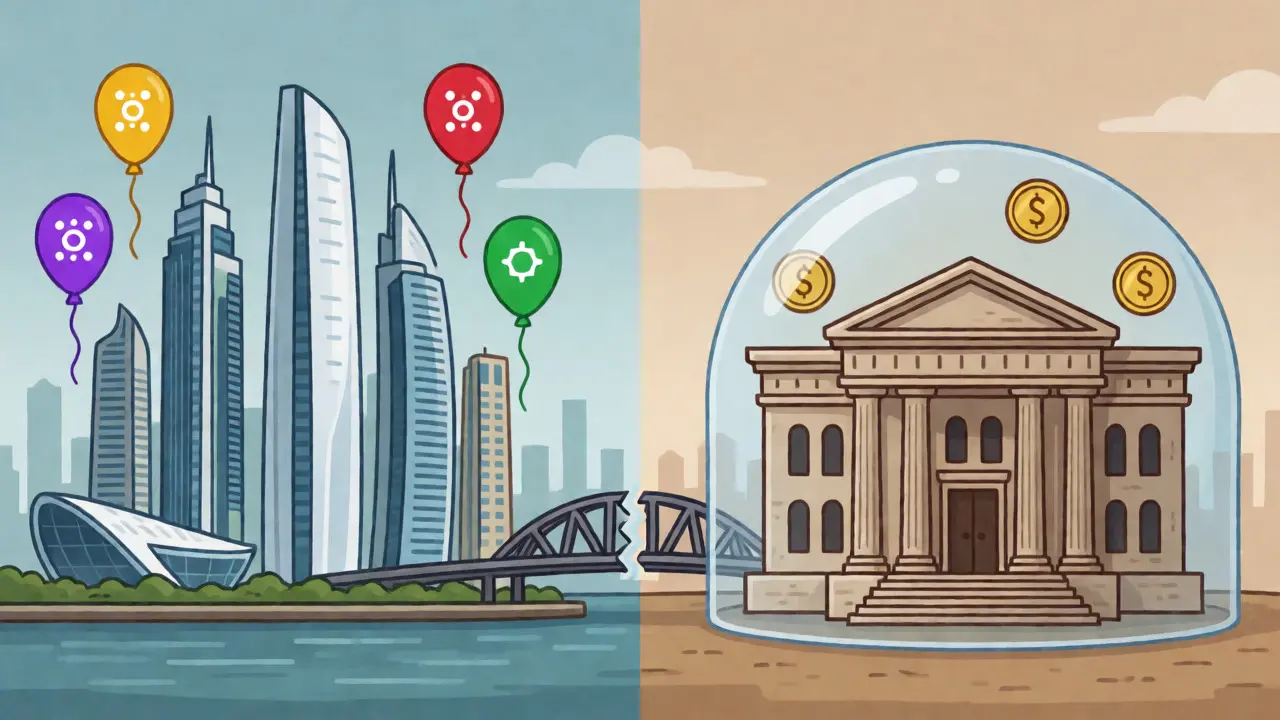
To understand Kuwait’s position, look at its neighbors. The GCC is not a monolith. While Qatar initially shared Kuwait’s restrictive view, it has begun softening its stance. The Qatar Financial Centre is developing a legal framework for digital assets, expected to finalize in mid-2025. Meanwhile, the UAE, Bahrain, Oman, and Saudi Arabia have embraced Central Bank Digital Currency (CBDC) pilots and more permissive regulatory sandboxes.
Kuwait remains the outlier. Why? A fundamental philosophical difference. Kuwait’s financial system is deeply rooted in traditional banking and Islamic finance principles. The introduction of the Sukuk Law aims to enhance legal certainty for Islamic instruments, offering an alternative path for financial innovation that aligns with Sharia compliance. Private cryptocurrencies, often seen as speculative and lacking intrinsic value, clash with this conservative framework.
| Country | Crypto Trading | Mining | CBDC Status |
|---|---|---|---|
| Kuwait | Prohibited | Prohibited | Feasibility Studies Only |
| UAE | Regulated (VARA) | Permitted | Project Aber Pilot |
| Bahrain | Regulated (CBB) | Permitted | Pilot Phase |
| Saudi Arabia | Restricted | Restricted | Project Aber Pilot |
| Qatar | Softening Stance | Unclear | Framework Development |
Note that while Saudi Arabia restricts retail trading, it actively participates in cross-border CBDC projects. Kuwait, conversely, is exploring sovereign digital currency options but maintains its ban on private crypto. This suggests Kuwait isn’t anti-digital; it’s anti-decentralization. They want control over the money supply, which a state-backed digital dinar could provide, whereas Bitcoin offers no such control.
Enforcement and Penalties
Don’t mistake the lack of headlines for lax enforcement. The Kuwait Ministry of Interior, along with the Public Authority for Industry and Kuwait Municipality, conducts coordinated raids. When they find illegal mining setups, the consequences are severe. Violators face referral to investigative authorities and potential legal action under the Penal Code.
The scale of enforcement is telling. Over 1,000 mining sites discovered implies that despite the ban, underground activity persists. These are often small-scale home miners or illicit industrial setups trying to capitalize on cheap power. The government’s message is clear: rectify your status immediately, or face prosecution. There is no amnesty period currently announced for past violations.
For expatriates working in Kuwait, this means caution. Sending remittances via crypto might seem cheaper, but if your employer or landlord refuses to accept it due to regulatory uncertainty, you’re stuck. Always use traditional banking channels for major transactions.
Future Outlook: Will Kuwait Change Its Mind?
As of late 2026, there are no signs of imminent reversal. The enactment of the Financing & Liquidity Law, authorizing up to KWD30 billion in public debt, shows the government’s focus on traditional fiscal tools. They are comfortable with their current trajectory.
However, pressure is mounting. Younger demographics in Kuwait are digitally native and increasingly frustrated by limited investment avenues. With neighboring hubs like Dubai attracting global talent through crypto-friendly visas, Kuwait risks losing competitiveness. A compromise might emerge not through lifting the ban on Bitcoin, but through a tightly controlled Central Bank Digital Currency that integrates smart contract capabilities without the volatility of private tokens.
For now, if you are planning to move to Kuwait or invest in its economy, assume crypto is invisible. It exists globally, but locally, it is legally nonexistent. Plan your finances around the Kuwaiti Dinar and traditional assets, and keep your digital wallet for when you leave the border.
Is Bitcoin legal to own in Kuwait?
While owning Bitcoin personally isn't explicitly criminalized in the same way possession of drugs is, it is effectively unusable. The Central Bank of Kuwait prohibits banks from facilitating crypto transactions, meaning you cannot easily convert Kuwaiti Dinars to Bitcoin or vice versa through local channels. Additionally, using it for payments is strictly forbidden.
Can I mine Ethereum in Kuwait?
No. Cryptocurrency mining is explicitly prohibited under Kuwaiti law. The Ministry of Interior has conducted raids on over 1,000 illegal mining sites. Mining violates the Industry Law and places undue strain on the national electricity grid, leading to fines and potential legal action.
Why did Kuwait ban crypto?
The primary reasons are compliance with FATF anti-money laundering standards, maintaining control over monetary policy, protecting the electrical grid from high-energy consumption mining, and preserving the stability of the traditional banking sector. Regulators view private cryptocurrencies as incompatible with Kuwait's financial architecture.
Are there any exceptions for foreigners?
There are no special exemptions for foreigners regarding the ban. Whether you are a citizen or an expat, the rules apply equally. Foreigners living in Kuwait face the same restrictions on using crypto for payments or accessing local banking services for digital assets.
Is Kuwait working on a Central Bank Digital Currency?
Yes, the Central Bank of Kuwait is conducting feasibility studies for a sovereign digital currency. Unlike private cryptocurrencies, a CBDC would be fully regulated and backed by the state, aligning with Kuwait's preference for centralized control over financial systems.
Bill Patterson
lazy article. missed the point about oil subsidies being the real reason not just aml
Ashwin Bhandurge
Hey everyone! 👋 Just wanted to jump in and say that while it's frustrating for traders, we have to look at this from a macro perspective. Kuwait is protecting its grid stability which is HUGE in summer heat. Think of it as protecting the national infrastructure rather than stifling innovation. It’s all about balance and long-term sustainability! 🚀 Keep pushing forward with traditional finance innovations like Sukuk!
Rajni Mathur
😡 Absolute nonsense. The AML excuse is a smokescreen. 😤
They are terrified of losing control over the money supply. 📉
It is pathetic that a country with such wealth cannot innovate. 🙄
The UAE is eating their lunch. 🍽️
Kuwait is becoming irrelevant. 🗑️
My analysis shows zero future growth potential here. 📊
Stop crying about Bitcoin. 💸
Get real. 🌏
Regulators are incompetent. 🤡
This will fail. 💥
Bill Patterson
@Rajni Mathur lol you sound mad. calm down
Rachel Etheridge
Oh my gosh, this is so heartbreaking!! 😭 I feel for all the expats trying to send money home. It’s just so unfair and confusing!! Why can’t they just allow it?? It feels like they are punishing the people who actually need flexibility!! 😢💔
Matt Reckdenwald
I hear your frustration, Rachel. It really does feel restrictive when you're used to more open markets. However, respecting local laws is part of living abroad. Maybe there's a middle ground coming with the CBDC?
Melanie Armijo
Money is merely a social construct. Whether it is gold, paper, or code, the value exists only because we agree it does. Kuwait is choosing to enforce a specific narrative of value through state power. Is that tyranny? Or is it simply a different definition of order? We must contemplate the nature of trust itself.
Laine Van Sickle
ugh so many rules. i hate it. why cant we just use bitcoin? its easier. this is stupid.
Nadia Christian
Finally!!! Someone gets it right!!!! Kuwait is doing exactly what they should be doing!!!!! No more shady crypto scams!!!! We need strong borders and strong banks!!!!! This is how you protect the economy!!!!! Stop letting these tech bros ruin everything!!!!! USA needs to learn from this!!!!
nic c
While the post touches on the regulatory framework, it fails to adequately address the geopolitical nuances involved in GCC monetary policy alignment, specifically regarding the interplay between Islamic finance principles and modern blockchain utility, which creates a unique friction point that Western analysts often overlook due to their inherent bias toward secular market mechanisms and lack of contextual understanding of regional sovereignty concerns.
Alan Hawkins
Agreed with nic c. The context is key. Also, good breakdown of the mining economics. The $1400 figure is eye-opening.
Steve Sulley
actually ur wrong. kuwait isnt anti-decentralization. they are pro-control. big diff. also the fatf thing is bs. its about oil money staying inside. simple as that. dont overthink it.
David Powell
How quaint. While the rest of the world moves into the digital age, Kuwait clings to its subsidized energy model like a security blanket. It’s not just regulation; it’s intellectual stagnation dressed up as prudence. One almost pities them.
Ellie Brooks
This is so interesting!! I had no idea the electricity costs were that low!! Do you think if they taxed mining instead of banning it, they could make millions?? Like, imagine the revenue!! It seems like a missed opportunity but maybe I am missing something about the grid stability issues?? Please share your thoughts!! 🤔✨
Dave Worth
🕵️♂️ Wake up sheeple!! They ban crypto to keep an eye on YOUR transactions!! 📊 Every coin tracked by the Fed equivalent!! 🏦 No anonymity means total surveillance!! 👁️ They don't want you free!! They want you controlled!! 🎮 Big Brother loves your data!! 📈 #Conspiracy #CryptoBan #Kuwait
Kelechi Precious Nwachukwu
My brother, please understand. In Nigeria, we face similar struggles with currency control. But here, the issue is clear: sovereignty. If you allow external assets to dictate local value, you lose your soul as a nation. It is painful, yes. But necessary for survival. Respect the boundary set by the state. It protects us all.