When you think of blockchain, you probably picture Bitcoin or Ethereum-digital coins traded online. But there’s a quieter, more powerful shift happening: real-world assets are being turned into tokens. A $10 million building in Berlin? Now split into 10,000 digital tokens. A Picasso painting? Fractional ownership sold to investors in Tokyo, Lagos, and Chicago. This isn’t sci-fi. It’s happening now. And behind every one of these tokens is a legal structure-sometimes solid, sometimes shaky-that determines whether you actually own anything at all.
What Exactly Is an RWA Token?
An RWA token is a digital representation of ownership in a physical or legal asset. That could be real estate, fine art, gold bars, music royalties, or even a slice of a commercial loan. The token lives on a blockchain, but the asset it represents doesn’t. It sits in a vault, a registry, or a legal contract somewhere offline.
The big promise? Liquidity. Fractional ownership. 24/7 trading. Before tokenization, buying a piece of a luxury apartment in London meant wiring $500,000 and dealing with lawyers, taxes, and paperwork that took months. Now, you can buy a token representing 0.1% of that property for $500 using a wallet on your phone. But here’s the catch: owning a token doesn’t automatically mean owning the asset. The law decides that.
The Core Legal Question: Is the Token Ownership or Just a Claim?
This is the make-or-break issue in every RWA project. Is the token itself the legal title? Or is it just a digital receipt saying, "You have a claim on someone else who holds the real asset?"
Most RWA projects use what’s called an indirect structure. The asset-say, a warehouse in Houston-is held by a Special Purpose Vehicle (SPV), usually a private company or trust. The SPV owns the asset. Then it issues tokens that represent shares in the SPV. Your token? It’s not ownership of the warehouse. It’s ownership of a share in the company that owns the warehouse.
This matters because courts recognize corporate shares. They don’t always recognize blockchain entries. If the SPV goes bankrupt, your token might be treated like a bond-worth whatever’s left after creditors get paid. But if the legal docs say your token equals direct ownership of the asset? Then you might have a shot at claiming the warehouse itself. That’s rare. And hard to enforce.
Two Main Legal Models: Direct vs. Indirect
There are two ways to structure this. One is common. The other is risky.
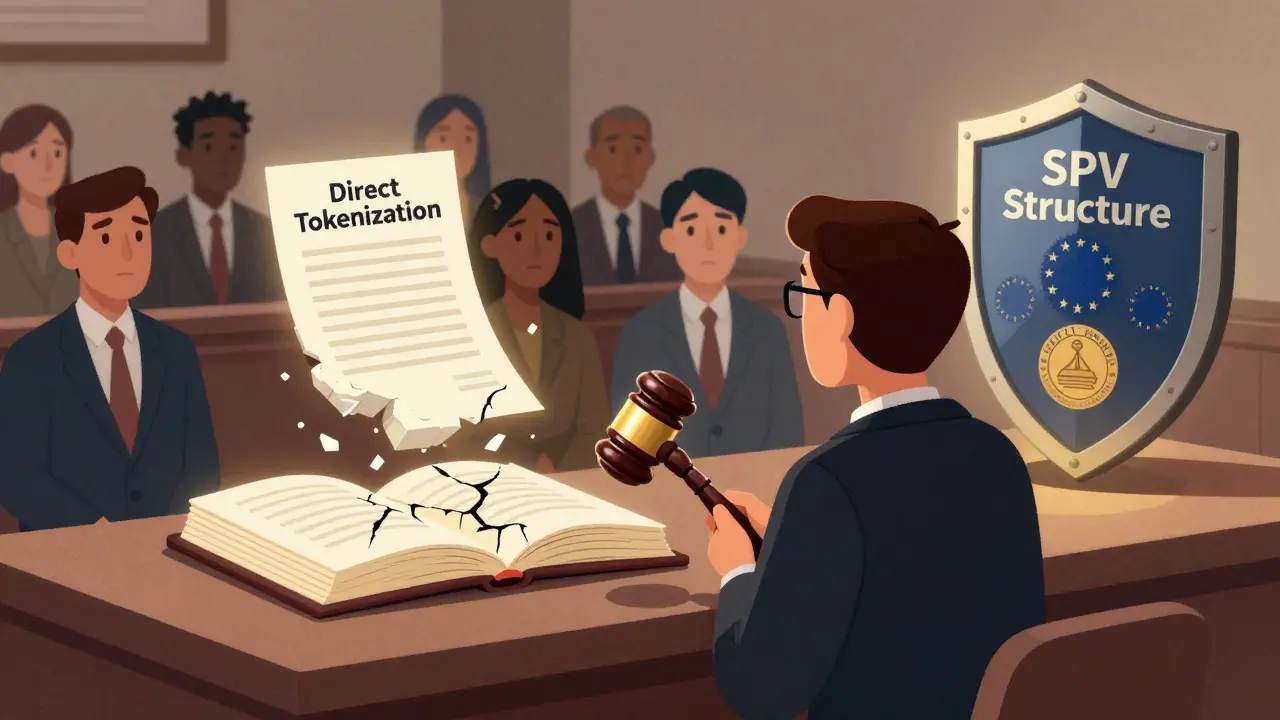
- Indirect (Tokenized SPV): This is the industry standard. The asset is held by a legal entity-usually a limited company or trust. Tokens represent equity or units in that entity. This works because the legal system already knows how to handle companies and trusts. Regulators get it. Investors get it. It’s the safest path.
- Direct Asset Tokenization: Here, the token itself is supposed to be the legal title. No middleman. Your token = deed to the property. Sounds clean, right? But in practice, it’s a legal minefield. Land registries don’t accept blockchain entries. Courts don’t automatically recognize smart contracts as deeds. And if the platform behind the token fails? You might end up with nothing but a digital file and no legal recourse.
A 2024 report from the International Token Standardization Association found that 7 out of 10 failed RWA projects used the direct model. In every case, token holders were treated as unsecured creditors during insolvency-not asset owners.
How Different Countries Handle RWA Tokens
The U.S. and the EU don’t just disagree on RWA tokens-they operate in different legal universes.
In the European Union, the MiCA regulation (Markets in Crypto-Assets) came into full effect in June 2023. It’s the first comprehensive legal framework for crypto-assets outside of securities. MiCA classifies RWA tokens as either "crypto-assets" or "financial instruments." If it’s a financial instrument-like a token tied to rental income from real estate-it’s treated like a security. That means strict disclosure rules, investor protections, and licensing for issuers. MiCA also enforces the Travel Rule: every transfer of a token above €1,000 must carry full identity info of sender and receiver. No exceptions.
In the United States, there’s no single law. Instead, the Howey Test is used. If a token involves investing money in a common enterprise with the expectation of profit from others’ efforts? It’s a security. That triggers SEC rules. Most RWA tokens fail this test. So issuers scramble for exemptions: Regulation D (private placements), Regulation A+ (mini-IPOs), or Regulation S (offshore sales). But enforcement is messy. Between January 2023 and March 2024, the SEC filed 12 enforcement actions specifically targeting improperly structured RWA projects. One case shut down a tokenized fine art platform because investors weren’t verified and the underlying paintings weren’t insured.
Meanwhile, places like Switzerland, Singapore, and the UAE have built specialized regimes. Singapore allows SPVs to hold assets and issue tokens under its Virtual Asset Service Provider (VASP) regime. The UAE’s Virtual Assets Regulatory Authority (VARA) gives licenses to RWA platforms that meet strict custody and transparency rules.
What Legal Work Actually Goes Into This?
You can’t just code a token and call it a day. Legal work starts before the first line of smart contract code.
- First, lawyers determine: Is this asset eligible? Can it be legally owned by an SPV? Are there restrictions on transfer? (Think: heritage art, government land.)
- Second, they pick the jurisdiction. Where will the SPV be registered? Where will investors come from? Each adds legal complexity.
- Third, they draft contracts: SPV articles of incorporation, token purchase agreements, custody agreements with vault operators, investor rights documents.
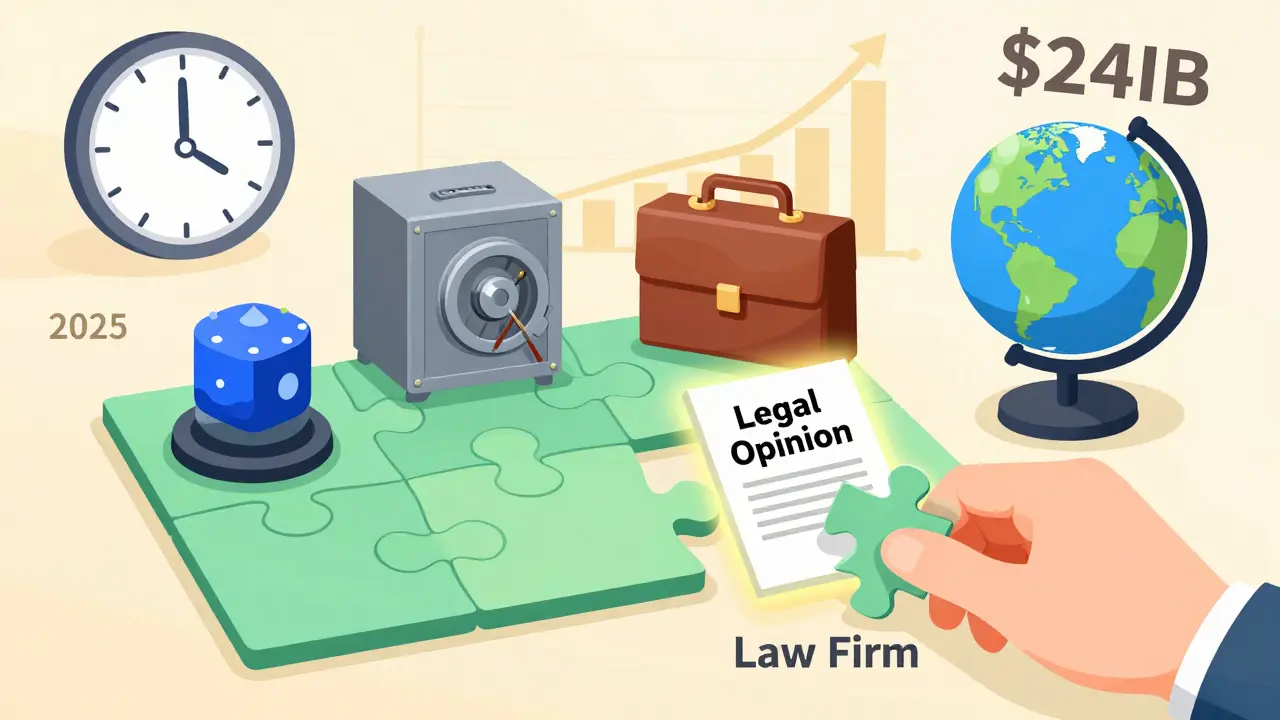
- Fourth, they get legal opinions. A formal memo from a law firm saying, "This structure complies with U.S. securities law and EU MiCA." These cost $50,000 to $250,000.
- Fifth, they integrate with legacy systems. Land registries, securities depositories, bank transfer rails. No blockchain can replace these alone.
For one real estate tokenization in Berlin, the legal team spent 317 hours over 7 months. The project cost $180,000 just in legal fees. But it’s now trading on a regulated exchange with over 2,000 investors from 14 countries.
Why Most RWA Projects Fail (and How to Avoid It)
The biggest mistake? Treating blockchain as magic. It’s not. It’s a ledger. The law still rules.
Projects fail for three reasons:
- No legal wrapper: Tokens are issued without an SPV or clear contractual rights. When the platform disappears, investors have no recourse.
- Wrong jurisdiction: A U.S. startup tries to sell tokens to EU investors without MiCA compliance. Regulators shut it down.
- Bad custody: The asset is held by a non-licensed custodian. No insurance. No audit trail. If the custodian gets hacked or goes bankrupt? The asset vanishes.
The successful ones? They treat legal as part of the product. They hire lawyers early. They get legal opinions. They use licensed custodians like BitGo or Metaco. They document everything. And they don’t promise "ownership"-they promise "beneficial interest in an SPV that owns the asset." That’s the difference between a lawsuit and a smooth exit.
The Future: What’s Coming Next?
By 2025, the EU’s DORA regulation will require RWA platforms to meet strict cybersecurity standards. Think bank-level security for blockchain infrastructure.
The International Swaps and Derivatives Association (ISDA) is drafting standardized legal templates for RWA tokenization. Expected in late 2024, these will give platforms ready-to-use contracts for asset-backed tokens-cutting legal costs by up to 40%.
Real estate is leading the charge. 45% of all tokenized assets are property. In major European cities, 40% of commercial deals are expected to involve tokens by 2025. The market for tokenized assets is projected to hit $24 billion by 2030.
But none of this matters if the legal foundation is weak. The blockchain doesn’t create ownership. The law does. And until every token is backed by a clear, enforceable, jurisdictionally valid legal structure, it’s just a digital promise.
Are RWA tokens considered securities?
It depends on the structure and jurisdiction. In the U.S., if the token represents an investment in a common enterprise with expectation of profit from others’ efforts, it’s likely a security under the Howey Test. In the EU, MiCA classifies many RWA tokens as financial instruments-functionally equivalent to securities. Most tokenized real estate, private credit, and royalty streams are treated as securities in both regions. Simple utility tokens tied to access (like a membership pass) may not be, but most asset-backed tokens are.
Can I own real estate directly through a token?
Technically, yes-but it’s rare and legally fragile. Direct ownership tokens claim to replace deeds or land registries. But no country currently accepts blockchain entries as legal title. Even in places like Switzerland or Singapore, the asset is still held by a legal entity. The token is a claim on that entity, not the land itself. If you want true ownership, you need the paper deed, signed and recorded by a government registry. Tokens can make it easier to trade, but they don’t replace legal title.
What happens if the token platform goes bankrupt?
If the platform is just a website or app that issues tokens without an SPV, token holders become unsecured creditors. They’re last in line when assets are liquidated. But if the asset is held in a properly structured SPV, and the platform merely facilitates trading, then the SPV survives. The tokens still represent ownership in the SPV, and the asset remains intact. The key is separation: the platform should never own the asset. Only the SPV does.
Do I need to be an accredited investor to buy RWA tokens?
In the U.S., yes-unless the offering uses Regulation A+ or Regulation S. Most RWA token sales use Regulation D, which only allows accredited investors (those with $1M net worth or $200k income). In the EU, MiCA allows retail investors to buy non-security crypto-assets, but if the token is classified as a financial instrument (which most RWA tokens are), then only professional investors can buy. Some platforms use tiered access: retail investors get limited exposure, while institutions get full access.
Is RWA tokenization regulated in the U.S.?
Yes-but not uniformly. The SEC treats most RWA tokens as securities and enforces existing rules. Issuers must register the offering or qualify for an exemption like Regulation D. Platforms that trade these tokens must register as broker-dealers or ATSs. The CFTC may also step in if the asset is a commodity like gold or oil. There’s no single RWA law. Instead, multiple agencies apply old rules to new tech. That’s why legal counsel is non-negotiable.

Adam Ashworth
This is the most clear breakdown of RWA legal structures I've seen in months. The SPV model isn't sexy, but it's the only thing keeping these projects from collapsing into legal chaos. I've seen too many teams try to skip the paperwork and end up with nothing but a smart contract and a lawsuit. Legal isn't a cost center-it's the foundation.
Allison Davis
The indirect structure isn't just safer-it's smarter. Tokenizing ownership of a company that owns an asset means you're operating within existing legal frameworks. Courts understand corporations. They don't understand blockchain entries. Period. Any project claiming direct ownership is either naive or deliberately misleading.
Tom Jewell
There's something deeply poetic about this whole thing-human beings trying to encode trust into code. We built blockchains to remove intermediaries, yet here we are, rebuilding the entire legal infrastructure around them. The irony isn't lost: we're using ancient institutions-courts, SPVs, notaries-to validate a technology meant to render them obsolete. Maybe the real innovation isn't the token. It's the stubbornness of law.
karan narware
Ah, yes... the 'legal wrapper.' As if the law ever cared about blockchain... in India, we have 700-year-old land records written on palm leaves, and now you want us to believe a token is worth more? Hah. You're not tokenizing assets-you're tokenizing hope. And hope doesn't pay property taxes.
Michael Suttle
They're all scams. Mark my words. The SEC isn't shutting these down because they're illegal-they're shutting them down because they're NOT controlled by the right people. This whole RWA thing? Just Wall Street's way of getting crypto into retirement accounts without letting us散户 in. They'll let you own a token... but only if you're rich enough to afford their lawyers. Classic.
Jenni James
I'm sorry, but this entire post reads like a whitepaper written by a law firm that got paid $200,000 to make blockchain sound legitimate. You mention 'legal opinions' like they're some kind of holy sacrament. What happens when the law firm goes bankrupt? Or gets subpoenaed? Or decides to side with the custodian? You're building a castle on sand and calling it a 'structured SPV.'
Chelsea Boonstra
Why are people still pretending this isn't just securities fraud with better branding? You say 'beneficial interest in an SPV'-that's just legalese for 'you don't own anything.' The moment the SPV's lawyer signs a waiver saying the token doesn't confer ownership, you're a bondholder. And bondholders get paid last. Always. This isn't innovation. It's rebranding debt.
Alex Thorn
I really appreciate how you laid this out. The fact that 7 out of 10 failed projects used direct tokenization tells me something important: people want simplicity, but simplicity without structure is a trap. The SPV isn't a barrier-it's a bridge. And bridges need foundations. I've advised three clients on this, and the ones who listened to lawyers? They're trading on regulated exchanges. The others? Vanished. Don't skip the boring stuff.
Howard Headlee
Let me tell you something-this isn't about blockchain. It's about access. For centuries, only the rich could own real estate. Now? A college student in Ohio can buy 0.01% of a building in Berlin. That’s revolutionary. Yes, the legal structure is messy. But so was the internet in 1995. We didn’t shut it down because it had no regulation-we built the rules as we went. This? This is the future. And it’s worth fighting for.
Julie Tomek
It is of paramount importance to recognize that the legal architecture underpinning tokenized real-world assets must be not only compliant with jurisdictional mandates but also operationally resilient across cross-border regulatory paradigms. Failure to integrate robust legal counsel at the inception phase invariably leads to systemic vulnerabilities that manifest during insolvency events, as evidenced by the 2024 ITSA report. Furthermore, the adoption of licensed custodians such as BitGo and Metaco is not optional-it is a fiduciary imperative.
Brandon Kaufman
I get why people are skeptical. But I’ve talked to investors from Nigeria, Poland, and Mexico who bought into a tokenized warehouse in Atlanta. They got their first rental payout last month. It wasn’t much-$12. But for them? It was the first time they ever earned passive income from an asset they didn’t have to physically touch. That matters. The law isn’t perfect, but it’s moving. Slowly. But it’s moving.
Craig Gregory
The whole thing is a Ponzi dressed up as a legal opinion. The SPV? Just a shell. The custody? A black box. The 'legal framework'? A PowerPoint deck. You think the SEC cares about your 'beneficial interest'? They care about your money. And when the platform goes dark, your token becomes a .json file with a fancy logo. Wake up.
Anshita Koul
In India, we’ve been doing fractional ownership for centuries-through hundis, joint family land, and cooperative societies. What’s new? The blockchain? No. The promise? Still the same: trust someone else to hold your piece. The difference now? You can trace it. But traceability doesn’t equal ownership. The law still needs to catch up. And until it does? It’s just a ledger with a glow.
PIYUSH KOTANGALE
This is actually really well explained. I was skeptical until I saw how Switzerland handles it-clear SPV, licensed custodian, transparent audits. It’s not magic. It’s just good business. The future isn’t about replacing law with code. It’s about using code to make law work better. And that? That’s worth getting behind.
vishnu mr
i think the spv thing is key but i also think we need to get rid of the idea that tokens = ownership. its more like a receipt with extra steps. the asset is still held by someone. the token just tells you where to ask for your cut. also typo: 'custody' not 'custidy' lol
Grace van Gent-Korver
I just don’t get why we need all this complexity. Why can’t we just have a digital deed? Why does it need a company, a trust, a lawyer, and a $200k legal opinion? Isn’t the whole point of blockchain to simplify?
Zephora Zonum
I find it amusing how people treat this as a breakthrough when in reality, it's just Wall Street repackaging private equity with blockchain branding. The fact that you need a $250,000 legal opinion to make this work proves it's not democratizing anything-it's just creating a new gatekeeping mechanism for the already wealthy. The token? It's a fancy ticket to the same old club.
Anthony Marshall
This is the future. Forget Bitcoin. This is where real value lives. A 14-year-old in Texas can own part of a solar farm in Spain. A single mom in Chicago can earn rent from a building in Lisbon. The law is catching up. The tech is ready. The only thing holding us back is fear. Let’s stop being scared of structure and start building it right.
Lindsay Girvan
The real question isn't whether the token is ownership. It's whether the lawyers who wrote the SPV agreement are still alive when the asset gets foreclosed. Because if they're not? Good luck proving your claim. This whole system is built on trust in institutions that are already crumbling.
Adam Ashworth
To the person who said 'why not just a digital deed?'-because land registries are state-run, paper-based, and legally binding. Blockchain isn't. You can't file a lien on a smart contract. You can't foreclose on a JSON file. The law doesn't care about your wallet. It cares about your deed. And until that changes, the SPV is the only bridge we have.