Imagine buying a piece of art for nearly $100 million, but the art isn't a canvas in a gallery-it's a string of code on a blockchain. That's exactly what happened during the wild ride of the NFT boom. While most people think of NFTs as just overpriced JPEGs, the record-breaking sales of 2021 and 2022 proved that some collectors view digital scarcity as the new gold standard. But how did a few digital files end up costing more than private islands?
The Absolute Record: The Merge
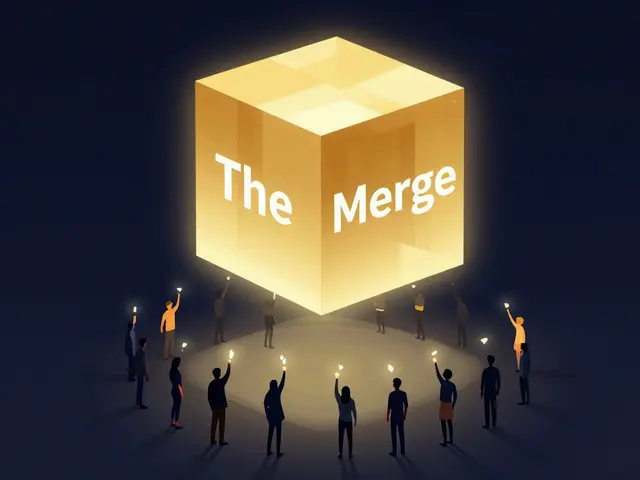
When we talk about the most expensive NFTs, we have to start with The Merge. Created by the mysterious artist Murat Pak, this project shattered all previous records in December 2021, selling for a staggering $91.8 million. However, it wasn't a single person who wrote that check. The sale was a massive social experiment in fractional ownership.
Unlike a traditional painting, The Merge was sold in "mass" units. A total of 28,893 collectors jumped in during a 48-hour window to buy 295,417 individual units. The genius part? The artwork itself is dynamic. It changes based on how many people own pieces of it. This turned the purchase into a community event, though it sparked a huge debate in the art world about whether a fractional sale should count as a single NFT record.
The Moment Digital Art Went Mainstream: Beeple's Everydays
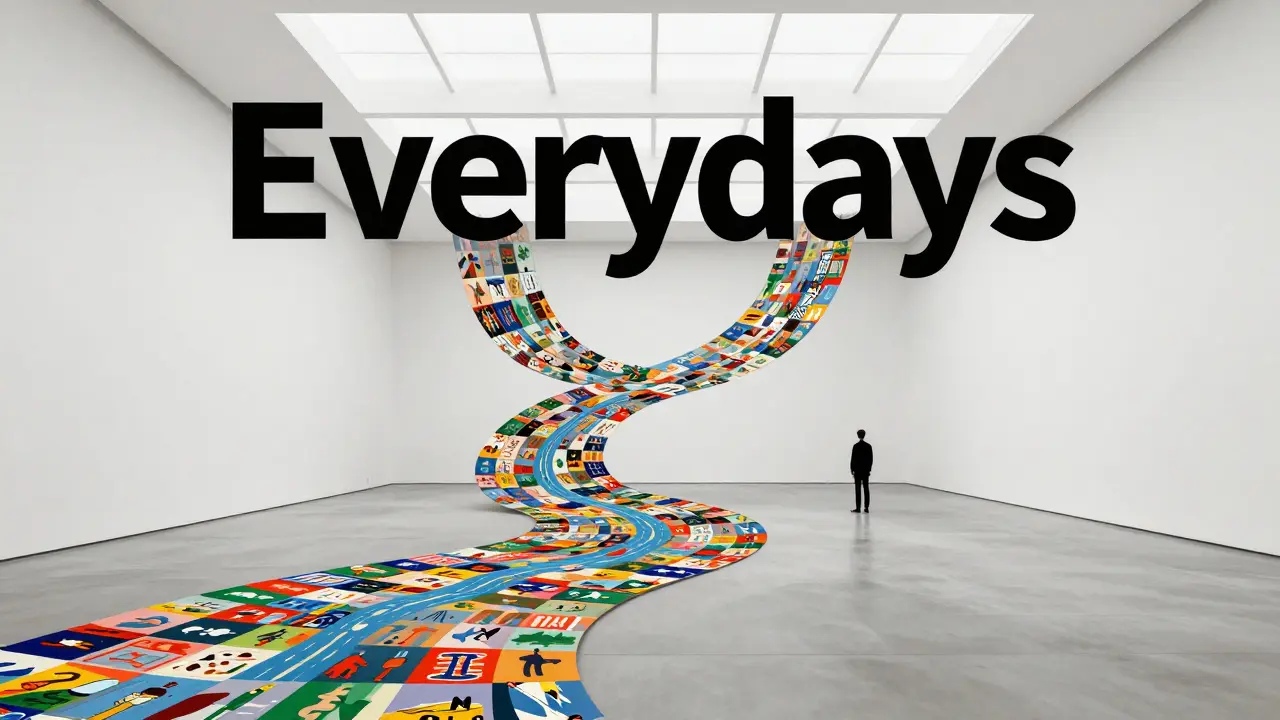
Before The Merge, the world was shocked by Everydays: The First 5000 Days. Created by Beeple (Mike Winkelmann), this piece sold for $69.3 million in March 2021. This wasn't a direct peer-to-peer trade; it happened at Christie's, one of the oldest and most prestigious auction houses in the world.
The piece is a colossal collage of 5,000 images, one created every single day for over 13 years. When Vignesh Sundaresan (known as MetaKovan) bought it, he didn't just buy a file; he bought a testament to consistency and the evolution of digital tools. Beeple didn't stop there-his other work, "HUMAN ONE," sold for $28.95 million shortly after, proving that he was the most commercially successful artist in the space.
| NFT Name | Artist | Sale Price | Key Attribute |
|---|---|---|---|
| The Merge | Murat Pak | $91.8 Million | Fractional Ownership |
| Everydays: The First 5000 Days | Beeple | $69.3 Million | Collage of 5,000 images |
| Clock | Pak & Julian Assange | $52.7 Million | Collaborative Digital Art |
| CryptoPunk #5822 | Larva Labs | $23.7 Million | Rare Ape Attribute |
| HUMAN ONE | Beeple | $28.95 Million | Hybrid Physical/Digital |
The Prestige of the Punks
While Beeple and Pak created unique masterpieces, the CryptoPunks collection proved that "profile picture" (PFP) NFTs could be high-value assets. Created by Larva Labs, these 10,000 pixel-art characters became the ultimate status symbol in the crypto world. Why do they cost so much? It comes down to rarity.
Out of 10,000 punks, only a few have extremely rare traits. For example, CryptoPunk #5822 sold for $23.7 million because it's one of only 24 "Ape" types. Another one, #4156, saw a wild price jump from $1.17 million to over $10 million in just one month in May 2021. It's essentially digital collecting, similar to how people trade rare baseball cards or vintage stamps, but with the added benefit of Ethereum providing an immutable ledger of ownership.
Generative Art and Cross-Chain Records
Not all expensive NFTs are hand-drawn. Some are created by algorithms. The Art Blocks platform is the leader here. One of its most famous pieces, Ringers #109 by Dmitri Cherniak, sold for $6.93 million. This is known as generative art because the code is stored directly on the blockchain, and the final image is "minted" based on that code.
While Ethereum dominates the high-end market, other blockchains have tried to carve out their own space. On the Tron blockchain, TPunk #3442 (the "Joker") sold for $10.5 million to Justin Sun. While some critics call TPunks a copy of CryptoPunks, the sale showed that the appetite for high-priced digital collectibles extended beyond a single network.
The Psychology of the High Price Tag
You might wonder why anyone would pay $69 million for something they can't touch. For collectors like MetaKovan or Ryan Zurrer, it's not just about the art-it's about the movement. They view these purchases as bets on the future of the internet, often referred to as Web3. By buying a record-breaking piece, they are effectively planting a flag in the ground and saying, "Digital ownership is real."
There is also a huge element of social signaling. In the same way a billionaire might buy a Picasso to show wealth and taste, owning a rare CryptoPunk or a Beeple signals that you were an early adopter of blockchain technology. It's a digital badge of honor that is instantly verifiable by anyone with an internet connection.
Where the Market Stands Today
The days of $60 million sales happening every week are mostly over. Following the peak of 2021-2022, the market faced a massive correction. Many "hype-based" projects crashed, but the truly historical pieces have held up better. The "blue chip" NFTs-those with genuine artistic value or historical significance-still command premiums, even if the "floor price" for the average punk has dropped.
We've shifted from a period of pure speculation to one where utility and provenance matter more. The record-breaking sales mentioned above now serve as a historical benchmark, marking the moment society transitioned from seeing the blockchain as just a way to move money (like Bitcoin) to a way to own culture.
What is the most expensive NFT ever sold?
The most expensive NFT is "The Merge" by Murat Pak, which sold for $91.8 million in December 2021. It was a fractional sale involving nearly 29,000 collectors.
Who is Beeple and why is his art so expensive?
Beeple (Mike Winkelmann) is a digital artist who gained fame for creating one artwork every day for 5,000 days. His work is valuable because of its sheer scale, the historical timing of its sale at Christie's, and its role in legitimizing digital art.
Why are CryptoPunks so valuable?
CryptoPunks are valuable due to their historical status as one of the first NFT collections on Ethereum and the extreme rarity of certain traits, such as "Alien" or "Ape" types.
Can anyone buy these expensive NFTs now?
Yes, provided you have the funds. Most are traded on secondary marketplaces like OpenSea or through private deals, though the prices have stabilized or decreased since the 2021 peak.
What is the difference between a regular NFT and a generative NFT?
A regular NFT is typically a static file. A generative NFT, like those on Art Blocks, is created by an algorithm. The code lives on the blockchain, and the final image is generated based on the buyer's specific transaction data.
Write a comment