Non-custodial crypto wallets occupy a strange space in the Indian digital asset landscape. As we move through 2026, the most persistent question isn't whether these tools exist, but whether they are technically legal to use. You might have seen headlines screaming about upcoming bans or total prohibitions. The reality is more nuanced. While regulatory ambiguity remains high, there is no formal legislation explicitly criminalizing the act of holding private keys yourself.
The confusion stems from how authorities categorize services versus personal tools. Many users conflate exchanges with wallets. Exchanges hold your assets; non-custodial wallets do not. Understanding this distinction is vital because the tax regime treats them differently despite the grey areas in enforcement. Let's look at the actual ground situation rather than the fear-mongering headlines circulating on social media.
What Exactly Is a Non-Custodial Wallet?
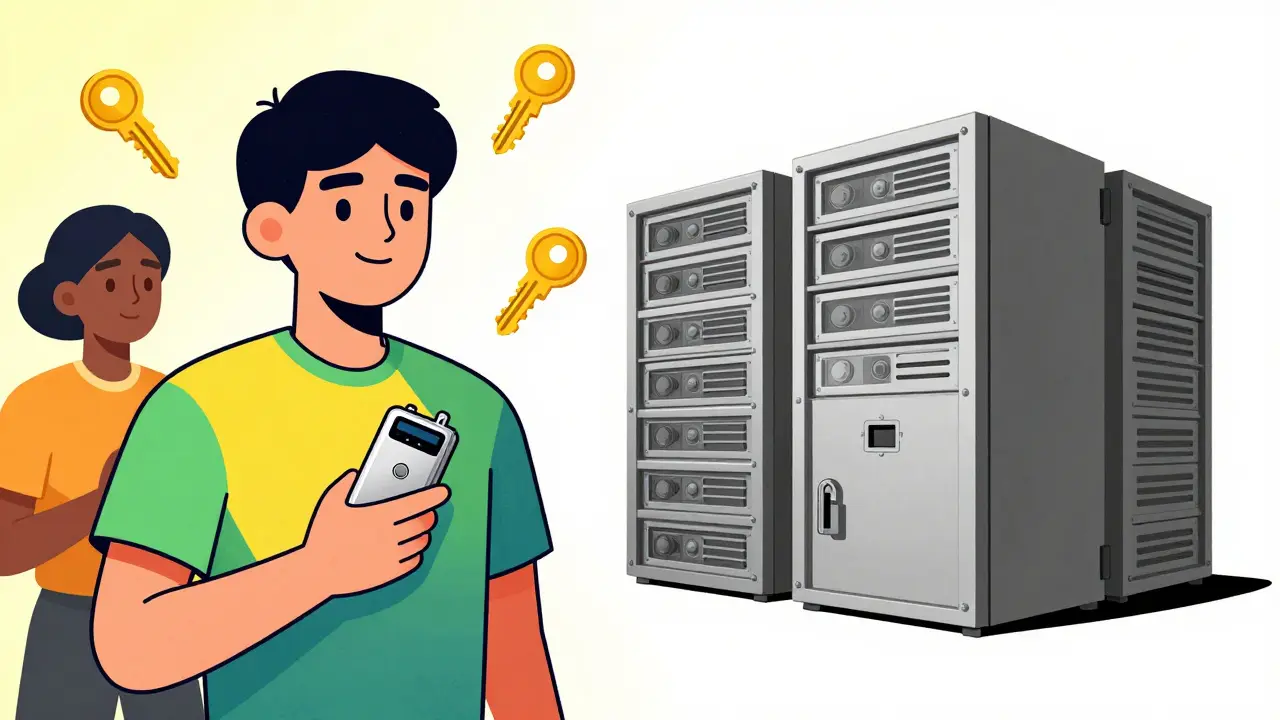
To navigate the regulations, you must first understand the technology. A custodial wallet is managed by a third party like an exchange. They hold the private keys. If the exchange gets hacked or frozen, your access depends on their infrastructure. In contrast, self-custody solutions keep control entirely in your hands. Popular examples include hardware devices like the Ledger Nano S Plus, Ledger Stax, and software apps like MetaMask or Exodus.
This architecture aligns with blockchain's core promise of decentralization. However, it creates friction when interacting with government-mandated reporting systems. In a custodial setup, the company reports transactions automatically. With a non-custodial wallet, you are the sole entity responsible for tracking activity for tax purposes. This shift places the compliance burden directly on the individual user.
Current Regulatory Status and Tax Framework
You need to separate fact from rumor regarding bans. Back in October 2025, Union Minister Piyush Goyal issued a definitive statement clarifying the government's stance. He confirmed that private cryptocurrencies face heavy taxation-specifically a 30% flat capital gains tax and a 1% TDS on transactions-but there is no outright prohibition on ownership or usage.
The real complexity lies in the Virtual Digital Asset (VDA) definition. The Finance Ministry's earlier drafts mentioned prohibiting private currencies, but language was softened to focus on taxation and monitoring. The Financial Intelligence Unit (FIU) released a notification in March 2023 requiring all Virtual Digital Asset Service Providers (VASPs) to register. Here is where the ambiguity spikes: does a person using a MetaMask account count as a service provider?
Technically, FATF guidelines suggest non-custodial wallet providers aren't VASPs unless they control user assets. Yet, the Indian FIU notification often fails to distinguish clearly between the tool (the wallet) and the intermediary (the exchange). This lack of distinction creates a compliance gap. For instance, if you use a non-custodial wallet to interact with a DeFi protocol, you generate a transaction record that doesn't automatically trigger the 1% TDS deduction at source because no bank or exchange intervened.
| Feature | Custodial Wallet (Exchange) | Non-Custodial Wallet (Self-Held) |
|---|---|---|
| Private Key Control | Provider holds keys | User holds keys exclusively |
| VASP Classification | Mandatory Registration | Ambiguous / Likely Exempt |
| TDS Enforcement | Automatically deducted | Manual self-assessment required |
| INR Conversion | Integrated UPI/Bank APIs | Often requires external P2P services |
| KYC Requirement | Mandatory | None (for wallet alone) |
This table highlights why many large holders prefer cold storage. Recent data shows that after the WazirX breach in July 2024, approximately 1.2 million Indian users migrated assets to cold storage to avoid centralized risk. However, convenience is sacrificed. Only three out of ten major non-custodial wallets support direct UPI payments as of late 2025, forcing users to bridge via intermediaries.
Operational Challenges for Indian Users
Even without a ban, the ecosystem is built on constraints. When you download a wallet app like Exodus or Trust Wallet from the Google Play Store, you encounter policies designed for global compliance. On October 29, 2025, Google Play updated its policy to require custodial wallet apps to obtain licenses in 15+ countries. Fortunately, they clarified on October 1, 2025, that non-custodial apps were exempt. This exemption is crucial because it prevents the removal of these utility tools from the app store.
However, connectivity issues persist. Performance metrics indicate that Indian users experience 27% longer transaction confirmation times compared to global averages. This delay isn't network speed; it's due to limited local node infrastructure. India currently operates only 1,247 full Bitcoin nodes, a fraction of Germany's 14,852. When you broadcast a transaction, it may route through international servers, adding latency and sometimes triggering geoblocks on certain DeFi platforms that flag Indian IP addresses.
Tax compliance is the biggest hurdle. The 30% capital gains tax applies to all realized profits. With a non-custodial wallet, you own the ledger. You must calculate the cost basis for every token moved or swapped. Errors here can lead to audits. Surveys conducted in September 2025 showed that 44.8% of users struggled with TDS miscalculations when moving assets between wallets. Tools like BitcoinTaxes.in help automate this, but manual verification is still necessary to satisfy RBI's audit trails for transactions above ₹50,000.
Market Adoption and User Sentiment
Despite the friction, adoption is rising. Statista reports that India ranks second globally in non-custodial wallet adoption, boasting 18.7 million active users out of a total crypto population of 81 million. Why are people sticking with it? Security. The Cambridge Centre for Alternative Finance noted that while India scores poorly on regulatory clarity, users prioritize asset preservation over ease of access.
User sentiment on platforms like Reddit reveals a split. Some appreciate the freedom from exchange freezes, citing reviews where accounts remain accessible unlike exchange withdrawals which sometimes stall due to liquidity issues. Others complain about the difficulty linking INR funding sources. A typical user journey involves buying stablecoins on a regulated exchange, withdrawing to a hardware wallet, and then using a decentralized exchange for trades. This "on-ramp, off-ramp" strategy works but adds friction and taxable events at every step.
Hardware options have stabilized in pricing. The Ledger Nano Stax costs around ₹13,999 as of September 2025. This makes entry relatively affordable compared to the potential loss exposure on unregulated exchanges. However, setup remains difficult for beginners. An IIT Bombay study found an 8-12 week learning curve for non-technical users, with 63.7% needing help for initial seed phrase backup. Losing a recovery phrase means permanent loss of funds-a stark difference from banking where passwords can be reset.

Future Outlook and Legislative Trends
Looking ahead to the rest of 2026, signs of clarity are emerging. A draft amendment circulated by the Ministry of Finance in October 2025 suggests a specific exclusion: "non-custodial wallet providers not facilitating fiat conversion shall not be classified as VASPs." If finalized, this would provide a safe harbor for simple storage tools. Dr. Rajesh Saraf, a former SEBI advisor, projects that India will formally recognize these tools by mid-2026.
However, risks remain. The Financial Intelligence Unit continues to monitor cross-border flows. Their report documented $9.2 billion in unmonitored VDA flows in 2025. Expect stricter KYC requirements for the exchanges you use to fund your wallet, even if the wallet itself stays unregistered. The probability of a sustainable ecosystem by 2030 sits at 73.2%, contingent on these regulatory distinctions being codified into law.
Practical Steps for Compliance
If you intend to hold assets outside an exchange, follow these steps to minimize legal exposure:
- Secure Seed Phrases: Write down your 12-24 word recovery phrase offline. Never store it digitally.
- Track Transactions: Maintain a spreadsheet or use automated tax software for every deposit and withdrawal.
- Use Registered Exchanges: Always move funds through a registered Indian exchange to maintain a clean audit trail.
- Avoid Mixing Services: Coin mixers or tumblers are flagged heavily by Indian authorities and could attract investigations.
- Check Local Nodes: Run a light node if possible to verify transactions independently.
Staying informed is just as critical as the tech itself. Keep an eye on updates from the Department of Revenue and the Securities and Exchange Board of India (SEBI), as they hold the power to interpret VASP definitions. By understanding the lines drawn between custody and tooling, you can participate safely.
Is using a non-custodial wallet illegal in India?
No, it is not illegal. While the government taxes crypto heavily, there is no explicit ban on owning or using non-custodial wallets. The law focuses on taxing profits and regulating service providers, not personal storage methods.
Do I pay TDS on non-custodial wallet transactions?
You are liable for 1% TDS on transactions. Unlike exchanges, non-custodial wallets do not deduct this automatically. You must track and file this manually during your tax return.
Are hardware wallets like Ledger safe in India?
Yes, hardware wallets function fully. They operate offline and do not process Indian currency directly, avoiding most VASP registration triggers. However, you must ensure the device firmware isn't banned by customs upon import.
Can I convert crypto to INR via a non-custodial wallet?
Direct conversion is difficult. Most non-custodial wallets lack integrated P2P or UPI gateways compliant with RBI norms. You typically need to withdraw to an exchange first to sell for INR.
Will Google Play remove MetaMask or Trust Wallet?
Unlikely. Google explicitly exempted non-custodial wallets from their licensing requirement in October 2025, distinguishing them from custodial applications that manage funds.
Matthew Wright
The regulatory ambiguity mentioned in the post is something I've noticed across various jurisdictions as well. It seems like the government is hesitant to fully endorse these technologies while simultaneously fearing a total ban would stifle innovation. Users tend to focus on the tax implications but overlook the privacy aspects inherent in self-custody solutions. Having control over private keys definitely aligns better with the ethos of decentralization compared to relying on third-party infrastructure. Most people probably underestimate the administrative workload required to track every single transaction for tax purposes though. Tools exist to help automate this process but manual verification remains necessary for safety. It's interesting how the narrative shifts from utility to prohibition depending on who is speaking publicly.
Manisha Sharma
Goverment need to stop confus everyone with tax rules. Self custody is freedom not crime. People panik too much abt headlines instead of reading actual notifications from ministry. We are tech savvy nation and shold not be scared by vague laws. Real owners know what they have and do not care about exchange risks anymore. Stop listening to fake news and read FIU docs properly.
Arwyn Keast
While national pride is understandable the regulatory environment here imposes significant burdens that cannot be ignored lightly. The lack of domestic infrastructure creates friction that does not exist in more established markets abroad. Classification of service providers remains inconsistent which complicates cross-border operations significantly. Security protocols must be rigorous regardless of political rhetoric surrounding virtual assets. Personal responsibility is paramount when navigating these evolving legal landscapes globally.
Erica Mahmood
Technical accuracy is key when discussing non custodial architecture. Exchanges hold keys you hold yours. That is the main point. Regulatory frameworks treat them differently. Compliance falls on you. Tracking requires discipline.
Emma Pease-Byron
It is amusing to witness how quickly fear spreads among the uninitiated when regulation is mentioned. One would think basic logic prevails in these discussions yet emotional responses dominate the discourse. The distinction remains obvious to anyone familiar with the foundational architecture of blockchain systems. Perhaps the panic stems from an unwillingness to accept personal responsibility for asset management. Clarity is rarely found in headlines so reliance on primary sources becomes essential for sanity.
Sharhonda Walker
Tax tracking tools ar really helpful for managing the ledgers yourself. I found some good software online that auto calculates gains. Dont rely only on excel sheets sometimes they glitch. Manual checks save you from audits later. Keep records safe too.
Suvoranjan Mukherjee
Absolutely correct regarding the utility of dedicated tax software for compliance tracking. Platforms like BitcoinTaxes.in provide significant automation for calculating realized gains accurately. Relying solely on spreadsheets increases the probability of human error during the filing season. The audit trails generated by these tools satisfy RBI requirements effectively. Proper documentation bridges the gap between crypto assets and traditional reporting norms.
Bruce Micciulla Agency
People always think they understand the legal framework when it comes to these digital assets but they really do not grasp the underlying mechanisms of how the financial intelligence unit operates. The notification from March 2023 was quite vague about who exactly constitutes a service provider and that vagueness creates a lot of anxiety for people holding their own private keys. You see everyone talking about the thirty percent capital gains tax yet nobody seems to worry about the tracking of transactions through the blockchain ledger which remains visible forever. It is frustrating because the authorities often confuse the tool with the intermediary platform even though the distinction is clear in international guidelines. Many users migrate to cold storage after seeing centralized exchanges get breached or frozen during volatile market conditions. They assume that keeping funds offline solves the problem entirely but they forget about the reporting requirements when converting back to fiat currency. The compliance burden shifts entirely onto the individual shoulder meaning you have to maintain your own audit trail manually without any automated assistance. Errors in self-assessment can lead to audits and penalties that far exceed the original profits made from trading. The financial ecosystem is built on trust and transparency but these regulations seem designed to hinder adoption rather than encourage legitimate innovation. You cannot simply hide behind the technology anymore because every transaction hash links back to your public address which can be monitored. The lack of local nodes means your data routes through foreign servers potentially triggering geoblocks on decentralized finance platforms. This latency issue isn't just about speed it also affects the security posture of your connection to the broader network. We need more clarity on whether simple wallet usage triggers VASP registration or if that is limited strictly to intermediaries handling funds. Until the Ministry of Finance releases the amendment expected by mid-two-thousand-twenty-six we remain in a grey zone of operational uncertainty. It is best to stay informed and avoid mixing services at all costs because those tools are flagged heavily by local agencies.
vijendra pal
Total agreement with the analysis regarding the risks involved with current tools 🚫📉⚠️.
Robert Coskrey
The distinction between custodial and non-custodial models is indeed critical for understanding regulatory exposure. One must consider the implications of VASP registration requirements on personal storage devices. Compliance strategies should prioritize audit trails over convenience features. Registered exchanges facilitate the fiat bridge effectively. Maintaining separate records ensures legal protection.
JERRY ORTEGA
Makes sense honestly. The separation helps keep things clean for IRS or tax man. Not saying its easy but safer route.
Adriana Gurau
You should really manage your seed phrases better before getting into these risky investments 😬. Security failures are usually due to user negligence not government actions. Ignoring backup procedures leads to permanent loss of capital. Be smarter than the average person who loses access easily. Protect your assets proactively. :)
shubhu patel
Understanding the nuances of the financial intelligence unit notification is crucial for long term planning. Users often fail to recognize the difference between ownership and service provision clearly. The upcoming amendments could clarify these definitions significantly for everyone involved. Keeping abreast of legislative drafts allows for proactive adjustment of strategy. Regulatory certainty will likely arrive sooner than expected given recent ministerial statements.
Krystal Moore
This feels like a heavy responsibility placed on ordinary people who just want to store wealth. Losing a seed phrase means losing everything instantly with no customer support. It is terrifying to think about how easily a family fortune could vanish. We need better safeguards in place for beginners definitely. The pressure alone causes immense stress during volatile periods.
gladys christine
Remember that self custody empowers you significantly against external failure modes. Building resilience is part of the learning curve for digital ownership. Community support groups often share vital tips for safe setup practices. Patience yields rewards in this space. You got this. 💪
Evan Borisoff
The operational constraints described here highlight systemic gaps in the current implementation strategy. Latency issues stem directly from insufficient local node distribution across the geographical region. Routing through international servers introduces points of failure that could compromise anonymity. Decentralized finance interactions become problematic when IP addresses trigger geoblocking mechanisms on specific protocols. Network performance metrics indicate a significant disadvantage compared to global averages currently. This delay is not merely technical it reflects a broader lack of infrastructure investment. Financial reporting requirements compound the difficulty for individual users managing complex portfolios. Every token movement generates a taxable event that must be recorded meticulously. Automation tools assist but manual verification remains a mandatory step for compliance. The cost basis calculation requires detailed historical data spanning multiple years. Misreporting leads to severe penalties that dwarf typical trading profits significantly. Government monitoring focuses on cross-border flows rather than static holdings specifically. Unmonitored volumes documented in recent reports suggest substantial enforcement priorities exist. Future legislative trends indicate a shift towards formal recognition of storage tools soon. Mid two thousand twenty-six projections suggest clearer guidelines will emerge gradually. Preparation now mitigates risk exposure when new regulations are codified into law. Diversifying funding sources through registered entities reduces potential liability exposure. Staying updated on departmental announcements is the most effective defensive measure available. Strategic compliance ensures sustainable participation in the ecosystem going forward.