Imagine waking up to find $1.5 billion missing from your digital wallet. That is not a hypothetical nightmare for the users of ByBit, but the reality of February 21, 2025. The largest cryptocurrency theft in history wasn't committed by a lone wolf hacker in a basement. It was orchestrated by state actors with military precision, deep resources, and a singular goal: funding nuclear ambitions while dodging international sanctions.
For years, observers dismissed North Korean cyber operations as noisy but ineffective nuisances. They were wrong. In 2025, the Democratic People's Republic of Korea (DPRK) transformed into the world's most prolific cryptocurrency thief. This shift isn't just about money; it is a fundamental challenge to how global finance protects itself against nation-state adversaries who treat blockchain transparency as a puzzle to be solved rather than a ledger to be respected.
The ByBit Breach and the End of Cold Storage Myths
The ByBit hack shattered the industry's confidence in security protocols. For decades, "cold storage"-keeping private keys offline on hardware devices-was considered the gold standard of safety. If the internet can't touch your keys, hackers can't steal them. Right? Not if you are dealing with the FBI-designated group known as TraderTraitor.
TraderTraitor didn't just guess passwords. They compromised the infrastructure surrounding the cold wallets. By infiltrating the IT personnel responsible for managing these secure environments, they created a bridge between the air-gapped vault and the online world. This breach resulted in the theft of approximately $1.5 billion USD in virtual assets. To put that in perspective, this single event accounts for nearly 69% of all funds stolen from cryptocurrency services in 2025. It dwarfs the total losses of previous years, signaling a dramatic escalation in capability and ambition.
Why does this matter to you? Because it proves that technical defenses alone are insufficient. When the threat actor has state-level resources, social engineering becomes their primary weapon. They don't break the lock; they convince the person holding the key to open the door.
A Three-Pronged Strategy for Sanctions Evasion
North Korea doesn't rely on a single method to move its illicit wealth. Instead, it employs a sophisticated, three-pronged approach that blends direct theft, labor exploitation, and complex laundering networks. Understanding this ecosystem is crucial for anyone tracking the flow of digital assets.
- Direct Cyber Theft: High-value attacks on exchanges and DeFi platforms, like the ByBit incident, provide immediate liquidity.
- IT Worker Exploitation: The regime dispatches thousands of skilled IT workers abroad under false identities. These individuals generate revenue through freelance coding jobs, often masking their location using VPNs and remote monitoring software. The United Nations estimates this sector generates up to $600 million annually for the Kim regime.
- Laundering Networks: Stolen assets are rarely kept in pure Bitcoin or Ethereum. They are rapidly converted, mixed, and moved through third-party jurisdictions to obscure their origin.
This strategy allows Pyongyang to bypass traditional banking restrictions. While SWIFT transfers might flag North Korean entities, a decentralized network of shell companies and digital wallets operates in the shadows. The goal is simple: convert volatile or traceable crypto assets into fiat currency or commodities that can fund ballistic missile programs without triggering alarm bells in New York or London.
The Role of Cambodia and Huione Group
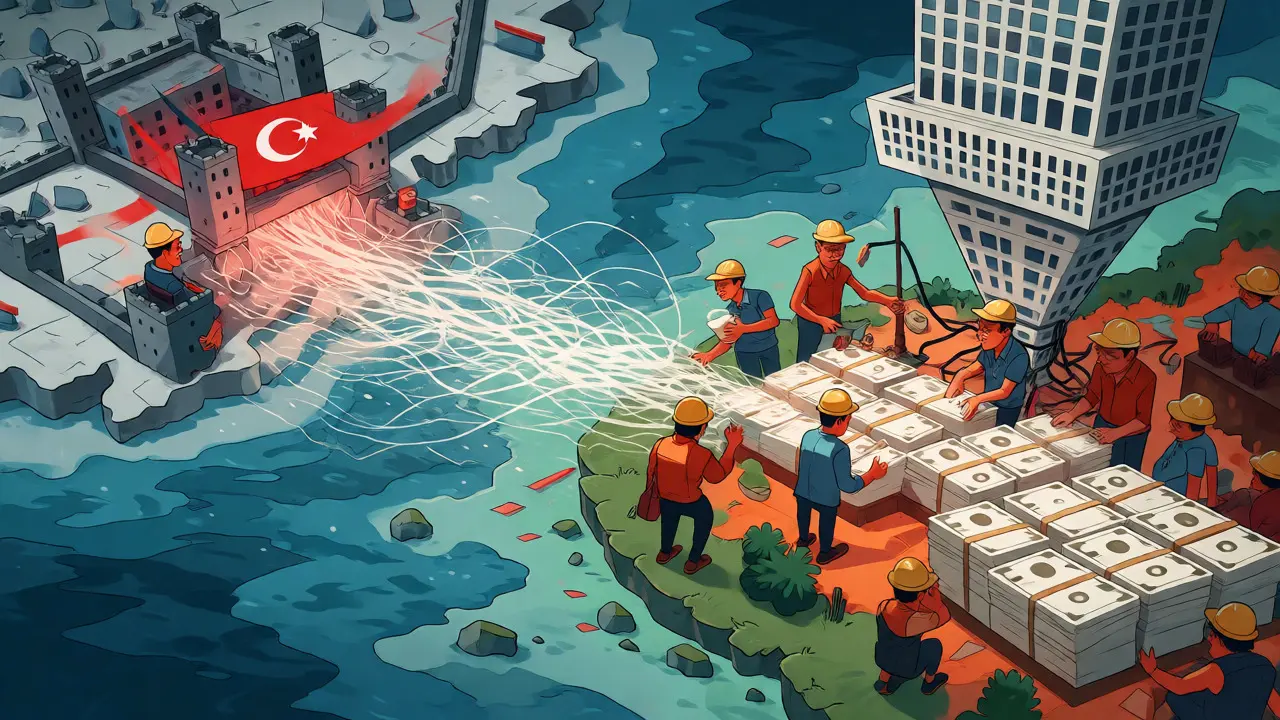
If North Korea steals the money, where does it go? Increasingly, the answer points to Southeast Asia, specifically Cambodia. The loosely regulated financial sectors there have become critical hubs for laundering illicit digital assets. A prime example is the Huione Group.
In May 2025, the U.S. Financial Crimes Enforcement Network (FinCEN) designated Huione as a primary money laundering concern. Their investigation revealed that between 2021 and 2025, approximately $37.6 million in cryptocurrency linked to North Korea flowed through Huione’s subsidiaries. Entities like Huione Guarantee provided the technical infrastructure for scams, while Huione Crypto issued stablecoins that could not be frozen by regulators. This allowed North Korean actors to convert proceeds into ostensibly legitimate assets, effectively cleaning the dirty money before it entered the global economy.
The connection is direct. FinCEN reported indications of ties between Huione executives and North Korean actors. This partnership highlights a broader trend: state-sponsored criminals partnering with local criminal ecosystems. It creates a symbiotic relationship where local firms gain access to high-volume transactions, and North Korea gains a safe harbor for its ill-gotten gains.
International Response and Legal Actions
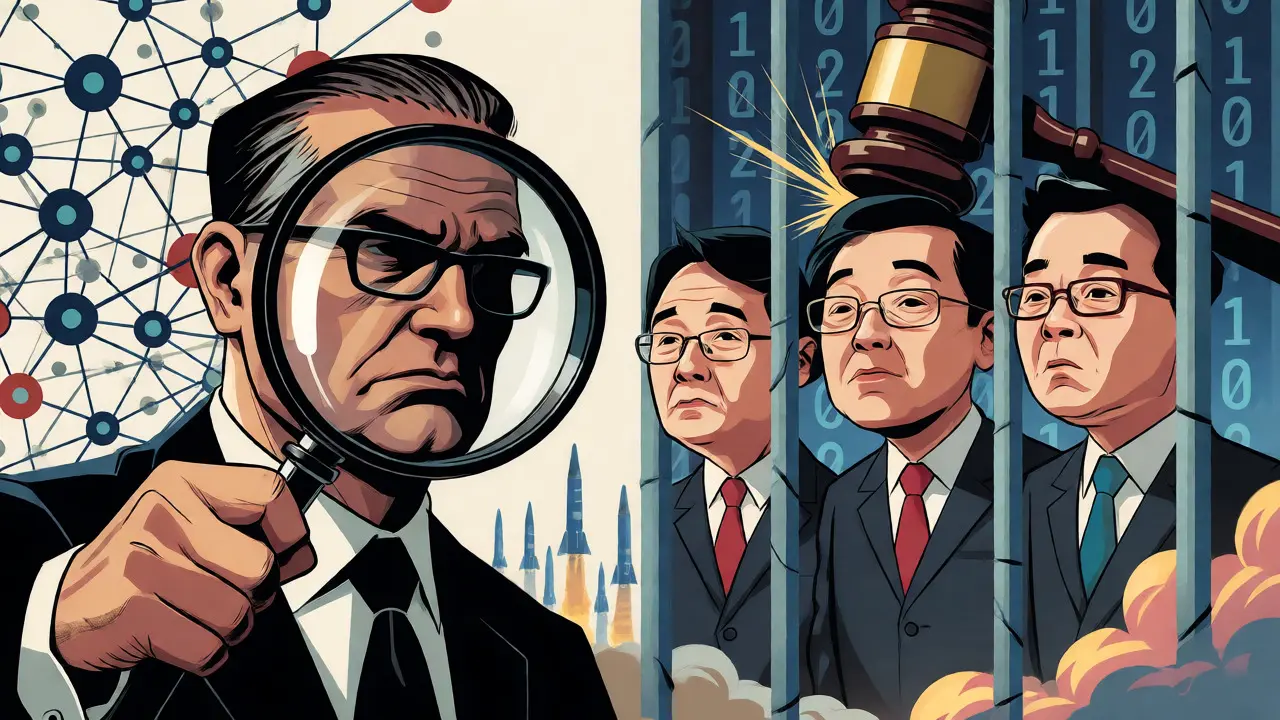
The scale of these operations forced a coordinated response from Western governments. The U.S. government, recognizing the national security implications, launched a multi-agency crackdown. On the same day as some of the latest sanctions announcements, the Department of the Treasury’s Office of Foreign Assets Control (OFAC) sanctioned the Korea Sobaeksu Trading Company and three associated individuals: Kim Se Un, Jo Kyong Hun, and Myong Chol Min.
These individuals were identified as key facilitators in generating clandestine revenue for the DPRK government. Jo Kyong Hun, for instance, served as an IT team leader based in North Korea, working closely with Kim Se Un on cryptocurrency issues. Their roles illustrate the human element behind the code. These aren't anonymous bots; they are specific people managing complex financial flows.
| Entity/Individual | Role/Function | Status |
|---|---|---|
| Korea Sobaeksu Trading Company | Front company for procurement and revenue generation | Sanctioned by OFAC |
| Kim Se Un | Financial facilitator involved in crypto schemes | Sanctioned |
| Jo Kyong Hun | IT Team Leader, managed crypto operations | Sanctioned |
| Myong Chol Min | Associated individual in sanctions evasion | Sanctioned |
| Huione Group | Cambodian money laundering hub | Designated by FinCEN |
Simultaneously, the Department of Justice unsealed indictments against seven DPRK nationals for criminal avoidance of sanctions under the International Emergency Economic Powers Act. The charges included illicit trafficking of counterfeit cigarettes, showing that the regime uses diverse methods to scrape together hard currency. To accelerate progress, the Department of State offered rewards ranging from $500,000 to $7 million under the Transnational Organized Crime Rewards Program for information leading to arrests.
The Threat to Global Security
Why should a casual investor care about North Korean IT workers or Cambodian exchange houses? Because the integrity of the entire cryptocurrency market depends on trust. When a state actor can steal billions and launder them through opaque networks, it introduces systemic risk. Senators Elizabeth Warren and Jack Reed pressed Treasury and Justice officials in mid-2025, questioning whether current measures were sufficient to prevent further thefts. Their inquiry highlighted a critical gap: while agencies identify threats, the speed of execution by North Korean hackers often outpaces regulatory response.
The FBI has actively engaged the private sector, urging RPC node operators, exchanges, and blockchain analytics firms to block transactions linked to TraderTraitor addresses. However, enforcement is reactive. By the time an address is flagged, the funds may already be dispersed across thousands of wallets on multiple blockchains. The expectation is that these assets will eventually be converted to fiat currency, making recovery difficult once the trail goes cold.
Industry experts warn that staving off future thefts requires significantly higher spending on cybersecurity. Exchanges must invest not just in better firewalls, but in rigorous background checks for remote staff and advanced behavioral analytics to detect anomalies in withdrawal patterns. The era of trusting a simple two-factor authentication system is over when the adversary has intelligence agency backing.
Future Outlook and Industry Adaptation
As we look toward late 2026, the landscape remains tense. The Trump administration’s recalibration of global priorities places containing Pyongyang at the top of the agenda. Analysts suggest that traditional sanctions may need to evolve. Rather than just blocking banks, authorities might need to target the technological infrastructure enabling these crimes, such as specific mining pools or cross-chain bridges frequently used for layering.
For the average user, the takeaway is clear: security is no longer just about protecting your password. It is about understanding the geopolitical forces moving through your portfolio. North Korea’s success in 2025 proved that digital borders are porous. Until international cooperation tightens the net around laundering hubs like Cambodia and China, the incentive for state-sponsored hacking remains dangerously high.
What was the largest cryptocurrency hack attributed to North Korea?
The largest hack was the ByBit exchange breach on February 21, 2025. The FBI confirmed that North Korean actors, designated as TraderTraitor, stole approximately $1.5 billion USD in virtual assets. This single event accounted for roughly 69% of all crypto service losses in 2025.
How does North Korea launder stolen cryptocurrency?
They use a combination of complex mixing services, conversion to stablecoins, and routing through third countries with loose regulations. Cambodia, particularly via entities like the Huione Group, serves as a major hub for converting illicit crypto into seemingly legitimate assets.
Are North Korean IT workers really working in Western companies?
Yes. The UN estimates that North Korean IT workers generate up to $600 million annually for the regime. They often work remotely for foreign companies, hiding their location with VPNs and assuming false identities from countries like China, Russia, or African nations.
What is the TraderTraitor designation?
TraderTraitor is the FBI’s name for the North Korean cybercrime group responsible for recent large-scale cryptocurrency thefts. They are known for using advanced social engineering to compromise IT personnel and breach even secure cold storage systems.
Has the US taken legal action against North Korean crypto thieves?
Yes. The OFAC sanctioned entities like Korea Sobaeksu Trading Company and individuals including Kim Se Un and Jo Kyong Hun. Additionally, the DOJ indicted seven DPRK nationals, and the State Department offers rewards up to $7 million for information leading to arrests.
Write a comment