Buying or selling cryptocurrency in Russia feels different now than it did a few years ago. The days of simply linking your Visa card to a global exchange are gone. Sanctions, banking blocks, and strict Central Bank regulations have forced traders into a new reality: Peer-to-Peer (P2P) trading is no longer just an option; it is the only viable bridge between Russian rubles (RUB) and digital assets.
If you are trying to move money out of Russia or bring crypto profits back into your local bank account, you are navigating a complex landscape of color-coded cards, escrow systems, and hidden risks. This guide breaks down which platforms actually work in 2026, how to spot a scam before it happens, and why your choice of payment method matters more than the price per coin.
Why P2P Dominates the Russian Market
In October 2025, the shift became undeniable. Traditional fiat on-ramps collapsed as major international exchanges pulled support for direct RUB deposits. Today, P2P trading accounts for nearly all significant volume for Russian users. It works by connecting buyers and sellers directly, with the platform acting as a middleman that holds the crypto in escrow until the ruble transfer is confirmed.
The scale of this activity is massive. As of mid-2026, Bybit is the leading P2P platform for Russian users, processing over $27 million in daily volume through thousands of active advertisements. Other players like HTX, MEXC, and KuCoin follow, but the gap is widening. Notably, giants like Binance and OKX show zero activity for RUB pairs, signaling their complete withdrawal from the Russian retail market due to compliance pressures.
This dominance isn't accidental. Russian banks have become hyper-vigilant about transactions labeled as "crypto-related." P2P allows users to frame transfers as personal payments between individuals, bypassing some automated filters-though this comes with its own set of dangers.
Top Platforms for Russian Traders in 2026
Not all exchanges treat Russian users equally. Some offer full localization and reliable support, while others restrict features or impose high fees. Here is how the current leaders stack up based on liquidity, fees, and user experience.
| Platform | Daily P2P Volume (USD) | Supported Payment Methods | Trading Fees (Spot) | Key Feature for RU Users |
|---|---|---|---|---|
| Bybit | $27.1M | Bank Cards, Advcash, E-wallets | 0.1% | Full Russian interface & support |
| HTX | $7.6M | Local Cards, SBP | 0.1% - 0.2% | High liquidity for stablecoins |
| KuCoin | $3.2M | Credit/Debit Cards Only | 0.1% | Wide altcoin selection |
| MEXC | $2.2M | Cards, Payeer, Yandex Money, SBP | 0% Maker / 0.02% Taker | Zero fees on select pairs; early token listings |
| Bitget | $1.8M | Local Cards, SBP | 0.1% Spot / 0.02% Maker Futures | MiCA compliant (EU license); Copy trading |
Bybit remains the go-to for most Russians because it speaks your language. Literally. Their customer support responds in Russian, and their interface is fully localized. They support over 2,000 cryptocurrencies, making it easy to move beyond just USDT if you want to diversify.
MEXC is the favorite for those who hunt for cheap entry points. With zero maker fees and access to over 2,800 coins, it’s where you go to find tokens before they hit bigger exchanges. Their integration with Yandex Money (Ю Money) and SBP makes depositing rubles seamless for tech-savvy users.
Bitget has gained traction by securing a VASP license in Bulgaria under MiCA regulations. While this doesn’t change much for Russian sanctions, it signals stability. Their copy-trading features are popular among beginners who want to mimic successful traders without analyzing charts themselves.
Decoding the Color-Coded Payment System
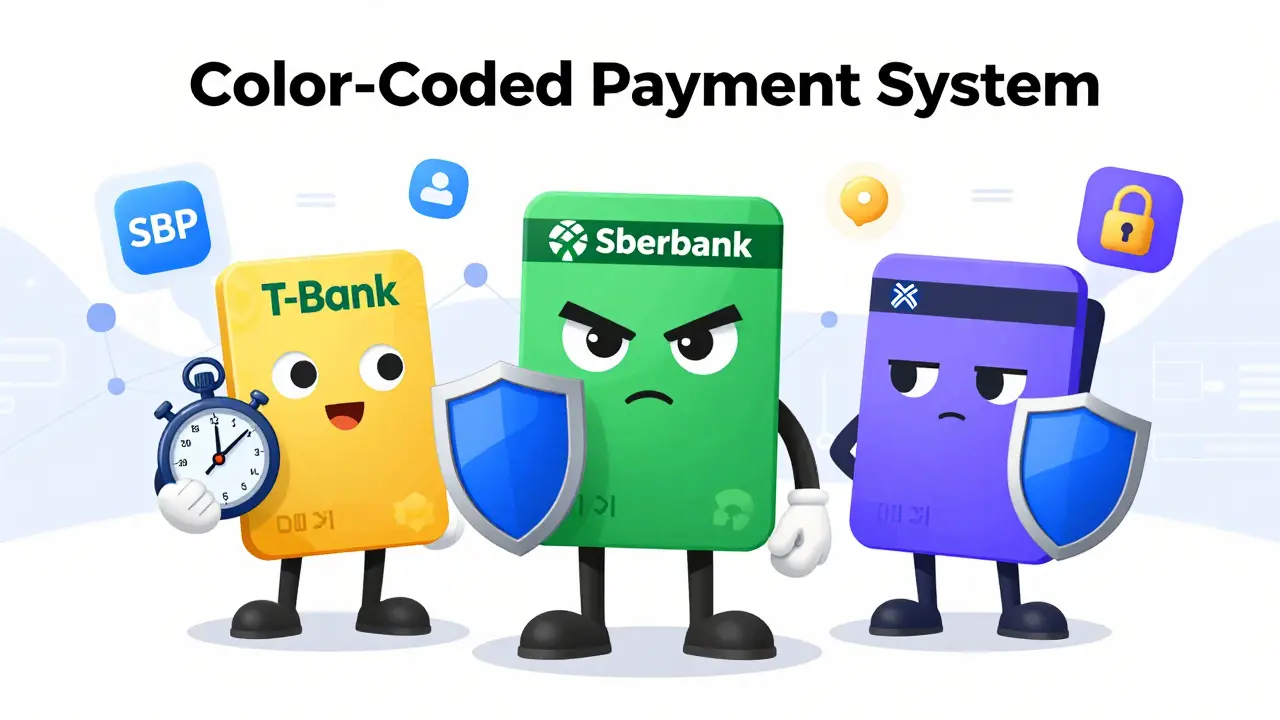
One of the biggest hurdles for new traders is understanding the payment methods listed in P2P ads. Due to sanctions, many banks cannot be named directly on international platforms. Instead, traders use a color-coded system that has become standard slang in the Russian crypto community.
- Green Card: Usually refers to Sberbank. It’s the largest bank in Russia, so liquidity is high, but their fraud detection algorithms are also aggressive.
- Yellow Card: Typically indicates T-Bank (formerly Tinkoff). Known for faster processing times and slightly more lenient monitoring for small transactions.
- Blue/Purple Icons: Often represent Raiffeisenbank, OZON Bank, or other smaller regional banks. These can be safer for avoiding freezes but may have lower transaction limits.
- SBP (Fast Payment System): A government-backed instant transfer system. It’s fast and widely accepted, but banks can still flag unusual patterns.
When you open a trade, always check the seller's preferred payment method. If you don’t have a Green Card but the seller only accepts it, do not force it. Use a filter to find merchants who accept your specific bank. Mixing banks unnecessarily increases the chance of a dispute.
The Hidden Risks: More Than Just Price Volatility
Everyone knows crypto prices swing wildly. But in Russia, the real danger isn't Bitcoin dropping 5% during your trade-it's your bank account getting frozen for three months because the person you bought crypto from received "dirty" money.
Counterparty Risk is the biggest threat. In P2P, you are dealing with another human being. A buyer might claim they sent the money when they didn’t. A seller might release the crypto before receiving payment. This is why you must never release crypto until you see the funds in your actual bank balance, not just a screenshot of a transfer confirmation.
Money Laundering Traps are common. Scammers buy large amounts of crypto using stolen funds or proceeds from illegal activities. When the victim reports the theft, the bank freezes your account because the money passed through it. To avoid this:
- Stick to merchants with a completion rate above 95%.
- Avoid deals that are significantly cheaper than market rate. If it looks too good to be true, it’s likely a trap.
- Keep transaction sizes moderate. Large lump-sum transfers attract immediate scrutiny.
Regulatory Uncertainty looms over everything. The Central Bank of Russia (CBR) continues to tighten rules around Virtual Asset Service Providers (VASPs). While P2P is currently tolerated, future legislation could require stricter identity verification (KYC) or ban certain payment channels entirely. Always keep your platform accounts verified to reduce friction if rules change.
How to Trade Safely: A Step-by-Step Checklist
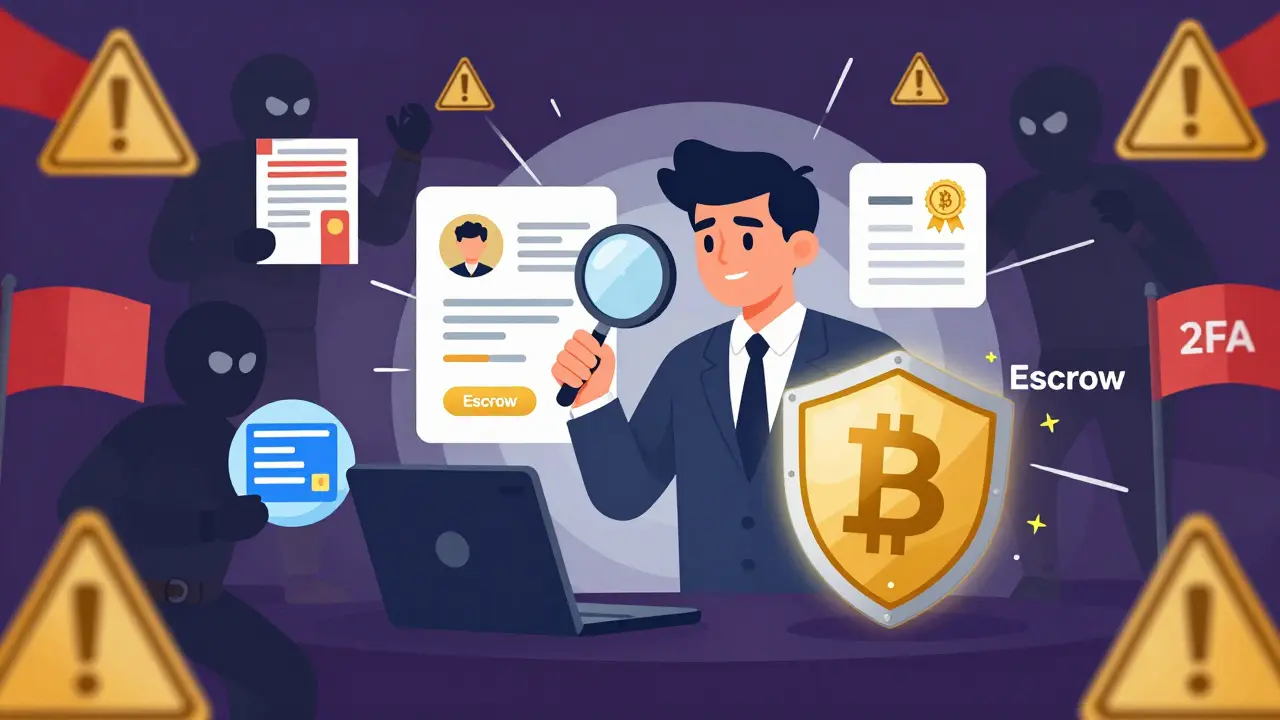
Safety in P2P trading comes down to discipline. Follow these steps every single time you execute a trade:
- Verify the Merchant: Look at their history. Have they been trading for months? Do they have hundreds of orders? Avoid new accounts with zero history.
- Use Escrow: Never take the conversation off-platform. Bybit, MEXC, and Bitget hold the crypto in escrow. If the other party fails to pay, you can open a dispute, and the platform will intervene. Moving to Telegram or WhatsApp voids this protection.
- Check the Name Match: Ensure the name on the bank account matches the name on the P2P profile. If a merchant asks you to send money to a third-party account, cancel the trade immediately.
- Confirm Receipt: Log into your banking app separately. Do not trust SMS notifications alone, as these can be spoofed. Verify the money is available in your balance before clicking "Release Crypto."">
- Enable 2FA: Use an authenticator app (like Google Authenticator) rather than SMS for two-factor authentication. SIM-swapping attacks are prevalent in the region.
Future Outlook: What’s Next for Russian Crypto?
The ecosystem is maturing. We are seeing the rise of specialized tools like Bitget Wallet, which includes built-in RUB on-ramps, simplifying the process for mobile users. DeFi integrations are becoming more accessible, allowing Russians to earn yield on their stablecoins without relying solely on centralized exchanges.
However, the pressure on traditional finance remains. Banks are likely to implement even stricter AI-driven monitoring for P2P-style transfers. Traders should expect tighter limits and more frequent requests for proof of source of funds. Diversifying across multiple platforms (e.g., using Bybit for large trades and MEXC for altcoins) can help mitigate the risk of being locked out of a single service.
Ultimately, P2P trading in Russia is a game of patience and vigilance. There are no shortcuts. By sticking to reputable platforms, respecting the color-coded payment norms, and prioritizing security over speed, you can navigate this restricted market effectively.
Is P2P crypto trading legal in Russia?
As of 2026, buying and selling cryptocurrency is legal in Russia, but using it for direct payments for goods and services is prohibited. P2P trading operates in a gray area: it is not explicitly banned, but the Central Bank monitors it closely. Exchanges must comply with anti-money laundering (AML) laws, and users are responsible for declaring income if required by tax authorities.
Why does Binance not support RUB P2P anymore?
Binance withdrew from the Russian market due to international sanctions and regulatory pressure. They no longer allow Russian IP addresses or RUB transactions to avoid legal penalties in Western jurisdictions. Users must switch to alternative platforms like Bybit, HTX, or MEXC.
What does "Green Card" mean in P2P ads?
"Green Card" is slang for Sberbank, Russia's largest bank. Because Sberbank cannot be named directly on some international platforms due to sanctions, traders use colors to identify banks. Yellow usually means T-Bank, and blue/purple often refers to Raiffeisen or OZON Bank.
Can my bank freeze my account for P2P trading?
Yes. Russian banks are required to monitor for suspicious activity. If you receive large sums from unknown individuals or frequently transact with crypto-linked accounts, your bank may block your card or request documents proving the source of funds. To minimize risk, keep transactions modest and use established merchants.
Which platform has the lowest fees for Russian users?
MEXC offers 0% maker fees on spot trading, making it one of the cheapest options for active traders. Bybit charges 0.1%, which is still competitive. However, always consider the spread (the difference between buy and sell prices) in P2P ads, as this often costs more than the exchange fee itself.
How do I avoid scams in P2P trading?
Never release crypto until you confirm the money is in your bank account via your banking app. Stick to merchants with high completion rates (>95%) and long histories. Avoid deals with prices significantly below market value. Keep all communication within the exchange's chat system to ensure dispute resolution support.
Write a comment