For years, owning a bit of Bitcoin in Pakistan felt like a legal gamble. Since 2018, the State Bank of Pakistan (SBP) basically told banks to stay far away from digital assets, leaving a massive Pakistan crypto regulation gap that forced a $21 billion economy underground. But 2025 changed everything. The government didn't just tweak a few rules; they performed a complete 180-degree turn, moving from a strict ban to a structured legal framework. If you've been holding assets in secret or wondering if it's finally safe to move your funds into a local account, the short answer is yes-but there are some very big catches.
The Big Pivot: How the Ban Ended
The shift didn't happen overnight, but the momentum peaked in mid-2025. The real catalyst was the Virtual Assets Bill 2025 is a comprehensive legislative framework promulgated via ordinance on July 8, 2025, designed to legalize and regulate digital assets in Pakistan. This bill effectively killed the 2018 advisory that had kept the crypto market in the shadows. By September 3, 2025, the government officially legalized cryptocurrency, ending a long era of uncertainty for millions of retail traders.
To make this work, the government created the Pakistan Virtual Asset Regulatory Authority (also known as PVARA) is an autonomous regulatory body responsible for the licensing, supervision, and regulation of virtual assets and service providers. Think of PVARA as the "crypto cop." They aren't there to stop you from owning Bitcoin, but they are there to make sure the exchanges you use aren't laundering money or running scams. The setup involved a technical committee with the Finance Minister and the Securities and Exchange Commission of Pakistan (known as SECP) to ensure that digital assets wouldn't crash the traditional financial system.
The Catch: Legalization vs. Full Adoption
Here is where things get tricky. Just because crypto is "legal" doesn't mean you can use it to buy a coffee at a local cafe or pay your rent. Pakistan has chosen a path of "strict control," which is very different from the "full adoption" model seen in places like El Salvador.
Currently, you are legally allowed to hold and transfer cryptocurrencies. However, the government has placed a hard line on commercial use. You cannot use Bitcoin or Ethereum for retail payments. If you try to use crypto for a commercial transaction at a store, you're still breaking the rules. The focus is strictly on holding assets, remittances, and specific fintech pilot programs. The government wants the tax revenue and the data from that $21 billion underground market, but they aren't ready to let a decentralized currency replace the Rupee in the streets.
| Feature | Pakistan (2025 Model) | India | UAE (Dubai) | El Salvador |
|---|---|---|---|---|
| Legal Status | Legal (Regulated) | Legal (High Tax) | Legal (Innovation Hub) | Legal Tender |
| Retail Payments | Prohibited | Restricted | Permitted (Varies) | Fully Accepted |
| State Digital Currency | Digital PKR (Coming) | Digital Rupee (Pilot) | Varies by Emirate | No (Uses BTC) |
| Regulatory Body | PVARA | RBI / Finance Ministry | VARA | Central Bank / BCV |

The Digital Pakistani Rupee: A New Player
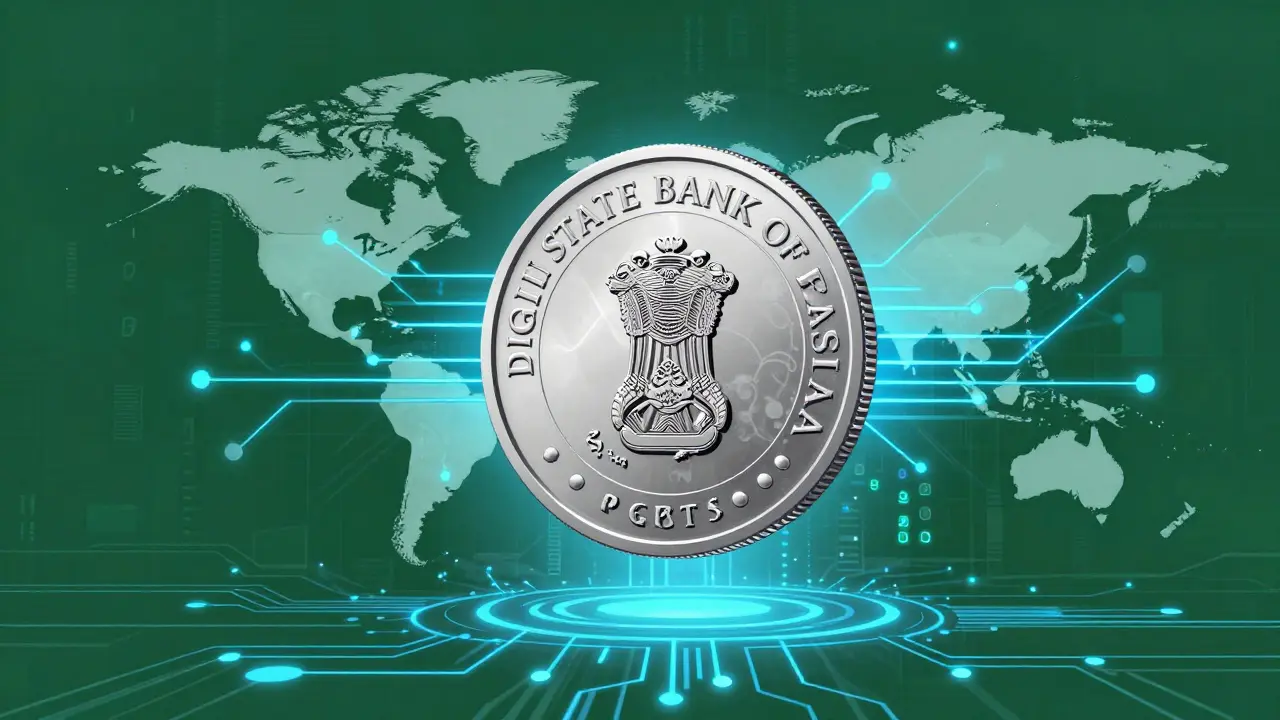
While private cryptos are legal to hold, the government is betting big on its own version. The Digital Pakistani Rupee is a Central Bank Digital Currency (CBDC) designed to modernize the financial system while maintaining total state oversight. This isn't a decentralized coin; it's essentially digital cash controlled by the State Bank of Pakistan (SBP).
Why do this? The government wants to make remittances-the lifeblood of Pakistan's economy-faster and cheaper. Instead of waiting days for a bank transfer from overseas, a CBDC could make the process near-instant. However, for the average crypto enthusiast, the Digital PKR is a bit of a letdown because it lacks the privacy and decentralization that make Bitcoin appealing. It's more about efficiency for the state than freedom for the user.
What This Means for Exchanges and VASPs
If you run a crypto business, the honeymoon phase of the ban is over. You now have to deal with Virtual Asset Service Providers (known as VASPs) regulations. To operate legally, you need a license from PVARA. This isn't just a piece of paper; it requires implementing strict Anti-Money Laundering (AML) and Counter-Terrorism Financing (CTF) protocols.
For the user, this means more KYC (Know Your Customer) requests. You'll likely need to provide more ID and proof of funds than you did when using peer-to-peer (P2P) markets. While this feels like a hassle, it's the trade-off for legal certainty. You no longer have to worry about your bank account being frozen because of a suspicious transfer from a crypto exchange.
The Road Ahead: Risks and Rewards
The move to legalize is a strategic play to attract foreign investment. By creating a clear rulebook, Pakistan is telling the world that its fintech sector is open for business. The potential to formalize a $21 billion market is a huge win for the national treasury in terms of tax collection.
But there are risks. Critics argue that by banning retail payments and restricting altcoin trading, Pakistan might be stifling the very innovation it claims to want. If you can't use the technology for actual commerce, you're essentially treating crypto as a speculative asset rather than a financial tool. There is also the concern about the "digital divide." Will the Digital PKR actually reach the unbanked population, or will it just be another tool for those who already have smartphones and bank accounts?
Is it legal to buy Bitcoin in Pakistan now?
Yes, as of September 2025, it is legal to hold and transfer cryptocurrencies under the Virtual Assets Bill 2025. However, you must use licensed Virtual Asset Service Providers (VASPs) to ensure compliance with the law.
Can I use crypto to pay for things at a shop?
No. While holding crypto is legal, using it for retail payments or commercial transactions is currently prohibited. The government maintains a strict distinction between owning assets and using them as a medium of exchange.
What is the Digital Pakistani Rupee?
The Digital Pakistani Rupee is a Central Bank Digital Currency (CBDC). Unlike Bitcoin, it is centralized and controlled by the State Bank of Pakistan, intended to modernize payments and remittances.
Who regulates crypto in Pakistan?
The Pakistan Virtual Asset Regulatory Authority (PVARA) is the primary body responsible for licensing and supervising virtual assets and the providers who manage them.
Do I need to pay taxes on my crypto gains?
With legalization comes taxation. While the specific tax brackets are being finalized by the technical committee, the goal of the 2025 pivot is to bring crypto assets into the formal tax net.
Next Steps for Users
If you are a casual holder, the first thing to do is check if your preferred exchange is seeking a license from PVARA. Moving your assets to a compliant platform will protect you from future regulatory crackdowns. If you're an entrepreneur, now is the time to look into the VASP licensing process, as the window for early adoption of the legal framework is wide open.
Keep an eye on the pilot programs for the Digital PKR. For most people, the transition from "grey market" to "legal market" will involve more paperwork and identity verification, but it removes the fear of legal repercussions that defined the last seven years of crypto in Pakistan.
Jagdish Sutar
This is a huge step for the region. Seeing Pakistan move towards a regulated framework makes it much easier for folks in the diaspora to support their families without worrying about the legal grey areas. It's a great example of how adapting to tech can bridge the gap between traditional finance and the future. I hope India follows a similar path without the heavy tax burden we currently see here.
Robert Mosolygo
The orchestration of this "pivot" is transparently designed for surveillance. By establishing the PVARA, the state effectively creates a centralized choke point to monitor every single transaction. This isn't about financial freedom; it is a calculated maneuver to migrate an underground economy into a panopticon where the government can seize assets at will. The transition to a CBDC is the final nail in the coffin of privacy. It is a textbook play for total fiscal control under the guise of "modernization." Truly pathetic that people believe this is a win for the user.
Caiaphas Konkol
Quite a quaint attempt at legalization, really. They've essentially stripped the essence of cryptocurrency-decentralization-and replaced it with a glorified digital ledger for the state. It's a facade of progress for the masses who don't understand the underlying philosophy of blockchain. The irony is palpable.
Mike Krasner
who cares if its legal if you cant even buy a sandwich with it lol just a fancy way to tax people more
Gary Lingrel
Typical government move just wanting that sweet tax money 🙄 it's not about the people it's about the treasury and they'll probably freeze accounts the moment they see a big profit
Charlie Queen
Love seeing the world open up to this tech! 🌍 It's going to be so cool to see how the Digital PKR actually works in practice. Cheers to more financial inclusion for everyone! 🥂✨
Kathleen Bergin
Everyone knows that CBDCs are just a way for banks to keep control. It is basic economics.
Sara Ellis
money is just an idea anyway so who cares if its a coin or a digital rupee everything is just a vibe
Jennifer Taylor
They are tracking us. First the apps then the coins now this. They want to know exactly where every penny goes so they can control the population. Don't trust the PVARA, it's just a front for a bigger global agenda to end cash.
Gloris Young
Really interesting shift. Glad it's becoming safer for the locals.
Miranda Jamieson
This is absolutely pathetic. If you can't use it for commerce, it's not a currency, it's a glorified lottery ticket. The government is just playing with the people's hopes while they keep the real power for themselves. Wake up!
Kyle Bush
Finally! About time they got their act together! 🚀 This is going to bring so much investment into the country, we're going to dominate the fintech space! 🇵🇰💪🔥
Keith Garcia
The sheer banality of this regulatory framework is staggering. They've managed to create a system that is both restrictive and invasive, yet somehow manages to be utterly tedious in its execution. A truly mediocre compromise for a once-vibrant underground market. 🙄🤡
Paige Raulerson
I'm just wondering why anyone thinks this is a good idea. The KYC requirements alone will scare off the people who actually need the technology. It's just another layer of bureaucracy for the elite to manage.
Jennifer L
Oh my goodness, the anxiety of those seven years must have been so horible!! I am truly overjoyed that the peopple can now hold their assets without fear of the law! 😭❤️ It is simply wonderful news for the communnity!
Ellie Drews
It's definitely a process of adjustment. Let's just be patient and see how the VASP licensing rolls out. It's better to have some rules than no rules at all.
praveen subbiah
THIS IS THE DAWN OF A NEW ERA! Pakistan is showing the world how to integrate digital assets with national pride and strength! We will lead the way in the digital revolution! 🇮🇳 Wait, I mean the region! This is absolutely legendary!
Guy Bianco
I believe it is prudent to emphasize that the shift toward licensing will benefit the average investor in the long run. While the transition may seem cumbersome, the legal certainty provided by PVARA is a necessary foundation for sustainable growth. :)
Alex Hunter
For those who are new to this, remember that moving to a licensed exchange is a safety move. It's a bit of a pain with the ID checks, but it's the only way to ensure your funds don't get locked by a bank. Just take it one step at a time.
jill huyo-a
I'm curious about how this affects the unbanked. It seems like a great step, but I hope the process for getting these IDs isn't too hard for people in rural areas. Maybe someone can explain if the Digital PKR will be accessible without a traditional bank account?