Searching for a way to trade your digital assets often leads to old forum posts or outdated lists of platforms. If you've come across RightBTC is a centralized cryptocurrency exchange that launched in 2014 to provide a secure and fast trading environment for both novice and pro traders. Also known as a former top-25 volume player, it once promised 24/7 support and a clean interface. However, there is a massive gap between what the old marketing says and the current reality. If you're looking to deposit funds today, stop right here: the platform is gone.
The Current Status: A Visit to the Exchange Graveyard
To put it bluntly, RightBTC is defunct. In the world of crypto, platforms don't always announce their departure with a formal press release; sometimes they just fade away. Industry trackers like CryptoWisser have officially moved the platform into their "Exchange Graveyard," a designation given to sites that are completely inaccessible. When a site lacks trading activity, has no recent user engagement, and its website is down, it's a clear sign of a total operational collapse.
Other analysts, such as those at ICORankings, describe the current state of the platform as "empty." There are no active markets and, more importantly, zero reserve transparency. In a post-FTX world, transparency is the only thing that keeps users feeling safe. The fact that RightBTC disappeared without providing a clear path for fund recovery is a grim reminder of the risks associated with mid-tier centralized exchanges.
How RightBTC Worked When it Was Alive
Back in its prime, RightBTC tried to win over users with simplicity. While most platforms use a complex system of maker and taker fees, RightBTC implemented a flat trading fee of 0.2%. This meant regardless of whether you were providing liquidity to the book or taking it, the cost remained the same. For a beginner, this was refreshing because it removed the math headache of calculating tiered costs.
The user experience was also a selling point. Early reviews often praised its "great theme and design," suggesting that the interface was intuitive and visually appealing. However, beauty is only skin-deep in fintech. Underneath the clean look, the infrastructure was typical of the 2014 era: basic order books and rudimentary security that would be considered a sieve by today's standards. They lacked the multi-signature wallets and rigorous cold storage protocols that current industry leaders use to protect 95% or more of user assets.
| Feature | RightBTC (Historical) | Top-Tier Exchanges (Modern) |
|---|---|---|
| Fee Structure | Flat 0.2% | Tiered (Often 0.01% - 0.1%) |
| Reserve Transparency | None / Untracked | Regular Proof-of-Reserves Audits |
| Security Stack | Basic Web Interface | Multi-sig, HSM, Cold Storage |
| Regulatory Status | Low/None | Global Licenses (e.g., Coinbase 49 US states) |

Why Did RightBTC Fail?
It's rarely just one thing that kills an exchange. RightBTC's trajectory follows a pattern seen in about 68% of exchanges that operated around 2018. They usually experience a massive surge during bull markets (like 2017 or 2021) but lack the capital reserves to survive the lean bear markets. When the hype dies down, liquidity vanishes.
Liquidity is the lifeblood of any Centralized Exchange is a platform where a central authority manages the matching of buy and sell orders for cryptocurrency assets . If an exchange doesn't have a deep enough order book, users experience "slippage," where the price they actually get is far from the listed market price. Once the big market makers left RightBTC, the platform became unviable. Small-scale traders moved to giants like Binance or Kraken, where billions of dollars in daily volume ensure tight spreads and instant execution.
Then there is the regulatory wall. Modern exchanges spend fortunes on compliance. For instance, Coinbase spent roughly $150 million annually on compliance by 2023. For a mid-tier platform like RightBTC, the cost of hiring hundreds of legal professionals and meeting international KYC (Know Your Customer) and AML (Anti-Money Laundering) standards is often too high to justify, leading to a quiet shutdown.
The Warning Signs of a Dying Exchange
Looking back at RightBTC provides a blueprint for what to avoid in the future. Most failed exchanges don't crash overnight; they bleed out over 6 to 12 months. According to Chainalysis, 72% of failed exchanges see their volume drop by more than 90% before they finally go dark. If you notice a platform's trading volume plummeting while their "support" becomes slow or robotic, it's time to move your funds.
Another red flag is the lack of exchange liquidity transparency. If a platform refuses to provide proof-of-reserves or avoids talking about where user funds are stored, they are essentially asking you to trust them blindly. In the current market, trust is not a strategy-verification is. Use platforms that allow you to verify their holdings on the blockchain.
Lessons for Today's Traders
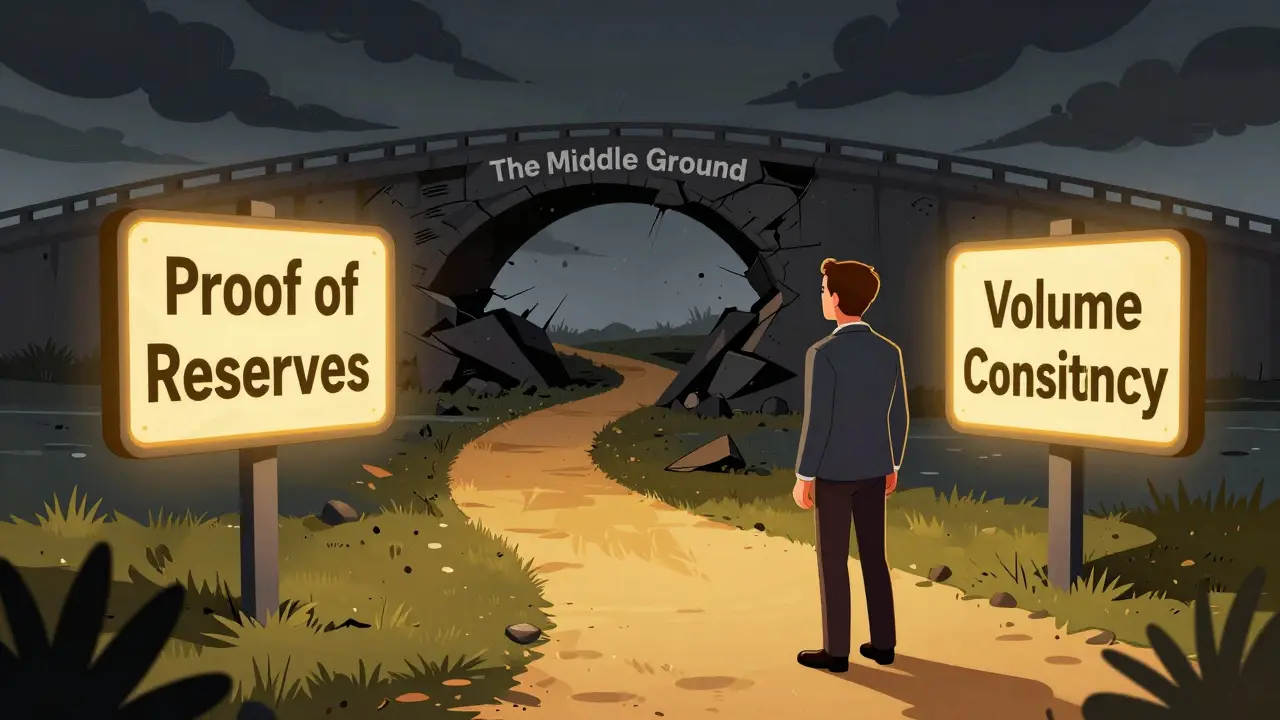
The story of RightBTC is a cautionary tale about the "middle ground." In the early days, being in the top 25 by volume seemed like a sign of success. Today, the market has consolidated. The "winners take all" dynamic means that only a few massive platforms can realistically provide the security, liquidity, and regulatory cover needed to survive.
If you are choosing a platform today, prioritize these three things over a "nice design" or "simple fees":
- Proof of Reserves: Does the exchange prove it holds your assets 1:1?
- Regulatory Licenses: Are they registered in jurisdictions with actual oversight?
- Volume Consistency: Check data aggregators to ensure the volume is real and not "wash traded" to look fake.
The safest bet is always to avoid leaving your assets on any exchange long-term. Use a non-custodial wallet where you hold the private keys. RightBTC's collapse shows that even a platform that once seemed "top tier" can vanish, leaving users with no way to recover their money. In fact, about 83% of failed exchanges provide no mechanism for recovery once they close.
Can I still withdraw funds from RightBTC?
No. RightBTC is classified as defunct and the website is inaccessible. Most users who left funds on the platform during its collapse have been unable to recover them, as the platform provided no formal wind-down or recovery process.
Was RightBTC a scam?
There is no widespread evidence of a deliberate "rug pull" or security breach. Its failure appears to be a business model collapse caused by a lack of liquidity and inability to meet regulatory demands, which is common among mid-tier exchanges from the 2014-2018 era.
What were the fees on RightBTC?
RightBTC used a simplified flat fee structure of 0.2% for all trades, regardless of whether the user was a maker or a taker. This was simpler than the tiered systems used by modern exchanges but often more expensive for high-volume traders.
How do I know if an exchange is about to fail?
Watch for a steady decline in trading volume (over 90% in a year), a sudden lack of updates from the team, and the absence of Proof-of-Reserves audits. If withdrawal processing times start to slow down, it is a critical warning sign to move your assets immediately.
Is there an alternative to defunct exchanges like RightBTC?
Yes. Users now typically gravitate toward highly regulated platforms like Coinbase, Kraken, or Binance, or move entirely to Decentralized Exchanges (DEXs) where they maintain control of their own keys.

Tracie and Matthew Hartley
Idk why ppl even care about these old dead sites. its not like anyone was actualy using it lately lol
Surender Kumar
man this is a good reminder to just use hardware wallets. better safe than sorry with these exchanges
Hope Johnson
The tragedy of the centralized exchange is not merely the loss of capital but the systemic erosion of the original decentralized ethos that cryptocurrency was intended to champion in the first place. When we entrust our digital sovereignty to a third party, we are essentially recreating the same fragile banking structures that the blockchain was designed to replace, and the collapse of platforms like RightBTC serves as a poetic, albeit painful, illustration of this paradox. It invites us to reflect on whether our desire for convenience and a "clean interface" has blinded us to the inherent risks of custodianship. We must realize that the true value of crypto lies in the ability to be one's own bank, and any deviation from that path is a gamble with the winds of corporate volatility. By analyzing these historical failures, we can cultivate a more mindful approach to asset management that prioritizes longevity and security over the seductive ease of a user-friendly dashboard. It is a journey from ignorance to empowerment that requires us to embrace the technical burden of managing our own keys. Ultimately, the graveyard of exchanges is a testament to the necessity of self-reliance in a digital age where trust is a liability and verification is the only currency that truly holds value over time.
Kieran Smith
wow i didnt realize how many ppl lost money here. hope evryone is doing okay now!
Omotola Balogun
Actually, the failure of such entities is laementably predictable. Most amateurs ignore the order book depth and simply look at the UI, which is a grave mistake. If the slippage is high, the platform is basically a ghost town regardless of what the marketing says. The lack of multi-sig wallets in 2014 was almost criminal, though I suppsoe standards were different then. Most people simply dont understand that liquidity providrs move faster than the retail crowd ever will.
Will Dixon
just get a cold wallet guys. its the only way to be safe
aletheia wittman
omg imagine leaving money on a site for a DECADE and then it just vanishes!! i would literally scream!! total nightmare fuel
EDOZIEM MICHAEL
money comes and goes but the lesson remains the same everything that rises must fall eventually
Agnessa Dale
I'm just glad more people are learning about proof of reserves now. It's a great step forward for the whole community!
logan bates
This is why US regulated exchanges are the only way to go. Everything else is just a scam waiting to happen.