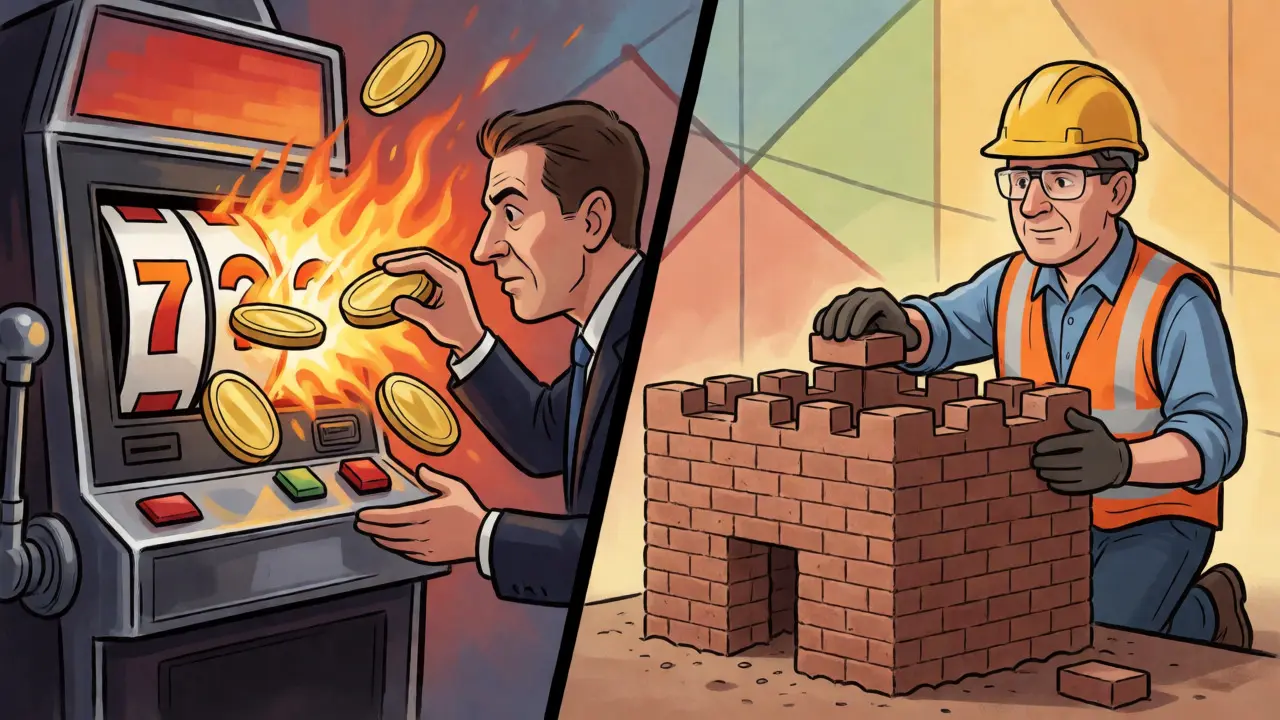
You’ve probably seen the headlines. Someone turned $100 into $10,000 overnight. What you don’t see is the thousands of traders who woke up to find their accounts wiped out because they ignored one simple truth: crypto risk management isn’t optional-it’s survival.
Cryptocurrency markets are brutal. Bitcoin can swing 5% in a day while the S&P 500 moves 1%. If you’re trading without a plan, you’re not investing; you’re gambling. This guide breaks down exactly how to protect your money using proven principles adapted from traditional finance but tweaked for the wild world of digital assets. Whether you’re new to blockchain or a seasoned trader, these steps will help you stay in the game long enough to win.
The Core Problem: Why Crypto Is Different
Traditional stock markets close at 4 PM Eastern. They have circuit breakers. They have regulators watching every move. Crypto? It runs 24/7. There are no holidays, no closing bells, and often, no safety nets. When China banned crypto mining in 2021, prices dropped 20% in hours. No warning. No pause button.
This constant activity means risks never sleep. A smart contract bug can drain funds while you’re eating dinner. An exchange hack can vanish your balance before you check your phone. Unlike bank deposits insured by the FDIC, most crypto holdings sit on your watch. If you lose your keys, they’re gone. If an exchange fails, you might be waiting years for a payout. That’s why treating risk as an afterthought is a fatal mistake.
Step 1: Master Position Sizing (The 1-2% Rule)
Most beginners blow up their accounts because they bet too big. They see a coin pumping and throw 20% of their savings at it. One bad trade later, they’re emotionally wrecked and selling at a loss.
Professional traders follow a strict rule: never risk more than 1-2% of your total account value on a single trade. Note that this is risk, not investment size. Here’s the math:
- Account Size: $10,000
- Risk per Trade: 1% ($100)
- Stop-Loss Distance: 5% below entry price
- Position Size: $100 / 0.05 = $2,000
In this scenario, you buy $2,000 worth of Bitcoin. If it drops 5%, you lose $100-exactly 1% of your account. You can survive ten straight losses and still have 90% of your capital left. Try doing that with a 20% bet per trade. You’d be broke by trade five.
Step 2: Use Stop-Loss Orders Like Armor
A stop-loss order is an automatic instruction to sell an asset when its price reaches a specific level. Think of it as an emergency exit hatch. Without it, you’re relying on willpower to cut losses. And let’s be honest: willpower evaporates when you’re staring at red candles.
Don’t set stops at arbitrary round numbers like $30,000 for Bitcoin. Market makers know those levels and hunt them. Instead, place stops just below technical support zones or use volatility-based indicators like Average True Range (ATR). For volatile altcoins, consider trailing stops. These adjust upward as the price rises, locking in profits while giving the trade room to breathe during normal fluctuations.
Step 3: Diversify Beyond Just "More Coins"
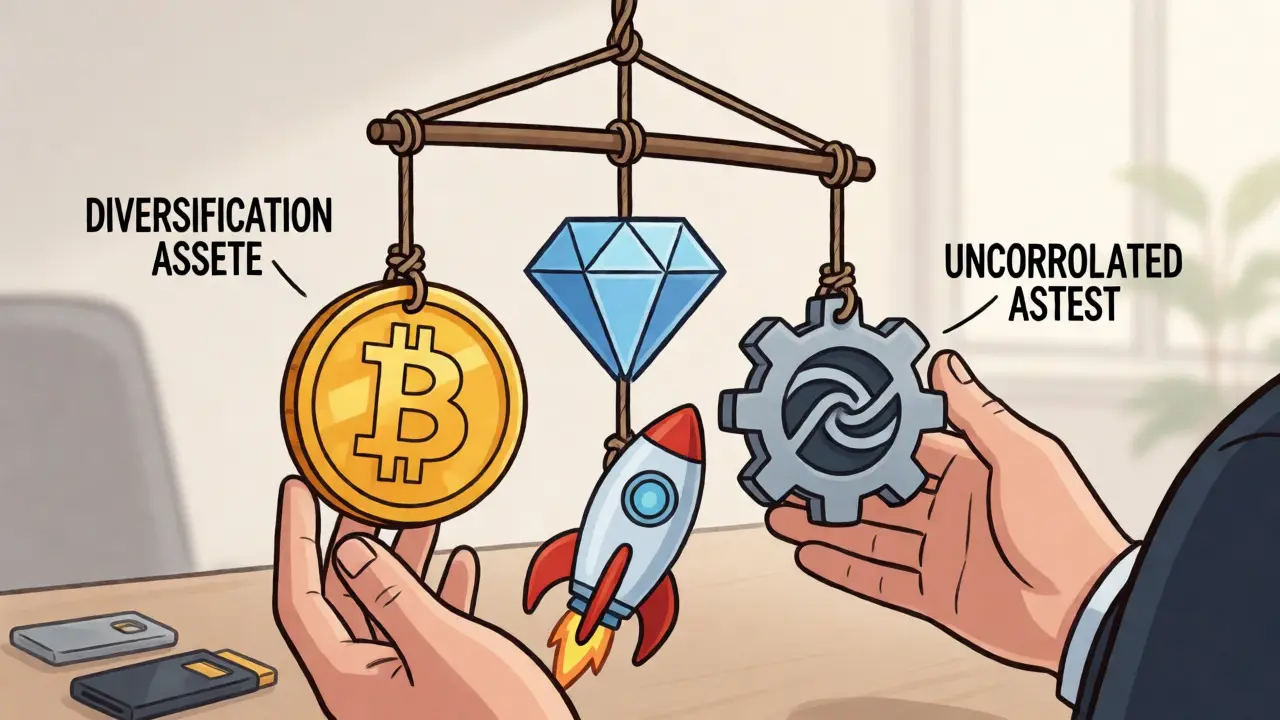
Diversification is misunderstood. Buying ten different meme coins isn’t diversification-that’s concentration risk. If Bitcoin sneezes, all altcoins catch a cold. True diversification means spreading risk across uncorrelated assets.
Consider splitting your portfolio into categories:
- Store of Value: Bitcoin (BTC), Ethereum (ETH)
- DeFi Protocols: Uniswap, Aave
- Infrastructure: Chainlink, Polkadot
- Speculative/High-Risk: Small-cap altcoins (limit to 5-10% of portfolio)
BitMEX, which has operated since 2014 with zero customer fund losses from breaches, recommends keeping any single high-risk asset under 2% of your total portfolio. This ensures that even if a small-cap project goes to zero, it barely dents your net worth.
Step 4: Respect Leverage (Or Don’t Touch It)
Leverage amplifies both gains and losses. On many exchanges, you can trade with 10x, 50x, or even 100x leverage. Sounds exciting until you realize that with 100x leverage, a 1% price move against you wipes out your entire position.
Data from Reddit communities like r/cryptocurrency shows that overleveraging is the number one reason retail traders quit. During euphoric bull runs, FOMO drives people to max out their margins. Then a minor correction triggers liquidations, cascading into market-wide crashes. If you must use leverage, keep it low (under 3x) and always pair it with tight stop-losses. Better yet, stick to spot trading until you’ve survived at least two full market cycles.
Step 5: Account for Operational and Regulatory Risks
Market risk is only half the battle. The other half involves things outside the chart:
- Exchange Hacks: Over $3.8 billion was stolen from exchanges in 2022 alone. Keep large holdings in hardware wallets like Ledger or Trezor, not on trading platforms.
- Smart Contract Bugs: DeFi protocols can have vulnerabilities. Use audited contracts and limit exposure to newer projects.
- Regulatory Shocks: Government announcements can crash prices instantly. Stay informed about developments in major economies like the US, EU, and China.
Remember, unlike bank deposits, most crypto assets aren’t insured. Nexus Mutual offers some decentralized insurance for DeFi risks, but coverage is limited. You are your own insurer.
Putting It All Together: A Practical Checklist
Before you click "Buy," run through this mental checklist:
- Have I defined my maximum loss for this trade in dollars?
- Is that loss less than 2% of my total account?
- Did I set a stop-loss order immediately after entering?
- Is this asset part of a diversified portfolio, not a concentrated bet?
- Am I using leverage responsibly, or am I gambling?
- Do I understand the specific risks of this token (tech, team, regulation)?
If you can’t answer "yes" to all six, skip the trade. There’s always another opportunity tomorrow. In crypto, staying solvent matters more than catching every pump.
| Strategy | Best For | Risk Level | Complexity |
|---|---|---|---|
| Spot Trading + 1% Rule | Beginners & Long-term holders | Low | Low |
| Swing Trading with Stops | Intermediate traders | Medium | Medium |
| Leveraged Futures (<3x) | Experienced day traders | High | High |
| DeFi Yield Farming | Advanced users | Very High | Very High |
Frequently Asked Questions
How much should I risk per crypto trade?
Most professional traders recommend risking no more than 1-2% of your total account equity on any single trade. This ensures that a series of losing trades won't devastate your capital. For example, if you have a $10,000 account, your maximum loss per trade should be between $100 and $200.
What is a good risk-to-reward ratio for crypto?
Aim for a minimum risk-to-reward ratio of 1:2. This means if you're risking $100, you should target a profit of at least $200. Higher ratios like 1:3 allow you to be profitable even if you only win 30-40% of your trades, provided your winners are significantly larger than your losers.
Should I use stop-loss orders in crypto?
Yes, absolutely. Crypto markets operate 24/7 and can experience sudden, sharp drops due to news or whale movements. A stop-loss order automatically sells your position when the price hits a predetermined level, preventing emotional decision-making and protecting you from catastrophic losses while you sleep.
How does leverage affect crypto risk?
Leverage magnifies both gains and losses. With 10x leverage, a 1% adverse price move results in a 10% loss of your margin. High leverage increases the likelihood of liquidation, where your entire position is forcibly closed. Beginners should avoid leverage entirely, while experienced traders should keep it low (under 3-5x) and strictly manage positions.
What are the main risks in crypto trading besides price?
Beyond market volatility, key risks include operational failures (exchange hacks, wallet errors), technical issues (smart contract bugs), and regulatory changes (government bans or restrictions). Unlike traditional stocks, crypto lacks consumer protections like FDIC insurance, so securing your assets and choosing reputable platforms is critical.
Courtney Parker
eh, this is just common sense. if you can't handle the heat get out of the kitchen. :P
Alexander James
It breaks my heart to see how many people ignore these basic principles! We have a moral obligation to protect our hard-earned money from the predatory nature of these markets. It is not just about profit; it is about dignity and survival in a chaotic financial landscape.
Brittany Ross
This is so helpful!! 🥺 I always feel like I'm gambling when I trade, but reading this made me realize I just need better boundaries. Thank you for reminding us that staying alive in the market is more important than getting rich quick. ❤️📉🚀
Rachel Aldaco
You know what's funny? The universe doesn't care about your stop loss. It cares about your soul. You think you're managing risk, but really you're trying to control chaos with tiny little numbers. And chaos always wins. Always. 😩💸
Stephen McElreavy
Excellent exposition on systematic risk mitigation. As someone who appreciates the nuances of both traditional finance and decentralized systems, I must highlight that the '1-2% rule' is indeed the bedrock of capital preservation. However, one must also consider the idiosyncratic risks associated with specific smart contract architectures, which often defy standard volatility models. Proper due diligence extends beyond mere price action into the technical underpinnings of the asset itself.
Dominic Jones
Indeed... Indeed... One must pause... and reflect... on the nature of value itself. Is Bitcoin truly an asset... or merely a collective hallucination sustained by network effects? If we treat it as a commodity... then position sizing makes sense. But if it is a currency... then why do we hedge against its own volatility? These questions... they haunt me. They keep me up at night. Thinking... always thinking...
Saket Kulkarni
I completely agree with the points raised above. It is essential to maintain discipline in such volatile environments. The concept of diversification mentioned here is quite sound. We should always look at uncorrelated assets to balance the portfolio effectively. This approach ensures long-term sustainability rather than short-term gains.
Maegan Rust
Oh, honey, you are speaking my language! 💖 It’s like tending a garden, right? You don’t plant all your seeds in one spot because a storm might wash them away. You spread them out, you water them gently, and you wait. Crypto is wild, untamed nature, but we can still find peace within the chaos if we listen to the earth (and the charts). Stay grounded, friends. 🌿✨
Harish Ramaiah
Ugh... seriously?? ... Another article telling us to be careful??? ... I already know!!! ... My eyes hurt from staring at red candles... 😭😭😭 ... Why does everyone act like they invented risk management??? ... It’s exhausting... just exhausting... 😩😩😩
Emerson Droguet
The emphasis on operational risk is particularly pertinent. Many retail investors overlook the custodial risks inherent in centralized exchanges. I would recommend reviewing the proof-of-reserves methodologies employed by major platforms before committing significant capital. Furthermore, understanding the regulatory framework in your jurisdiction is paramount to avoiding unexpected liquidity freezes.
Mary Burnett
Thank you for sharing this comprehensive guide. It serves as a gentle reminder that patience is a virtue in investing. We often rush to judgment without considering the broader implications of our actions. Taking time to assess each trade carefully can lead to much better outcomes for everyone involved.