You might be searching for a Silk Road crypto exchange review because you think it’s a trading platform like Coinbase or Binance. But here is the twist: Silk Road was never an exchange. It was a darknet marketplace, a hidden online store that ran on Tor and accepted Bitcoin as its only currency. If you’re looking to trade coins, this isn’t the place. But if you want to understand how Bitcoin survived its infancy and why regulators cracked down so hard, this story is essential reading.
What Was Silk Road Exactly?
Silk Road is an infamous darknet marketplace that operated from February 2011 until October 2013. Created by Ross Ulbricht, who went by the pseudonym "Dread Pirate Roberts," it functioned as a hidden service on the Tor network. Think of it less like a stock market and more like eBay for illicit goods. Users could buy drugs, digital services, and stolen data anonymously. The platform processed approximately $183 million in Bitcoin transactions during its short life. That sounds huge, but adjusted for today's value, we are talking about billions. Yet, despite the massive volume, it handled less than 0.4% of all Bitcoin transactions at the time. Its real power was cultural, not financial.
The technical setup was surprisingly user-friendly for a black market. You needed the Tor Browser to access the site and a Bitcoin wallet to pay. No credit cards, no names, just cryptographic keys. Sellers listed products with photos and descriptions, similar to Amazon. Buyers left reviews, creating a reputation system that kept quality relatively high. This feedback loop was crucial. Without trust, anonymous markets collapse. Silk Road solved this by holding funds in escrow. Your Bitcoin sat in limbo until you confirmed receipt of the package. Only then did the seller get paid, minus an 8-12% commission. This mechanism protected both parties from scams, a feature later adopted by legitimate platforms.
Why It Was Not a Crypto Exchange
It is critical to distinguish between an exchange and a marketplace. An Cryptocurrency Exchange is a platform where users trade cryptocurrencies for fiat currencies or other digital assets. Examples include Coinbase, founded in 2012, and Binance, launched in 2017. These platforms require Know Your Customer (KYC) checks. You show your ID, link a bank account, and trade openly. Silk Road required none of that. You didn't trade Bitcoin for dollars; you spent Bitcoin on goods. There was no order book, no bid-ask spread, and no leverage. You couldn't go long on Bitcoin or short Ethereum. You simply bought what you wanted and paid in BTC.
| Feature | Silk Road | Legitimate Exchanges (e.g., Coinbase) |
|---|---|---|
| Primary Function | E-commerce marketplace for goods/services | Trading platform for asset conversion |
| Identity Verification | None (Anonymous) | KYC/AML Required |
| Payment Method | Bitcoin only | Fiat, Stablecoins, Multiple Cryptos |
| Regulatory Status | Illegal/Unregulated | Licensed/Regulated |
| Escrow System | Internal centralized escrow | Not applicable (instant settlement) |
This distinction matters because many beginners confuse the two. They hear "Bitcoin" and "platform" and assume they can trade there. You couldn't. If you had 5 BTC on Silk Road, you couldn't swap them for Litecoin. You had to spend them. This limited utility meant Silk Road drove adoption as a payment method, not as a trading venue. Dr. David Chaum, a pioneer in digital cash, noted that while Silk Road proved Bitcoin worked as money, it also triggered the regulatory backlash that stifled legitimate crypto growth for years.
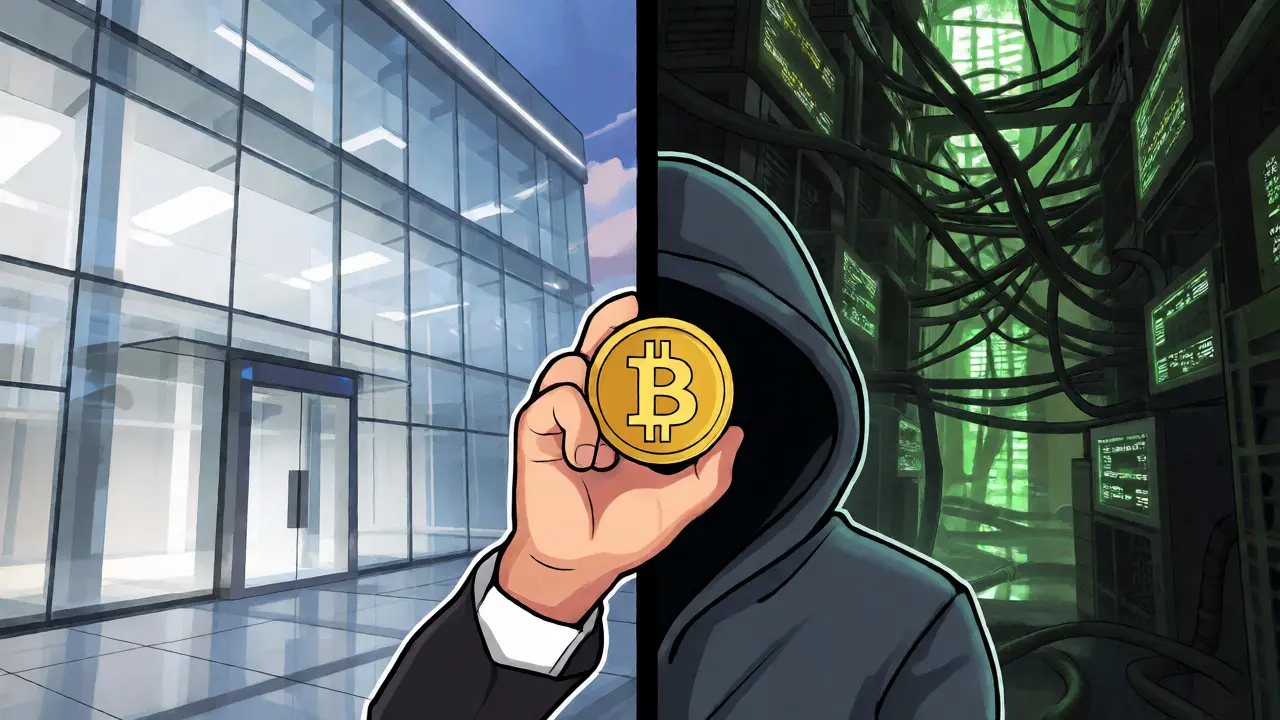
The Rise and Fall of Dread Pirate Roberts
Ross Ulbricht built Silk Road to prove that free-market principles could work without government interference. He believed in voluntary exchange and hated the "War on Drugs." Ironically, his creation became the poster child for why governments feared cryptocurrency. By mid-2013, Silk Road dominated the dark web, holding up to 92% of all darknet transaction volume. It hosted nearly 147,000 buyers and almost 4,000 vendors. The community felt self-regulating. Top sellers maintained 98% positive feedback rates. Quality control wasn't enforced by police, but by peer pressure and ratings.
But anonymity has limits. Law enforcement used blockchain analysis to trace payments back to Ulbricht. They found he had posted under his real name in early forum posts before switching aliases. On October 1, 2013, FBI agents arrested him in a San Francisco library. The operation collapsed within 24 hours. Why? Centralization. Silk Road relied on a single admin server. When Ulbricht was taken, the keys were seized, and the market shut down. This single point of failure contrasted sharply with decentralized networks. Unlike Bitcoin itself, which survived thousands of attacks, Silk Road died instantly because it was human-controlled.
The aftermath was messy. Silk Road 2.0 launched shortly after, trying to replicate the model. It failed too, suffering a $2.7 million theft due to a technical bug called transaction malleability. This vulnerability allowed attackers to alter transaction IDs, confusing the escrow system. It highlighted a key lesson: building secure software is hard, especially when you don't have a professional engineering team testing code for months. Legitimate exchanges invest millions in security audits. Silk Road relied on one guy and a small team.
Impact on Bitcoin Adoption and Regulation
Did Silk Road help or hurt Bitcoin? Both. In the short term, it scared off institutional investors. News outlets reported that Bitcoin was primarily used for buying cocaine. A 2023 report from the Congressional Research Service showed that while Silk Road transactions were tiny compared to total volume, they accounted for 87% of media coverage about Bitcoin between 2011 and 2013. This skewed public perception. People associated crypto with crime, not innovation.
However, the crackdown forced the industry to mature. The U.S. Treasury issued its first guidance on cryptocurrency in May 2013, specifically citing Silk Road. This led to the BitLicense framework in New York and stricter anti-money laundering laws globally. The EU’s 5th Anti-Money Laundering Directive directly referenced Silk Road’s model. Essentially, Silk Road acted as a stress test for regulation. It showed policymakers what happens when money moves without oversight. The result was a push toward compliance, which eventually made crypto safer for mainstream users.
Today, the U.S. government holds over 144,000 BTC seized from Silk Road. These coins are worth billions now. The Marshals Service sells them periodically, often causing slight dips in price. Each sale of 10,000 BTC correlates with a 2.3% price drop within 24 hours, according to a University of Chicago study. So, even though the marketplace is gone, its ghost still haunts the charts.

Lessons for Modern Crypto Users
If you are new to crypto, what should you take away from this history? First, understand the difference between spending and trading. Most modern wallets and exchanges facilitate trading. If you want to buy coffee with Bitcoin, you need specific merchants or debit card integrations, not a darknet market. Second, recognize the value of privacy. Silk Road users loved anonymity, but true privacy tech has evolved. Tools like Monero or privacy-focused layer-2 solutions offer better options today without the legal risks.
Third, look at the technology legacy. Silk Road pioneered the use of multi-signature escrow and reputation systems in digital commerce. Modern decentralized finance (DeFi) protocols use smart contracts to automate escrow, removing the need for a central admin like Ulbricht. This reduces counterparty risk. You don't trust a person; you trust code. This shift from centralized trust to algorithmic trust is one of Silk Road's most enduring contributions.
Finally, remember that convenience comes with trade-offs. Silk Road offered ease of use for illicit goods but lacked consumer protections. If you bought a fake product, you could dispute it, but you couldn't call customer service. Today, regulated exchanges offer insurance and clear recourse. For most people, paying a fee for safety and legality is worth it. Silk Road was an experiment. It proved Bitcoin works as a medium of exchange, but it also proved that unregulated markets attract predators.
Frequently Asked Questions
Was Silk Road a cryptocurrency exchange?
No, Silk Road was not a cryptocurrency exchange. It was a darknet e-commerce marketplace that accepted Bitcoin as payment for goods and services. Users could not trade different cryptocurrencies against each other or convert Bitcoin to fiat currency directly on the platform.
Who created Silk Road?
Silk Road was created by Ross Ulbricht, an American computer programmer. He operated under the pseudonym "Dread Pirate Roberts." He was arrested by the FBI in October 2013 and subsequently sentenced to life in prison.
How much Bitcoin was seized from Silk Road?
The U.S. government seized approximately 144,336 Bitcoin from Silk Road's servers. At the time of seizure in 2013, this was worth about $3.6 million. Due to Bitcoin's price appreciation, these holdings are now valued in the billions of dollars.
Does Silk Road still exist?
The original Silk Road closed permanently in 2013. Several successors, such as Silk Road 2.0 and Silk Road 3.0, attempted to revive the brand but failed due to technical issues, hacks, or law enforcement actions. Today, various darknet markets operate, but none have achieved the same level of dominance or cultural impact.
Why did Silk Road close?
Silk Road closed because of law enforcement intervention. The FBI traced Ross Ulbricht through digital footprints and traditional detective work. His arrest led to the immediate shutdown of the site's servers. Additionally, the platform suffered from centralization, meaning the entire operation depended on one administrator.
Write a comment