Imagine logging into your favorite crypto platform only to find the site gone. Your funds are locked. Support emails bounce back into the void. This is not a hypothetical nightmare for many users; it was the harsh reality of TradeSatoshi, a UK-based cryptocurrency exchange that operated from 2015 until its abrupt and controversial shutdown in late 2019. If you are searching for this name today, you likely have one of two reasons: either you were a user during its operational years seeking answers about lost assets, or you stumbled upon an outdated guide and want to know if it is safe to use now. The answer is simple but critical: TradeSatoshi is dead. It does not exist. Depositing money here would be impossible because there is no platform left to receive it.
The Rise and Fall of TradeSatoshi
To understand why this exchange matters, we need to look at where it started. Founded in 2015, TradeSatoshi positioned itself as a friendly, community-driven alternative to the sterile interfaces of early crypto giants. Unlike Binance or Coinbase, which focused heavily on security and institutional compliance from day one, TradeSatoshi leaned into social features. It offered a built-in chat system where traders could talk directly to each other, share tips, and even send small amounts of crypto as "tips" within the conversation. For beginners in the wild west of 2017-2018 crypto, this felt welcoming. It lowered the barrier to entry by offering lower minimum trade limits, allowing people to buy and sell without needing thousands of dollars upfront.
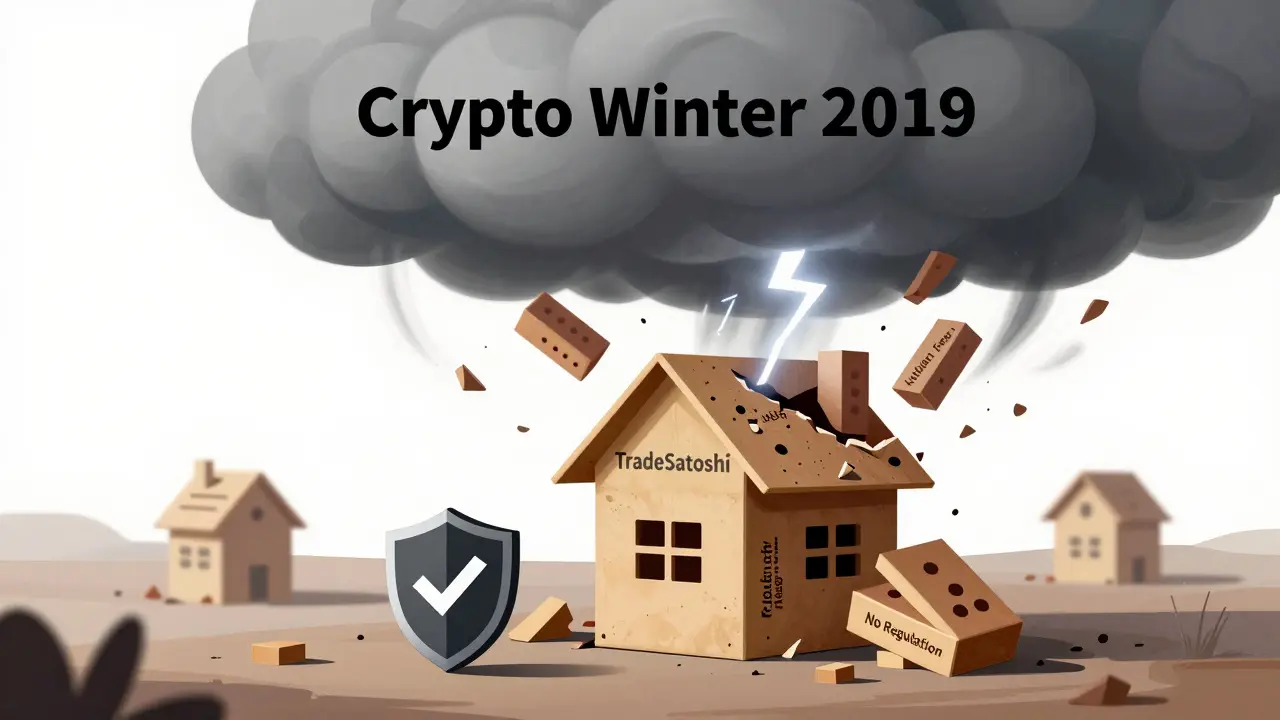
However, the charm wore off quickly when the market turned cold. By late 2019, the cryptocurrency winter had hit hard. Trading volumes across the industry dropped by roughly 80%, according to reports from Bitwise Asset Management. Small exchanges without deep pockets struggled to survive. TradeSatoshi lacked the venture capital backing that kept larger competitors afloat. Coinbase, for instance, raised $100 million in Series D funding in August 2018, providing a massive safety net. TradeSatoshi showed no evidence of such institutional support. When liquidity dried up, the platform couldn't sustain operations, leading to a sudden closure that left users stranded.
Red Flags That Were Ignored
Looking back with hindsight, several warning signs were visible before the lights went out. The most glaring issue was transparency-or rather, the lack thereof. Professional reviewers like CryptoWisser noted that TradeSatoshi failed to publish clear fee schedules. In an industry where fees can range from 0.1% to over 1%, knowing exactly what you pay is crucial. Without published rates, users had no way to verify if they were being charged fair prices or if hidden spreads were eating their profits. This opacity violated best practices followed by transparent leaders like Coinbase, which clearly listed spot trading fees between 0.50% and 1.49% during the same period.
Security protocols were another black box. While major exchanges like Binance established the Secure Asset Fund for Users (SAFU) in 2018-a $1 billion reserve designed to protect users in case of hacks-TradeSatoshi provided no public details on how it safeguarded funds. There were no mentions of cold storage percentages, multi-signature wallets, or regular third-party audits. For a platform handling digital assets, this silence was deafening. Furthermore, the exchange operated in regulatory gray areas. Despite being registered in the UK, it accepted customers from the United States without apparent regard for emerging US regulations requiring specific licensing. This lack of regulatory adherence meant users had little legal recourse if things went wrong.
| Feature | TradeSatoshi | Industry Leaders (e.g., Binance/Coinbase) |
|---|---|---|
| Fee Transparency | No published schedule | Clear, detailed fee structures |
| Security Proof | Undocumented | SOC 2 certs, SAFU funds, audits |
| Regulatory Compliance | Gray area, accepted US users | Licensed in multiple jurisdictions |
| Institutional Backing | None evident | Major VC funding rounds |
| User Interface Focus | Social chat, low limits | Advanced charting, high volume |
The Shutdown: What Actually Happened?
The end came abruptly in December 2019. Bitcoinist reported that TradeSatoshi announced it would close shop, but the announcement offered no path for refunds or fund migration. Instead, users found themselves locked out. Accounts were frozen. Withdrawals were halted. One verified user on the Bitcointalk forum documented losing access to approximately $9,000 worth of coins just days before the complete shutdown. The pattern described by multiple victims mirrors classic exit scam behavior: first, restrictions on withdrawals, then account lockouts, and finally, total abandonment of the platform.
Why did this happen? Financial fragility played a huge role. As trading volumes plummeted, the exchange likely ran out of operating cash. Without a reserve fund or insurance, they simply couldn't pay out users. But the manner of the exit suggests deeper issues. Trustpilot reviews from June 2019 already contained allegations of foul play, with users claiming their accounts were blocked after asking questions on social media. Others reported that the team unlisted coins without warning, trapping value inside the platform. When the final shutdown occurred, these complaints transformed into accusations of fraud. CipherTrace’s 2020 Crypto Crime Report later documented 37 similar exchange closures in 2019 alone, resulting in $292 million in user losses, placing TradeSatoshi squarely within this trend of predatory failures.

User Experience: From Hype to Horror
If you scroll through archived reviews, you will see a stark contrast. In October 2019, just weeks before the collapse, Trustpilot was filled with five-star ratings praising the "friendly chat box" and "low costs." Users loved the ease of use. Beginners appreciated that they didn’t need complex knowledge to start trading. The social aspect made them feel part of a community. However, these positive reviews often ignored the underlying risks. They focused on convenience while overlooking the absence of security guarantees.
Post-shutdown, the narrative flipped entirely. Reddit threads exploded with stories of inaccessible funds. Users described trying to log in only to find error messages or blank screens. Customer support channels, once praised for responsiveness, went silent. The integrated chat system, which had been a selling point, became a graveyard of unanswered pleas for help. The dichotomy is painful: those who joined late saw the platform at its worst, while early adopters may have withdrawn successfully before the cracks appeared. This timing disparity explains why some still defend the brand online, while others label it a definitive scam.
Legal Recourse and Recovery
For those still hoping to recover funds, the outlook is bleak. The UK Financial Conduct Authority (FCA) does not list TradeSatoshi as a registered entity, meaning it likely operated without proper authorization. This lack of registration strips users of consumer protections available under UK law. Without a licensed custodian holding your assets, there is no legal mechanism to force a refund. Law enforcement agencies generally prioritize cases involving massive scale or organized crime syndicates; individual losses of a few thousand dollars rarely trigger international investigations.
Some users attempted to contact the founders or staff via social media, but accounts were deleted or blocked. The Bitcointalk thread titled "THIS IS SCAM EXCHANGE... PLEASE AVOID DEPOSITS" serves as a grim testament to the frustration felt by victims. With no corporate structure remaining and no active legal entity to sue, recovery is practically impossible. Experts advise accepting the loss as a tuition fee for learning how to vet exchanges properly.
How to Avoid the Next TradeSatoshi
The lesson from TradeSatoshi isn’t just about avoiding one bad actor; it’s about changing how you evaluate any crypto platform. Here is what you must check before depositing a single cent:
- Verify Regulatory Status: Check if the exchange is registered with financial authorities in its jurisdiction. For US users, ensure compliance with SEC or CFTC guidelines. For UK users, look for FCA authorization.
- Demand Fee Transparency: Never trust a platform that hides its fee structure. Legitimate exchanges publish detailed breakdowns of trading, withdrawal, and deposit fees.
- Check Security Measures: Look for proof of cold storage, multi-signature wallets, and independent security audits. Ask yourself: where are my keys?
- Assess Liquidity and Volume: High trading volume indicates a healthy, active market. Low volume can mean slippage and difficulty withdrawing large sums.
- Read Recent Reviews Carefully: Ignore generic five-star posts. Look for detailed experiences from users who have actually withdrawn funds. Pay attention to complaints about delays or hidden charges.
- Avoid Unregistered US Access: If a foreign exchange accepts US customers without clear licensing, it is a major red flag indicating regulatory evasion.
Platforms like Kraken and Coinbase survived because they invested heavily in compliance and security. They understood that trust is the currency of the crypto world. TradeSatoshi gambled on novelty and community vibes, ignoring the fundamental need for operational integrity. That gamble cost thousands of users their savings.
Current Status and Alternatives
As of 2026, TradeSatoshi remains permanently offline. CoinCodex explicitly marks it as "no longer operational," and no revival attempts have been successful. Any website claiming to be TradeSatoshi today is a phishing scam designed to steal your personal information. Do not enter your credentials anywhere resembling this old brand.
If you are looking for a beginner-friendly alternative with strong security, consider established platforms with proven track records. Kraken offers robust security and supports a wide range of altcoins. Coinbase provides a user-friendly interface ideal for newcomers, though with higher fees. Binance continues to dominate in terms of volume and feature set, catering to both beginners and advanced traders. Always remember: the cheapest or most convenient option is not always the safest. Prioritize platforms that have survived multiple market cycles and demonstrated resilience under pressure.
Is TradeSatoshi still operational in 2026?
No, TradeSatoshi shut down permanently in late 2019. It is no longer operational, and any attempt to access it will result in errors or lead to fraudulent sites.
Can I recover my funds from TradeSatoshi?
Recovery is highly unlikely. The exchange operated without proper regulatory licensing, and the company has ceased all operations. There is no legal entity to pursue for refunds, and law enforcement has not indicated any recovery programs for affected users.
Why did TradeSatoshi shut down?
The shutdown was attributed to financial insolvency during the 2018-2019 crypto winter. Lack of venture capital backing, low trading volumes, and potential mismanagement led to the inability to meet user withdrawal requests, resulting in an abrupt closure.
Was TradeSatoshi a scam?
While initially launched as a legitimate exchange, its final actions mirror those of an exit scam. Users reported frozen accounts, blocked withdrawals, and lack of communication prior to the shutdown. Many experts classify the closure as fraudulent due to the opaque handling of user funds.
What are safe alternatives to TradeSatoshi?
Safe alternatives include regulated and well-established exchanges like Coinbase, Kraken, and Binance. These platforms offer transparent fee structures, robust security measures, and regulatory compliance, significantly reducing the risk of fund loss.
Did TradeSatoshi accept US customers?
Yes, despite being a UK-based entity, TradeSatoshi accepted customers from the United States. This created significant regulatory vulnerabilities, as it likely operated without the necessary licenses required by US financial authorities.
What was unique about TradeSatoshi's interface?
TradeSatoshi featured an integrated social chat system that allowed users to communicate directly, share tips, and send crypto tips. This community-focused approach was rare among exchanges at the time but did not compensate for its lack of security and transparency.


Write a comment