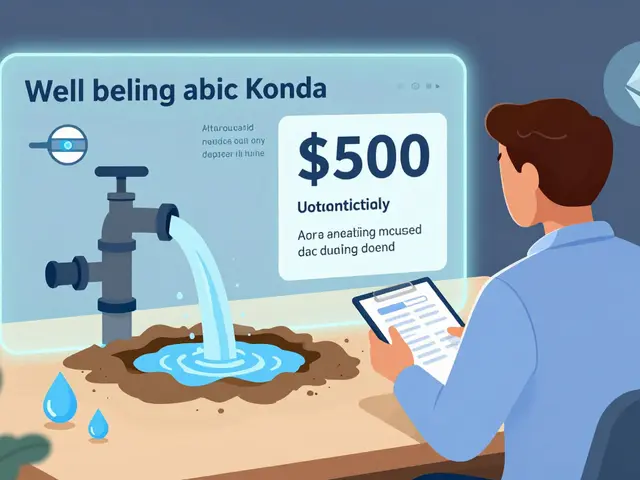
Imagine donating $500 to build a well in Kenya - but instead of hoping the charity uses your money wisely, you see it happen. You get real-time updates: sensors confirm the well is dug, water flows, and only then does the next payment release. No guesswork. No delays. No middlemen taking a cut. This isn’t science fiction. It’s how smart contracts for conditional donations work today.
What Exactly Are Smart Contracts for Conditional Donations?
A smart contract is just code on a blockchain that runs automatically when certain conditions are met. For donations, that means you can say: "Pay $1,000 to this clinic only after they’ve delivered 500 malaria nets and uploaded verified photos." The money doesn’t move until those exact things happen. This isn’t about trust. It’s about proof. Traditional charities often take 15-25% of donations just to cover admin, fundraising, and processing fees. With smart contracts, that drops to 2-5%. That’s because there’s no need for banks, payment processors, or manual audits. The code does it all. Ethereum powers about 68% of these charitable smart contracts as of mid-2024. But other networks like XDC and Bitcoin (using Discreet Log Contracts) are catching up. XDC, for example, settles transactions in under 8 seconds - compared to 3-5 business days for international wire transfers.Why This Changes Everything for Donors
Most people don’t give because they don’t trust where the money goes. A 2022 Cone Communications survey found only 23% of donors had high confidence in charities’ accountability. Smart contracts fix that. Take the Malala Fund’s 2023 campaign. They used smart contracts to fund girls’ education in Pakistan. Donors could track every dollar: when a school opened, when teachers were hired, when textbooks arrived. Donor confidence jumped 37% within six months. People didn’t just give more - they gave again. Firefly Giving’s data shows 42% higher donor retention for charities using this model. You’re not just donating. You’re auditing. And you’re doing it in real time.How It Actually Works (No Tech Degree Needed)
You don’t need to write code. Here’s the simple flow:- You choose a charity that uses smart contracts (like Firefly Giving or CharityChain).
- You pick a condition: "Pay $200 when 100 meals are delivered," or "Release funds monthly if attendance increases by 10%."
- You send crypto (ETH, XDC, etc.) to the contract using your wallet - MetaMask, Trust Wallet, or similar.
- The contract waits for an external signal - called an "oracle" - to confirm the condition was met. Chainlink is the most common oracle used in charities.
- Once verified, the money moves automatically. No human intervention.
Where It Falls Short - The Real Risks
This isn’t magic. It’s code. And code can’t handle chaos. In 2022, UNICEF ran a pilot to fund flood relief in Pakistan. Their smart contract said: "Funds release only after supply trucks reach district X." But the roads were washed out. Trucks couldn’t get through. The contract didn’t know how to adapt. $220,000 sat frozen while people starved. That’s the problem with rigidity. Human needs don’t follow preset rules. A smart contract can’t decide to redirect funds if a new emergency pops up. It just follows its code. There’s also the digital divide. The World Bank estimates 72% of global donors don’t own cryptocurrency. Setting up a wallet, managing private keys, paying gas fees - it’s intimidating. One nonprofit reported 12 potential donors walked away during a campaign because MetaMask confused them. And then there’s cost. Small charities with budgets under $500,000 struggle. Setting up a smart contract can cost $8,000-$25,000. Hiring a Solidity developer runs $120/hour. For a local food bank? That’s not an investment - it’s a luxury.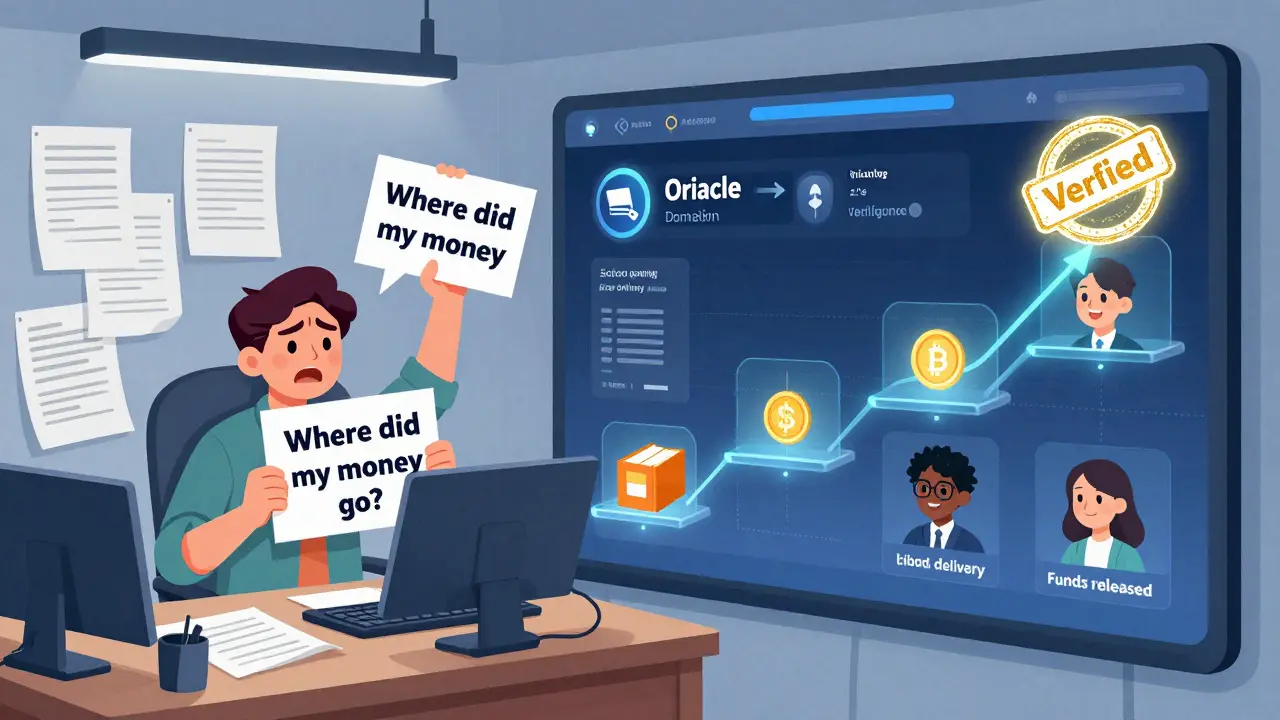
Who’s Using This Right Now?
Adoption is split. Big players are in. Small ones are watching. Fortune 500 foundations? 41% have tried or piloted conditional donations. Deloitte reports 67% of major banks now offer smart contract giving to wealthy clients - partly because it auto-generates IRS-compliant tax receipts 92% faster than paper. But among small nonprofits? Only 8% have adopted it, according to a 2024 NTEN report. The main barriers? Cost, complexity, and fear of legal gray zones. Legal uncertainty is real. In January 2025, a U.S. court case (*Bryant v. JPMorgan Chase Bank*) ruled that your actions - like clicking "I agree" to a smart contract - can count as legal consent. But what if the terms are buried in code? Courts still aren’t sure. That’s why 68% of U.S. charities now consult lawyers who understand both nonprofit law and blockchain before launching.The Future: What’s Coming Next
The tech is getting easier. In February 2024, Ethereum launched ERC-7217 - a new standard specifically for charitable smart contracts. It cuts development time by 40%. That means lower costs and faster setups. The ISO is also working on ISO 23026, a global standard for blockchain in social impact. Expected in late 2025, it will define what "good" looks like for conditional donations - from security to transparency to accessibility. Gartner predicts that by 2027, 35% of charities with budgets over $1 million will use some form of smart contract giving. But that’s still a fraction of the total. The real tipping point? When donors don’t need to know what a blockchain is. When the interface is as simple as Venmo. When you just tap "Donate with Conditions" and pick from preset options: "Fund a school," "Build a clinic," "Feed a family."Should You Use It?
If you’re a tech-savvy donor who wants total control over where your money goes - yes. Smart contracts give you unmatched transparency. You’re not just giving. You’re verifying. If you’re a small charity with limited staff and budget - maybe not yet. The setup cost and learning curve are still too high. Start by partnering with a platform like Firefly Giving that handles the tech for you. If you’re a large nonprofit or corporate foundation - you’re already behind. The savings in admin costs, the boost in donor trust, the speed of fund release - it’s a competitive advantage. The biggest risk isn’t the technology. It’s ignoring it. Because as more donors demand proof - not promises - charities that stick to old-school reporting will lose trust. And trust is the only currency that really matters in giving.
Smart Contracts vs. Traditional Donations
| Feature | Smart Contract Donations | Traditional Donations |
|---|---|---|
| Processing Time | Seconds to minutes | 3-5 business days |
| Admin Fees | 2-5% | 15-25% |
| Transparency | Real-time, on-chain tracking | Annual reports, vague updates |
| Donor Control | Custom conditions, automated release | One-time gift, no follow-up |
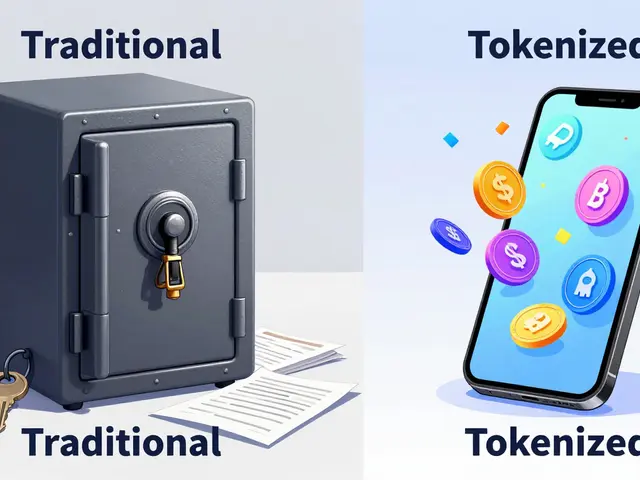
| Accessibility | Requires crypto wallet | Credit card, bank transfer, check |
| Flexibility | Rigid - can’t adapt to emergencies | Staff can redirect funds as needed |
| Legal Clarity | Evolving - court cases still testing enforceability | Well-established |
Frequently Asked Questions
Can I cancel a smart contract donation after sending it?
No. Once a smart contract receives funds, the code controls everything. You can’t reverse it, pause it, or change the conditions after deployment. That’s why it’s critical to review every condition carefully before sending crypto. Think of it like signing a legally binding contract - but instead of paper, it’s code.
What happens if the oracle gives wrong data?
Oracles are third-party services that feed real-world data into the contract - like weather reports, delivery confirmations, or sensor readings. If a single oracle is wrong, the contract may release funds incorrectly. That’s why top platforms use multiple oracles and require consensus. Chainlink, for example, pulls data from 3-5 independent sources before confirming a condition. Still, no system is perfect. Always check how the charity verifies its data.
Do I need to pay gas fees every time a donation is released?
Yes. Every time the contract executes - whether it’s releasing funds or updating a status - it costs gas on Ethereum. During high network traffic, fees can spike over $50. That’s why some charities use lower-cost chains like XDC, where fees stay under $0.01. Donors should ask: "Does this charity absorb gas fees, or do I pay them?" Most reputable platforms cover gas for donors.
Are smart contract donations tax-deductible?
Yes - if the charity is a registered 501(c)(3) nonprofit. The IRS treats crypto donations as property, not income. You get a tax deduction based on the fair market value of the crypto at the time you donated. Smart contracts make this easier because they automatically generate a timestamped, immutable record of your donation - no receipt chasing needed. Firefly Giving’s clients report 92% faster IRS documentation than traditional methods.
Can I set up a smart contract myself without a charity?
Technically, yes. But it’s risky. You’d need to write or deploy the code, choose a trustworthy oracle, verify the recipient’s wallet address, and ensure legal compliance. Most people don’t have the skills. Even if you do, there’s no guarantee the recipient will use the funds as intended - unless they’re part of a verified platform. Stick with established charities using smart contracts. They’ve done the heavy lifting.
Next Steps: What to Do Now
If you want to try conditional donations:- Start small. Donate $50 to a charity using Firefly Giving or CharityChain.
- Look for campaigns with clear conditions: "Funds release when 50 meals delivered," not vague promises.
- Use a wallet you control - never send crypto from an exchange.
- Ask the charity: "How do you verify the conditions?" If they say "we check manually," skip it.
- Partner with a platform instead of building your own contract.
- Start with one pilot campaign - maybe a disaster relief or education project.
- Train your team on crypto basics. You don’t need to be an expert, but you need to explain it to donors.
- Don’t wait for perfect. Wait for action.
Jessie X
I love the idea but I just don't trust crypto wallets. One wrong tap and poof your donation's gone. I need to see a receipt I can print.
Dave Lite
This is the future. Smart contracts eliminate the 20% overhead most NGOs bleed out on admin. Chainlink oracles + ERC-7217 = near-zero latency disbursement with immutable audit trails. The real bottleneck? Onboarding non-crypto donors. We need UX that abstracts the blockchain layer entirely - think Venmo but for impact. Also gas fees should be subsidized by the platform, not the donor. If you're paying $40 in ETH gas to give $50, you're doing it wrong.
jim carry
You people are naive. You think code is moral? What if the sensor breaks? What if the well is dug but the water is contaminated? The contract doesn't care. It just pays. People are dying because some coder in Silicon Valley thought 'if-then' logic was enough to solve human suffering. This isn't innovation. It's arrogance wrapped in blockchain.
Don Grissett
so like... you're saying we should trust a computer more than a human? lol. i mean i get the transparency thing but what if the oracle lies? or what if the charity gets hacked? and why do i need a wallet? i just wanna send cash. also i heard the gas fees are wild right now. i'm out.
Katrina Recto
I've seen this work in rural Kenya. The difference isn't just efficiency-it's dignity. When women get direct control over funds tied to measurable outcomes, they rebuild communities. This isn't tech for tech's sake. It's justice with a timestamp.
Sabbra Ziro
I'm so excited about this! I think it's beautiful, really-when donors can see exactly how their kindness turns into clean water or books or medicine. And the transparency? It's not just good for accountability, it's healing. People feel connected again. Like they're part of something real. I've donated twice now using Firefly Giving, and I cried when I saw the video of the school opening. It's not just money-it's hope, with a blockchain ledger.
Emily Hipps
If you're not using smart contracts yet, you're leaving money on the table-and trust on the table. Donors want to know their $50 didn't vanish into some admin black hole. This isn't optional anymore. It's the new standard. Start small. Partner with a platform. Train your team. The tech is ready. The donors are ready. Are you?
Tiffani Frey
The UNICEF flood example is critical. Code can't empathize. Oracles can't read the weight of silence in a village without power. I've worked with grassroots orgs in Nigeria-sometimes the best donation is the one that doesn't follow the script. Smart contracts are tools, not saviors. We need hybrid models: code for transparency, humans for compassion.
kris serafin
This is 🔥. Seriously. I gave $75 to a school project in Uganda via CharityChain. Got real-time updates: sensors pinged when the roof was installed, then when books arrived. The whole thing took 17 minutes. No emails. No forms. Just... done. I'm donating monthly now. 🚀
Jordan Leon
There's an ethical tension here. On one hand, we eliminate inefficiency and opacity. On the other, we replace human judgment with deterministic logic. What happens when a child needs medicine, but the contract only releases funds for school supplies? The moral calculus is no longer in human hands-it's in the bytecode. We must not mistake precision for virtue.
Allen Dometita
I tried it once. Got confused with the wallet. Thought I had to mine crypto first. Lol. Then I saw a guy on YouTube say 'just buy ETH on Coinbase and send it'. Did it. Felt like a wizard. My $30 built a well. Now I tell all my friends. Simple. Real. No fluff.
Brittany Slick
It’s like giving with a heartbeat. Not just a transaction. You feel the pulse of impact-when the water flows, when the child opens the book, when the meal arrives. It turns donors into witnesses. And witnesses don’t look away.
greg greg
I've been researching this for six months now and I think it's important to consider the broader implications beyond donor trust and fee reduction. The underlying architecture of blockchain-based charitable disbursement introduces a paradigm shift in fiduciary responsibility, particularly regarding the legal status of oracles as third-party agents, the enforceability of immutable code under existing nonprofit statutes, and the potential for algorithmic bias in condition-setting-especially when conditions are designed by Western tech teams without local contextual input. Furthermore, the energy consumption of Ethereum prior to the merge remains a moral concern for many, and even post-merge, the carbon footprint of verification nodes in global networks is nontrivial. The tax implications are clear under IRS Notice 2014-21, but what about international donors? How does this align with EU digital asset regulations or India's crypto tax regime? And what happens when a smart contract is deployed on a chain that later gets deprecated? Is the donation still verifiable? The technical elegance is undeniable, but the socio-legal ecosystem is still in its infancy.
Denise Paiva
You call this transparency? It's control. You want to micromanage charity like a spreadsheet. Real aid isn't about sensors and code-it's about relationships. You think a well in Kenya needs a blockchain to prove it exists? The people there don't need your digital receipts. They need your presence. This isn't progress. It's alienation dressed up as innovation.