Blockchain Governance: How Decisions Are Made in Decentralized Networks
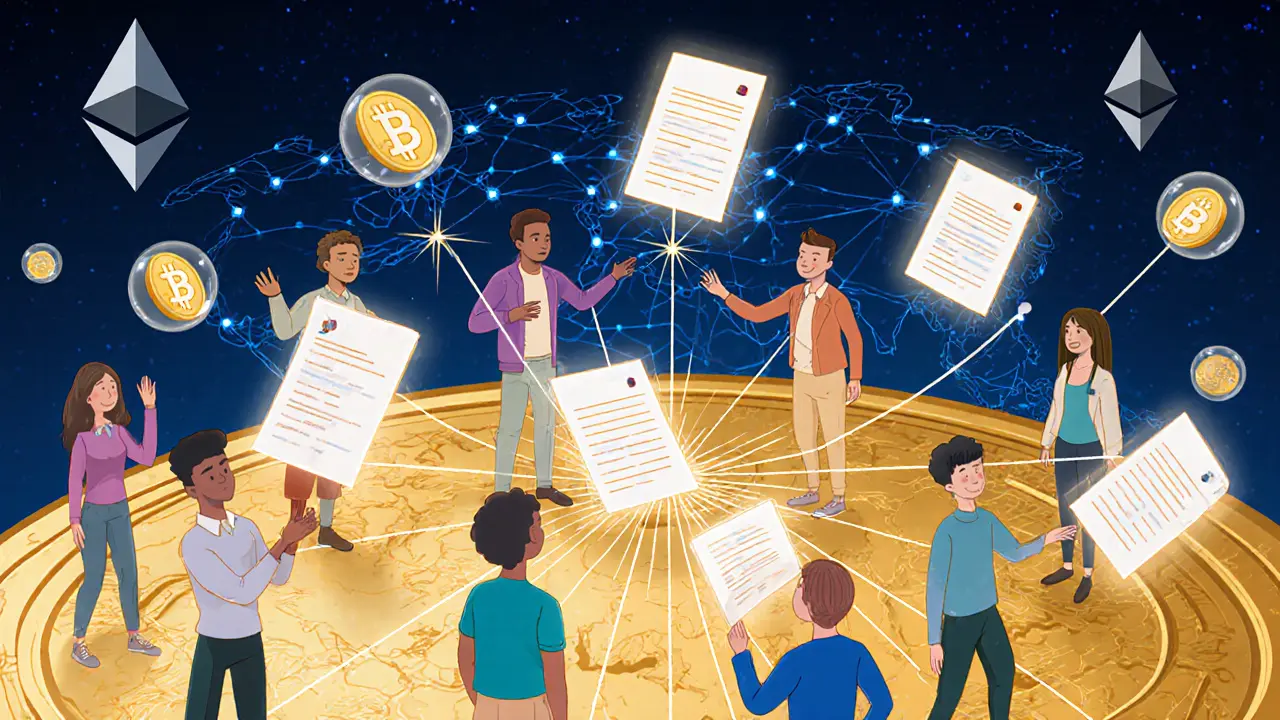
When you hear blockchain governance, the system of rules and processes that decide how a blockchain network changes over time. It's not run by a CEO or a board—it's decided by developers, miners, stakers, and sometimes you, if you hold the right tokens. Unlike traditional companies, there’s no headquarters where someone flips a switch to update the software. Instead, changes happen through proposals, votes, and sometimes bitter arguments that split the network in two.
That’s why crypto regulation, government rules forcing exchanges and projects to follow KYC, AML, and reporting standards. It’s a growing force shaping how blockchains operate. South Korea’s $34 billion fine on Upbit didn’t just punish a company—it sent a signal: if you ignore compliance, regulators will shut you down. Meanwhile, Canada seized $40 million from TradeOgre because it refused to verify users. These aren’t random crackdowns. They’re proof that decentralized decision-making, the idea that control should be spread across users, not concentrated in a few hands. It’s being tested in the real world. You can’t claim to be decentralized when your exchange doesn’t know who you are.
And then there’s proof-of-stake, a consensus method where token holders validate transactions and earn rewards, but can also be penalized for bad behavior. It’s become the standard for Ethereum, Solana, and most new chains. But with staking comes slashing—a penalty for misbehaving validators. That means your governance power isn’t just about voting on upgrades. It’s about keeping the network secure. If you stake, you’re part of the system. If you ignore it, you risk losing money.
So what does this mean for you? Whether you’re holding a token, providing liquidity, or just trying not to get scammed by fake airdrops, you’re already involved in blockchain governance. Every time you choose which exchange to use, which wallet to trust, or whether to support a fork, you’re casting a vote. The posts below show you how this plays out in real life: from failed tokens with no community backing, to exchanges that got crushed by regulators, to protocols that survived because their users actually cared. You won’t find fluff here. Just the messy, real-world outcomes of who gets to decide—and what happens when they don’t agree.