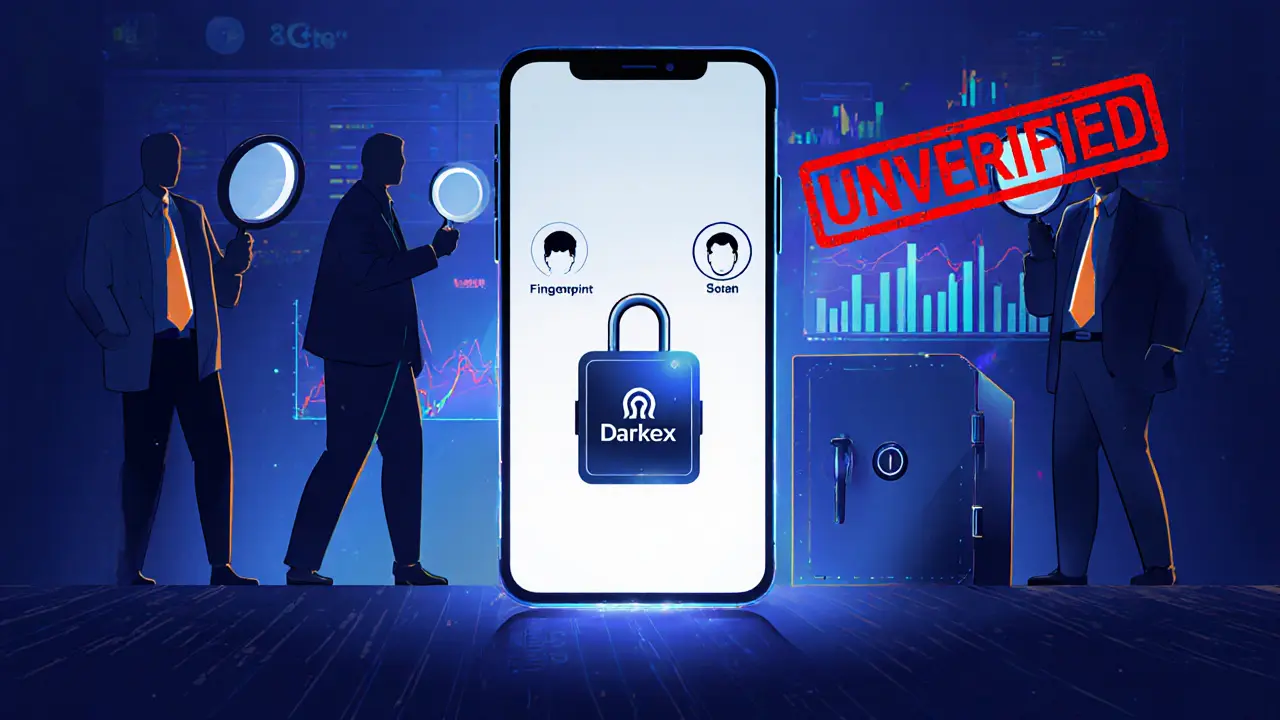
Darkex Exchange: Is It Legit or a Scam? What You Need to Know
When you hear Darkex Exchange, a crypto platform that claims to offer fast trades with low fees but has zero public footprint. Also known as Darkex.io, it pops up in forums and Telegram groups promising high returns—but there’s no official website, no team info, no social media presence, and no trace on any trusted crypto directory. If a platform doesn’t show up on CoinGecko, CoinMarketCap, or even a basic Google search with quotes around its name, that’s not an oversight—it’s a red flag.
Real crypto exchanges like Poloniex, a once-major platform that now blocks U.S. users due to regulatory pressure, or Bitsonic, a Korean-only exchange with clear local compliance but no English support, have public records, audits, customer service, and user histories. TradeOgre, a privacy-focused exchange shut down by Canadian authorities for operating without KYC still had public logs and a track record before it vanished. Darkex has none of that. No news articles. No Reddit threads. No YouTube tutorials. Just a handful of anonymous posts pushing a link.
Scammers build fake exchanges like Darkex to steal private keys, trick users into depositing crypto, then disappear with the funds. They copy the look of real platforms, use fake testimonials, and promise “limited-time bonuses.” But if you can’t find the company’s legal address, its team’s LinkedIn profiles, or even a support email that doesn’t bounce, you’re not dealing with a business—you’re dealing with a trap. The same pattern shows up in LongBit, a fake exchange with zero real records, or AnimeSwap, a non-existent DEX on Sui that lures people with fake promises. These aren’t mistakes—they’re tactics.
Regulators are cracking down hard. South Korea fined Upbit $34 billion for KYC failures. Canada seized $40 million from TradeOgre. If Darkex were real, it would be in the news—not hidden in shady Discord channels. The only thing you’ll find if you dig deeper are scam reports, broken links, and stolen images from real exchanges.
What you’ll find below are real reviews of exchanges that actually exist—and the scams that look just like them. You’ll learn how to tell the difference, what to check before you deposit, and which platforms have real track records. Don’t guess. Don’t risk. Know before you trade.