Impermanent Loss: What It Is, Why It Happens, and How to Avoid It
When you put crypto into a liquidity pool, a smart contract that holds two tokens to enable trading on decentralized exchanges. Also known as providing liquidity, it lets you earn fees from trades—but it also exposes you to impermanent loss, a temporary drop in value compared to just holding your tokens. This isn’t a hack, a scam, or a bug. It’s math. And if you’re using DeFi, a system of financial apps built on blockchains without banks or middlemen. Also known as decentralized finance, it enables direct peer-to-peer transactions for yield farming, you need to understand this before you stake anything.
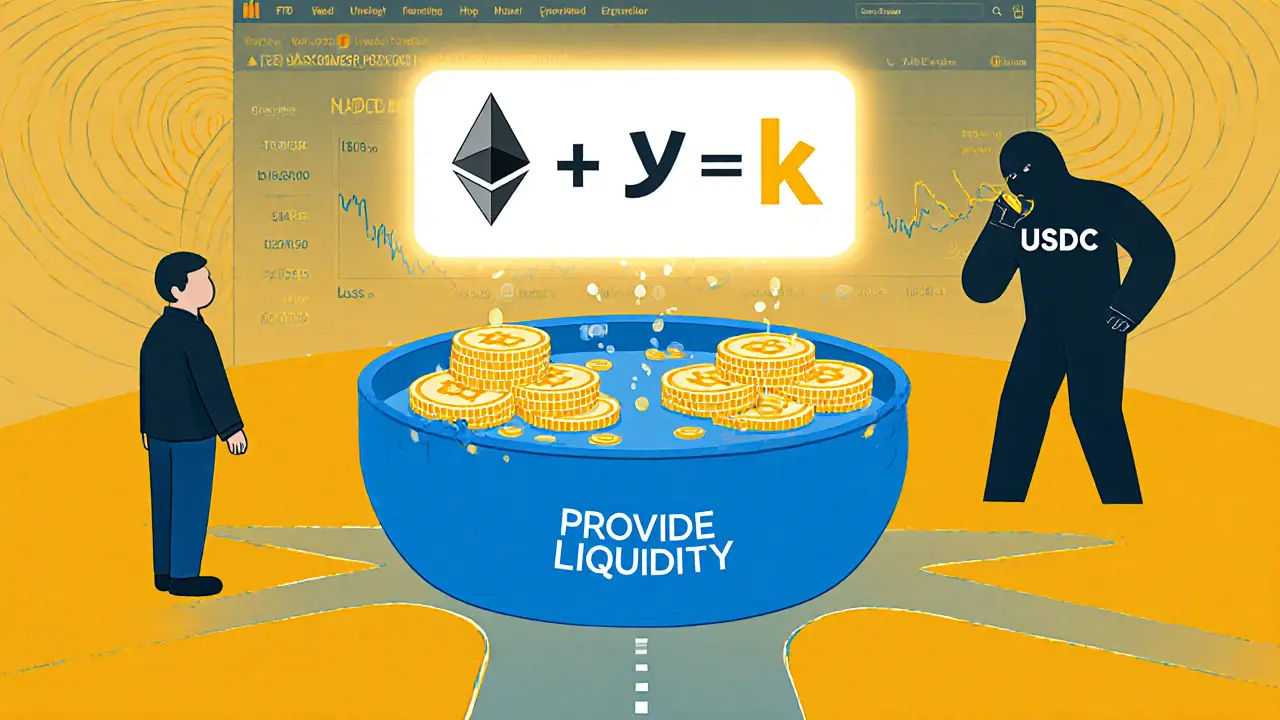
Here’s how it works: say you add $1,000 worth of ETH and USDC to a pool. If ETH’s price doubles while USDC stays flat, the pool automatically rebalances to keep the ratio equal. That means you end up with more USDC and less ETH than you started with. Your total value might still be higher than when you started—but if you’d just held the ETH, you’d have even more. That gap? That’s impermanent loss. It’s called "impermanent" because if the prices swing back, the loss disappears. But in crypto, prices rarely go back. They keep moving. And if you withdraw after a big price shift, that loss becomes real.
Not all liquidity pools carry the same risk. Pools with stablecoins like USDC and DAI? Low risk. Pools with wild meme coins or volatile tokens? High risk. The bigger the price difference between the two tokens, the worse the loss. That’s why most experienced users stick to pairs with low volatility or use protocols that offer insurance. Some platforms now even pay out compensation if you lose money from price swings. But don’t assume that’s standard. Always check the fine print.
You don’t need to avoid liquidity pools entirely. But you do need to know what you’re signing up for. If you’re chasing 20% APY on a new token pair, ask yourself: is the reward worth the chance of losing half your ETH? Many people jump in because they see the numbers, then panic when their balance drops. It’s not a loss on paper—it’s a mismatch between what you expected and what the market delivered.
The posts below break down real cases where impermanent loss hit hard, where it didn’t matter at all, and how some users turned it into an advantage. You’ll see how people used it to their benefit in DeFi, how scams hide behind fake yield promises, and what tools actually help track your exposure. No fluff. No hype. Just what happens when the math doesn’t go your way—and how to plan for it.