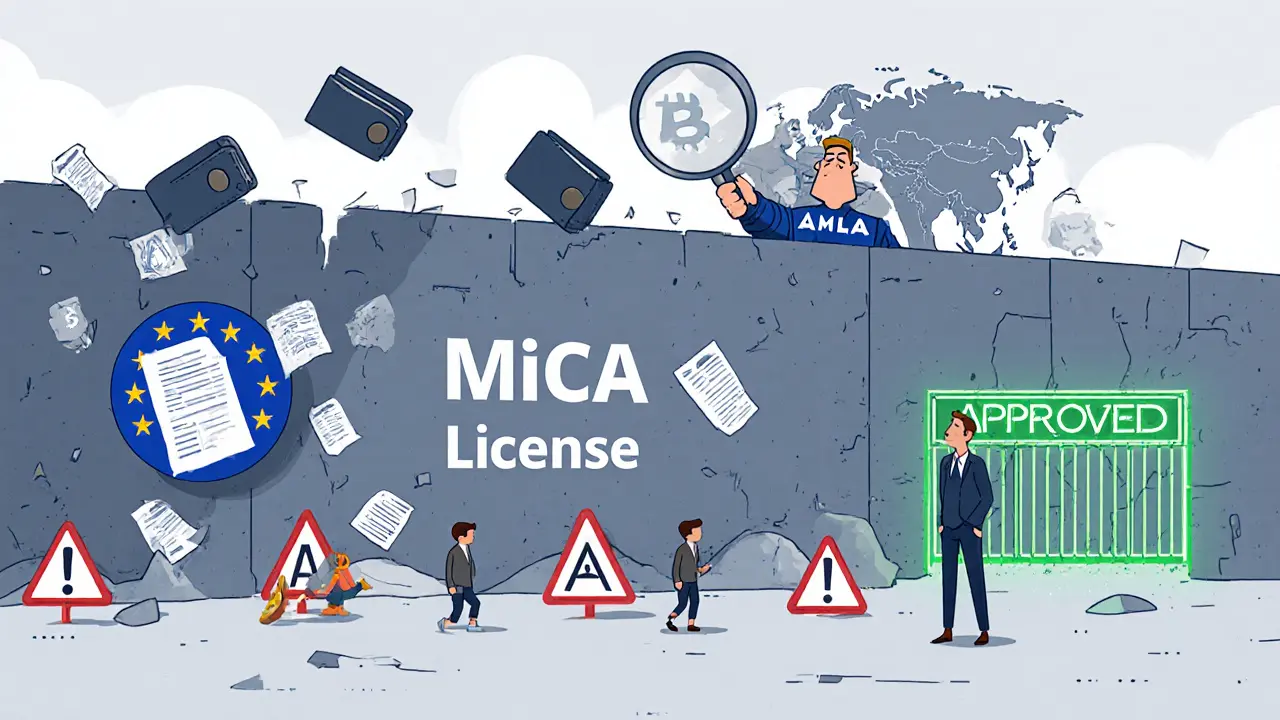
MiCA Compliance: What It Means for Crypto Exchanges and Users
When you hear MiCA compliance, the Markets in Crypto-Assets Regulation, a sweeping EU law that sets clear rules for crypto businesses. Also known as Crypto-Asset Market Regulation, it’s not just paperwork—it’s changing how exchanges, wallets, and tokens operate across the globe. If you trade crypto, hold tokens, or use a platform like Upbit or Poloniex, MiCA affects you—even if you live outside Europe.
MiCA compliance requires exchanges to verify users (KYC), track transactions (AML), and publish clear whitepapers before launching tokens. It’s why TradeOgre got shut down in Canada and why Upbit faces $34 billion in potential fines. These aren’t isolated cases—they’re signs of a global shift. Countries outside the EU are copying MiCA’s rules because it works. No more anonymous trading. No more shady airdrops pretending to be real projects. If a crypto platform doesn’t follow MiCA-style rules, it’s either shutting down or getting blocked.
It’s not just about punishment. MiCA compliance protects you. It means the exchange you’re using has to prove it’s real, not a fake site like LongBit or AnimeSwap. It means the token you’re buying has to explain what it does—not just promise moonshots. And when a project like SOVRUN or KOII claims to be innovative, MiCA forces them to back it up with real data, not hype.
That’s why the posts here focus on real cases: Upbit’s fines, TradeOgre’s seizure, KYC rules worldwide, and why fake airdrops like CovidToken or HyperGraph (HGT) are scams. MiCA didn’t create these problems—but it’s forcing the industry to fix them. You’ll find guides on how to spot non-compliant platforms, what to look for in a safe exchange, and why even decentralized apps now need to follow basic rules. This isn’t about bureaucracy. It’s about making crypto safer, clearer, and actually usable.