Thinking about launching a crypto exchange in Bangkok? You’re not alone. With over 8 million Thais holding digital assets and the market projected to hit $805 million in revenue by 2026, the opportunity is real. But here’s the catch: you can’t just set up shop and start trading. Thailand treats cryptocurrency like traditional finance, which means strict rules, hefty capital requirements, and a licensing process that takes months, not days.
If you are an operator eyeing this Southeast Asian hub, or an investor wondering why only 12 exchanges hold official licenses, this guide breaks down exactly what it takes to get approved by the Securities and Exchange Commission (SEC) of Thailand. We’ll cover the money, the paperwork, and the new 2025 rules that changed everything for foreign platforms.
Key Takeaways
- Total Initial Cost: Expect roughly 52.5 million THB (~$1.4-1.5 million USD) upfront, covering share capital and application fees.
- Licensing Timeline: The official review takes 150 days, but realistic preparation requires 6-12 months.
- New Foreign Rules: Since April 2025, any foreign platform serving Thai users must obtain a local license or face restrictions.
- Three Main Licenses: You need specific approval for being an Exchange, Broker, or Dealer; one size does not fit all.
- Local Presence Required: You cannot run this remotely. You need a Thai entity, local staff, and physical office space.
The Regulatory Landscape: Who Calls the Shots?
Thailand doesn’t play games with digital assets. The backbone of regulation is the Emergency Decree on Digital Asset Businesses B.E. 2561 (2018), which established the first clear legal framework for crypto in the region. However, the rules tightened significantly with the Royal Decree on the Operation of Digital Asset Businesses (No. 2) B.E. 2568, effective April 13, 2025. This update was crucial because it closed loopholes for offshore exchanges targeting Thai customers without a local footprint.
The Ministry of Finance holds the ultimate authority to grant licenses, while the SEC Thailand handles day-to-day supervision, enforcement, and ongoing compliance checks. Think of the Ministry as the gatekeeper who decides if you’re allowed in, and the SEC as the referee ensuring you play by the rules once you’re inside. This dual structure provides legal certainty but creates a high barrier to entry. Unlike some jurisdictions that ban crypto outright or leave it unregulated, Thailand offers a clear path-but it’s expensive and bureaucratic.
Types of Licenses: Which One Do You Need?
Not every crypto business needs the same license. The law distinguishes between three primary categories, each with different obligations and risk profiles. Choosing the wrong one can waste years of effort.
| License Type | Primary Function | Target Audience | Complexity Level |
|---|---|---|---|
| Digital Asset Exchange | Facilitates buying/selling via order books; holds user funds temporarily. | Retail investors, traders | High (Strict custody & liquidity rules) |
| Digital Asset Broker | Executes trades on behalf of clients using their own accounts or other exchanges. | Institutional clients, active traders | Medium-High |
| Digital Asset Dealer | Trades directly from its own inventory (market making). | Counterparties seeking immediate execution | Medium |
Most startups aim for the Digital Asset Exchange license because it allows them to build a consumer-facing brand. However, this comes with the heaviest compliance burden, particularly regarding the segregation of customer assets. Brokers and Dealers have slightly more flexibility but operate in narrower niches. There are also licenses for ICO Portals, Custodial Wallet Providers, and Fund Managers, but these are rare-only two operators currently hold custodial wallet licenses, indicating either high complexity or low demand in those specific segments.
The Financial Commitment: What Does It Really Cost?
Let’s talk numbers, because this is where many projects stall. To apply for a license, you must demonstrate financial stability. The law mandates a minimum registered share capital of 50 million THB (approximately $1.4 million USD). This isn’t just a number on paper; it must be fully paid up and deposited into a Thai bank account upon company incorporation.
On top of the capital, there is a non-refundable application fee of 2.5 million THB (approx. $70,000 USD). So, your hard costs before you even open your doors are around 52.5 million THB. But wait, that’s just the ticket to enter the game. You also need to budget for operational setup: office leases in Bangkok, hiring local staff, legal counsel, and IT infrastructure. Realistically, most successful applicants spend an additional $500,000 to $1 million on professional services and technology before submission. If you run out of cash during the 150-day review period, you’re in trouble. The SEC looks at your ability to sustain operations long-term, not just your ability to pay the fee.
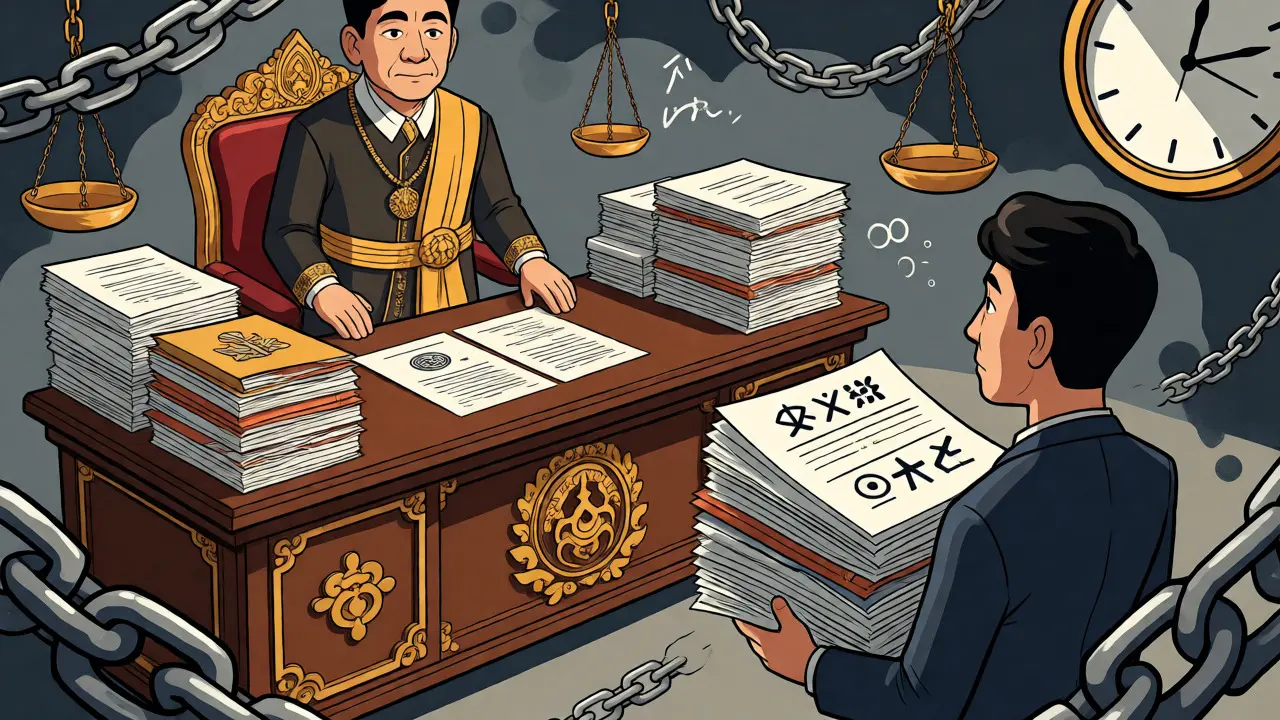
Step-by-Step Application Process
Getting licensed is a marathon, not a sprint. Here’s how the timeline typically plays out:
- Entity Incorporation: Register a limited company in Thailand. You need a local director and shareholders. Foreign ownership is allowed, but banking relationships require careful navigation.
- Infrastructure Setup: Secure a physical office. The SEC wants to see you have a place to work. Hire key personnel, including a Compliance Officer and a Chief Risk Officer who are physically present in Thailand.
- Policy Development: Draft comprehensive Anti-Money Laundering (AML) and Counter-Financing of Terrorism (CFT) policies. Implement KYC (Know Your Customer) software that meets Thai standards.
- Documentation: Prepare detailed business plans, cash flow projections for the next 3-5 years, and technical specifications for your trading engine and security protocols.
- Submission: Submit the application to the Ministry of Finance via the SEC. This triggers the official 150-day clock.
- Review & Queries: The SEC will likely ask for clarifications. Respond quickly. Delays here can push your launch back by months.
- Approval: Once granted, you receive a license valid indefinitely, provided you maintain compliance.
Many companies underestimate step 3. Your AML/CFT policies can’t be generic templates pulled from the internet. They must reflect your specific business model. For example, if you allow fiat deposits via prompt-pay, your monitoring systems must flag unusual transaction volumes instantly.
Compliance: Beyond the License
Getting the license is half the battle. Staying licensed is the other half. The SEC conducts regular audits and spot checks. Key ongoing obligations include:
- Customer Asset Segregation: User crypto holdings must be kept separate from the exchange’s operating funds. You need proof of reserves.
- Data Protection: Comply with Thailand’s Personal Data Protection Act (PDPA), which mirrors GDPR in many ways.
- Tax Reporting: Capital gains tax applies to profits from selling digital assets. Exchanges often assist with withholding tax calculations.
- Incident Reporting: Any cybersecurity breach or significant operational failure must be reported to the SEC immediately.
Failure to comply can result in fines, suspension of services, or revocation of the license. In 2024 and 2025, several smaller platforms faced scrutiny for lax KYC procedures, leading to temporary halts on new user registrations. Don’t let that be you.
Why Choose Thailand Over Singapore or Vietnam?
It’s fair to ask why anyone would choose this route when neighboring countries offer easier access. Thailand’s advantage lies in its market depth and regulatory clarity. While Vietnam has a massive user base, its regulatory environment remains ambiguous, creating legal risks for institutional investors. Singapore is a major hub, but competition is fierce, and the Monetary Authority of Singapore (MAS) has become increasingly stringent on token classification.
Thailand strikes a balance. It’s large enough to support viable businesses (with 11.6% penetration rate in 2025) but regulated enough to attract serious capital. The recent amendments explicitly addressing cross-border services mean that global giants like Binance or Coinbase must partner locally or establish licensed entities. This protects domestic players and ensures tax revenue stays within the country. For a startup, this means less competition from fly-by-night offshore sites that undercut prices without bearing compliance costs.

Pitfalls to Avoid
Based on recent applications, here are common mistakes:
- Underestimating Local Staffing: You can’t rely solely on expats. Having Thai nationals in senior roles helps with cultural nuances and regulatory communication.
- Weak Technical Infrastructure: If your API downtime exceeds certain thresholds, the SEC may question your operational resilience.
- Ignoring Marketing Rules: Advertising crypto products in Thailand requires pre-approval for certain claims. Misleading ads can trigger investigations.
- Banking Difficulties: Traditional Thai banks are cautious with crypto-related transactions. Securing a reliable banking partner early is critical.
Frequently Asked Questions
How much does it cost to get a crypto exchange license in Thailand?
The direct costs include 50 million THB in registered capital and a 2.5 million THB application fee, totaling approximately 52.5 million THB ($1.4-1.5 million USD). However, total initial setup costs, including legal fees, tech infrastructure, and staffing, often exceed $2 million USD.
How long does the licensing process take?
The statutory review period is 150 days. However, preparing the application documents, establishing the local entity, and setting up compliant infrastructure typically takes an additional 6 to 12 months before you can even submit.
Can foreign companies operate crypto exchanges in Thailand without a license?
As of April 2025, no. The Royal Decree (No. 2) B.E. 2568 mandates that any digital asset business providing services to Thai residents must obtain a local license. Offshore platforms targeting Thai users without a license face potential restrictions on advertising and payment processing.
What is the minimum capital requirement?
For a Digital Asset Exchange, the minimum registered capital is 50 million THB. This amount must be fully paid and held in a Thai bank account. Other license types, such as Brokers or Dealers, may have different capital structures, but the Exchange license is the most common and costly.
Are DeFi and NFTs covered under current Thai regulations?
Current regulations primarily focus on centralized exchanges, brokers, and dealers. DeFi protocols and NFT marketplaces are not comprehensively regulated yet, though the SEC is actively studying these areas. Operators should monitor upcoming guidance, as future amendments are expected to address decentralized finance specifically.
Next Steps for Aspiring Operators
If you’re serious about entering the Thai market, start by securing local legal counsel specialized in digital assets. Firms like Silk Legal or Nishimura provide deep insights into the nuances of the Emergency Decree. Next, engage with a local bank to understand their stance on crypto-related corporate accounts. Finally, draft a robust business plan that proves your viability beyond the first year. The Thai market rewards patience and compliance, punishing shortcuts with heavy fines and reputational damage.

Write a comment