Think about the last time you bought an NFT. You likely saw a beautiful piece of art or a rare game item, but did you ever wonder where that image actually lives? Most people assume it's "on the blockchain," but the reality is far less glamorous. Blockchains are great for bookkeeping, but they are terrible for storing large files. If you tried to put a high-resolution 4K video directly on Ethereum, the transaction fees would cost more than the asset itself. This gap between ownership (the token) and the actual content (the data) has created a massive technical hurdle that the industry is finally solving.
We are moving away from a world of static JPEGs toward a world of NFT data storage that supports living, breathing digital entities. With the market shifting from speculative gambling to actual utility-evidenced by transaction counts climbing nearly 80% in early 2025 despite stabilizing prices-the infrastructure needs to change. We aren't just storing pictures anymore; we're storing AI brains, game physics, and dynamic histories.
Key Takeaways for the New Era of Storage
- Hybrid is the standard: Metadata stays on-chain for security, while heavy files live in decentralized networks.
- The rise of iNFTs: New standards like ERC-7857 allow NFTs to store and transfer AI agents.
- Permanence over hosting: Solutions like Arweave are replacing traditional servers to prevent "link rot."
- Gaming as a catalyst: The push for cross-platform assets is forcing a universal standard for how data is read across different games.
The Problem with "On-Chain" Storage
To understand where we're going, we have to understand why we can't just put everything on the chain. A blockchain is essentially a distributed ledger. Every single node in the network has to keep a copy of that ledger. If every NFT creator uploaded a 10MB file to the chain, the entire network would grind to a halt under the weight of the data. This is why the ERC-721 standard, the foundational framework for non-fungible tokens usually just stores a URL or a hash pointing to an external location.
The danger here is the "404 error." If the server hosting that image goes bust, your expensive NFT becomes a link to a dead page. This fragility is what's driving the shift toward decentralized storage protocols that don't rely on a single company's server.
The Big Three: IPFS, Arweave, and Filecoin
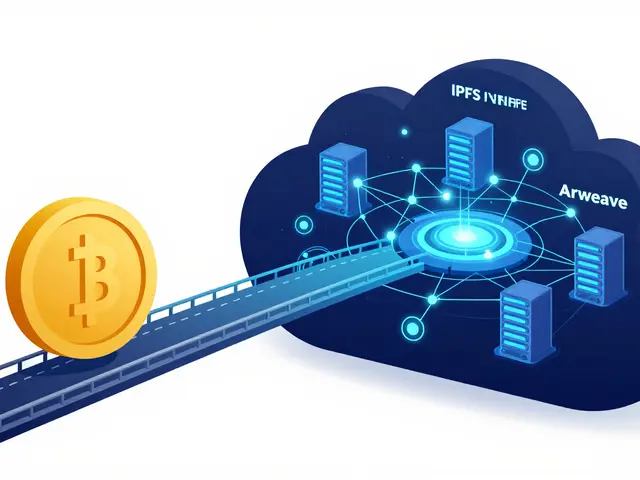
When developers talk about off-chain storage today, they are usually choosing between three heavy hitters. Each one handles data differently depending on whether the project needs speed, permanence, or low cost.
| Solution | Core Philosophy | Best For | Key Trade-off |
|---|---|---|---|
| IPFS | Content Addressing | Fast access, caching | Requires "pinning" to prevent data loss |
| Arweave | Permanent Web | Historical archives, Art | Higher upfront cost for permanence |
| Filecoin | Marketplace Storage | Enterprise data, Large sets | More complex setup than IPFS |
IPFS (InterPlanetary File System) uses a peer-to-peer method. Instead of asking for a file by *where* it is (a URL), you ask for it by *what* it is (a hash). If the file changes by one pixel, the hash changes. This ensures the art you bought is exactly the art you get. However, IPFS doesn't guarantee the file stays online forever unless someone "pins" it.
That's where Arweave comes in. It's designed as a "permaweb." You pay a one-time fee, and the data is stored indefinitely. For high-value digital art, this is the gold standard because it removes the risk of the data disappearing in ten years.
Finally, Filecoin turns storage into a commodity. It's a decentralized marketplace where you rent unused hard drive space from people around the world. It's incredibly cost-effective for the massive datasets required by gaming ecosystems.
The AI Revolution: Enter the iNFT
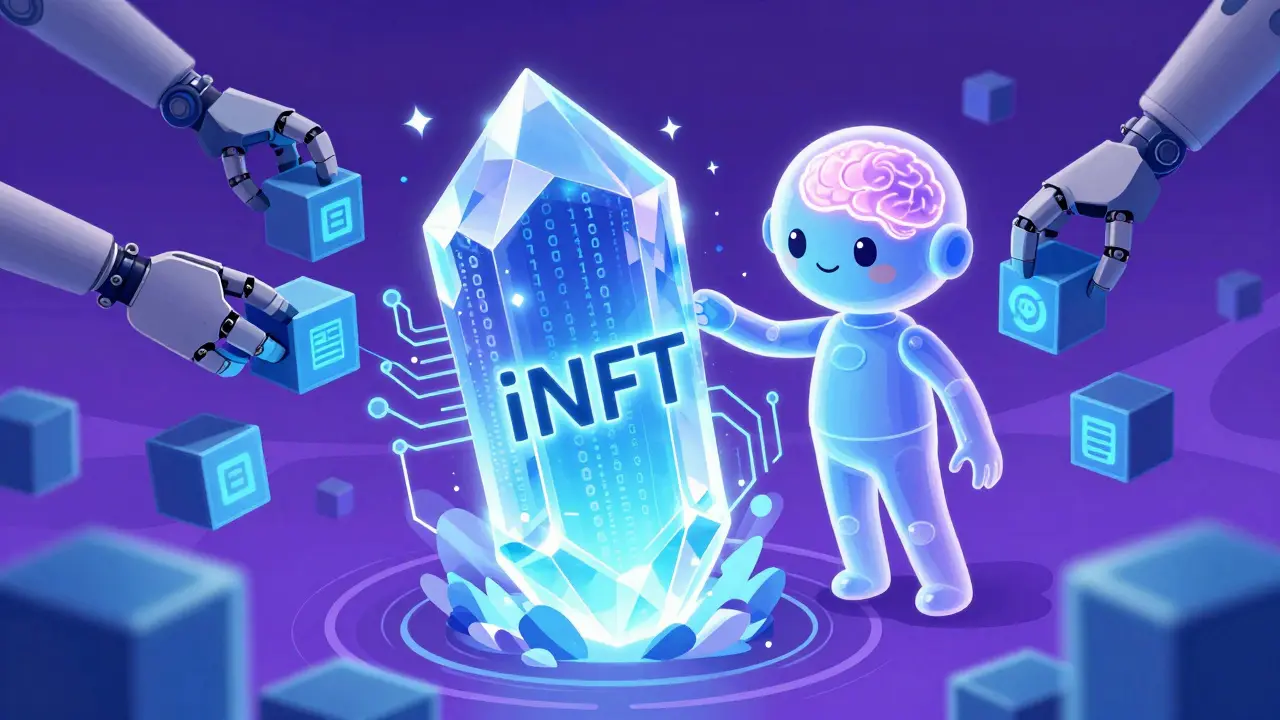
We've reached a tipping point. In 2025, roughly 30% of new NFT projects started integrating AI. We are no longer talking about simple generative art-where a computer just randomizes traits-but about "Intelligent NFTs" or iNFTs. This is where storage gets complicated.
An iNFT isn't just a picture; it's an agent. It might have a memory, a personality, and the ability to learn from its owner. This requires ERC-7857 a new standard for intelligent NFTs that enables the secure transfer of AI agents. When you sell an iNFT, you aren't just transferring a token; you're transferring a set of weights, prompts, and encrypted data that define that AI's personality.
Imagine a gaming character that remembers every battle it fought and every ally it made. That data is too huge for a blockchain but too valuable to store on a random corporate server. This is forcing the development of "mutable storage"-systems that can update the AI's state in real-time while still keeping a permanent, verifiable record of its provenance on the blockchain.
Gaming and the $942 Billion Opportunity
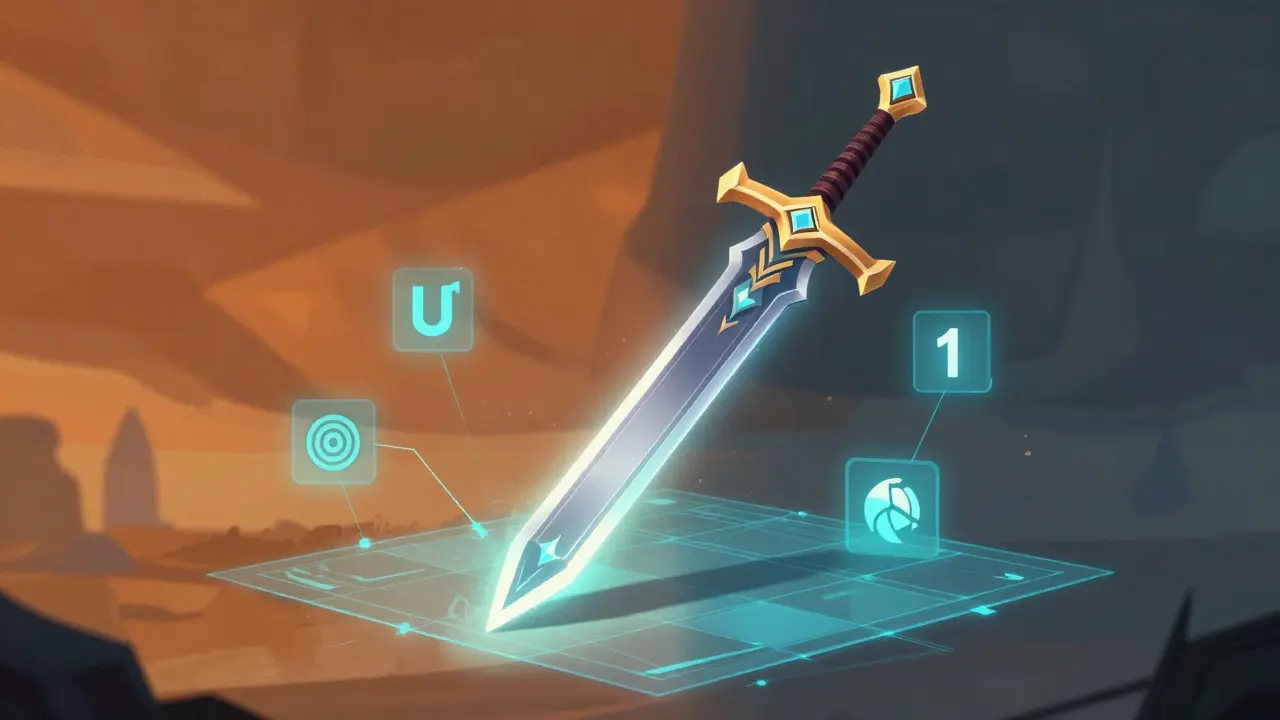
The gaming industry is the biggest stress test for NFT storage. With the market forecasted to hit nearly $943 billion by 2029, we're seeing a massive push for interoperability. If you spend 100 hours earning a legendary sword in one game, you want to be able to carry that sword into another virtual world.
For this to work, different games must agree on how to read the item's data. This is why we're seeing a shift toward unified standards. Around 70% of gamers now demand cross-platform functionality. This means storage solutions must move beyond simple "file hosting" and become "data layers" that can be queried by multiple different game engines (like Unreal or Unity) simultaneously.
Privacy and the Off-Chain Edge
One of the biggest misconceptions about blockchain is that "everything is public." While the token transfer is public, the actual data stored off-chain can be encrypted. This is a huge win for enterprise adoption. Companies can use blockchain to verify that a document is authentic without actually revealing the contents of the document to the entire world.
By keeping sensitive data off the public ledger and only storing a cryptographic hash on-chain, businesses can comply with strict data protection laws (like GDPR) while still getting the security benefits of a decentralized network. This hybrid approach-public verification, private storage-is the only way NFTs will ever work for healthcare records, legal contracts, or identity management.
What Happens Next?
By 2026, the line between an AI and an NFT will practically disappear. We are moving toward "programmable digital life." Static collectibles will feel like relics, similar to how we look at old printed photos compared to a social media feed.
Storage providers who focus on enterprise-grade reliability and real-time AI processing will win. The "JPEG era" is over. The next phase is about assets that grow, evolve, and interact. Whether it's a brand avatar that changes its outfit based on the weather in your city or an educational tool that adapts to your learning speed, the future of NFT storage is about dynamism and intelligence.
What is the difference between on-chain and off-chain storage?
On-chain storage means the data is written directly into the blockchain's blocks, making it nearly impossible to delete but extremely expensive and slow. Off-chain storage keeps the actual file (like an image or video) on a separate network (like IPFS or Arweave) and only stores a "pointer" or a hash on the blockchain to prove ownership and authenticity.
Will my NFT disappear if the storage provider goes bankrupt?
If your NFT is stored on a centralized server (like a standard website), yes, it could disappear. However, if it is stored on decentralized networks like IPFS (with proper pinning) or Arweave (which uses a permanent endowment model), the data remains accessible as long as the network exists, regardless of any single company's fate.
What are iNFTs and why do they need special storage?
iNFTs (Intelligent NFTs) are tokens that incorporate AI agents. Unlike static art, they have evolving states, memories, and behaviors. They need special storage because their data is mutable (it changes over time) and often requires secure re-encryption when the NFT is transferred to a new owner, as defined in the ERC-7857 standard.
Which storage is best for a long-term art collection?
Arweave is generally considered the best for long-term preservation because it is designed for permanence. While IPFS is great for speed and efficiency, Arweave's payment model is built to ensure data lasts for hundreds of years, making it ideal for digital archives and high-value art.
How does AI impact the cost of NFT storage?
AI increases storage demands because the files are larger (model weights) and more dynamic. This makes traditional on-chain storage impossible and pushes projects toward sophisticated off-chain layers that can handle real-time data processing and versioning without costing a fortune in gas fees.
Mike Word
The shift toward hybrid storage seems like the only logical path forward for the industry. It is interesting to see how the tension between security and scalability is being handled through these decentralized networks. The concept of content addressing via IPFS is a significant leap over traditional URL-based hosting.
Mike Krasner
imagine actually thinking these jpegs are the future lol
Sarah Fisher
There is something deeply poetic about the idea of a digital entity that evolves and remembers. We are essentially creating a new form of digital consciousness, however rudimentary it may be. The transition from static ownership to the guardianship of a living AI agent changes the entire philosophy of what a collectible actually is. It moves the value from the rarity of the image to the uniqueness of the experience and the history shared between the owner and the agent. I wonder how this will affect our perception of digital legacy when these entities outlive their original creators.
Kathleen Bergin
Everyone knows Arweave is better because it is permanent. Why do people even debate this.
Liz Ariza
This is seriously such a game changer! 🌟 I love how we are finally moving past the basic stuff into something actually useful. The idea of a sword that travels between games is just magical ✨ Keep pushing for these standards because the interoperability is where the real magic happens! 🚀
Greg Reynolds
The claim that 70% of gamers demand cross-platform functionality is likely a gross oversimplification of user sentiment. Furthermore, the implementation of ERC-7857 is far from a silver bullet for AI integration, as the computational overhead for real-time state updates remains an unsolved bottleneck in decentralized environments.
Alex Wan
I am most humblingy amazed by the prospect of such inovation!! Truly, the synergistic blend of AI and blockchain is a marvvelous achievemnt for humanty. I beleive we are witnessng the dawn of a new era where digital assets possess genuine soulds!
Robert Mosolygo
The push for "private storage" is just a smokescreen for the centralized entities to maintain control over the data while pretending to be decentralized. They want us to believe in the hash while they keep the keys to the actual server. It is a classic bait-and-switch designed to lull the public into a false sense of security while the infrastructure is quietly consolidated by a few powerful players who will eventually censor whatever they deem inconvenient.
Ali Tate
absolutely quaint that we are still discussing hashes and pointers like it is 2017 while the real power players are already building the proprietary layers that will make this whole open standard dream look like a children's plaything. american innovation is the only thing that actually moves the needle here and the rest is just noise
praveen subbiah
This technology is absolutely breathtaking and will surely put India at the forefront of the global digital revolution! My heart swells with pride seeing how these decentralized systems can empower millions of developers across my beautiful homeland to create wonders that the world has never seen before! It is a glorious time to be alive!
Tony Gurley-Ward
The notion of "programmable digital life" is a deliciously absurd way to describe a few lines of code and some weights in a database. We are essentially just dressing up glorified spreadsheets and calling them sentient beings to justify a higher floor price in a volatile market. It is a wonderful masquerade of tech-mysticism that keeps the speculators happy while the actual engineers just try to keep the servers from melting.
Lisa Camp
STOP TALKING AND START BUILDING! If you aren't already integrating iNFTs into your pipeline, you're already dead in the water! Get moving or get left behind!
Alex Hunter
It's great to see the community focusing on utility over speculation. For those just getting started, remember that the tool you choose for storage depends entirely on your specific goals-permanence versus speed. Let's keep supporting these new standards so everyone can participate regardless of their technical background.