Imagine waking up to find that 75% of your industry's global infrastructure is suddenly illegal in the place it calls home. That is exactly what happened during the Chinese crypto mining exodus. In a matter of months, the world witnessed the largest cross-border migration of industrial hardware in history. It wasn't just a few enthusiasts moving their rigs; it was a massive shift of gigawatts of power and thousands of specialized machines fleeing a regulatory storm.
For years, China was the undisputed heavyweight of the Bitcoin world. But when the government decided that energy-intensive mining was a liability, the map of the network changed forever. The real question is: where did all that gear go, and why did some places win while others lost?
The Catalyst: Why the Exodus Happened
The crackdown wasn't a sudden accident. It started locally, with provinces like Inner Mongolia banning mining to cut down on coal consumption. But by 2021, the central government stepped in with directives that carried immense weight. Unlike previous warnings that targeted traders, these rules went straight for the throat of the miners.
The impact was immediate. According to data from the Cambridge Centre for Alternative Finance (CCAF), China's share of the global mining power plummeted from about 75.5% in late 2020 to just 46% by April 2021. This created a vacuum that other countries were more than happy to fill.
The Logistics of a Digital Escape
You might wonder how you move an entire industrial operation across the globe in a few months. The secret lies in the hardware. Bitcoin mining relies on ASIC (Application-Specific Integrated Circuit) machines. These aren't like traditional factories with fixed assembly lines; they are essentially modular boxes that only need two things: a steady stream of electricity and a stable internet connection.
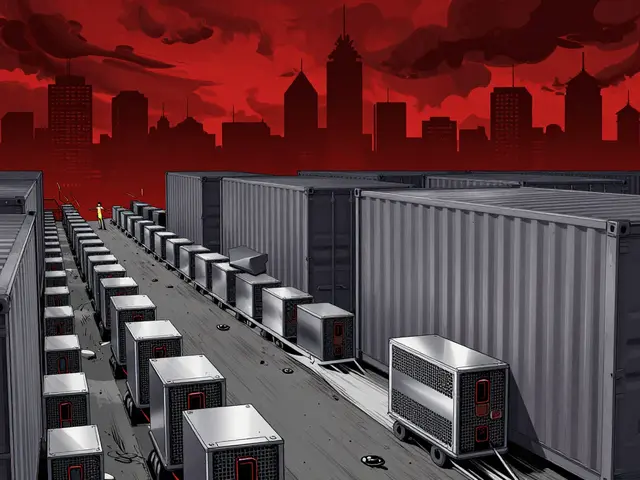
Because these machines are portable, miners could simply unplug their farms, pack them into shipping containers, and ship them to jurisdictions with friendlier laws. This inherent mobility is why the migration happened so fast. Miners had already practiced this "seasonal migration" within China, moving equipment between provinces to follow hydropower during rainy seasons, so they already had the playbook for relocating on a global scale.
Kazakhstan: The Immediate Beneficiary
If you're looking for the biggest winner of the early exodus, look at Central Asia. Kazakhstan became the primary landing spot for fleeing Chinese operations. Its share of global mining power surged from a tiny 1.4% in 2019 to 8.2% by April 2021. By October of that year, it had briefly surpassed China to become the second-largest mining hub in the world.
Why Kazakhstan? It came down to the basics: coal and cost. The country had an abundance of cheap energy and an existing infrastructure that could handle massive electrical loads. For a miner who just lost their home in China, a place with low electricity bills and a government that didn't mind the noise of ten thousand fans was a perfect match.
Texas: The New Strategic Hub
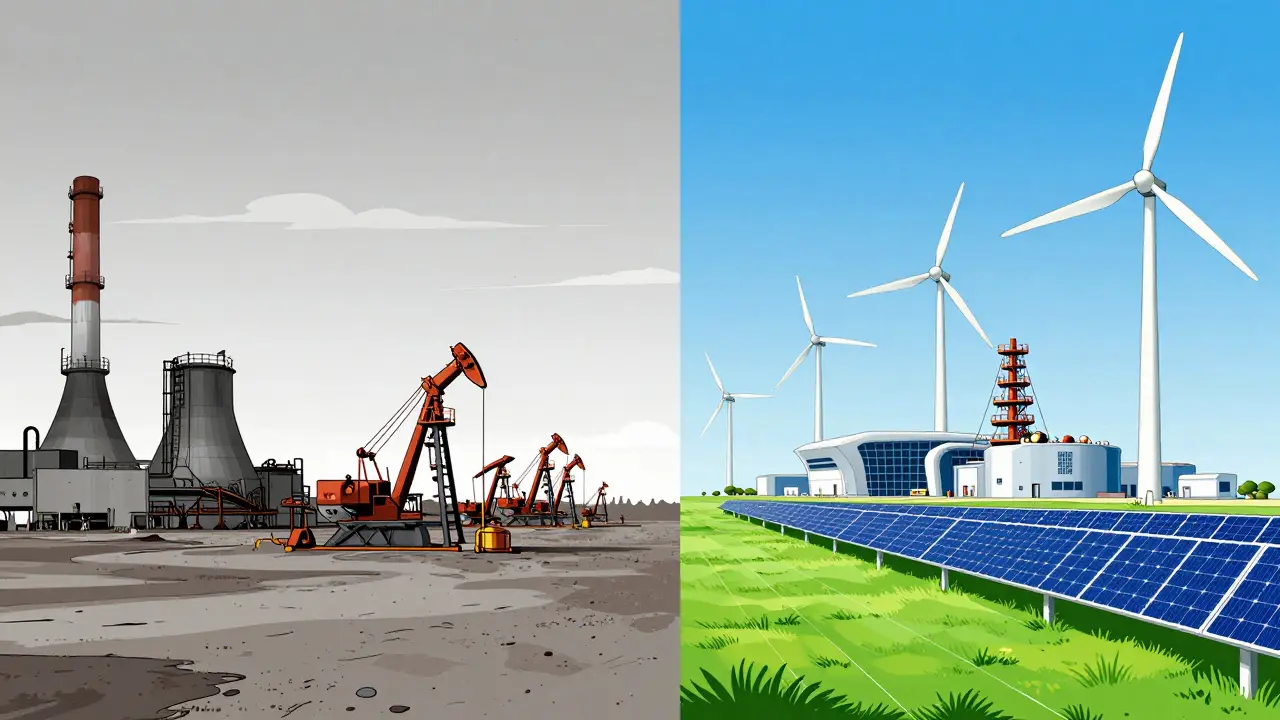
While Kazakhstan offered quick wins, the United States-and specifically Texas-offered something more sustainable: regulatory stability and a sophisticated energy market.
Texas became a magnet for the "Great Mining Migration" for several reasons:
- Deregulated Energy Market: Miners could negotiate flexible contracts and buy power when it was cheapest.
- Renewable Energy: With a mix that includes wind and solar, Texas allowed miners to lower their carbon footprint.
- Pro-Crypto Stance: Unlike the restrictive environment in China, Texas legislators viewed mining as an economic opportunity.
In fact, Texas accounts for roughly half of the 5.2 gigawatts of mining capacity installed across the U.S. Interestingly, this relationship works both ways. Because miners can shut down their machines instantly, they act as a "demand response" tool for the grid, helping to prevent blackouts during heatwaves by reducing load when the public needs power most.

Comparing the New Mining Destinations
The shift wasn't just about moving from point A to point B; it was about choosing the right trade-offs between cost, law, and energy source.
| Feature | Kazakhstan | Texas, USA | Russia |
|---|---|---|---|
| Primary Energy Source | Coal | Wind, Solar, Gas | Hydro, Natural Gas |
| Key Attraction | Extremely low cost | Regulatory stability | Energy abundance |
| Risk Level | Moderate (Political) | Low (Legal) | Moderate (Political) |
| Infrastructure | Industrial Coal Grid | Deregulated Energy Market | State-owned Utilities |
The Aftermath: A More Resilient Network
At first, the exodus caused a dip in the total hashrate-the total computational power of the network. This happened simply because machines were in transit or waiting for electrical permits in their new homes. However, once the dust settled, the network was actually stronger.
Having 75% of the network in one country was a massive single point of failure. If China had decided to seize the hardware or manipulate the nodes, the entire system would have been at risk. By spreading the mining power across the U.S., Kazakhstan, Russia, and other regions, the Bitcoin network achieved a higher level of geographic decentralization. This makes it much harder for any single government to shut down the network through localized regulation.
Why did miners prefer Texas over other US states?
Texas stands out because of its deregulated electricity market, which allows mining companies to negotiate direct deals with energy producers. Additionally, the state's massive investment in wind and solar power provides a way for miners to access cheap, renewable energy, while the political climate in Texas is generally much more welcoming to cryptocurrency than in states like New York.
Did the Chinese ban stop all mining in China?
Not entirely, but it pushed it underground. While the massive industrial farms moved to places like Kazakhstan and the US, some smaller-scale operations continued in secret, often using stolen electricity or small-scale hydro power, though they no longer dominate the global hashrate.
What is the 'Great Mining Migration'?
This term refers to the massive relocation of Bitcoin mining hardware and personnel out of China following the 2021 government crackdown. It is considered the largest geographical shift in the history of the Bitcoin network, moving the center of gravity from East Asia to North America and Central Asia.
How does Bitcoin mining help the energy grid?
In places like Texas, miners can act as a "flexible load." When the grid is under stress (like during a summer heatwave), mining farms can shut down their power consumption almost instantly. This frees up electricity for homes and businesses, helping to stabilize the grid and prevent blackouts.
Was Kazakhstan the only place miners moved to?
No, while Kazakhstan saw the fastest growth, miners also relocated to Russia, Canada, and various parts of the US. The movement was based on a combination of low energy costs, existing electrical capacity, and a lack of restrictive laws.
Kim Smith
it's kinda wild when you think about the sheer scale of it all like just packing up these massive metal boxes and shipping them across the ocean because some govt decided they had enough of the power bill and honestly it just shows how the internet and money are becoming these fluid things that can't really be tethered to one piece of land anymore, which is a pretty deep shift in how we perceive national sovereignty in the digital age, though i wonder if the energy trade-off is actually a win for the planet or just a shell game where we move the pollution to places with fewer rules lol
Michelle Stanish
Not a big deal.
Mark Pfeifer
The demand response aspect in Texas is the most fascinating part of this entire shift. Using miners as a giant load-shedding mechanism effectively turns a profit-seeking venture into a grid stability tool. It is a rare example of a symbiotic relationship between industrial scale computation and public infrastructure.
Yuhan Mo
Essentially, we are seeing a massive reallocation of hash power based on the LCOE (Levelized Cost of Energy) across different jurisdictions. The arbitrage isn't just in the coin, but in the electricity pricing. Texas is basically the endgame for industrial-scale ASICs due to the ERCOT market structure.
Adedamola Oyebo
Very accurate analysis... The mobility of ASICs is key!!
Tracy Sperandio
The sheer audacity of moving gigawatts of power across borders is absolutely electric! It's like a high-stakes game of musical chairs where the winners are the ones with the cheapest plugs and the boldest nerves. This is a masterclass in adaptability and a vivid reminder that the digital frontier refuses to be caged by antiquated borders!
Thomas Jewett
Typicaly this is why the US is superior because we have the freedom to actually build things without some totalitarion regime just waking up and deciding your business is illegal overnight, and frankely it is a travesty that anyone thought Chinas centrally planned economy could compete with the raw power of Texan entrepreneurship and the sheer will of the american spirit to dominate the global hash rate forevermore.
Abhinav Chaubey
Please, let's be real. The US only won because they have a mess of a grid that needs these miners to keep it from crashing. India could easily implement a more efficient system if we wanted to dominate this space, but the point here is that China's failure was inevitable because they tried to control something that is naturally uncontrollable.
Sean Mitchell
What a tragedy. To think that the only thing driving this 'migration' is the desperate search for a cheap plug. It's truly heartbreaking that our global economy has devolved into shipping heavy metal boxes across the ocean just to solve a math puzzle for a digital coin.
Kaitlyn Wu
We need to be clear that while Texas is a hub, the environmental cost is still being shifted around. Relocating to a place with 'regulatory stability' often just means finding a place where the lobbyists have more influence over the energy policy.
Ankit Sindhu
It's great to see everyone sharing their perspective on this. The shift toward decentralization really is a learning moment for all of us in the tech space. It shows that resilience comes from diversity, not just in software, but in geography.
nikki krinkin
It is interesting how the network just absorbed the shock and came out stronger. The dip in hashrate was just a blink in the long term.