Yield Farming Calculator
Calculate Your Potential Returns
Your Estimated Returns
Total Value:
$0.00
Earnings:
$0.00
Risk Level:
LowNote: This calculation is based on the typical APY range for the selected platform. Returns are calculated with daily compounding unless specified otherwise.
Yield farming isn’t just a buzzword anymore-it’s a core way people earn passive income in DeFi. If you’re looking to put your crypto to work in 2025, you need to know which platforms actually deliver consistent, safe, and scalable returns. Forget the hype. This isn’t about chasing 200% APYs that vanish in a week. It’s about finding platforms that balance risk, reward, and reliability in a market that’s finally matured.
Curve Finance: The Low-Risk Anchor
Curve Finance is the quiet workhorse of yield farming. Launched in 2020, it doesn’t flashy. It doesn’t promise moonshots. It focuses on one thing: stablecoins. If you hold USDC, DAI, or USDT, Curve lets you deposit them into liquidity pools and earn fees from traders swapping between these coins. In 2025, APYs range from 5% to 15%, depending on the pool and market conditions.
Why do so many experienced farmers stick with Curve? Because it’s been audited repeatedly, has never suffered a major exploit, and its design minimizes impermanent loss-the biggest risk when providing liquidity. Unlike volatile token pairs, stablecoins move in sync, so your capital stays mostly intact.
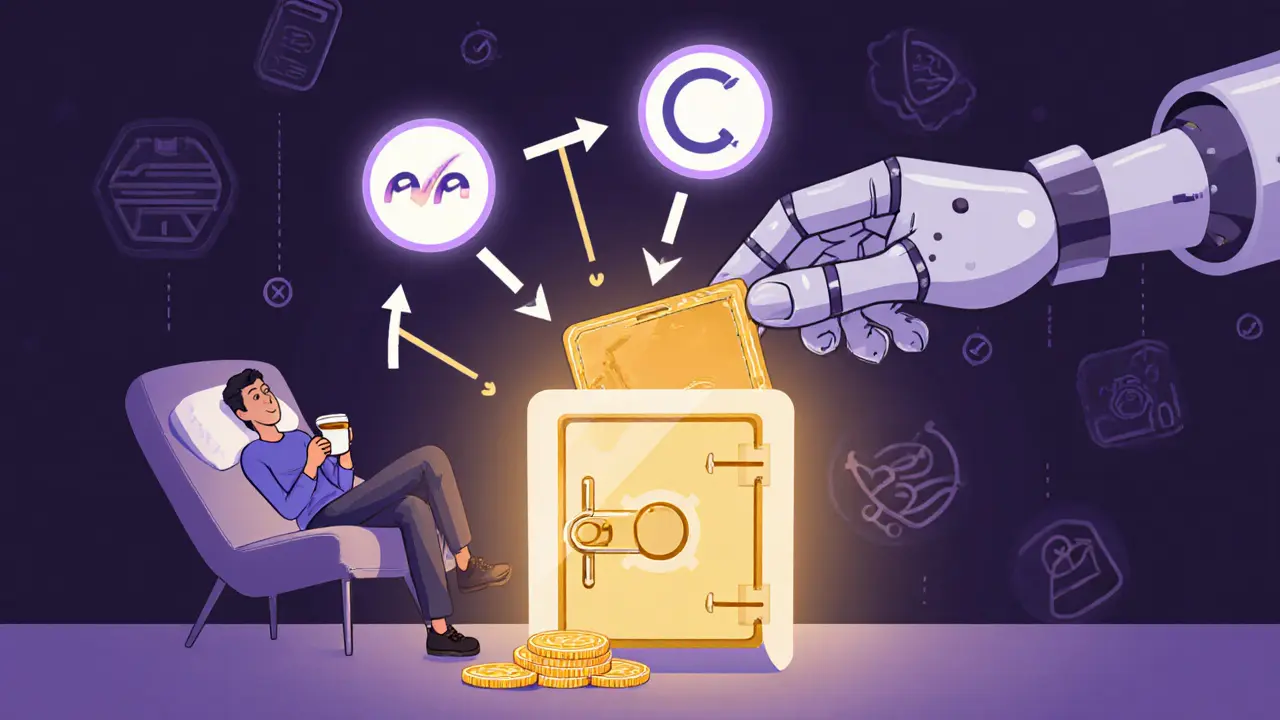
Here’s the catch: Curve doesn’t auto-compound. You get CRV tokens as rewards, but you have to manually claim and reinvest them. That’s where Convex Finance comes in. Most Curve users connect their wallet to Convex, which automatically stakes their CRV as veCRV and reinvests rewards. It’s a two-step process, but it’s proven. Thousands of users report steady returns even during bear markets.
Yearn Finance: The Set-and-Forget Vault
Yearn Finance is the gateway drug to yield farming for beginners. Created by Andre Cronje, it’s designed to do the heavy lifting for you. Instead of hopping between protocols, you deposit your crypto into a Yearn vault, and the system automatically moves your funds to the highest-yielding opportunities across DeFi.
APYs range from 4% to 20% in 2025, depending on the vault. Stablecoin vaults land around 8-12%, while ETH or wrapped BTC vaults might hit 15-20%. The magic is in the automation. Yearn’s smart contracts monitor yields in real time, shifting your assets between Aave, Compound, Curve, and others to maximize returns. You don’t need to know how any of that works.
It’s not perfect. Some vaults eat into profits with high gas fees, especially on Ethereum. And during market crashes, yields can drop fast as protocols cut rewards. But for someone who doesn’t want to spend hours managing positions, Yearn remains the most trusted option. Over $5 billion is locked in its vaults-proof that even skeptical investors trust its model.
GMX: Earn From Trading, Not Just Tokens
GMX flips the script. Instead of earning from token inflation, you earn from actual trading activity. GMX runs a decentralized perpetual exchange on Arbitrum and Avalanche. Traders bet on price movements using leverage, and liquidity providers (LPs) supply the capital that makes those trades possible.
You deposit assets like ETH, USDC, or WBTC into the GLP pool. In return, you get GLP tokens, which represent a share of the entire pool. Every time someone trades on GMX, a portion of the trading fees flows to GLP holders. In 2025, APYs hover between 10% and 20%, paid in ETH and esGMX (a staked version of the GMX token).
This model is sustainable because it’s not based on printing new tokens. It’s backed by real demand. Even when crypto prices drop, traders still need liquidity to open positions. That means GMX’s yields don’t crash as hard as other platforms during bear markets.
But there’s risk. If traders lose money on their leveraged bets, those losses are absorbed by the GLP pool. In extreme volatility, your GLP value can dip temporarily. That’s why GMX is best for users who understand derivatives and aren’t afraid of some exposure to market swings.
Beefy Finance: The Cross-Chain Powerhouse
If you want maximum yield, Beefy Finance is your go-to. It supports over 30 blockchains-BNB Chain, Polygon, Avalanche, Arbitrum, TON, you name it. Beefy doesn’t just farm on one chain. It scans all of them, finds the highest APYs, and auto-compounds your rewards daily.
APYs here range from 5% to 80%. You’ll find stablecoin vaults at 8-12%, but also high-risk pools on newer chains offering 50%+ returns. For example, a vault on the TON network might pay 75% APY by farming a new token paired with USDT. That’s tempting, but it’s also risky. Many of these high-yield pools are tied to projects with little history or weak audits.
Beefy’s strength is its automation. It handles bridging assets between chains, claiming rewards, and reinvesting them-all without you lifting a finger. But that’s also its weakness. If one underlying protocol gets hacked (say, a lending platform Beefy uses on Fantom), your funds could be at risk. Beefy doesn’t control those protocols-it just connects to them.
Experienced farmers use Beefy as a tool, not a crutch. They diversify: 60% in low-risk vaults on Ethereum and BNB Chain, 30% in mid-risk pools on Avalanche and Polygon, and only 10% in speculative high-APY bets. That’s how you avoid getting wiped out by one bad contract.
What to Avoid in 2025
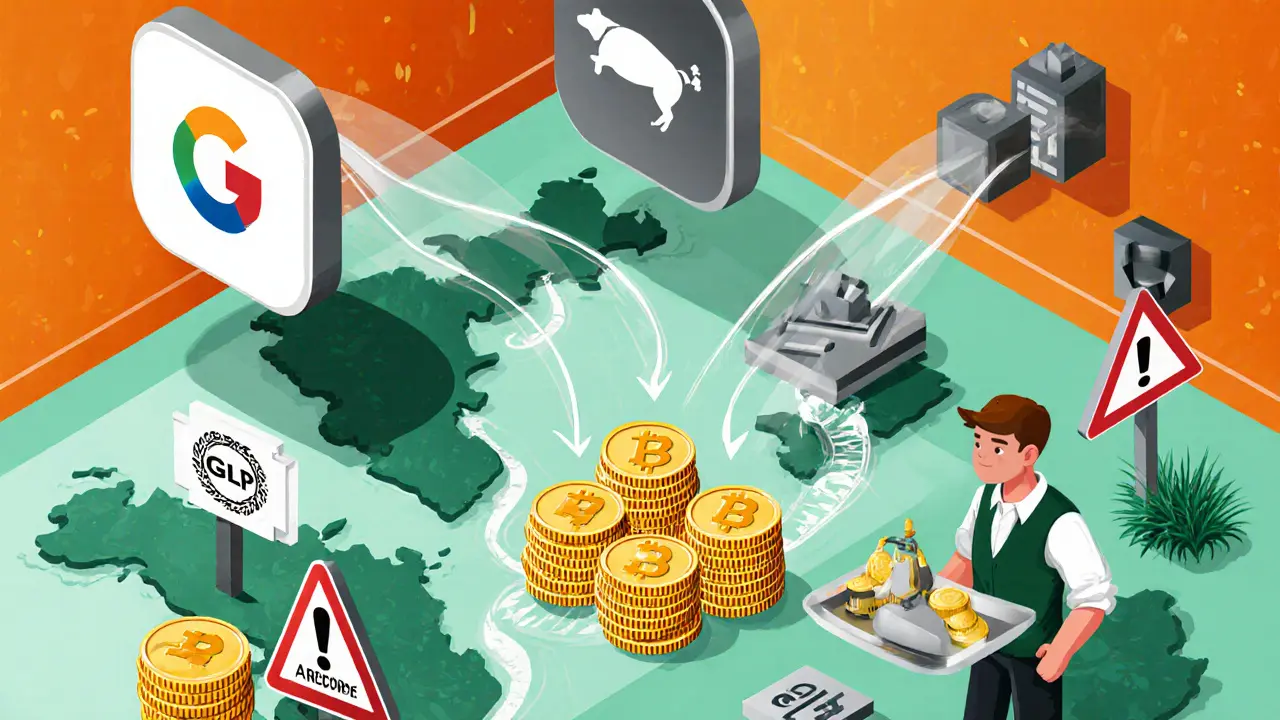
Yield farming has gotten smarter, but scams haven’t disappeared. Here’s what to watch out for:
- APYs over 100%: If it sounds too good to be true, it is. These are usually exit scams or token dumps disguised as farming.
- Unaudited protocols: Always check if a platform has been audited by reputable firms like CertiK, Trail of Bits, or PeckShield. If it’s not listed, walk away.
- Ignoring gas fees: On Ethereum, claiming rewards on a $500 position might cost $30 in gas. Use Layer 2s like Arbitrum or Polygon to cut costs.
- Single-platform concentration: Don’t put all your money in one vault. Spread it across Curve, Yearn, and a couple of Beefy pools.
How to Start in 2025
Here’s a simple plan if you’re new:
- Get a wallet: MetaMask or Coinbase Wallet.
- Buy stablecoins: USDC or DAI on a centralized exchange like Coinbase or Kraken.
- Deposit into Yearn’s USDC vault: Simple, safe, auto-compounding.
- After 30 days, add 20% to Curve’s 3Pool (USDC/USDT/DAI) for extra yield.
- Once you’re comfortable, try one Beefy vault on Polygon with 15-20% APY.
That’s it. You’re now earning passive income without needing to monitor prices or trade constantly.
Future Trends Shaping Yield Farming
The next big shift isn’t just about higher APYs-it’s about real-world integration. Platforms are starting to tokenize real assets: real estate, commodities, even government bonds. Imagine earning 8% APY from a vault that holds shares in a commercial building in Texas. That’s not science fiction anymore.
Layer-2 networks are also making farming cheaper. On Arbitrum, you can farm for pennies in gas. On TON, fees are virtually zero. That means even small investors can compete.
And AI is creeping in. Some advanced aggregators now use machine learning to predict which vaults will outperform next week based on historical data, liquidity changes, and token emissions. You won’t see this in beginner platforms yet-but if you’re serious, keep an eye on tools like DeBank and Zapper, which are already integrating these features.
Final Thoughts
Yield farming in 2025 isn’t about luck. It’s about strategy. Curve gives you stability. Yearn gives you convenience. GMX gives you real revenue. Beefy gives you scale. The best farmers use all of them-wisely.
Start small. Test one platform. Learn how it works. Then expand. Don’t chase the highest APY. Chase the most reliable system that fits your risk tolerance. That’s how you win in DeFi.
What is the safest yield farming platform in 2025?
Curve Finance is the safest. It focuses on stablecoin liquidity pools that have been audited for years, suffer minimal impermanent loss, and have never been exploited. While yields are modest (5-15% APY), it’s the most reliable option for preserving capital while earning passive income.
Can you lose money yield farming?
Yes. You can lose money through impermanent loss (especially with volatile assets), smart contract exploits, or token dumps. Even GMX, which earns from trading fees, can see temporary losses if traders win big on leveraged positions. Always understand the risks before depositing funds.
Do I need to pay gas fees for yield farming?
Yes, but it varies. On Ethereum, gas fees can eat into small returns. Use Layer 2s like Arbitrum, Polygon, or BNB Chain to reduce costs. Most top platforms now support these networks, so you don’t have to pay high Ethereum fees to farm effectively.
What’s the difference between APY and APR in yield farming?
APR (Annual Percentage Rate) is the simple interest rate you earn in a year. APY (Annual Percentage Yield) includes compounding. Most yield farming platforms pay rewards daily or hourly and automatically reinvest them. That’s why APY is always higher than APR-it reflects the power of compounding.
Should I use auto-compounding vaults?
Yes-if you’re not actively managing your positions. Auto-compounding vaults like Yearn or Beefy save time and boost returns by reinvesting rewards automatically. But make sure the vault is well-audited and doesn’t rely on unstable underlying protocols. Don’t use them for high-risk pools unless you fully understand the risks.
How do I track all my yield farming positions?
Use portfolio trackers like DeBank or Zapper. They connect to your wallet and show all your positions across Curve, Yearn, GMX, Beefy, and dozens of other protocols in one dashboard. You’ll see your total APY, rewards earned, and risk exposure-no manual tracking needed.

andrew seeby
just deposited my usdc into yearn yesterday and already see the compounding magic 🚀 no more manually claiming rewards - life changed
Pranjali Dattatraya Upadhye
oh my gosh, i love how you broke this down!! curve is my baby - stable, quiet, reliable like a good old dog who never barks but always shows up 🐶💛
Kyung-Ran Koh
For beginners: Please, please, please start with stablecoins. Don't get lured by 80% APYs on random chains. I've seen too many friends lose everything because they chased moonshots. Stay grounded. Use Yearn. Use Curve. You'll thank yourself later.
Michelle Stockman
Wow. So you're telling me the only way to not lose money is to be boring?
Matthew Gonzalez
There's a deeper truth here: yield farming isn't about maximizing returns - it's about aligning your risk tolerance with your patience. The market rewards those who don't react. It punishes those who chase. Curve isn't sexy. But it's the only thing that survives the winter.
Hope Aubrey
GMX is where the real money is. You think you're farming? No. You're *participating in the market's heartbeat*. Those trading fees? That's real economic activity - not inflationary token emissions. If you're not in GMX, you're not farming - you're just watching.
Tara R
Why are people still using Beefy? The audits are a joke. The cross-chain bridges are a single point of failure waiting to happen. And you call this DeFi? It's just a glorified ATM with a smart contract label.
Brian Webb
I respect the structure here - but I think the real win is not in picking the best platform, but in building a system. I use Curve for core, Yearn for automation, and one Beefy vault on Polygon for fun. That’s it. No need to be a hero. Just be consistent.
Whitney Fleras
Thank you for mentioning gas fees - so many people forget this. I used to farm on Ethereum and lost half my profits to fees. Switched to Arbitrum and now I’m actually making money. Small change, huge difference.
Missy Simpson
Just started with Yearn last week and already made more than my side hustle 😭 thank you for this guide - it’s the first thing that made sense to me!
Benjamin Jackson
There’s something poetic about Curve - it’s the quiet farmer who works the land every day, rain or shine. Meanwhile, everyone else is chasing the next storm hoping for lightning. The land still feeds them. Always has.
Leo Lanham
LMFAO at people calling GMX 'sustainable'. Bro, if traders lose, YOU lose. That’s not farming - that’s betting on a casino where you’re the house AND the gambler. I’ll take my 10% from Curve, thanks.
Liam Workman
What’s wild is how this mirrors real-world investing: low-risk = slow growth, high-risk = volatile swings. But here, you can *choose* your risk level without a financial advisor telling you what to do. That’s the real revolution - autonomy. Even if you mess up, it’s your mess. And that’s powerful.
Colin Byrne
While your analysis is technically accurate, you’re ignoring the macroeconomic underpinnings. Yield farming is a symptom of monetary policy failure - negative real interest rates forced capital into speculative instruments. The platforms you list are merely intermediaries in a system designed to devalue fiat. The real question isn't which protocol to use - it's whether you should participate in a system that rewards speculation over production.
Louise Watson
Curve. Yearn. Done.
Hope Aubrey
So you think Curve is ‘boring’? Good. Boring means it’s still here when the hype coins are dust. I’ve watched 30+ ‘revolutionary’ farms die. Curve? Still running. Still paying. Still audited. That’s not luck - that’s engineering.