When a government bans something people want, that thing doesn’t disappear. It just gets more expensive to buy. This is the basic economic rule behind underground crypto market premiums in countries where digital assets are illegal. If you live in a place where holding Bitcoin or Ethereum is a crime, you can’t just open an app and click “buy.” You have to find someone willing to take the risk of selling it to you. That seller charges extra for their trouble. This extra cost is the premium.
In 2025 and early 2026, this dynamic has shifted dramatically. With major economies tightening restrictions, the gap between the global spot price of cryptocurrency and the street price in banned zones has widened. For traders, researchers, and policymakers, understanding these premiums offers a clear window into how effective bans actually are-and how much value users place on financial freedom versus legal safety.
The Economics of Illicit Crypto Trading
To understand why prices spike in restricted areas, we need to look at the components of the price tag. In a normal market, like buying stocks on the NYSE, the price reflects supply and demand. In an underground market, the price reflects supply, demand, risk, and liquidity.
Imagine you want to buy $1,000 worth of Bitcoin in a country with a total ban. On the global market, that’s straightforward. But locally, you face three hurdles:
- Risk Premium: The seller could be arrested. They charge you extra to compensate for the chance of losing their license, money, or freedom.
- Liquidity Discount: There are fewer buyers and sellers. To move large amounts quickly without raising suspicion, you might pay more than the market rate.
- Operational Costs: Using decentralized exchanges (DEXs) or peer-to-peer (P2P) networks often involves higher gas fees or intermediary costs to maintain anonymity.
This creates a pricing inefficiency. The same asset trades at different prices depending on geography. In economics, this is called arbitrage opportunity, but in banned jurisdictions, it’s a criminal enterprise. The wider the ban, the higher the premium.
China: The Total Prohibition Model
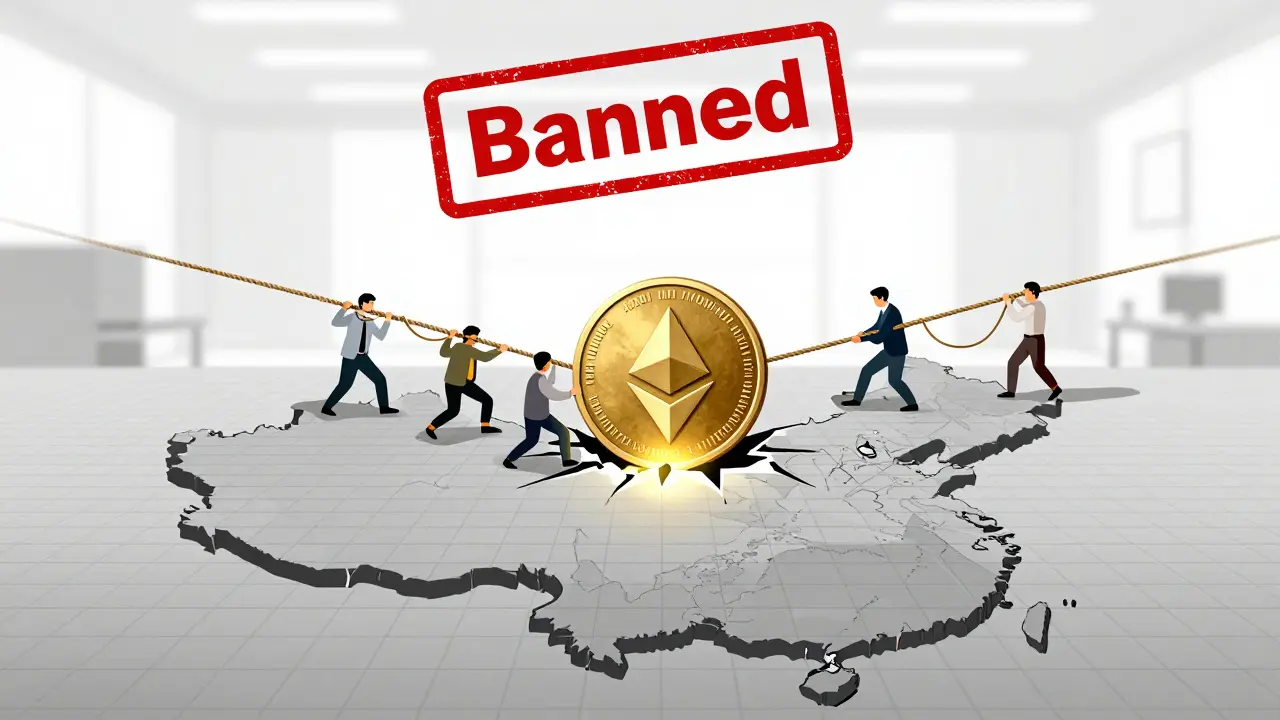
China represents the most extreme case study. On May 30, 2025, Beijing passed sweeping legislation that went beyond previous mining bans. This new law criminalized personal ownership of cryptocurrencies, including Bitcoin, Ethereum, and altcoins. The state is betting everything on its Central Bank Digital Currency (CBDC), the digital yuan, leaving no room for private digital assets.
China's crypto ban is the most restrictive policy globally, criminalizing personal holdings of digital assets. Because enforcement is rigorous and surveillance is pervasive, the supply of accessible crypto plummets. When supply drops and demand remains steady-or even grows due to capital flight desires-the price rises.
While exact data on black market rates is hard to pin down due to the covert nature of these transactions, experts estimate that acquiring Bitcoin in China now carries a significant premium compared to global averages. Traders rely on offshore exchanges, complex bridging protocols, and trusted P2P networks. Each step adds friction and cost. The result is a hidden market where Bitcoin isn’t just a currency; it’s a high-risk commodity priced for danger.
Afghanistan and Egypt: Enforcement vs. Reality
Not all bans look the same. Afghanistan maintains an absolute ban under the Taliban regime, justified by religious grounds (declaring crypto "haram") and economic control needs. The Da Afghanistan Bank (DAB) and FinTRACA enforce this through arrests and confiscations. However, enforcement is inconsistent. In such environments, the premium exists but fluctuates wildly based on local security conditions.
Egypt offers another perspective. Cairo imposed a blanket ban on crypto trading yet arrested 112 individuals in 2025 for violations. This active enforcement suggests a vibrant underground market persists despite the prohibition. When authorities actively hunt traders, the risk premium increases. Sellers know they are playing a dangerous game, so they price that danger into every transaction.
In both cases, the lack of legitimate channels forces users into the shadows. Without regulated exchanges, there is no price discovery mechanism. Prices become opaque, negotiated privately, and heavily influenced by fear of detection.
| Jurisdiction | Ban Type | Enforcement Level | Theoretical Premium Driver |
|---|---|---|---|
| China | Total (Ownership) | High | Supply constraint + High arrest risk |
| Afghanistan | Total (Religious/Economic) | Variable | Inconsistent enforcement + Low liquidity |
| Egypt | Trading Ban | Moderate-High | Active arrests + Lack of legal access |
| India | Heavy Regulation/Fines | High Compliance Pressure | Non-compliant platforms moving underground |
The Role of Emerging Markets and Compliance Pressure
You don’t need a total ban to create an underground market. Sometimes, heavy regulation does the job. In 2025, 88% of emerging markets allowed crypto trading, but 12% maintained full or partial bans. Even in permitted markets, strict rules can push activity underground.
Consider India. The Financial Intelligence Unit (FIU) fined non-compliant platforms $9.5 million in 2024, a 32% increase from the previous year. When compliance costs rise, some operators simply leave the legal system. They move to unregulated P2P networks or offshore servers. Users who want to avoid KYC (Know Your Customer) checks follow them. This creates a parallel market where premiums emerge not because ownership is illegal, but because compliance is too expensive or intrusive.
South Africa suspended licenses of 12 crypto firms in 2025 for failing Anti-Money Laundering (AML) requirements. The Philippines blacklisted 20 exchanges, freezing $150 million in funds. These actions send a clear message: play by the rules or get shut down. For many users, especially those dealing with illicit funds or seeking privacy, the legal path is closed. They turn to the underground, paying higher prices for the convenience of anonymity.
Technology as an Enabler: DEXs and Privacy Coins
Technology plays a crucial role in sustaining these underground markets. Decentralized Exchanges (DEXs) allow users to trade directly from their wallets without a central authority. This reduces the risk of exchange seizure but increases technical complexity. Not everyone knows how to use a DEX safely. Those who do provide a service to those who don’t, charging a fee for their expertise.
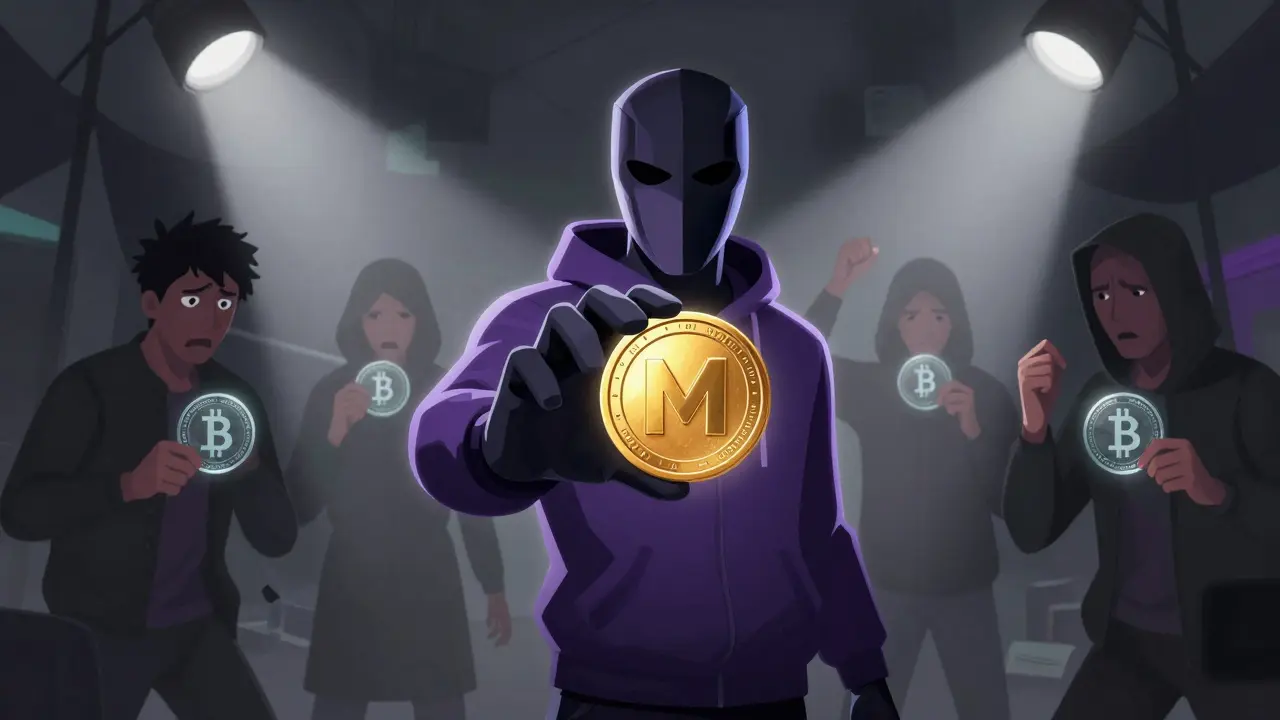
Privacy-focused cryptocurrencies like Monero and Zcash often command higher premiums in banned jurisdictions. Why? Because they offer enhanced anonymity. In a country where holding Bitcoin is a crime, being able to prove you didn’t hold it matters. Monero’s obfuscated ledgers make tracing transactions nearly impossible. This feature has immense value in repressive regimes, driving up demand and price relative to transparent coins like Bitcoin.
Cross-border transfers also enable access to international markets. A user in Nigeria, where the EFCC seized $38 million in crypto assets linked to cybercrime in 2024, might use stablecoins to move wealth out of the country. The cost of moving that value across borders-through mixers, bridges, or third-party services-adds to the final price paid by the end user.
Measuring the Unmeasurable: Data Challenges
One of the biggest challenges in studying underground crypto premiums is data availability. By definition, these markets are hidden. Participants don’t publish their prices. Researchers rely on proxies:
- P2P Platform Spreads: Analyzing bid-ask spreads on platforms like LocalBitcoins (before its shutdown) or current alternatives can hint at risk levels.
- Off-Ramp Rates: Comparing the rate at which users convert crypto to fiat in banned countries versus global averages.
- Arbitrage Opportunities: Tracking price differences between global exchanges and localized OTC (Over-The-Counter) desks.
Despite these methods, comprehensive quantitative data remains scarce. The Financial Action Task Force (FATF) noted that 99 jurisdictions had passed or were passing crypto-related legislation as of June 2025. This regulatory patchwork makes standardization difficult. What counts as a “premium” in one country might be a “discount” in another, depending on local enforcement intensity.
Future Outlook: Will Bans Reduce Demand?
History suggests that bans rarely eliminate demand; they just change how it’s met. As long as people see value in cryptocurrency-whether for store of value, censorship resistance, or cross-border payments-they will find ways to access it. The question isn’t whether underground markets will exist, but how expensive they will become.
If enforcement becomes too severe, premiums may rise so high that only the wealthy can afford crypto. This creates a two-tier system: the rich have access to digital assets, while the poor are locked out. Alternatively, if technology improves usability, premiums might drop as more people learn to navigate DEXs and privacy tools independently.
For now, the underground crypto market remains a shadow economy, driven by risk, scarcity, and the enduring desire for financial autonomy. Understanding its premiums helps us see the true cost of restriction-not just in dollars, but in trust and accessibility.
What causes crypto premiums in banned countries?
Premiums arise from increased risk (arrest/seizure), reduced liquidity (fewer buyers/sellers), and operational costs (using anonymous tools). Sellers charge extra to compensate for these dangers.
Is it possible to track underground crypto prices?
Direct tracking is difficult due to secrecy. Researchers use indirect methods like analyzing P2P spreads, off-ramp conversion rates, and arbitrage gaps between global and local markets.
Why do privacy coins like Monero have higher premiums?
In banned jurisdictions, anonymity is valuable. Privacy coins offer harder-to-trace transactions, reducing the risk of detection. Higher demand for this safety feature drives up their price relative to transparent coins.
How does China's 2025 ban affect the market?
China’s ban on personal ownership created a massive supply shock. With no legal way to hold crypto, users turned to underground networks, likely increasing premiums due to high enforcement risks and limited access.
Do regulations in emerging markets create underground activity?
Yes. Heavy fines and licensing suspensions in places like India and South Africa push non-compliant operators and users toward unregulated P2P markets, creating parallel economies with their own pricing structures.
Lee Paige
It is no surprise that the underground markets are thriving. The globalist agenda to impose CBDCs on unwilling populations requires such draconian measures. China knows exactly what it is doing by criminalizing ownership; they are preparing the populace for total financial control. When you ban Bitcoin, you don't stop adoption, you just force it into the shadows where the state cannot track it. This premium is the price of freedom in a world that increasingly values surveillance over liberty. The elites want us to use their digital yuan so they can turn off our accounts if we dissent. That is why people pay extra for privacy coins like Monero. It is not about speculation, it is about survival against an encroaching totalitarian system.
Karthikeyan S
lol look at this guy preaching about freedom while sitting behind a screen 🤡 ur taking the bait hard. the 'premium' is just greed masquerading as resistance. nobody cares about your conspiracy theories. u r delusional if u think paying 20% more makes u a hero. it just means u r a sucker who got played by scammers and bad actors. wake up sheeple 😂
Lee Paige
Your dismissal of the structural realities of financial suppression reveals a profound ignorance of macroeconomic trends. The premium is not merely greed; it is a quantifiable metric of risk aversion in high-surveillance environments. To suggest that participants are simply 'suckers' ignores the fundamental human desire for autonomy from state-controlled monetary policy. I am not being played; I am observing the inevitable friction between centralized power and decentralized technology. Your emoticon-laden ranting serves only to highlight your inability to engage with complex geopolitical and economic concepts. Stay in your echo chamber.
Dinesh Pattigilli
actually, the whole premise of this article is flawed because it assumes rational actors in irrational markets. most people buying crypto in banned zones arent sophisticated traders, theyre desperate individuals looking for any exit ramp. the 'premium' is often just exploitation by local cartels who know the supply chain is broken. its not a noble struggle for freedom, its just basic predator-prey dynamics. the tech doesnt matter when the human element is compromised by fear and desperation. also, monero premiums are inflated because of money laundering, not some abstract concept of privacy. lets be real here.
Madhu Menon
One must consider the philosophical implications of value itself. If a government declares an asset illegal, does it lose its intrinsic worth, or does it gain a new dimension of value based on scarcity and defiance? The premium is not just a number; it is a testament to the resilience of human ingenuity against oppressive structures. In the shadow economies of Afghanistan or China, every transaction is a silent protest. We often forget that money is a social construct, and when the state tries to redefine that construct, the people create their own parallel reality. This is the dialectic of finance in action. :)
Narendra Kulkarni
i think u guys are overthinking it a bit. its simple economics really. supply goes down, price goes up. in india, we see this all the time with other goods too when regulations get tight. people still need to move money, so they find a way. its not always about deep philosophy or conspiracies. sometimes its just about getting paid without the bank freezing ur account. its annoying but thats life in emerging markets right now. hope things get better soon though.
Alexis Abster
This is absolutely heartbreaking to witness! 💔 Think about the ordinary families in these regions who are forced to choose between safety and financial stability. They aren't trying to break laws; they are trying to survive in systems that have failed them. The fact that they have to pay a premium just to access basic financial tools is a tragedy of modern governance. We need to empathize with these users rather than judge them. Their courage in navigating these dangerous underground networks is truly inspiring. Let's support initiatives that bring transparency and ease to these communities instead of letting them suffer in the shadows. 🌟
Steven Jacobowitz
Wait, hold on. You're saying the premium is driven by risk, but isn't it also heavily influenced by liquidity constraints? Like, if there are only two sellers in a city, they can charge whatever they want regardless of arrest risk. I'm curious how much of that premium is actually 'risk compensation' versus just pure monopoly pricing. Also, how do you even verify the global spot price if you're offline? Seems like a lot of assumptions here. Can someone explain the mechanism of price discovery in a completely isolated network?
verna kennedy
Let me educate you on how markets actually work. The premium is a direct reflection of inefficiency caused by regulatory overreach. When you remove legal channels, you destroy price discovery. The 'monopoly' argument is weak because these markets are highly fragmented and competitive due to low barriers to entry for P2P traders. Anyone with a smartphone can become a seller, which keeps prices somewhat competitive despite the risks. The lack of verification is precisely why premiums exist; information asymmetry is a key driver of cost in illicit markets. Read a textbook.
Caitlin Donahue
i mean its kinda crazy how much extra ppl pay just to avoid the gov watching them. i dont get it myself but hey its their money lol. seems like a lot of hassle for something that could just be regulated properly. why make it so hard on everyone involved? its just confusing and probably leads to a lot of scams. hope they figure it out eventually cause this black market stuff sounds stressful af.
Kelly Tenney
I appreciate everyone sharing their diverse perspectives here! It is clear that this topic touches on many different aspects of life, from economics to personal freedom. Whether you view it through the lens of risk, philosophy, or simple supply and demand, one thing remains true: people will always find ways to connect and exchange value. Let's continue to learn from each other and strive for a future where financial inclusion is accessible to all, regardless of geography or regulation. Together, we can understand these complex dynamics better. 🙌