Imagine waking up to find that the most popular stablecoin in the world is suddenly off-limits on your favorite exchange. For millions of crypto users in Europe, this isn't a hypothetical scenario-it's the reality of the USDT ban under the new EU regulatory regime. If you've been holding Tether, you're likely wondering why the European Union decided to pull the plug on a giant and where you're supposed to move your money.
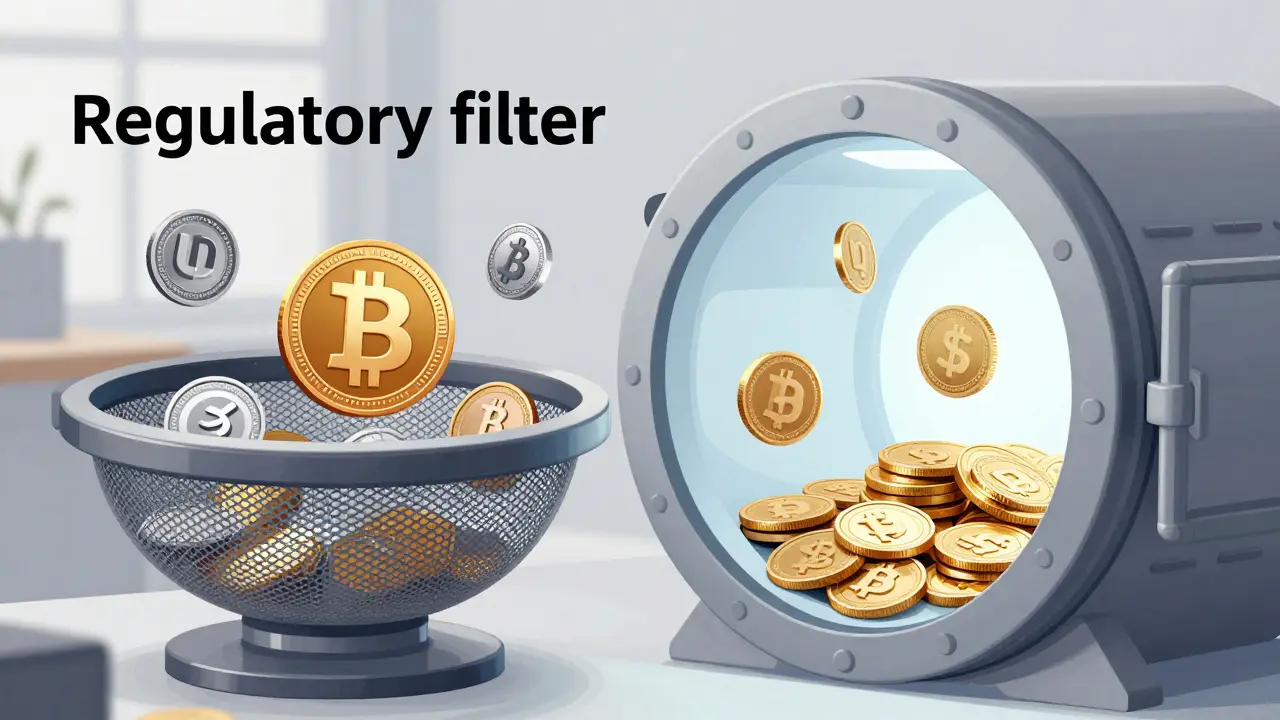
The shake-up comes from MiCA is the Markets in Crypto-Assets regulation, a massive legislative framework designed by the European Commission to bring order to the wild west of digital assets. While it sounds like a boring set of rules, MiCA is effectively a filter. It separates the stablecoins that play by the rules from those that don't. Because Tether (the company behind USDT) didn't meet these specific EU standards, the hammer came down, leading to a complete trading ban on European exchanges effective July 1, 2025.
Key Takeaways for EU Investors
- USDT is banned: Trading pairs for USDT are being removed from EU-based exchanges.
- Deadline passed: Full enforcement began in late 2024, with the final ban hitting in mid-2025.
- Compliance is the issue: Tether failed to meet transparency and reserve requirements.
- Alternatives exist: Users are shifting to MiCA-compliant stablecoins like USDC or Euro-backed tokens.
Why the EU Actually Banned USDT
It’s not that the EU hates stablecoins; they just hate uncertainty. Under MiCA, the regulators split stablecoins into two camps. First, there are Electronic Money Tokens (EMTs), which track a single currency like the Dollar or Euro. Then there are Asset-Referenced Tokens (ARTs), which track a basket of assets. USDT falls into the EMT category, and that's where the trouble started.
To be legal in the EU, an EMT issuer must follow a strict playbook. They need a 1:1 reserve of liquid assets, kept separate from the company's own money. They also need to publish a "white paper" (a detailed rulebook for the token) and undergo regular, independent audits that anyone can actually verify. Tether, unfortunately, has a long history of being vague about what's actually backing its coins. The EU decided that "trust us" wasn't a good enough answer for financial stability.
Beyond the money, there's the issue of AML/KYC (Anti-Money Laundering and Know Your Customer) protocols. European regulators want automated, traceable systems to prevent crime. Tether's lack of transparency in these areas made them a red flag for authorities like France's ACPR.
How Exchanges Are Handling the Purge
Exchanges aren't waiting around to get fined. They've spent the last year systematically scrubbing USDT from their EU platforms. The approach varies, but the result is the same: you can't buy USDT anymore.
OKX took the direct route, becoming one of the first to completely phase out all USDT trading pairs for European users. Coinbase followed suit in early 2025, telling users to convert their holdings to something compliant before the deadline. Binance tried a slower approach, moving USDT to a "sell-only" mode first-meaning you could get rid of your USDT, but you couldn't buy more. By March 31, 2025, Binance joined the rest, delisting USDT along with other non-compliant tokens like FDUSD and TUSD.
| Requirement | MiCA Standard | Tether (USDT) Status |
|---|---|---|
| Reserve Backing | 1:1 Liquid Assets (Segregated) | Insufficient Disclosure |
| Audit Frequency | Regular & Independent | Lacks Real-time Transparency |
| Regulatory License | Authorized EU Entity | No Valid EU Registration |
| AML/KYC | Automated & Traceable | Inadequate Process Automation |
The Risks of Staying in USDT
You might think, "I'll just keep my USDT in a private wallet," but that creates a new set of headaches. If you try to move that USDT back onto an exchange or use it for cross-border payments, you're hitting a wall. Experts at COREDO have pointed out that using non-compliant tokens for business transfers is now a nightmare for financial due diligence.
When you move funds from a non-compliant source into a European bank account, the bank's compliance software flags it. This can lead to your account being frozen or your digital assets being blocked. Essentially, USDT has gone from being a "safe haven" to a "regulatory liability." If the money trail doesn't match the EU's traceability standards, you're the one who has to prove where the money came from-which is hard when the issuer is opaque.
What Should You Use Instead?
The good news is that the market is adapting. There's a massive surge in MiCA-compliant alternatives. While USDT is out, USDC has positioned itself much more favorably by adhering to stricter transparency standards. Additionally, we're seeing the rise of Euro-backed stablecoins, which eliminate the currency exchange risk for people living in the Eurozone.
For those running a business, the move is to find a VASP (Virtual Asset Service Provider) license holder. These companies have already done the heavy lifting to comply with MiCA, meaning your assets are safer from sudden freezes or regulatory seizures. The market is expected to grow by about 37% once the dust settles, as institutional investors finally feel safe enough to enter the space knowing there are actual rules in place.
Is There a Grace Period?
If you're a professional service provider, you might have a bit more breathing room. Legal experts at Aurum Law note that some CASPs (Crypto-Asset Service Providers) that were operating legally before the end of 2024 have a transition period lasting until July 1, 2026.
However, don't mistake a transition period for a free pass. This is a window to get your paperwork in order or get your authorization rejected. It doesn't magically make USDT compliant. If you're a retail trader, the window has effectively closed. The goal for any EU user now is to migrate their liquidity into tokens that have the proper stamps of approval from agencies like the ACPR.
Can I still hold USDT in a private wallet in the EU?
Yes, you can physically hold USDT in a non-custodial wallet. However, the ban means you cannot trade it on regulated EU exchanges. Converting that USDT back into Euros or other assets will be extremely difficult and may trigger intense AML checks by your bank.
Why isn't USDC banned as well?
USDC is generally more transparent with its reserves and has made significant efforts to align its operational model with the transparency requirements set by MiCA, unlike Tether, which has remained opaque about its specific holdings.
What happens to my USDT if it's stuck on an exchange?
Most exchanges, like Coinbase and Binance, provided a window to convert your USDT to other coins. If you missed that window, you should contact the exchange's support immediately, though your options may be limited to selling the asset at a potential loss or moving it to an external wallet.
Is MiCA only about stablecoins?
No, MiCA is a comprehensive framework. While the stablecoin rules (EMTs and ARTs) were among the first to be enforced, the regulation also covers disclosure requirements for other tokens, rules for crypto-asset service providers, and market abuse protections.
Will this make stablecoins safer?
In the short term, it's chaotic. In the long term, yes. By requiring 1:1 reserves and independent audits, MiCA reduces the risk of a "bank run" or a stablecoin crashing because the issuer didn't actually have the money they claimed to have.
What to Do Next
If you're still holding non-compliant assets, your first priority should be an audit of your own portfolio. Identify every platform where you have USDT and check their current status regarding MiCA. If the exchange has already switched to "sell-only" or delisted the pair, your best bet is to move the funds to a platform that still allows exits or swap them for a compliant asset like USDC or a regulated Euro-stablecoin.
For business owners, stop using USDT for payroll or B2B payments immediately. The risk of having your corporate bank account flagged for AML violations is too high. Transition your treasury to a MiCA-authorized VASP to ensure your operations remain legal and your funds stay accessible.


Surender Kumar
this is prolly the best way to make the market actualy stable lol. its about time we got some rules so new people dont get rekt by random crashes
7stargee Emmanuel Obani
classic EU move 🙄 they just want to control everything and kill the decentralization dream. imagine needing a government permit to hold a dollar coin. lmao
Kelly Cantrell
The EU is just testing the waters to see how much they can squeeze the population. First it's USDT, then it's every other asset until you're forced into a government-monitored CBDC. This isn't about "transparency," it's about surveillance and total financial lockdown. We're seeing the blueprint for the global panopticon right here.
Prasanna Shembekar
omg my heart is literally racing right now!! how can they just ban it like that my portfolio is shaking
Will Dixon
dont worry too much about it. just swap your stuff to usdc or a euro coin and youll be fine. its not a big deal once you get the hang of the new rules
Jason Davis
The transition to MiCA compliant assets is actually a huge win for the industry long-term. Most people don't realize that without 1:1 liquid reserves, you're basically gambling on the issuer's honesty. Moving to USDC is a no-brainer because they've’ve already aligned their ops with these standards. Just a tip: if you're using a non-custodial wallet, be really careful when bridging back to a CEX in Europe because the AML flags are super sensitive right now. Use a reputable VASP to avoid the headache of having your funds frozen for three weeks while you provide proof of funds.
Lela Singh
Total game-changer! Get your assets moving now! USDC is the gold standard here. Don't sleep on the Euro-tokens either!
Rima Dinar
It is really important for everyone to take a breath and look at this as a learning opportunity to better manage their risk across different jurisdictions, because while it feels overwhelming to migrate your entire portfolio, taking it one step at a time and ensuring you have the correct documentation for your bank will save you so much stress in the long run.
Carroll Foster
Oh sure, because asking a company to prove they actually have the money they claim to have is just "too much" for Tether. Truly a shocker that the EU wants actual audits instead of a vague PDF. I'm sure the "trust me bro" strategy was working out great until now. What's next, a ban on coins that are backed by magic beans? The sheer audacity of being surprised by this is the best part.
Rebecca Violette
i feel so ansious about this like why does everything have to be so complicatd with crypto just when i start to understand it everything changs
Hope Johnson
We must consider if the push for regulation is an inherent part of the maturation process of any financial technology, as we see the tension between the original ethos of decentralization and the societal need for consumer protection. If we want institutional adoption, we have to accept a certain level of oversight, yet we must also strive to ensure that these regulations do not stifle the very innovation that gave birth to blockchain in the first place. It is a delicate balance between safety and freedom, and MiCA is essentially the EU's attempt to draw that line in the sand for the next decade of digital finance.
Swati Sharma
From a liquidity provider perspective, the shift towards EMTs with higher transparency is basically optimizing the risk-adjusted return for the ecosystem. If we can synchronize our on-ramp and off-ramp processes with MiCA-authorized VASPs, the slippage during conversion will be minimal, and we can maintain high capital efficiency while remaining fully compliant with the ACPR's latest directives on asset-referenced tokens.
Stanly Hayes
Honestly, the US needs to get its act together and do something similar. We're just letting these companies run wild over here while Europe actually builds a framework that works. It's embarrassing that we're lagging behind in clear legislation!
ssjuul z
Exactly! Clear rules make the game fair for everyone 🚀 Just follow the guidelines and you'll be golden! Keep it positive guys!
Artavius Edmond
I'm just vibing with the transition. It's kind of interesting to watch the big exchanges scramble to change their pairs. Not too stressed about it personally since I don't hold much USDT anyway.
logan bates
USA doesn't need EU rules. We'll handle our assets our own way.
Agnessa Dale
Everything will work out for the best! This is just a stepping stone to a more secure and professional crypto world where everyone can participate without fear! ✨