Getting a VARA crypto license is no longer just about filling out forms. It’s about proving you can survive the scrutiny of one of the world’s most rigorous financial regulators. If you are planning to launch or expand your virtual asset business in Dubai, the rules have tightened significantly since the initial rollout. The Virtual Assets Regulatory Authority (VARA) doesn’t just want your money; it wants proof that your technology, your team, and your compliance systems are bulletproof.
Dubai has positioned itself as a global hub for digital assets, but this status comes with strict conditions. You cannot operate in the shadows. Every transaction, every client interaction, and every token issuance must align with VARA’s comprehensive framework. This guide breaks down exactly what you need to know to navigate these requirements without wasting time or capital.
Who Needs a VARA License?
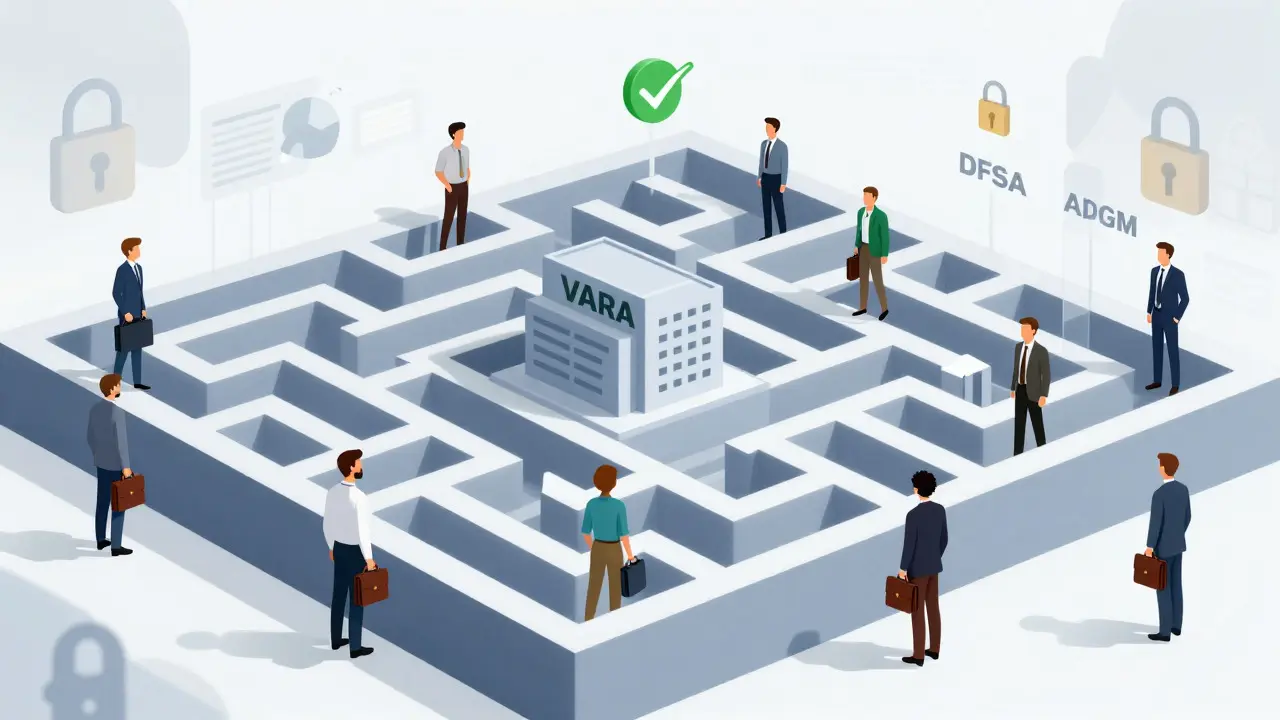
First, let’s clear up a common confusion. VARA regulates the entire Emirate of Dubai, with one major exception: the Dubai International Financial Centre (DIFC). If you are setting up shop in DIFC, you answer to the Dubai Financial Services Authority (DFSA), not VARA. For everyone else operating within Dubai’s mainland or other free zones, VARA is the sole authority.
You need a license if you fall under the definition of a Virtual Asset Service Provider (VASP). This covers six primary categories of services:
- Exchange Services: Platforms that facilitate trading between different virtual assets or between fiat currency and virtual assets.
- Broker-Dealer Services: Acting as an intermediary for buying and selling virtual assets on behalf of clients.
- Custody Services: Safeguarding and administering virtual assets for others. This carries the highest security and insurance standards.
- Transfer Services: Enabling the movement of virtual assets between accounts or wallets.
- Wallet Provision Services: Providing digital storage solutions where users hold private keys.
- Token Issuance: Creating and distributing new tokens. Note that Category 1 issuances require specific approval for each token, while Category 2 requires distribution through a licensed intermediary.
If you are running a decentralized finance (DeFi) protocol, issuing non-fungible tokens (NFTs), or managing tokenized real-world assets, you likely fall under this umbrella. The 2025 regulatory updates explicitly expanded coverage to include these emerging technologies, closing loopholes that previously allowed some projects to operate in a gray area.
Capital Requirements: How Much Cash Do You Need?
VARA uses paid-up capital as a barrier to entry to ensure only serious players enter the market. The amount you need depends entirely on the scope of your operations. There is no single flat fee; instead, requirements stack based on the services you offer.
| Service Category | Minimum Paid-Up Capital (AED) | Approximate USD Value |
|---|---|---|
| Basic Services (e.g., simple wallet provision) | 100,000 | $27,200 |
| Broker-Dealer Services | 1,000,000 | $272,000 |
| Custody Services | 4,000,000 | $1,088,000 |
| Exchange Operations | 5,000,000 | $1,360,000 |
Here is the catch: these amounts are cumulative. If you want to run an exchange that also offers custody services and acts as a broker-dealer, you don’t just pay the highest tier. You add them up. In this scenario, your required paid-up capital would be AED 10 million (approx. $2.7 million USD). This ensures that entities handling high volumes of client funds have sufficient financial resilience to absorb shocks and protect user assets.
Licensing Fees and Ongoing Costs
Beyond the capital you must lock up in your corporate account, there are direct fees payable to VARA. These cover the administrative cost of reviewing your application and monitoring your compliance.
- Application Fee: Ranges from AED 40,000 to AED 100,000, depending on the complexity of your requested services.
- Annual Supervision Fee: Between AED 80,000 and AED 200,000 per year. This is non-negotiable and covers ongoing regulatory oversight.
Do not underestimate the hidden costs. To meet VARA’s standards, you will likely need to hire specialized legal counsel, implement enterprise-grade Anti-Money Laundering (AML) software, and conduct external cybersecurity audits. These professional services often exceed the official licensing fees. Budget accordingly, as cutting corners here is the fastest way to get your application rejected.
Strict Operational and Compliance Standards
Having the money isn’t enough. VARA demands operational excellence. Your company must be incorporated as a legal entity within Dubai. You cannot apply as a sole proprietorship or an offshore shell company without local substance.
Fit-and-Proper Criteria Your board members, senior management, and compliance officers must pass strict background checks. VARA looks at their experience, reputation, and integrity. If your CEO has a history of regulatory breaches elsewhere, your application will likely stall.
Technology and Security You must demonstrate robust cybersecurity measures. This includes data protection protocols, system resilience plans, and regular penetration testing. For custody providers, insurance coverage against cyber threats and operational risks is mandatory. You need to show that you can keep client assets safe even if your servers are hacked.
Record Keeping Every transaction, client interaction, and compliance decision must be logged. VARA expects detailed audit trails that can be produced instantly upon request. Your internal systems must support this level of transparency.
AML/CFT: The Non-Negotiable Core
Anti-Money Laundering (AML) and Counter-Terrorism Financing (CFT) are the backbone of VARA’s regulatory philosophy. Aligned with Financial Action Task Force (FATF) recommendations, these rules are strict.
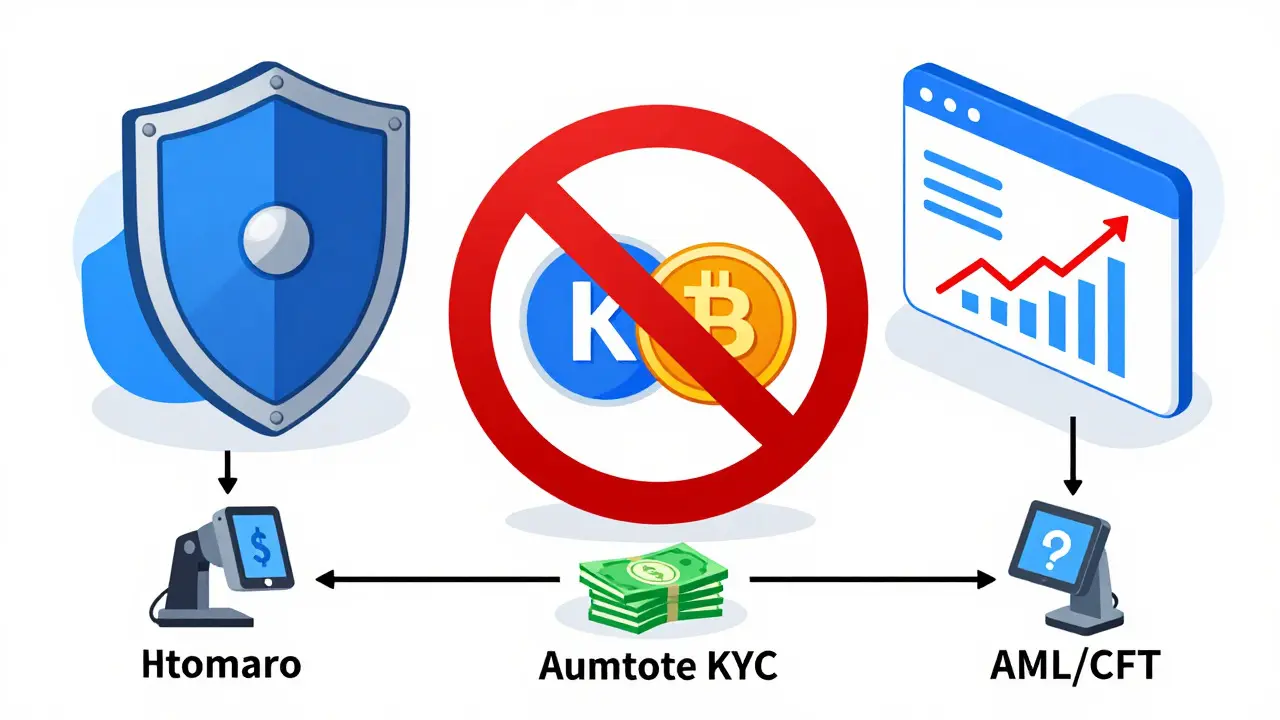
You must implement automated Know Your Customer (KYC) processes. This means verifying identities, validating the source of funds, and determining beneficial ownership structures before any transaction occurs. Manual checks are not sufficient for scalable operations.
Your systems must monitor transactions in real-time for suspicious activity. If something looks off-like unusual transfer patterns or links to sanctioned entities-you must report it immediately. Regular staff training and independent compliance audits are required to prove that your AML program is working, not just sitting on paper.
Key Restrictions You Must Avoid
VARA Administrative Order 2023/2024 introduced specific bans that many founders overlook until it’s too late. Ignoring these will result in immediate rejection or revocation of your license.
Banned Tokens Privacy coins like Monero and Zcash are explicitly prohibited. VARA views the anonymity features of these tokens as a direct risk for money laundering and terrorism financing. You cannot list, trade, or custody these assets.
Marketing Approval You cannot run ads or marketing campaigns without prior approval from VARA. All promotional materials must meet transparency standards and include necessary risk warnings. This applies to social media, websites, and email newsletters. Trying to bypass this by using third-party influencers does not exempt you from liability.
Information Security Mandates You must use modern IT solutions for data storage and processing. Regular external security audits are mandatory, and your infrastructure must be certified to international standards. Legacy systems or unverified cloud setups will not pass inspection.
VARA vs. Other UAE Regulators
Dubai is not the only option in the UAE. Understanding the landscape helps you choose the right jurisdiction.
- VARA (Dubai Mainland/Free Zones): Best for companies wanting broad access to the Dubai market with a regulator focused exclusively on virtual assets. Offers modern, tech-friendly rules.
- DFSA (DIFC): Ideal for firms already embedded in traditional finance or those seeking the prestige of an international financial center. The DFSA applies more traditional financial services regulations adapted for crypto.
- FSRA (Abu Dhabi Global Market - ADGM): A strong alternative if you prefer Abu Dhabi’s ecosystem. The FSRA has its own distinct regulatory framework for virtual assets.
- SCA/Central Bank (Federal Level): Applies to entities operating outside designated free zones across the UAE. Generally less specialized for pure-play crypto businesses compared to VARA.
Most dedicated crypto startups choose VARA for its clarity and speed, provided they can meet the capital and compliance hurdles.
Next Steps for Applicants
If you are ready to proceed, start by engaging a local legal advisor familiar with VARA’s examination procedures. Do not attempt to draft your business plan alone. Focus on building your compliance infrastructure early-invest in automated KYC tools and secure custody solutions. Remember, VARA rewards preparedness. Companies that present a thorough, well-documented application with robust technical safeguards tend to move through the review process faster than those who treat compliance as an afterthought.
How long does it take to get a VARA license?
The timeline varies significantly based on the completeness of your application and the complexity of your services. Typically, the process takes between 3 to 6 months. Applications with incomplete documentation, weak compliance frameworks, or insufficient capital explanations face delays. Engaging experienced consultants can help streamline the submission and reduce back-and-forth queries from regulators.
Can I hold a VARA license if my company is registered outside Dubai?
No. VARA requires applicants to incorporate as a legal entity within the Emirate of Dubai. This ensures local presence and accountability. You cannot obtain a VARA license for an offshore entity without establishing a local subsidiary or branch that meets all incorporation and operational requirements.
Are DeFi protocols required to get a VARA license?
Yes. Recent regulatory updates explicitly include decentralized finance (DeFi) protocols under VARA’s jurisdiction. Even if your protocol is automated, if it provides services like lending, borrowing, or swapping to users in Dubai, you are considered a VASP and must comply with licensing, AML, and consumer protection rules.
What happens if I fail to comply with VARA regulations after getting licensed?
Non-compliance can lead to severe penalties, including heavy fines, suspension of operations, or revocation of your license. VARA conducts regular audits and market surveillance. Repeated violations or serious breaches of AML/CFT rules can also result in criminal charges for key personnel. Maintaining ongoing compliance is critical for survival.
Does VARA regulate NFTs and Metaverse assets?
Yes. VARA’s framework covers non-fungible tokens (NFTs) and tokenized assets. Platforms facilitating the creation, sale, or trading of NFTs must obtain the appropriate license. The regulator assesses whether the NFT represents a utility, a collectible, or a security, applying corresponding rules for disclosure and investor protection.

Write a comment