Vietnam Crypto Tax Calculator
Calculate Your Vietnam Crypto Tax
Under Vietnam's new regulations, cryptocurrency gains are taxed at 20% under securities rules. Enter your transaction details below to estimate your tax liability.
On September 9, 2025, Vietnam did something no other country had ever done: it launched the world’s first legally sanctioned, government-run pilot program for cryptocurrency. Not a ban. Not a tax. Not a half-measure. A full five-year experiment to bring crypto out of the shadows and into a controlled, regulated system - with clear rules, licensed players, and real consequences for breaking them. The program runs until September 8, 2030. And if you’re trading crypto in Vietnam, or even thinking about it, this changes everything.
What Exactly Is the Vietnam Crypto Pilot Program?
The program isn’t just a policy tweak. It’s built on two legal pillars: Law No. 71/2025/QH15 on Digital Technology Industry and Resolution 05/2025/NQ-CP. These documents, passed by Vietnam’s National Assembly and signed by Deputy Prime Minister Ho Duc Phoc, officially recognize virtual assets as legal property under Vietnam’s Civil Code. That’s huge. For the first time, owning Bitcoin, Ethereum, or any other crypto isn’t just tolerated - it’s protected by law, as long as you follow the rules.
But here’s the catch: you can’t just trade crypto however you want. The government drew a hard line. Cryptocurrency is still banned as a payment method. Banks can’t process crypto transactions. ATMs won’t give you Bitcoin. But you can own it. You can trade it. You can invest in it - but only through platforms that the Ministry of Finance has licensed.
The program defines three types of digital assets:
- Virtual assets: any digital item used for exchange or investment - like NFTs, tokens, or utility coins.
- Crypto assets: a subset of virtual assets that use encryption or digital tech to verify ownership and transfers - think Bitcoin, Ethereum, and similar blockchains.
- Other virtual assets: anything else that doesn’t fit the first two categories.
Only crypto assets are fully regulated under this pilot. Everything else falls into a gray zone until further guidance comes out.
Who Can Participate?
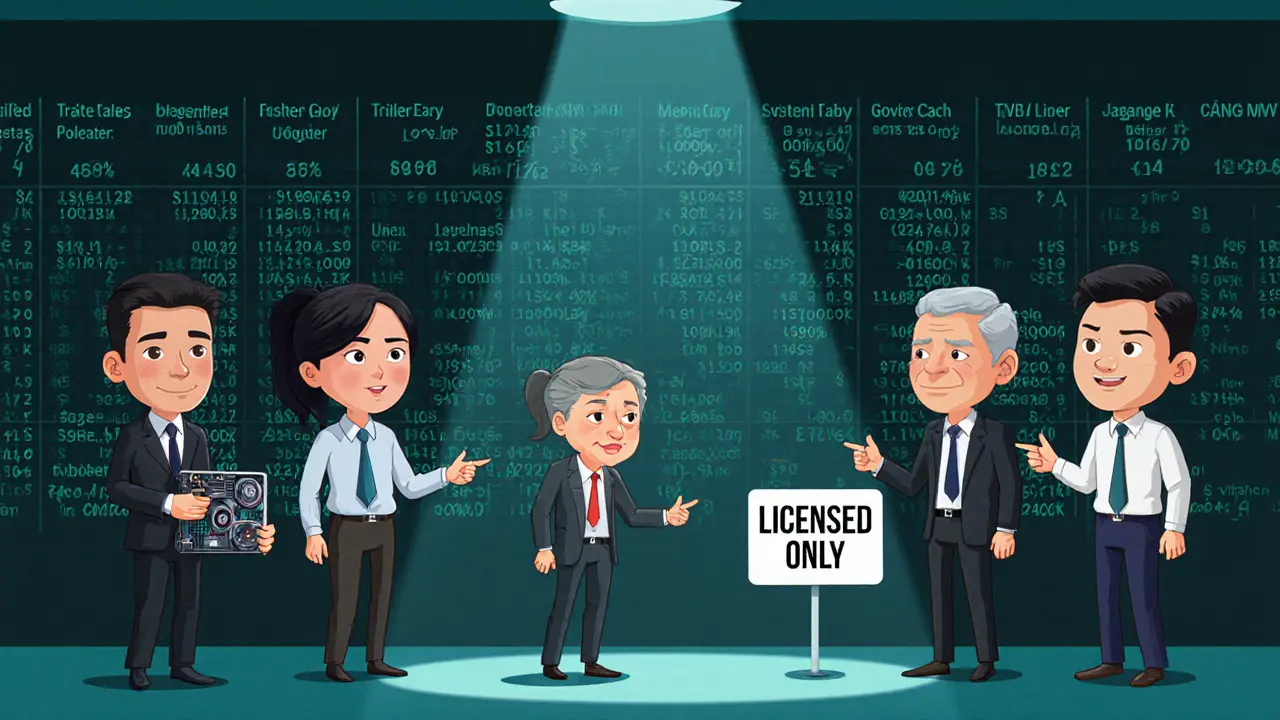
Anyone - Vietnamese citizens, foreign residents, international investors - can take part. But you can’t operate alone. Every exchange, wallet provider, trading platform, or custody service must get a license from the Ministry of Finance. No exceptions. The first licensed provider is expected to launch by March 2026. After that, all domestic trading must happen through these approved platforms.
That means if you’re currently using Binance, Bybit, or any offshore exchange, you’re already in violation once the first license goes live. You have six months to move your assets and accounts to a licensed Vietnamese platform. If you don’t, you risk administrative fines or even criminal charges.
Foreign companies can apply for licenses too, but they’ll need a local partner, a physical office in Vietnam, and full compliance with local cybersecurity and anti-money laundering (AML) rules. The bar is high - higher than most Western countries.
Why Is Vietnam Doing This?
Vietnam has one of the most active crypto markets in Southeast Asia. Daily trading volume hits over $600 million, according to VIR, a local industry tracker. That’s more than Thailand or Indonesia. But until now, it’s been a wild west. Traders used offshore platforms. Money flowed out of the country. No taxes. No oversight. No accountability.
The government didn’t want to stop crypto. It wanted to control it. By creating a legal pipeline, Vietnam aims to:
- Keep capital within the country
- Collect tax revenue from crypto gains
- Prevent money laundering and fraud
- Attract tech investment and talent
- Position itself as a regional digital finance leader
Compared to China’s total ban or India’s heavy taxation without clear rules, Vietnam’s approach is bold. It’s not trying to kill crypto. It’s trying to tame it.
What’s Still Unclear?
For all the progress, big questions remain unanswered.
Miners are in limbo. The law doesn’t say whether crypto mining is legal. No one knows if you can run a mining rig at home. No one knows if you need a license. No one knows if you’ll be taxed on the coins you mine. The Ministry of Finance says guidance is coming, but there’s no timeline.
Taxes are messy. Right now, crypto gains are being taxed under securities rules. That means 20% capital gains tax - but only if you sell. No one knows if that’s permanent. No one knows how to report holdings. No one knows if staking rewards count as income. The tax code hasn’t caught up.
Penalties are vague. The law says violators face “administrative sanctions or criminal liability.” But what counts as a violation? Trading on an unlicensed site? Not reporting a $500 gain? Using a VPN to access Binance? There’s no public list of offenses or fines. That uncertainty scares off small investors.
English documentation is scarce. The laws are written in Vietnamese. Most official guidance is only available in Vietnamese. Foreigners and non-native speakers are at a serious disadvantage. Translation services are unreliable. Many traders are flying blind.
How Are People Reacting?
On Reddit’s r/Vietnam and local forums like Webtretho, reactions are split.
Some traders are relieved. “Finally, we have rules,” one user wrote. “I was scared to cash out because I didn’t know if the government would come after me.”
Others are angry. “They’re forcing us to use local exchanges that charge 3% fees and have terrible customer service,” another said. “Why not let us use Binance and just tax us?”
Small businesses are struggling. One Hanoi-based startup that accepted crypto for services now has to shut down its payment system because they can’t afford the licensing process. “We’re not a bank,” the owner said. “We just wanted to give customers a choice.”
Legal firms in Ho Chi Minh City are booking consultations months in advance. Everyone wants to know: “Am I safe?”

What Should You Do Right Now?
If you’re in Vietnam and hold crypto, here’s what to do before March 2026:
- Stop using unlicensed exchanges. Binance, KuCoin, OKX - none of them are legal under the new rules. Keep your assets on them if you want to risk fines.
- Track your transactions. Start recording every buy, sell, transfer, and staking reward. You’ll need this for taxes.
- Watch for licensed platforms. The Ministry of Finance will publish a list. Bookmark their official website. Check it weekly.
- Don’t mine yet. Until the government says it’s legal, avoid running mining hardware. You could be fined or have equipment seized.
- Get legal advice. If you’re holding more than $10,000 in crypto, talk to a lawyer who understands Vietnam’s new digital asset laws. Don’t wait until you get a notice from the tax office.
What Happens After 2030?
The pilot ends in 2030. What happens next depends on how well it works.
If compliance is high, tax revenue is strong, and fraud stays low, Vietnam will likely make the program permanent. It could even expand to include DeFi, tokenized real estate, or CBDC integration.
If things go wrong - if people flee to offshore platforms, if money laundering slips through, if exchanges fail - the government could shut it down and go back to a full ban.
Right now, the odds favor success. Vietnam’s tech-savvy population, strong internet infrastructure, and willingness to experiment give it a real shot. But the success of this program isn’t about technology. It’s about enforcement. And enforcement is still untested.
One thing is certain: Vietnam isn’t waiting for the rest of the world to catch up. It’s setting the pace. And if you’re involved in crypto in Southeast Asia, you’re watching what happens here - because what happens in Vietnam may soon happen everywhere else.
Is cryptocurrency legal in Vietnam in 2025?
Yes, but only under strict conditions. Vietnam’s pilot program, launched in September 2025, makes cryptocurrency ownership and trading legal if done through government-licensed platforms. However, using crypto as payment or transacting through unlicensed exchanges remains illegal.
Can I use Binance or other foreign exchanges in Vietnam?
No. After the first licensed platform launches (expected by March 2026), all domestic trading must go through Ministry of Finance-approved providers. Using foreign exchanges after that point is a violation and can lead to fines or legal action.
Do I have to pay taxes on crypto in Vietnam?
Yes. Currently, crypto gains are taxed under securities rules at 20%. The government hasn’t finalized a dedicated crypto tax code yet, but you’re expected to report all transactions. Keep detailed records of buys, sells, and transfers.
Is crypto mining allowed in Vietnam?
It’s unclear. The pilot law does not mention mining. The Ministry of Finance has not issued any guidance on whether it’s legal, regulated, or taxed. Until official rules are published, mining is in a legal gray area and carries risk.
What happens if I don’t comply with the new rules?
You could face administrative penalties like fines, asset freezes, or account closures. In serious cases - such as large-scale money laundering or operating an unlicensed exchange - you could be subject to criminal prosecution. Enforcement is still being tested, but the government has signaled it will act.
Will Vietnam’s crypto program spread to other countries?
It already is. Countries like Thailand, Singapore, and even some U.S. states are watching Vietnam closely. Its five-year pilot structure - combining legal recognition with strict licensing - is being studied as a potential global model for balancing innovation and control.
Next Steps for Investors and Traders
If you’re holding crypto in Vietnam, your next move should be preparation - not speculation.
Start documenting everything. Use a simple spreadsheet. Note dates, amounts, platforms, and transaction IDs. Even if you’re not taxed yet, you’ll need this later.
Follow the Ministry of Finance’s official website. No third-party blogs. No Telegram groups. Only the government’s site will have accurate updates.
And don’t assume this is temporary. The government has committed to five years. That’s not a trial. It’s a transition. The crypto world in Vietnam is changing - and it’s not going back.

Lawal Ayomide
This is either genius or madness. Vietnam just turned crypto into a state-controlled experiment. No one else has dared to do this. I'm watching.
justin allen
Of course the US government is gonna lose its mind over this. They can't even tax crypto properly, but Vietnam? They're building a whole new financial system. America's still stuck in 2017.
samuel goodge
The philosophical implications here are staggering: by legalizing crypto as property-not currency-Vietnam is effectively redefining ownership in the digital age. It's not about regulation; it's about ontological recognition. What does it mean for a thing to 'exist' if the state says it does? And yet... the enforcement gap is terrifying. Who polices the police?
Philip Mirchin
If you're in Vietnam and holding crypto, don't panic. Just start documenting. Use Google Sheets. Write down every trade. Even if you're not taxed yet, you'll thank yourself later. This isn't the end-it's the beginning of a new normal. Stay calm, stay organized.
Britney Power
Let's be brutally honest: this is a performative regulatory gesture wrapped in technocratic jargon. The 20% capital gains tax is archaic, the licensing regime is exclusionary to small operators, and the lack of clarity around mining is a deliberate tool of control. This isn't innovation-it's authoritarianism with a blockchain logo.
Maggie Harrison
This is HUGE 🌏✨ Vietnam’s not just playing chess-they’re building the whole board. Imagine if every country did this instead of banning or ignoring crypto? We could actually have a fair, transparent system. I’m so hyped for 2030. Let’s goooo!
Nelia Mcquiston
I think the real question isn't whether this will work-it's whether the people can trust the government to enforce it fairly. There’s a huge cultural gap between a top-down regulatory model and a decentralized ethos. Maybe this works because Vietnam has both high tech adoption and strong state cohesion. Can other countries replicate that? Doubtful.
Mark Stoehr
Theyre gonna ban mining then tax the miners who still do it and then seize their rigs and call it a day lol
Reggie Herbert
The regulatory framework is technically sound but operationally naive. Licensing platforms introduces centralized points of failure-exactly what crypto was designed to circumvent. You’re creating a permissioned blockchain with bureaucratic gatekeepers. The irony is poetic.
Murray Dejarnette
You think this is bad? Wait till the IRS finds out Vietnam’s doing this better than the U.S. They’ll panic and try to ban crypto again. But this time, people won’t listen. We’re past that.
Sarah Locke
To anyone in Vietnam reading this: you’re not alone. I’ve been where you are. Start small. Talk to your local crypto meetup. Find someone who’s been through the legal process. You don’t need to know everything-just take the next step. You’ve got this.
Mani Kumar
Vietnam’s move proves Western models are obsolete. We don’t need SEC approvals or Coinbase. We need clarity, enforcement, and national sovereignty over digital assets. This is the future of finance.
Tatiana Rodriguez
I’ve been tracking this for months, and honestly, the biggest threat isn't the law-it's the language barrier. If you're not fluent in Vietnamese, you're being systematically excluded from compliance. That’s not regulation. That’s exclusion disguised as control. The government needs to publish multilingual summaries. It’s not just fair-it’s practical.
ashi chopra
I live in Hanoi and saw the first licensed exchange announcement yesterday. The UI is clunky, fees are high, but at least it’s legal. I moved my ETH there. It feels weird to trust the government with my crypto... but I trust it more than Binance after the FTX crash.
Darlene Johnson
This is a trap. They’re letting you trade so they can track you. Then they’ll freeze accounts, seize assets, and accuse you of tax evasion. Mark my words: by 2028, they’ll say ‘the pilot failed’ and ban crypto entirely. This is how dictatorships soften people up.
Ivanna Faith
Why are we even talking about this like its new? Its just another government trying to control the uncontrolable lol
Akash Kumar Yadav
India should copy this. Not the licensing part-the part where they actually made a decision. We’ve been debating crypto for 8 years. Vietnam moved. We’re still in committee.
alex bolduin
The real win here isn't the law-it's the signal. Vietnam is telling the world: we’re not afraid of innovation. We’ll shape it ourselves. That’s more powerful than any tax code or license.
Shari Heglin
The premise that legal recognition equates to consumer protection is fundamentally flawed. Property rights without enforceable recourse are symbolic. The state can declare Bitcoin legal, but if it refuses to adjudicate disputes or provide restitution for exchange failures, the designation is meaningless. This is not a regulatory framework-it is a rhetorical exercise in statecraft.